Bluesound Pulse Sub Brings Bigger Bass Without a Bulky Cabinet



Bluesound Pulse Sub Brings Bigger Bass Without a Bulky Cabinet
Bluesound Pulse Sub adds deeper, cleaner bass to BluOS systems with wireless setup, dual 6.5-inch woofers, and a compact design.
A Bigger Bass Upgrade in a Smaller Package
Bass has a funny habit of taking over a room. One minute you’re watching a film or spinning a favorite record, and the next, a giant black box is demanding attention from the corner. The new Bluesound Pulse Sub takes a different approach, promising deeper low-end impact without making the cabinet feel like another piece of furniture.
The Pulse Sub is a completely redesigned wireless powered subwoofer created for Bluesound’s BluOS multi-room ecosystem. It’s intended to add weight, depth, and atmosphere to compatible music and home cinema systems while keeping the overall setup tidy.
For anyone who has ever wanted more rumble without sacrificing floor space, that balance is the main attraction. The goal isn’t simply to make the bass louder. It’s to make it feel more connected to the music or movie, like the missing foundation has quietly clicked into place.
Dual Woofers Do the Heavy Lifting
Inside the compact cabinet sits a 350-watt amplifier supported by Smart DSP technology. That power drives two custom 6.5-inch woofers arranged in an opposing configuration.
The design gives the new model roughly 2.5 times more power than the previous-generation Bluesound subwoofer. That’s a substantial leap, but the engineering isn’t focused on brute force alone. The opposing driver layout is designed to help the subwoofer remain composed when the action gets intense.
With the two woofers working against each other, much of the vibration produced by each driver is canceled out. In plain English, the cabinet is less likely to shake, wobble, or announce itself while the drivers are working hard.
That matters because unwanted cabinet vibration can distract from the sound. Instead of hearing a box rattling in the corner, listeners should get bass that stays deep, clean, and controlled. The effect is meant to be felt in the room but not constantly pointed out by the room.
Designed for Music and Movie Nights
The Pulse Sub is built around the BluOS platform, so it isn’t a standalone wireless accessory that requires a completely separate control system. It pairs with existing Bluesound products through the BluOS Controller app.
Setup follows the same general process Bluesound uses when adding a second player to a system. That should make the experience familiar for people who already have BluOS equipment at home. Rather than navigating a maze of separate menus, users can add the subwoofer through the same broader ecosystem they already use for playback and multi-room control.
That kind of simplicity can make a real difference. A subwoofer may be technically impressive, but if connecting it feels like assembling a small satellite dish, the excitement tends to disappear quickly. The Pulse Sub aims to keep the process closer to a few sensible app steps.
A Natural Partner for BluOS Equipment
The wireless pairing options include the Pulse Cinema and Pulse Cinema Mini soundbars. Used with either model, the Pulse Sub is designed to create a fuller home cinema setup, bringing more depth to soundtracks, action sequences, and those low-frequency moments that make a film feel properly cinematic.
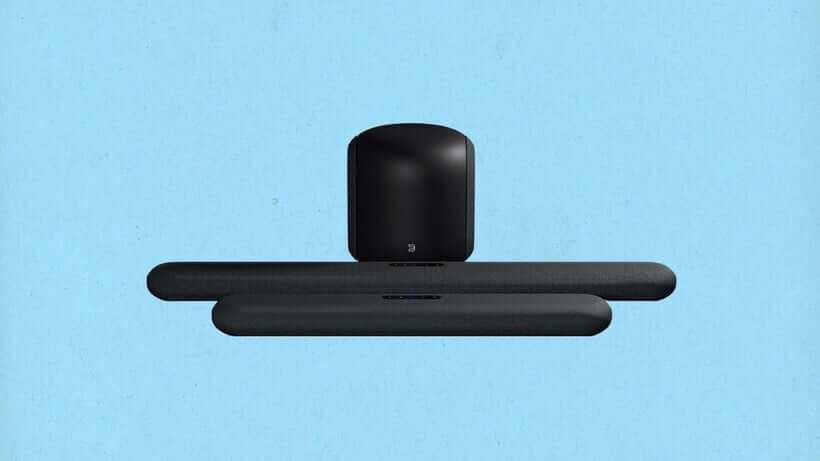
It can also pair with the Powernode streaming amplifier. In that arrangement, the subwoofer is aimed at listeners who want a deeper and more musical low end during music playback.
That distinction is worth noting. The Pulse Sub isn’t being presented only as a movie-night rumble machine. Its role in a music system is to add a richer foundation while preserving the character of the main speakers. Ideally, the bass should support the performance rather than cover it up.
I’ve always liked the moment when a subwoofer stops feeling like an extra component and starts feeling like part of the original recording. A kick drum gains body, a bass guitar occupies a little more space, and an orchestral swell seems to push farther into the room. That’s the sort of contribution Bluesound is targeting here.
Bass That Knows When to Behave
“Great bass shouldn’t be loud and boomy. It should bring you closer to what you are watching or listening to without calling attention to where it is coming from.”
— Matt Simmonds, VP of Bluesound Product Development
That idea is central to the Pulse Sub’s identity. It isn’t about turning every scene into an earthquake or giving every song an exaggerated thump. Instead, the stated aim is a more controlled form of impact—bass that helps create immersion without making its location obvious.
Simmonds also said the team rethought both the acoustic and industrial design. The result is intended to deliver more than twice the previous model’s power output while keeping the enclosure compact, controlled, and easy to live with.
That combination is where the Pulse Sub becomes particularly interesting. More power often suggests a larger cabinet, heavier construction, or a component that needs its own dedicated corner. Bluesound is attempting to move in the opposite direction: increase output while keeping the physical presence restrained.
Soft Edges and Hidden Cablework
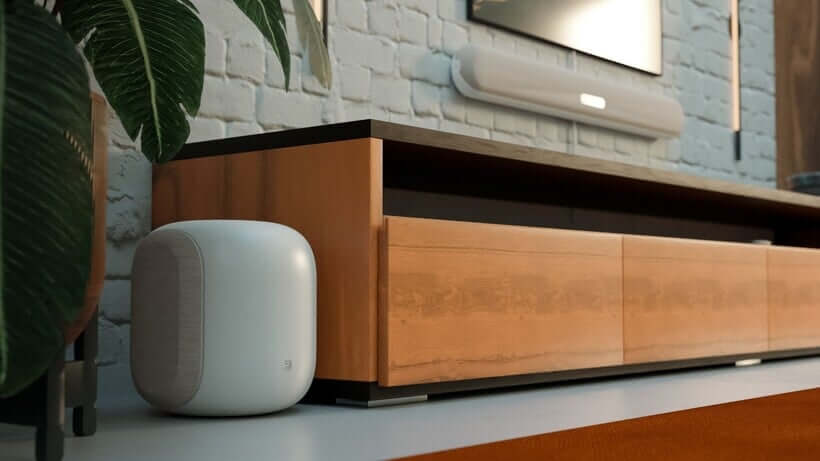
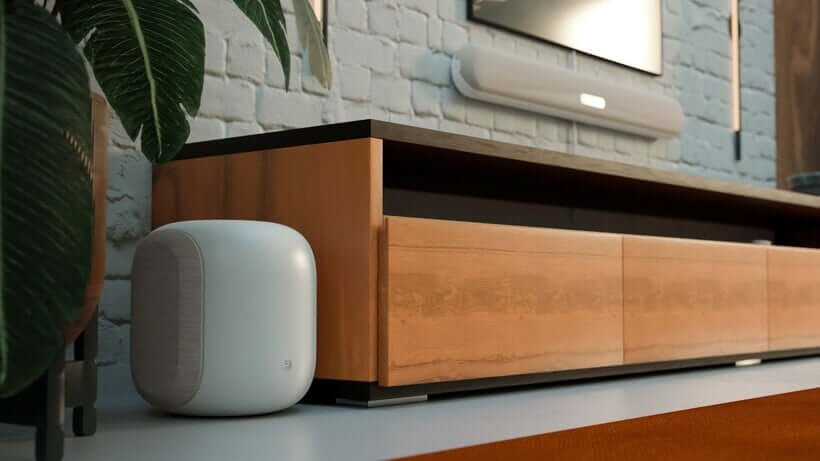
The cabinet uses soft contours and tonal-weave fabric grilles, giving the Pulse Sub a gentler visual character than the typical sharp-edged subwoofer enclosure. A matte satin finish is designed to match the rest of the Bluesound range, helping it blend into an existing system rather than look like an unrelated add-on.
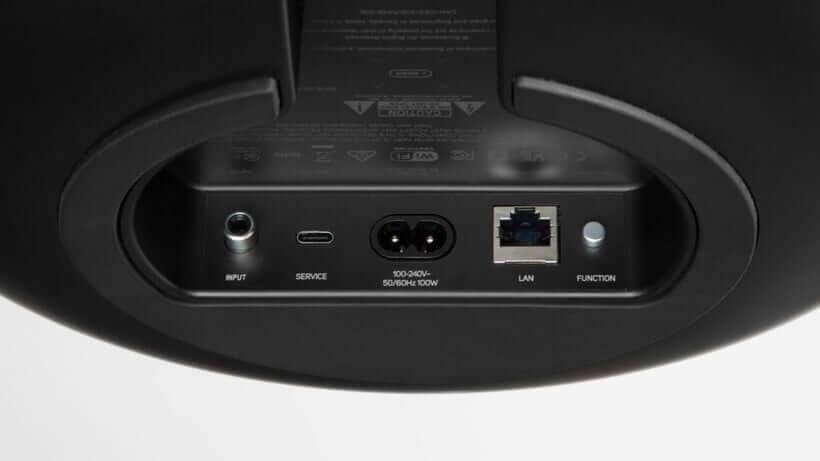
Small details can make a product much easier to live with, and the integrated cable management channels are a good example. They keep wiring routed and out of sight, which is especially welcome in a living room where cables have a strange talent for appearing in exactly the wrong place.
The wireless functionality handles pairing with BluOS products, but Bluesound hasn’t closed the door on other systems. A low line-level analog input allows the Pulse Sub to work as a wired active subwoofer with non-BluOS equipment.
That gives the product a little more flexibility. Owners of a broader setup aren’t restricted to wireless BluOS pairing, while existing Bluesound users can take advantage of the simpler app-based connection. It’s a practical two-lane approach: wireless for convenience, wired for wider compatibility.
A Home Cinema Upgrade Without the Clutter
In a home cinema system, the appeal is easy to understand. Soundbars can create a clean and convenient setup, but the lowest frequencies often need their own dedicated driver to add genuine weight. Pairing the Pulse Sub with a Pulse Cinema or Pulse Cinema Mini is designed to fill out that lower register without requiring a full collection of separate speakers.
The opposing woofer arrangement should also help keep the presentation controlled. Big bass can be thrilling, but uncontrolled bass quickly becomes tiring. A clean low end lets explosions feel physical, while quieter atmospheric effects can retain their subtle detail.
The same principle applies to television, streaming, and music. The subwoofer is not meant to dominate every moment. It should sit underneath the system, adding scale when the recording calls for it and stepping back when it doesn’t.
Availability and Pricing
The Bluesound Pulse Sub is scheduled to become available later in 2026. It will be priced at £849 / €999 and sold through authorized Bluesound retailers, the Bluesound website, and Amazon.
Pre-order details are expected to follow at a later date. For now, the headline remains fairly straightforward: Bluesound is offering a more powerful subwoofer with a compact enclosure, wireless BluOS integration, and a wired option for non-BluOS systems.
The Pulse Sub’s appeal will likely come down to how well it balances those promises in everyday use. On paper, it has the ingredients for a serious upgrade—350 watts, dual opposing 6.5-inch woofers, Smart DSP, and flexible connectivity. But its real mission is more refined than a specification-sheet arms race.
It wants to bring more feeling to a soundtrack, more shape to a bass line, and more depth to a multi-room setup without turning the living room into a showroom for oversized audio equipment. That’s a sensible direction, especially for listeners who want the low end to be present but not constantly obvious.
The Bluesound Pulse Sub takes a thoughtful approach to bigger bass: more amplifier power, dual opposing drivers, wireless BluOS control, and a cabinet designed to blend into the room. Would you rather have bass that announces itself—or bass that simply makes everything feel more complete?
FAQ
- What is the Bluesound Pulse Sub?
The Bluesound Pulse Sub is a wireless powered subwoofer designed to add deeper, more controlled bass to BluOS multi-room systems and compatible Bluesound products. - How much power does the Pulse Sub provide?
It includes a 350-watt amplifier with Smart DSP technology, driving two custom 6.5-inch woofers. - Why are the two woofers arranged in opposing directions?
The opposing configuration helps cancel much of the vibration created by the drivers, allowing the cabinet to stay more stable while producing bass. - Which Bluesound products can pair with it wirelessly?
The Pulse Sub can pair with products including the Pulse Cinema, Pulse Cinema Mini, and Powernode streaming amplifier through the BluOS Controller app. - Can the Pulse Sub work with non-BluOS systems?
Yes. Its low line-level analog input allows it to function as a wired active subwoofer with non-BluOS equipment.
If the warm, immersive side of music and movies is your favorite part of listening, a favorite album cover poster can bring that same feeling to your walls. Browse the collection at Architeg Prints for a tasteful way to keep the soundtrack going between listening sessions.
 | DISCOUNTGET 30% OFF*Use code on your next order:
|
* This post may contain affiliate links, meaning we earn a commission if you make a purchase through these links, at no additional cost to you.