Beck on Ride Lonesome: Finding Courage in Emotional Songwriting


 See more Architeg Prints stories on Google.
Beck on Ride Lonesome: Finding Courage in Emotional Songwriting
Beck’s Ride Lonesome turns heartbreak, live musicianship, and decades of genre-hopping into his most direct album in years.
A New Chapter in Beck’s Long Musical Journey
Some albums arrive with a bang. Others drift in like headlights through desert dust. Beck’s Ride Lonesome belongs to the second category—a patient, twilight-colored record shaped by loss, reflection, and the kind of emotional honesty that takes years to gather.
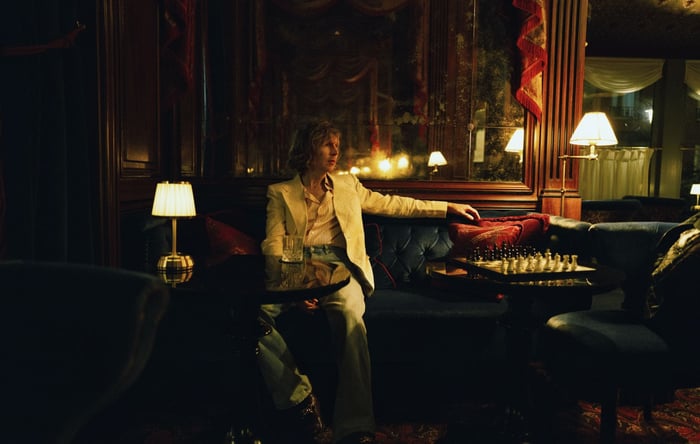
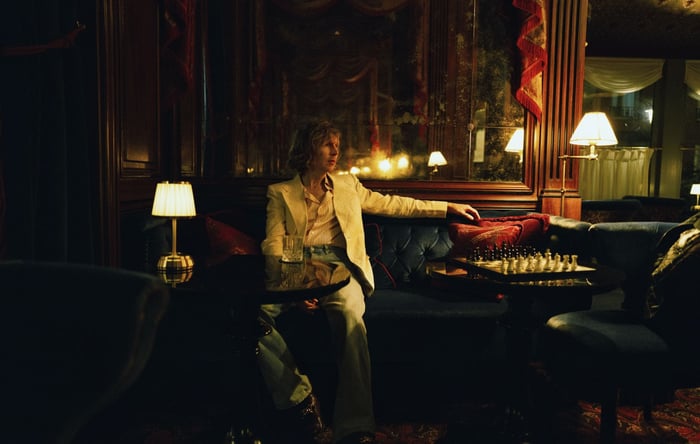
When we met Beck in a studio space at his label’s London offices, he was thoughtful, candid, and running on what he called “jet lag mode, man.” It was a fitting state for discussing an album he describes as a “slow motion, twilight, Mojave, acoustic, a trance of sound and emotion.”
Ride Lonesome arrives seven years after Hyperspace, though Beck certainly hasn’t been sitting around polishing trophies. The years between albums included the disruption of COVID and lockdowns, several world tours, and an acclaimed orchestral theater run featuring an 80-piece orchestra. Behind the scenes, he was also laboring over the songs that would eventually become this new record, refining them with almost punishing attention to detail.
In another timeline, the album might have appeared much sooner. Beck originally intended to complete it and release it in 2023, but eventually put the project aside for two years.
“I wasn’t sure about the songs, I didn’t think they were strong enough, and I just wasn’t in the mood for what the record would require to really fully live it and bring it to life.”
— Beck
That level of self-questioning says plenty about his process. Is he hard on himself? Beck’s answer is characteristically straightforward: he considers himself realistic. As artists grow older, he explains, they become more aware of what a song actually is—and what it might become.
Why Ride Lonesome Needed Time
That patience is central to Ride Lonesome. Rather than chasing the restless genre collisions of Mellow Gold, Odelay, or Midnite Vultures, Beck returns to the acoustic, emotionally open territory associated with Sea Change and Morning Phase.
The album reunites him with his original touring band from the 1990s, the same group of musicians connected to those earlier records. Nigel Godrich, who produced Sea Change, handles the mixing. Beck affectionately describes this long-running group as his version of “The Wrecking Crew,” a reference to a tightly bonded studio ensemble whose chemistry grows richer with time.
That chemistry matters. These musicians have known one another for decades, and Beck says their shared musical language has continued to deepen, gaining more shapes, colors, and nuance. You can almost hear the history in the premise: not a group trying to impress one another, but old friends listening closely and instinctively knowing when a song has found its center.
A Heartbreak Record With Nothing to Hide
The emotional core of Ride Lonesome is direct. Beck calls it a heartbreak record, and the songs reckon with romantic loss, the death or absence of a close friend, the end of eras, and the uneasy work of letting go.
The writing reflects feelings he wanted to express when he was younger but didn’t always feel free to present. In the musical climate of his early career, sincere acoustic songwriting could be treated as something embarrassing or unfashionable. A performer might step onstage with a finger-picked guitar and an elegiac song, only to face heckling, boos, or objects flying through the air.
Beck remembers artists such as Elliott Smith and Lou Barlow writing quiet, introspective music during that period. He admired their work but also recognized the danger of being that emotionally exposed in certain rooms. His own performances sometimes turned into a strange survival tactic: after attempting a heartfelt song, he might suddenly shout a deliberately outrageous line about pop culture and drugs, transforming discomfort into a party.
That history makes Ride Lonesome feel more significant. The tenderness isn’t accidental, and it isn’t naïve. It comes from someone who spent years learning how to protect vulnerable songs before finally deciding to let them stand in the light.
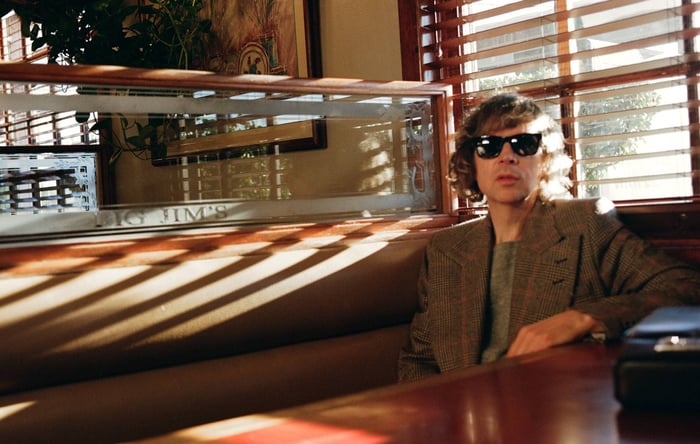
From Sea Change to a Different Kind of Record
Beck sees Ride Lonesome as closer in spirit to Morning Phase than Sea Change, though he’s careful not to draw hard borders around his albums. From the beginning, he resisted dividing his musical identities into separate projects.
He began by making folky singer-songwriter recordings on tapes, then had an unexpected breakthrough with “Loser.” At the time, there was uncertainty about whether those different sides of his work should be presented under separate names. His team decided to keep everything together, and that choice became part of Beck’s artistic identity.
The result has sometimes confused listeners. Some artists separate their electronic, rock, compositional, and singer-songwriter work into distinct acts. Beck generally didn’t. His records were presented as one wide, unruly body of work, even when one album sounded almost nothing like the next.
He acknowledges that Midnite Vultures, for example, feels like an entirely different project from Ride Lonesome. But that contrast is also the point. Beck’s catalog has never followed a single straight road. It zigzags, doubles back, changes clothes, and occasionally drives straight through a genre boundary just to see what happens.
Watch: “Ride Lonesome”
The ’90s, Sincerity, and Genre Defiance
Beck’s memories of the 1990s are filled with contradiction. Audiences claimed to want authenticity, yet open sincerity could seem “nauseating.” Artists were expected to be genuine, but not too earnest; emotional, but preferably with an ironic escape hatch.
He believes every era develops its own rules about what is acceptable. Making a record like Ride Lonesome would have been difficult in that earlier climate, when straightforward emotional music could be dismissed before it had a chance to breathe.
At the same time, Beck’s early work was aggressively genre-defiant. He mixed rap, country, noise, and symbolist poetry in ways that some listeners interpreted as insincere or evasive. For Beck, the collision itself was a form of postmodern punk rock. If volume and lyrical provocation were no longer enough to shock people, then smashing unlikely sounds together could still create friction.
The irony is that this approach required enormous effort. Beck was often labeled “slacker rock,” even though his background involved working constantly to survive. The slacker image suggested an easy suburban life, perhaps making music in a parents’ garage without needing a day job—something he says was far removed from his experience.
He also pushes back against the habit of older generations reducing young artists to a catchy label. Recalling Dean Martin introducing the Rolling Stones while visibly rolling his eyes, Beck argues that dismissing younger performers rarely ages well. He admires Conan O’Brien’s policy of not making jokes at the expense of artists from a younger generation. New musicians, Beck believes, deserve welcome and support rather than a reflexive punchline.
Watch: “Loser”
Would Young Beck Fit the Current Music Landscape?
Beck suspects there would be more room for an artist like his younger self in today’s musical landscape. The rules appear looser now, and genre-blending has become much more accepted. Bedroom music can fill arenas, while young pop and indie artists freely combine folk, country, electronic sounds, and experimental production.
Still, Beck doesn’t necessarily feel that his influence is easy to spot. His songs aren’t always natural karaoke choices because the lyrics can be too strange and idiosyncratic. Many of his peers wrote songs that almost anyone could sing after a few drinks, but Beck spent much of his early career deconstructing the songs he was making.
He also remembers encountering resistance with albums such as Odelay and Sea Change. Some listeners walked out of shows, and he lost part of his audience. It felt self-destructive at the time, but he trusted his intuition. Looking back, he believes those records may now be more popular with the people attending his concerts than albums that sold far more when they were released.
Watch: “In the Night”
Why Human Musicianship Still Matters
The making of Ride Lonesome was deliberately physical. Most of the songs were recorded live in a room with five musicians playing together in real time. No punches were pulled, and the performances weren’t endlessly corrected. The band simply occupied the same space and captured what happened.
Beck isn’t claiming that live recording is inherently superior to programming beats on a laptop. He sees value in both approaches. But he feels increasingly drawn toward the unpredictable chemistry that happens when people make music together.
That attraction also explains his interest in orchestras. For a period, he attended performances almost every week, drawn to the strange beauty of dozens of people gathering in one room to create something that could technically be reproduced with a device in your pocket.
An orchestra, to Beck, feels beautifully indulgent and counterintuitive in an age devoted to optimization. Technology brings extraordinary benefits, but each new step can also mean losing something difficult to name. He held out from buying an iPhone for years and jokes that he was better off—and that his eyes were better.
A Tour Designed as Theater, Not a Rock Show
The live presentation for Ride Lonesome is expected to follow the album’s atmosphere rather than recreate a conventional Beck rock concert. He describes the tour as slow, dark, remote, and filled with a sense of “otherness.”
Instead of a straightforward band setup, he wants something closer to a theater production directed by Robert Wilson. That vision suggests a performance built around mood, space, and movement—a world audiences enter rather than simply watch from the crowd.
Joey Waronker, who played drums on the album and joined Beck during the orchestral performance at Royal Albert Hall, remains a longtime collaborator. Beck admits Joey is busy but says the two musicians always play together when the opportunity appears.
What Comes After Ride Lonesome?
As for the next album, Beck says he is always juggling several projects. Some records have been simmering for years, waiting until they are ready.
That has been his pattern before. When Sea Change appeared, listeners wondered where it had come from, but Beck had been developing music in that direction for more than a decade. Some of its songs were already ten years old when the record arrived.
So, will there be another seven-year gap? Beck hopes not. But his music has never been governed by a strict calendar. The songs arrive when they have something to say—and when he’s ready to fully live inside them.
The album Ride Lonesome is scheduled for release on September 18 through Capitol Records, with a North American tour beginning September 22.
Beck’s Ride Lonesome sounds like the work of an artist finally allowing himself to say the quiet parts out loud. After decades of disguises, detours, jokes, and genre collisions, the directness feels less like a retreat than a hard-won victory. Which Beck era speaks to you most—the restless shape-shifter or the open-hearted songwriter?
FAQ
- What is Beck’s Ride Lonesome about? Ride Lonesome is a deeply emotional record focused on heartbreak, romantic loss, losing loved ones and friends, changing life stages, and learning how to let go.
- Which Beck albums are most closely connected to Ride Lonesome? Beck describes the album as being especially related to Morning Phase, while its acoustic and emotionally sweeping qualities also connect it with Sea Change.
- Who played on Ride Lonesome? The album was made with Beck’s original touring band from the 1990s, the musicians associated with Sea Change and Morning Phase. Joey Waronker also played on the record, while Nigel Godrich handled the mixing.
- Why does Beck prefer live musical performances? Beck is drawn to the unpredictable chemistry of musicians playing together in one room. He values the human exchanges, imperfections, and real-time reactions that can disappear when music is heavily programmed or edited.
- What will Beck’s Ride Lonesome tour be like? Beck says the tour will be unlike his previous shows, with a slow, dark, remote atmosphere. He envisions something closer to an immersive theater production than a traditional rock concert.
For a lasting way to celebrate Beck’s eras of reinvention, browse your favorite album cover poster designs at Architeg Prints. They bring a little record-store nostalgia to your walls without turning your room into a museum.
 | DISCOUNTGET 30% OFF*Use code on your next order:
|
* This post may contain affiliate links, meaning we earn a commission if you make a purchase through these links, at no additional cost to you.