Better Than Yesterday Review: Lebra Jolie’s Flex Album With a Knife Inside

 See more Architeg Prints stories on Google.
Better Than Yesterday Review: Lebra Jolie’s Flex Album With a Knife Inside
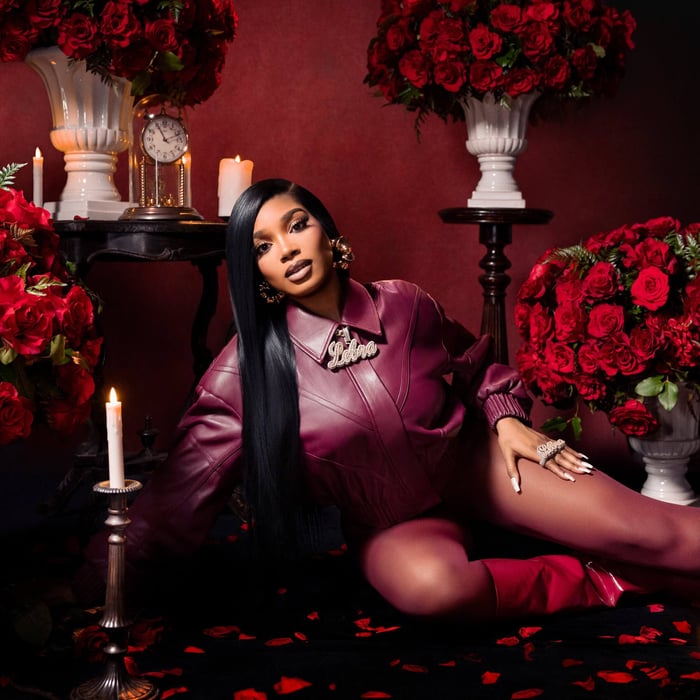
Better Than Yesterday is a freestyle-built rap album that swings from luxury demands to gut-level family pain—and the contrast is the whole point.
First, let’s be honest about what this album is betting on
Lebra Jolie raps like she’s mid-thought, not mid-performance. The whole album feels like she walks into the booth, hears the beat, and starts talking in rhythm before the second hi-hat lands. That’s not a cute myth you tell in press runs—it’s audible as a method.
And on Better Than Yesterday, that method is the main character. When it hits, she sounds like she’s confessing and clowning in the same sentence, sliding from “I’m up” to “I’m not okay” without announcing the genre switch. When it misses, you can hear the downside of freestyle life: she’ll cling to a single idea for a full track like she’s waiting for the next line to arrive in the mail.
I thought this was going to be a straightforward “money, body, attitude” project—then the first track happened and messed up that assumption.
“My All” opens the door way too wide—and nothing else matches it
The most ambitious thing on Better Than Yesterday is track one, “My All.” It starts with Jolie thanking God, then—almost in the same breath—admitting she’s thought about suicide. No dramatic pause. No swelling strings begging you to take it seriously. Just a blunt statement dropped like it’s part of the weather.
From there, she stacks real-life weight: food stamps, church-paid rent, the slog of a five-year Section 8 waiting list, fathers removed from homes, whole families getting hollowed out by addiction. The writing (or, fine, the talking-into-a-mic) doesn’t feel like she’s trying to craft an “important song.” It feels like she’s finally letting the camera point where it actually hurts.
“Is we the new age slaves?/Did we all get played?” — Lebra Jolie
That question doesn’t float by as rhetorical. It sits there and stares at you.
DJ Montay’s production choice is the real trick: it stays low, warm, almost restrained. No soapbox drums. No inspirational choir. It refuses to over-dramatize, which makes the details hit harder. Honestly, “My All” could’ve been the whole project—an EP where she keeps pulling that thread until it snaps.
Instead, it’s track one… and the rest of the album mostly chooses a different mission. I’m not saying that’s wrong, but it’s a lopsided dare: “Here’s my biggest song first. Now watch me do something else for a while.”
After that, the album swerves into sex and money—and commits to the bit
Coming off “My All,” the rest of the tracklist makes a decision: this album is going to live in the world of sex, cash, and who’s paying. Not as occasional flexing—more like a full operating system.
- “From the Front” goes straight for luxury lust: she wants both legs behind her head in an AMG. It’s not subtle, and it’s not trying to be.
- “Cowgirl” flips the rodeo into a regional kink anthem, with Houston flavor baked in—Johnny Dang grills get name-dropped, and there’s a Smith & Wesson reference tossed in like seasoning.
- “Whole Thing” is her thesis in one line: “Fuck that fifty-fifty, pay the whole thang.”
- “Off Yo Chest” circles back with Bottega on her feet and fifty inches of hair, like she’s re-stating the brand identity for anyone who missed the memo.
This middle stretch shares a beat DNA—mid-tempo thump, comfortable pocket, nothing too weird. Producers like Vando, Warro, and Kutta Beatz (heavy presence here) keep the sound cohesive, almost stubbornly so.
Jolie sounds good on these tracks. Here’s the catch: she also sounds the same on these tracks. That’s the tradeoff the album keeps making—consistency over surprise. And after the third “pay for it” variation, the financial-dominance angle starts running out of new ways to say the same sentence. Because she’s freestyling, the lines don’t always get revised into something that sticks to your brain. The vibe carries the songs; the quotes don’t always survive the replay.
I’m not even mad at the theme. I just kept waiting for one of these flex cuts to twist the knife the way “My All” did.
The competition tracks sharpen her tone… then sometimes go dull on purpose
The “I’m better than you” lane shows up with more bite, but it also hits a ceiling fast.
“i8” counts up to eight and dares anyone to match her. Standard competitive rap energy—fine. Then she takes a shot at another woman with a line about her stomach looking like she’s been drinking beers at the store while her rent is late. It’s supposed to be funny, I think, but it lands as cruelty without the cleverness. There’s no twist, no wordplay payoff—just meanness stated plainly. That’s one of the few moments where the album’s attitude stops feeling entertaining and starts feeling small.
“Turn Me Up” works harder and gets rewarded for it. There’s real vinegar in the part about someone sleeping with her baby’s father and catching feelings. And she drops what might be the meanest and funniest line on the record:
“How you gave your pussy up to a rich nigga and still left with nothing?”That’s the kind of insult that actually has architecture to it—it’s not just a slap, it’s a whole argument in one breath.
“F’in Wit Me” has the cleanest hook of the bunch, but it also keeps repeating the same single claim without developing it into a second idea. It’s catchy, but it’s stuck in place.
Then the Diamond remix widens the map—Houston to Atlanta—but the argument doesn’t change. Different scenery, same speech.
If you like repetition as a flex (like mantra rap, but with acrylic nails), you’ll call this consistency. If you like progression, you’ll call it treadmill music. I land somewhere in the middle—and I’m not totally sure that’s what Jolie wants me to do.
“Don’t Panic” is a legacy link-up that refuses to evolve (and that’s the point)
“Don’t Panic” pairs Jolie with Trina over a Hitmaka beat that samples Trina’s own “Da Baddest Bitch.” The result feels like two eras standing in the same room, neither one trying to impress the other.
Trina’s verse is brief and exactly what you’d expect: direct, confident, no bargaining. And that’s fine—because the track doesn’t ask either woman to adjust. Nobody’s softening their edges to make a “moment.” It’s more like a handshake between veterans of the same attitude.
You could argue that makes the song a little static—like it’s posing for a photo instead of moving. But the stubbornness is also the appeal. This track isn’t here to reinvent anything. It’s here to underline lineage.
“Girl Math” is where the album finally turns into a person, not just a posture
Then “Girl Math” shows up and loosens the whole project’s collar.
This is the funniest, most human track on the record—not because she’s doing stand-up, but because she’s finally doing specificity. Jolie runs through the messy logic of:
- ignoring a man you like (because feelings are embarrassing),
- swiping his card at the mall like it’s a natural resource,
- deciding an outfit is still “new” if you haven’t taken pictures in it,
- funding your lifestyle off a man while posting about independence online.
When she says,
“My girl math is knowin’ if I want it, I’m gon’ really get it,”it lands because there’s a character behind it. Not a generic “bad bitch” silhouette—an actual person with contradictions, which is always more interesting.
Vega’s production gives her more melodic room than anywhere else on the album, and she actually uses it. It’s the rare moment where her freestyle approach feels like freedom instead of limitation. The flex material elsewhere needed this kind of detail—these little scenes that make the bravado feel lived-in, not copy-pasted.
On second listen, “Girl Math” ended up feeling more important to the album than some of the “serious” songs, because it proves she can build a whole world with a few small choices.
“Grandma’s House” is the album’s real emotional center—and it doesn’t ask permission
And then there’s “Grandma’s House,” which is the one that actually guts you.
Jolie raps to her grandmother—someone she loves, someone she hasn’t visited in a long time—and she never fully explains why. The reasons stay half-buried, which makes it feel more real, not less. She asks,
“How you love me and do what you did?”and the question hangs there with no neat resolution.
She mentions being on Adderall after Adderall trying to sleep. She wonders why she’d know her worth when nobody showed it to her. Then she drops the hardest line on the album:
“How you supposed to be my blood, but you stood over me?”
There’s no flex armor around it. No posture. Just a woman on a Ybonthetrack beat talking to someone who hurt her and someone she misses at the same time. That overlap—love and anger sharing the same couch—is the album’s most honest sound.
Put “Grandma’s House” next to “My All,” and it becomes obvious: Jolie has a whole record’s worth of this material in her. The only question is whether she trusts it enough to center it next time.
The early-2000s Southern sample palette fits her… but the album’s ratio doesn’t
One thing this album does smartly is pick a sample palette that matches Jolie’s voice. She leans on early-to-mid-2000s Southern rap references—Trillville’s “Neva Eva,” Gucci Mane’s “Freaky Gurl,” Trina—so the production stays rooted in a specific time and place. It sounds like home. It sounds like Fifth Ward because she is Fifth Ward, and the beats don’t try to sand that off.
The problem isn’t the sound. It’s the density.
Fifteen tracks with two skits still leaves eleven full songs of bragging and four that cut deeper. And the bravado cuts don’t differentiate themselves enough to earn that ratio. There’s a version of this album where fewer tracks would’ve made the repetition feel like aesthetic commitment instead of creative convenience.
Jolie is fluid and charismatic—no argument there. Her freestyle method gives her that off-the-cuff electricity, like she’s right there in the room. But it also means she rarely revises toward precision. Sometimes the first thought is the right thought. Sometimes it’s just the first thought.
What I wanted—maybe unfairly—was either:
- fewer “pay the whole thing” variations, or
- more tracks like “Girl Math” where the personality behind the posture gets to breathe.
When she lets that happen, this becomes music you remember instead of music you nod to.
Favorite tracks (the ones that actually stay with you)
Not the “best songs” in some abstract sense—the ones that left a mark after the album ended:
- “My All”
- “Girl Math”
- “Grandma’s House”
And yeah, overall, I walked away feeling this landed above average in impact—mostly because the highs aren’t small highs. They’re “oh, you can really do that” highs.
Conclusion
Better Than Yesterday is basically two albums sharing a closet: one is a sharp, funny, very Houston flex project, and the other is a brutally personal record hiding in plain sight. The flex side wins on quantity; the personal side wins on gravity. When Jolie stops performing confidence and just talks—really talks—the music stops being “content” and starts being evidence.
Our verdict: If you like Southern rap swagger, transactional romance bars, and a rapper who sounds like she’s freestyling straight out of her actual day, you’ll enjoy this album and probably quote it. If you need tight editing, evolving topics, and hooks that build instead of looping, you’re going to get impatient and start rearranging the tracklist in your head like you’re her unpaid A&R.
FAQ
- Is Better Than Yesterday fully written or freestyled?
It plays like a freestyle-first album—Jolie’s delivery often feels immediate, like she’s reacting to the beat in real time rather than reading polished verses. - What’s the most serious song on Better Than Yesterday?
“My All” opens with huge life-and-death stakes and covers poverty, housing struggles, and neighborhood reality without dressing it up. - Which track shows the most personality (not just flexing)?
“Girl Math” is the loosest and most character-driven moment—specific, funny, and self-aware in a way the other flex tracks don’t always reach. - Does the Trina feature change the sound of the album?
“Don’t Panic” feels more like a lineage stamp than a pivot—both artists hold their ground rather than blending into something new. - What should I listen to first if I’m unsure about the album?
Start with “My All,” then jump to “Grandma’s House,” then “Girl Math.” That trio tells you what Jolie can do when she aims beyond pure bravado.
If you’re the type who treats album art like part of the music, you can shop a favorite album cover poster at our store here: https://www.architeg-prints.com. It fits this record’s vibe—bold on the surface, more loaded the longer you stare.
 | DISCOUNTGET 30% OFF*Use code on your next order:
|
* This post may contain affiliate links, meaning we earn a commission if you make a purchase through these links, at no additional cost to you.