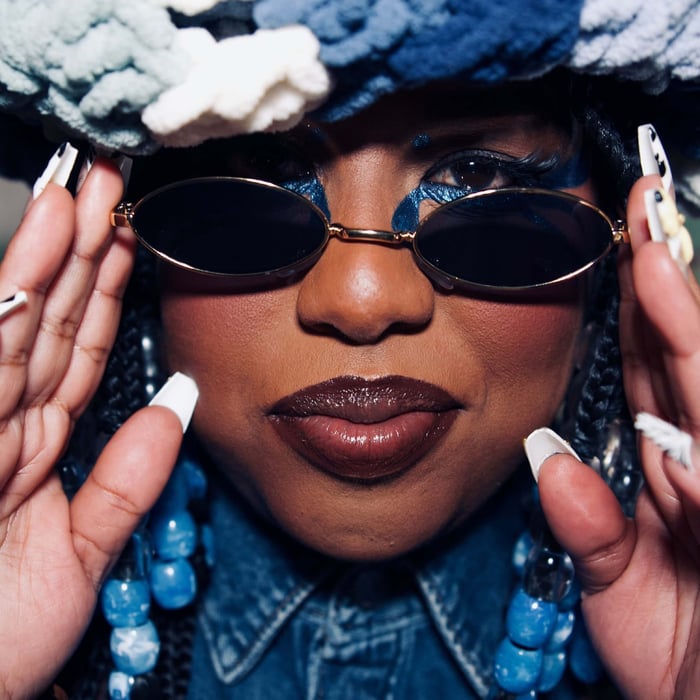
Words Are Spells Review: Witch Prophet Turns Healing Into a Firewall


 See more Architeg Prints stories on Google.
Words Are Spells Review: Witch Prophet Turns Healing Into a Firewall
Words Are Spells is Witch Prophet’s blunt post-crisis album—family voices, tight beats, and hard boundaries that slowly open into warmth without begging for approval.
This album isn’t “vibes”—it’s a permission slip with teeth
Some albums want to be your safe space. Words Are Spells feels more like Witch Prophet taped off the room, posted rules on the door, and dared you to pretend you can’t read.
I’m listening to this like it’s a document: not of suffering, but of what happens after suffering stops being cute and starts being administrative. The whole thing keeps circling one question in different outfits—who gets access to her, and who doesn’t. And no, she’s not asking nicely.
The backstory is baked into the sound, not stapled on
Etmet Musa spent years telling doctors something was wrong. Seizures since childhood, a long fight to get taken seriously, and then—around 2013—temporal lobe epilepsy finally named out loud. Even then, it didn’t seem to come with the kind of care that actually believes a Black queer woman inside Canada’s medical system.
Her previous record, Gateway Experience, wasn’t subtle about what was happening in her body. It carried that declassified CIA “Gateway” idea—sound and consciousness and manipulation—like a flashlight in a tunnel. It traced symptoms in real time: focal aware seizures, déjà vu, waking nightmares. Then, a few months after that album landed, she got diagnosed with a brain tumor. Surgery followed. And right before they put her under, she kept repeating the Amharic word “Temesgen”—“Thank God”—like a rope in her hand.
Words Are Spells is what comes after the emergency finally stops ringing. Not relief exactly. More like: okay, now we do boundaries.
(And honestly, I wasn’t sure on first listen whether the record would stay in “healing manifesto” mode the whole time. On second pass, it clicked: it’s not preaching. It’s enforcing.)
The title track opens like real life: messy, overlapping, and specific
The album starts with her aunts—Elsa Tesfay and Selam Tesfaye—talking over each other about Amitabh Bachchan and Madhuri Dixit. It’s mid-conversation, like someone accidentally captured a kitchen moment and decided it mattered enough to keep. Because it does.
Then it slides into something more pointed: her aunts translating an Ethiopian protection prayer. There’s even this small human stutter where one of them won’t say “hell,” and the other one basically shouts it for her. That tiny detail tells you what the album’s going to do all the way through: spirituality, yes, but not the pretty Instagram version. The kind with family quirks, discomfort, and commitment.
And the music backs up the prayer with immediate consequence. Right after, she comes in with a line that doesn’t blink: “I got a blessing for me and a curse for you / If you do me wrong, watch your back.” If you were hoping for soft-focus forgiveness, you’re in the wrong room.
Arguable take: that’s not just confidence—it’s Witch Prophet making it clear the “recovery era” isn’t about being more pleasant.
“Akisté” is the album’s warm center—and it’s warm because it’s earned
“Akisté” brings in four of Leilani’s aunts—Saba, Helen, Selam, and Sarah Tesfaye—singing a graduation song they recorded for her son at a surprise party. The recording sits there like proof of community, not decoration.
You can hear how big these Ethiopian and Eritrean graduation celebrations are meant to be, how they carry the weight of weddings. The song praises Musa as the mother, and underneath it she sings: “I’ve come a long way / With the odds stacked against me / Struggle every day.”
This is the album’s softest moment, but it’s not “soft” like surrender. It’s soft like being held up by people who are proud of you and aren’t embarrassed to say it. The pride isn’t one-directional—her family’s pride aims right back at her, dead-on.
Arguable take: “Akisté” hits harder than most big “anthem” tracks because it refuses to inflate itself. It just stands there and lets the love show.
Side A: self-produced claustrophobia that refuses to romanticize pain
Side A is self-produced by Musa, and it stays close. Tight. Almost boxed-in on purpose.
The drums are spare, arrangements stripped, and her voice sits right against the beat like there’s no oxygen between them. That choice feels intentional: not “minimalist because aesthetic,” but minimalist because she’s documenting a mental space where extra ornament would be dishonest.
“Temesgen” loops “I’m locked in this cage” over a thinned-out rhythm with Feven Kidane’s trumpet. And I like that the trumpet doesn’t show up as some uplifting rescue device. It doesn’t soften anything. It just fills the same room as the cage, like: yes, beauty can exist in confinement, and no, it doesn’t unlock the door by itself.
Then “Breathe,” co-produced with SUN SUN, lets in a little space—like cracking a window you didn’t realize was sealed shut. The words are plain and sharp:
- “Constant thinking, constant fretting, second guessing”
- “Am I good enough?”
- “Is this good enough?”
- “Just breathing”
She delivers it flat, which is exactly the point. If she sang it like a triumph, it would be lying. The third verse returns to those same phrases, because anxiety doesn’t care that you’re tired of hearing it.
Mild criticism, though: there are moments on Side A where the stripped approach flirts with sameness. The restraint is meaningful, but it occasionally feels like she’s choosing “no flourish” so hard that the song starts to blur at the edges.
Arguable take: Side A isn’t trying to be “the heavy part.” It’s trying to be the part where you can’t even afford drama because you’re busy surviving.
Side B arrives fast: SUN SUN opens the room and the light changes
SUN SUN takes over production duties on Side B, and the shift is immediate—audible within seconds. It’s not louder, exactly. It’s wider.
Izzy Collins’ guitar and Tara Kannangara’s trumpet broaden the frame on “Thoughts Are Magic,” “Secret Garden,” and “Forwards Backwards.” The warmth here isn’t sentimental; it’s dimensional. Side A held its breath. Side B exhales and starts walking.
“Thoughts Are Magic” rides a mid-tempo groove that sits between trip-hop and neo-soul, and it’s one of the album’s smartest misdirects. The refrain—“words are spells and thoughts are magic / do the work, it’s automatic”—could easily read as self-help wallpaper. And for a second, I worried it would. But she keeps hammering the second half in a way that refuses to let you coast. The track doesn’t claim dreams arrive because you manifested hard enough. It pushes effort and spiritual grounding: “Push aside the ego and find who you be with the spirit as your guide.”
There’s also an interview link floating around out there that backs up this stance, but the point is: the song itself enforces it. No magical-thinking loopholes. No “just think positive” escape hatch.
Arguable take: Side B isn’t “the happy half.” It’s the part where she finally has the energy to be blunt in full sentences.
“Golden,” “Free,” “Secret Garden”: three ways to shut the door
This trio feels like Witch Prophet workshopping boundaries in real time—each track a different method of refusing contamination.
“Golden” is the quick cut
“Golden” is the most clipped song on the record, basically a brisk dismissal of someone trying to pump fear into her space. She drops a line like “I jump dimensions in a blink of sunshine / Call it the Midas touch / I’m golden” and the whole vibe is: I see what you’re doing, it didn’t work, goodbye.
Arguable take: “Golden” isn’t bragging—it’s the sound of someone finally immune to a certain kind of manipulation.
“Free” is even colder—and that’s the point
“Free” goes further, and it’s not trying to be kind:
- “I need freedom from you”
- “From your lies”
- “From your misery”
- “From your vibe”
- “You’re no friend for me”
No preamble. No “I wish you well.” Just a clean sever. If that feels harsh, good—that’s what it feels like when someone stops negotiating their sanity.
Arguable take: “Free” is a break-up song aimed at a person, a pattern, and an entire atmosphere at the same time.
“Secret Garden” sets visiting hours instead of burning the place down
“Secret Garden” is the fullest of the three, and it’s where the album’s protective energy becomes architecture. She’s not just slamming the door; she’s defining the property line:
“Welcome to my garden… if you are not ready, don’t walk up / Don’t enter ‘cause I value my peace… My mind, my body, my soul, my time.”
Where “Golden” and “Free” shut things down, “Secret Garden” posts rules. And the second verse—“dreams showing and telling me to be careful of who I trust”—lands differently when you remember she spent years being dismissed by medical professionals about what was happening inside her own skull. Being gaslit like that teaches you caution the hard way.
Uncertainty moment: I can’t tell if “Secret Garden” is meant to be an invitation with conditions, or a warning dressed up as poetry. It kind of works either way, which might be the point.
Arguable take: “Secret Garden” is the album’s actual thesis, because it shows boundaries as care—not punishment.
“Forwards Backwards” is the album’s raw nerve, and it refuses to flinch
The most exposed song here is “Forwards Backwards,” because it’s not just about health—it’s about judgment.
She brings up what people tell her she should repent for:
- loving a girl who loves her too
- having a child before “the groom”
And then she answers the accusation four times: “That’s not true / I don’t believe you.”
That repetition matters. The song doesn’t just say condemnation is cyclical—it builds the cycle into the structure. The questions circle too: “Where do we go in the end? / Is this the end? / Does it even end?” It feels like hearing the same critique again and again, and having to push past it again and again, until pushing past becomes muscle memory.
Collins’ guitar and Kannangara’s trumpet give the track an unhurried pulse that keeps the confrontation from tipping into melodrama. That’s a choice. The song could’ve gone big and theatrical; instead it stays steady, like she’s refusing to grant the condemnation any cinematic glow.
Arguable take: “Forwards Backwards” is braver than any “confessional” ballad because it doesn’t ask for sympathy—it asks for space.
“Love Shock/In Love” cashes the check the album’s been writing
After all that guarding and boundary-setting, “Love Shock/In Love” turns into want—plain and physical:
“Touch me teasing, feel me all over my body / Make me feel like I’m your one and only.”
This track matters because it proves the boundaries weren’t a wall around a dead zone. They preserved her ability to desire without bracing for impact. The desire is the payoff. Not the climax in a dramatic sense—more like: okay, the system is stable again, and now feeling can come back online.
Arguable take: this is the only kind of “sexy” song that feels adult—because it arrives after self-protection, not instead of it.
The arc is short, obvious, and smart—and I respect it
The whole record runs about 27 minutes, and it holds together because it has an actual shape: Side A’s self-produced interiority opening into Side B’s fuller, warmer arrangements. That split between Musa’s production and SUN SUN’s is the smartest decision here. It gives an album about recovery a real arc—constriction, then release—without her ever needing to announce “this is the part where I heal.”
And yes, there are feebler stretches where the directness risks flattening into plainness. But the strongest songs earn the blunt approach. Plus, Musa’s voice—low, settled alto, every syllable delivered with even conviction—smooths over the moments that might otherwise sag.
I came in expecting a “post-surgery triumph” record. What surprised me is how much this sounds like someone who’s done being interpreted by other people. These songs say what they mean and quit. It’s almost rude. It’s great.
My favorite tracks
- “Words Are Spells”
- “Forwards Backwards”
- “Temesgen”
Conclusion
Words Are Spells isn’t trying to impress you with complexity; it’s trying to stop you from wasting her time. The family recordings aren’t sentimental filler—they’re her receipt. The production shift isn’t a gimmick—it’s the sound of a door opening because she decided it could. And the boundaries aren’t branding—they’re survival turned into policy.
Our verdict: People who like intimate, spiritually grounded R&B/trip-hop-adjacent music with real-life edges will love this—especially if you respect an artist who’d rather cut you off than explain herself twice. If you need every song to “go somewhere” or you treat self-protection as an attitude problem, this album will feel like a locked gate with a very clear sign on it.
FAQ
- Is “Words Are Spells” a concept album or just a theme?
It plays like a lived-through concept: protection → confinement → exit → rules → desire. Nobody’s narrating it, but the sequencing makes the point. - Why do the family recordings matter so much?
They aren’t “intro skits.” They set the terms: lineage, protection, pride, and the very specific sound of being held by community. - What’s the biggest difference between Side A and Side B?
Side A is tight and close-mic’d, self-produced and claustrophobic. Side B (handled by SUN SUN) widens the room with guitar and trumpet—more warmth, more air. - Is the album mostly about illness and recovery?
That’s the engine, but the destination is boundaries—who gets access, who doesn’t, and how she keeps her peace without becoming numb. - Which track hits the hardest emotionally?
“Forwards Backwards.” It loops condemnation and refusal until refusal becomes the whole structure.
If you want something physical to match the album’s “keep out / come closer” energy, you can always shop a favorite album cover poster at our store—quietly, tastefully—here: https://www.architeg-prints.com/
 | DISCOUNTGET 30% OFF*Use code on your next order:
|
* This post may contain affiliate links, meaning we earn a commission if you make a purchase through these links, at no additional cost to you.