Domani’s Hot Seat Review: Therapy Talk, Petty Disses, and Real Life Collide


 See more Architeg Prints stories on Google.
Domani’s Hot Seat Review: Therapy Talk, Petty Disses, and Real Life Collide
Hot Seat is Domani trying to be a whole person while the rap internet begs him to be a headline.
Start Here: This Album Sounds Like Two Different Rooms
I put on Hot Seat expecting one long, messy response to the loudest feud in rap right now. What I got instead was weirder: a record that keeps switching masks mid-sentence, like Domani’s trying to prove he can multitask under pressure—and kind of resenting the fact that he has to.
The T.I. and 50 Cent mess is basically unavoidable at this moment: a failed Verzuz situation, memes swirling, Tiny Harris getting dragged into it like she’s an accessory, and T.I. firing off multiple diss tracks. Then the kids step in. King Harris drops “Droptop” in a shirt printed with 50’s late mother’s face—which is the kind of decision that feels less like strategy and more like “somebody take the phone away.”
Domani Harris, 24, goes even further. He drops “Firebug,” a near-four-minute diss that samples an OutKast 2000 hit and speaks directly to 50 Cent’s mother, Sabrina Jackson, who died in an apartment fire when Curtis was eight. Then he follows it with “PU$Y,” interpolating G-Unit’s “I Smell Pussy” over a Turbo beat. Both of those end up sitting on Hot Seat as tracks six and seven… surrounded by songs that don’t care about 50 Cent at all.
That’s the album in a nutshell: half private journal, half public street argument. And no, it doesn’t fully fuse.
The Diss Records: “Firebug” Is Calm in the Most Unsettling Way
Here’s what makes “Firebug” hit: Domani doesn’t yell. He doesn’t do the usual diss-record thing where the rapper tries to win by volume. He opens by asking Sabrina Jackson if she’s proud of the way Curtis has carried the family name. That question is staged as polite, but it’s weaponized politeness—the kind that makes you lean back because you can tell the speaker is enjoying how uncomfortable it’s going to get.
He tosses a line about cats having nine lives—then points at the nine times 50 was shot. And the way he delivers it matters: the bar doesn’t sprint by. He leaves the math sitting there like a stain.
Then he calls 50 a “firebug,” tying Curtis to the fire at his ex-girlfriend’s home. By the second verse he’s calling 50 illiterate and dragging in Daphne Joy’s abuse allegations. It’s not subtle. It’s not “clever.” It’s direct, researched, and intentionally nasty.
What surprised me is how controlled it feels. On first listen I expected pure chaos—some rich kid swinging wildly because he can. But “Firebug” is paced like Domani knows exactly where the sharp edges are, and he’s placing them carefully.
Arguable take: “Firebug” works because it resists hype. If he’d screamed, it would’ve sounded like cosplay.
“PU$Y” Tries to Swing Harder—and Slips on Its Own Momentum
“PU$Y” is built differently: faster pocket, Turbo beat, more shove than glide. And honestly, this is where Domani starts tripping over his own punches. The energy is higher, but the aim gets looser.
There’s an Eminem jab—“Em, what the fuck is this? Is this yo mans?”—and yeah, it’s funny in that “everybody look over here” way. But the stuff that lands isn’t the comedy. The Marquise child-support reference and the Daphne Joy namecheck hit harder because they feel sourced, not invented. He’s not making up bogeymen. He’s pulling receipts out of the public mess and throwing them like darts.
Still, if “Firebug” feels like a scalpel, “PU$Y” is a handful of nails. It’s not that nails can’t do damage—it’s that you can’t pretend it’s finesse. This is the mild downside of Hot Seat: Domani’s most aggressive mode isn’t always his most effective one.
Arguable take: “PU$Y” is the louder diss, but it’s the weaker song—volume doesn’t equal impact.
“Telephone” Is the Best Song Because It Escapes the Surname
The best track on Hot Seat is “Telephone,” and it earns that spot by refusing to be about the feud—or even about being T.I.’s kid. It’s about the boring, grinding, soul-sanding reality of being alive and responsible while everyone else treats you like a footnote.
It opens with a voicemail tone, then drops you into motion: Domani walking into a meeting, bills stacking up, the real mileage on his Jeep. He wants a feature from Jermaine (Cole), but he keeps getting introduced as “the nigga who was on that TV when he was knee-high” or “some kin to T.I.” That’s not just annoying; it’s identity theft by casual conversation.
The second verse turns into a list of obligations that feel physical:
- call his mom back
- FaceTime his girl so she knows he isn’t cheating
- call his brother and switch up his slang so they can actually understand each other
Then he says, “Success became the reason I don’t feel shit,” and it doesn’t play like a brag or a pity line. It lands like exhaustion—the kind you don’t post about because you barely have the energy to notice it.
By the third verse he’s praying, asking God why He’d threaten to take his mama from him. And after two verses of missed calls and emotional errands, that question burns. KP’s production stays sparse enough that Domani can’t hide behind effects. His voice has to do the heavy lifting, and it does.
I’m not even sure Domani meant “Telephone” to be the album’s centerpiece, but it behaves like one anyway.
Arguable take: “Telephone” is the only moment where the album stops trying to prove something and just tells the truth.
The Early Stretch: Basement Memories and Small Losses That Add Up
Before he gets to 50 Cent or prayer or the record’s big swings, Domani puts you in a grandmother’s basement and starts cataloging small losses like he’s stacking evidence.
Sleeplessness. First fight. First song. A doctor delivering bad news.
“Shedding Skin” is built on Natra Average and Vique production that stays thin on purpose. It’s not trying to turn Domani’s life into a motivational poster or a “healing journey” commercial. The point is the unguarded tone—he sounds like he’s talking to himself and forgetting you’re there.
Mid-verse he accelerates into: “My daughter don’t need no excuses / Fuck your game, I burn it down,” and the speed-up feels earned. Not performed. Like he got too honest and his mouth had to catch up with his brain.
Then “F’d Up” comes in even blunter. The chorus is basically the whole point: “I’m fucked up in the head right now / Can’t control what I feel right now.” No clever framing. No metaphor. Just a straight admission repeated until it starts sounding like a fact.
Kuntry King shows up with a guest verse that drops a heavy West Side gravity into the track—one of the few moments where Hot Seat nods toward those Grand Hustle trunk-selling days from the mid-’90s. Kuntry’s lines are plain and loyal: not knowing who’s really a friend, stacking notes with Benjamin, the whole West Side willing to ride. The verse doesn’t try to be anything more than what it is, which is exactly why it works.
Arguable take: the album’s “small” songs (“Shedding Skin,” “F’d Up”) feel bigger than the diss records because they have actual stakes that don’t expire with the news cycle.
Young Thug’s Hook: A Ghost in the Booth
The eeriest moment on Hot Seat is Young Thug on “Devil Needs No Help.” And it’s not just because the J.U.S.T.I.C.E. League production sets a certain mood—though it does.
It’s Thug’s voice.
He took a non-negotiated plea deal in October 2024 after over two years locked up during the YSL RICO trial, and on this hook he sounds thin in a way you can’t fake. Like part of him never left the courthouse. It’s a haunting texture: not dramatic, not “I’m back,” just… altered.
Domani, meanwhile, tilts between spiritual conviction and beef in the same breath. He can go from warning about the devil to taunting Curtis Jackson inside the same verse without stitching the seam. That swerve feels intentional, but it also feels like the album’s problem in miniature: he keeps trying to hold two emotional temperatures at once.
I kept waiting for the song to choose a lane—either get holy or get petty—but it insists on being both. Maybe that’s the point. Or maybe it’s just indecision dressed up as complexity. I’m genuinely not 100% sure.
Arguable take: the “devil” talk feels less like theology and more like Domani trying to give his anger a costume.
“ATL Never Scared” Is Proudly Not Deep—and That’s Why It Works
Then there’s “ATL Never Scared,” which interpolates Bone Crusher’s 2003 single—the same record T.I. appeared on—and aims for one thing only: city anthem status.
You get the side shout-outs (west, south, east), women with bottles on their heads, Domani folding clothes while talking reckless. It’s not pretending to be profound, and that’s the smartest thing it does. KP’s production bounces hard enough that any attempt at seriousness would’ve wrecked the fun.
Arguable take: “ATL Never Scared” is the album’s most honest flex because it doesn’t pretend it’s therapy—it’s just adrenaline.
The Therapy Frame Is a Tease, Not a Spine
Hot Seat opens with a therapist’s voice: “You’ve been having quite the month.” And then—almost immediately—that framing dissolves.
That’s the real snag here, and it’s not about ambition or track order gymnastics. It’s simpler: the personal songs and the 50 Cent joints live in separate rooms, and the album never builds the hallway.
On one side you’ve got Jeep mileage, the grandmother’s basement, the brother who needs you to switch your slang so you can connect. On the other side you’ve got diss records that earn their venom through research: the “firebug” accusation, the Marquise child-support number, the Daphne Joy allegations.
Both halves have their own logic. But the album doesn’t argue—musically or emotionally—that they belong together. The therapy voice at the start isn’t sturdy enough to hold both worlds. So you’re left with a split experience that you mostly accept because it’s a nine-song LP and it moves fast enough that you don’t get bored.
Domani writes better on the quiet songs and strikes harder on the loud ones. He doesn’t need to choose. But he also doesn’t quite fuse them, either.
Arguable take: Hot Seat never becomes more than its halves, and that’s a creative choice—whether Domani admits it or not.
Where I Landed (And What I’d Keep on Repeat)
By the end, I’d still call Hot Seat above average—not because it’s perfectly constructed, but because it feels like Domani is fighting for a voice that isn’t rented from his last name or borrowed from a feud.
If I’m keeping three tracks in rotation, it’s these:
- “Telephone”
- “Shedding Skin”
- “F’d Up”
And yes, I’m aware that list makes me sound like I prefer my rap with emotional bruises and minimal fireworks. Guilty.
Arguable take: the “favorite tracks” here aren’t just the best-written—they’re the ones least interested in proving anything.
Conclusion
Hot Seat is Domani trying to sit in two chairs at once: the personal chair where real fear and real love live, and the public chair where rap beef gets monetized. He doesn’t fall, but he doesn’t relax either—and that tension is the album’s actual sound.
Our verdict: People who like rap when it’s specific, weary, and a little unpolished will actually like Hot Seat—especially if “Telephone” hits you in that “I should call my mom” spot. If you only want diss records, you’ll get impatient waiting for the next shot. And if you only want healing narratives, the 50 Cent tracks will feel like someone lighting a fire alarm during therapy.
FAQ
- Is Hot Seat mostly a 50 Cent diss project? No. Two tracks (“Firebug” and “PU$Y”) are aimed squarely at 50, but the rest is personal material that doesn’t connect directly to the feud.
- What’s the most emotionally direct song on Hot Seat? “F’d Up.” The chorus is basically Domani admitting he’s not okay, without dressing it up.
- What’s the best song on Hot Seat? “Telephone.” It’s the one that makes Domani feel like a person, not a storyline.
- Does the therapy intro matter across the album? Not really. It sets a frame and then the album doesn’t commit to it, which can feel like a missed opportunity.
- Which side of Domani is stronger: personal songs or diss songs? The personal songs. The diss tracks hit, but the quieter writing is where he sounds most in control.
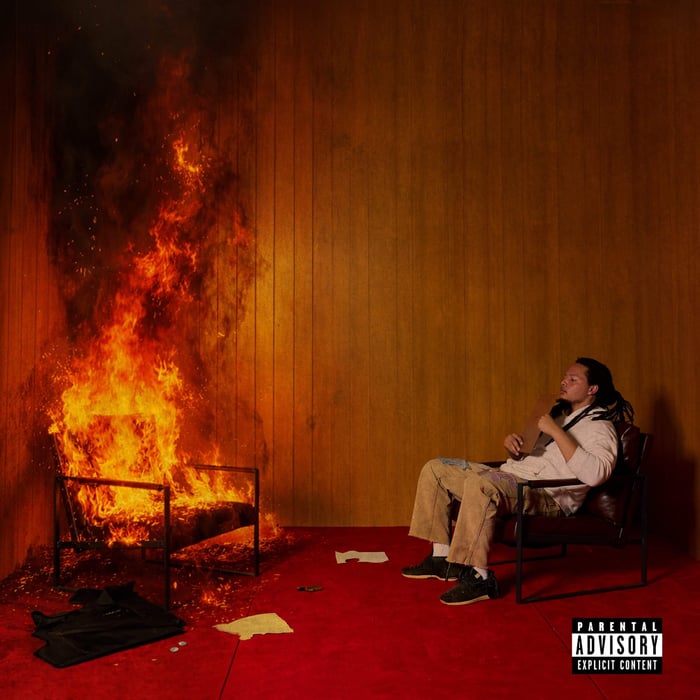
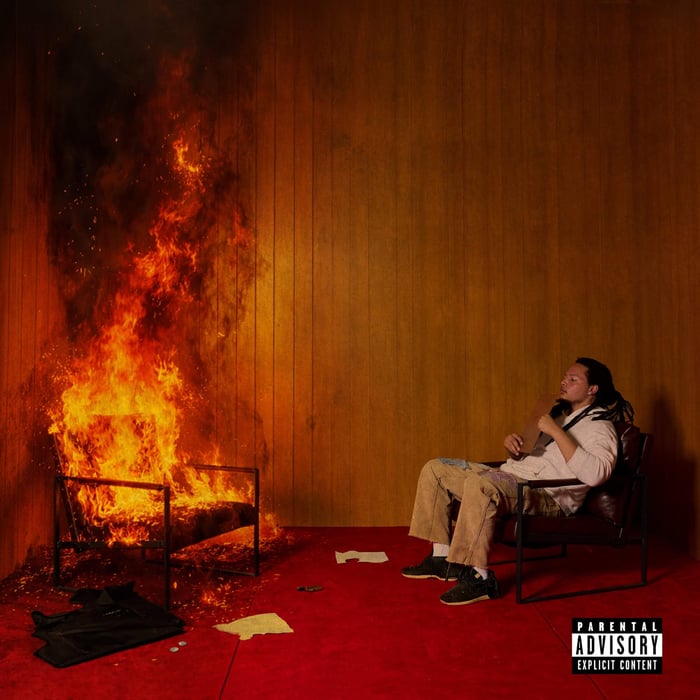
If you’re the kind of listener who misses album art you can actually live with, you can shop a favorite album cover poster at our store: https://www.architeg-prints.com. Hot Seat practically begs to be printed large—half confession, half warning sign.
 | DISCOUNTGET 30% OFF*Use code on your next order:
|
* This post may contain affiliate links, meaning we earn a commission if you make a purchase through these links, at no additional cost to you.