Call Me If: Tyler’s Flex-Vacation Rap That Secretly Cries


 See more Architeg Prints stories on Google.
Call Me If: Tyler’s Flex-Vacation Rap That Secretly Cries
Call Me If turns luxury into a coping mechanism—DJ Drama yells, Tyler brags, and somehow the most expensive moments sound the loneliest.
Courtesy of Columbia Records.
The “genre” problem is the point, not the problem
Tyler walks into this album like someone who’s already annoyed you’re about to misunderstand it. I can hear that old frustration—being treated like “rap/urban” is a consolation prize when he’s clearly building in bigger rooms than that. The vibe isn’t “please respect me.” It’s closer to: fine, I’ll give you rap so undeniable you’ll choke on the category label.
And yeah, I’m still thinking about that moment where he basically said the award felt like an insult dressed up as praise. That’s the emotional engine here: recognition that lands wrong. Like someone handing you a gift card to a store you don’t shop at—then acting like you should cry.
“It sucks that whenever we, and I mean guys that look like me, do anything that’s genre-bending, they always put it in a rap or urban category.” — Tyler, The Creator
He doesn’t fix that situation by “going pop.” He does something pettier and smarter: he makes a rap tape that acts like a rap tape, then stuffs it with oboe loops, bossa nova pivots, and travel-brochure decadence. Call Me If isn’t a request. It’s a dare.
DJ Drama isn’t a feature—he’s a framing device
The decision to pull DJ Drama into this world is the tell. Tyler doesn’t use Drama because he needs credibility. He uses Drama like a director uses lighting: to make everything feel louder, brasher, more mythologized than it technically is.
The funny part is how wrong Drama “should” sound here, at least on paper. Most Gangsta Grillz tapes live on trap drums, Southern street talk, club pressure. Tyler hands him oboe loops and bossa nova switches instead—then lets Drama roam around the mix yelling about yachts and getting fed French Vanilla like he’s manifesting luxury by shouting.
I wasn’t totally sure it would work the first time I played it. Drama’s voice can bulldoze subtle beats, and Tyler’s production can be picky about space. But Tyler clearly wants that friction. He wants the mixtape grime rubbing against the expensive fabric. It’s not “contrast” for art-school reasons. It’s to rough up the flex so it doesn’t sound like a sterile showroom.
There’s a long memory behind it, too: Tyler wanted his own Gangsta Grillz tape back when he was a teenager and Odd Future was still trying to become a retail reality. This album feels like he finally cashes that check—then writes a new one on top of it.
And there’s an extra layer: Pharrell’s In My Mind: The Prequel as a reference point, that earlier “grillz persona” idea. Tyler’s always borrowed formats like costumes. Here, he wears the mixtape like luggage.
The “rap again” impulse hits like a switchblade
Right before this album arrived, Tyler went on Instagram Live and started name-checking the stuff that made him want to rap again—Wayne’s Dedication era, Clipse’s We Got It for Cheap, Lupe’s Fahrenheit run, JAY-Z, André 3000, and Westside Gunn. That’s not trivia. That’s the map.
Because when “Lumberjack” hits, it’s not a gentle return. It’s Tyler chopping a Gravediggaz sample (“2 Cups of Blood”) into something sharp enough to wave around. It’s barely over two minutes and still manages to sound like he’s grinning while he swings. The hook isn’t the point. The posture is.
“Lemonhead” is even more telling. It opens furious—like it’s going to stay in that red zone—then the beat drops into breezier bossa nova right when Tyler starts stacking syllables. That pivot is the album in miniature: he refuses to stay in the expected mood even when the aggression would be convenient. It’s like watching someone storm out of a room… then detour into a pastry shop because they remembered they have taste.
And “Juggernaut” is where Tyler’s sense of humor turns into an artistic weapon. The Lil Uzi Vert and Pharrell pairing already feels like a flex, but then Tyler drops the Timberlands line—“so fuckin’ deadass I need some Timberlands”—and it’s so stupid it becomes perfect. He knows exactly how ridiculous it sounds. That’s why he keeps it. He’s making rap feel fun again by letting it be dumb in the right places.
Passport rap is him admitting he needed to leave
Tyler’s travel obsession isn’t just “I’m rich now.” It’s “I escaped.” Raised by his mom, Bonitha Smith, in Ladera Heights—comfortable enough, but still a box—he treats leaving Los Angeles at 20 like the real beginning of his life. And you can hear that pride in the opener: Geneva water, swim trunks sitting in the trunk of a Rolls-Royce, the namedropping of Cannes and Monte Carlo, the French Open.
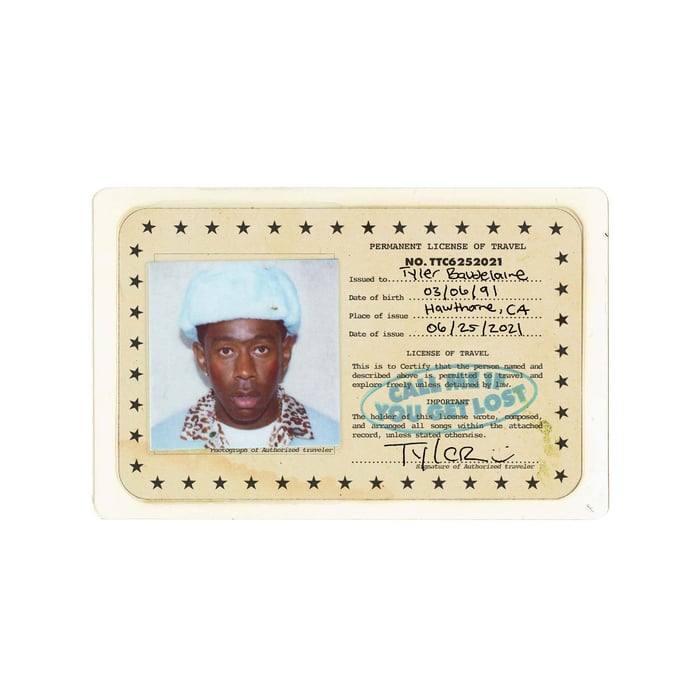
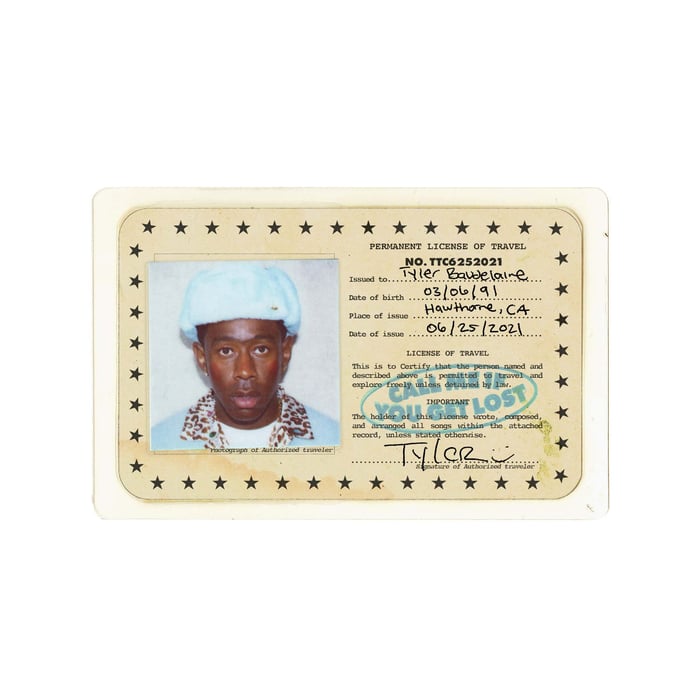
The cover—built from old passport and travel document imagery—locks it in. This isn’t a random aesthetic; it’s Tyler building a myth around movement. He even names the persona: Tyler Baudelaire, the French poet who couldn’t stay still. That’s not just “I read a book once.” It’s Tyler saying restlessness is his whole religion.
I’ll be honest: at first, I rolled my eyes at the travel flexing. It can sound like rich-kid scrapbooking if you catch it on the wrong day. But somewhere around “Wusyaname,” my first impression flipped. The name-drops turn into a pickup line, and suddenly the “taste” obsession isn’t just snobbery—it’s flirting as self-defense. Cannes. Forgotten indie films she hasn’t heard of. A personality built out of references because saying what you feel straight is apparently illegal.
YoungBoy Never Broke Again shows up sounding almost unfamiliar—an energetic melodic thing that doesn’t match how he usually carries himself elsewhere. Ty Dolla $ign glides over the track, smooth like he’s cutting through heat haze. And the whole thing compresses a summer afternoon into a thunderous two minutes. That’s the trick Tyler keeps pulling: he makes luxury feel less like comfort and more like motion sickness.
Every brag has a confession taped underneath
This is where the album gets sharper than its “vacation” theme suggests. Tyler keeps bragging, but the brag is booby-trapped.
On “Corso,” he admits he tried to take someone’s girl, says he doesn’t regret it, then admits she picked the other guy anyway. He cries on a jet—then interrupts himself to say he doesn’t even like the word “bitch,” he just likes how it sounds. That’s such a Tyler move: confess, then immediately critique your own confession like you’re editing yourself in real time.
On “Massa,” he’s complaining about an eight-figure tax bill, sure—but the real complaint is being dismissed by someone who only has time for his art on a lunch break. That’s not “money problems.” That’s ego bruising. And honestly, it’s relatable in the ugliest way: he can handle the IRS, but he can’t handle being treated like background noise.
“Manifesto” is him picking a fight with the room. It opens with a woman saying, “You need to say something about that,” and Tyler responds with this hostile, slightly wounded edge—like he hates that anyone gets to demand anything from him. He talks about being “canceled” before the word became a platform sport: tweeting Selena Gomez as a teenager, protests outside early shows, and being banned from entering the UK for three years because of his lyrics.
Domo Genesis slides in and brings racial discrimination into the frame, and suddenly the track isn’t a statement—it’s an argument. Tyler doesn’t package it as advice, even when he tells Black kids to do what they want. He says it like a dare, not a hug.
The guest list works because Tyler refuses to babysit it
“Hot Wind Blows” is the obvious proof. Lil Wayne raps like he’s actually on the yacht Drama keeps yelling about, and he matches Tyler bar for bar. Nobody sounds strained trying to “keep up.” If anything, the whole thing feels too easy—like two people showing off because they can.
“Lemonhead” is where 42 Dugg justifies his presence. Tyler had called Dugg’s “We Paid” the core of rap music, and Dugg’s verse makes that statement sound less like hype and more like Tyler pointing at a blueprint.
There’s also this interesting generational bend in the features:
- Pharrell and Wayne show up as the heroes Tyler grew up idolizing
- Dugg and YoungBoy show up as artists who came up with Tyler already in the air around them
And nobody feels shoehorned. That’s not an accident. Tyler leaves enough room in his beats for guests to exist as themselves, but he also chooses guests who won’t turn his world into theirs. YoungBoy on “Wusyaname” might be the most relaxed he’s ever sounded—like Tyler tricked him into exhaling.
If I have one small gripe, it’s that the album sometimes leans so hard into “look what I can do” sequencing that a couple moments feel like they’re sprinting past their own impact. Not bad—just impatient. Tyler’s allergic to lingering unless he’s bleeding.
Halfway through, the flex runs out of gas—and that’s when it gets good
Eventually, passports and posturing stop meaning much. The album has to earn a second gear.
“Sweet / I Thought You Wanted to Dance” is that gear shift. It runs over ten minutes, stitched together like two moods sharing one body. Brent Faiyaz sings the first half as Tyler in full infatuation mode—guard down, embarrassing, human. Then the beat melts sideways into a reggae/lovers rock groove and Fana Hues takes over. Tyler raps wishing the timing were different, promising to save a dance for her. It’s openly soft, and because it arrives after so much flexing, it lands harder.
Then “Momma Talk” slides in—Bonita Smith just talking. No performance, no polish. She says she used to beat up kids over her kid. It’s funny in a blunt, parental way, but it also underlines the album’s real spine: for all the yacht talk, Tyler still wants you to know who made him.
And there’s a detail that makes the softness feel even more deliberate: an early version of “Sweet”’s chorus had shown up years earlier at the end of Flower Boy’s “I Ain’t Got Time!” outro. Tyler didn’t just write this feeling last week. He’s been carrying it around like a note in his wallet.
“Wilshire” is the whole album with the makeup wiped off
No Drama. No ad-libs. No guests. No bravado.
Tyler said he recorded “Wilshire” on a cheap handheld mic in basically one take, and you can hear it. The plosives pop hard—those P’s crack right into your ear. Most people would clean that up. Tyler leaves it in because the mess is the point.
He also described recording it while sitting in a chair, sad enough that he didn’t want the booth. That detail matters because “Wilshire” sounds like someone refusing to stand up. It’s eight and a half minutes of him telling a full story: falling for someone who’s dating his friend, both of them hovering around the line, the boyfriend getting suspicious, her telling the truth, the fallout, Tyler picking her up while she cries on his shoulder for an hour, and then—cleanest twist of the knife—she ends it with Tyler too.
Then he calls himself a bad person. He talks about keeping private life private because people are weirdos. And suddenly the entire “luxury” concept reads differently: the travel is a distraction technique that doesn’t fully work.
That’s the moment I hesitate, though: I can’t tell if “Wilshire” is Tyler being brutally honest, or Tyler being brutally convincing. Maybe it’s both. Either way, it’s the least “designed” thing on the album, and it’s the part that sticks like gum on your shoe.
Winning Best Rap Album twice is the punchline he engineered
Later, he’s on Instagram Live again—this time receiving Best Rap Album while he’s out hiking. The acceptance vibe is basically: thanks, now I can make an album where I flex all day. Which sounds cocky until you realize the whole project is built as a response to being boxed in.
This album got assembled during the pandemic, cut together in his living room. And then Tyler does another quiet flex inside the flex: he puts a Madlib beat on “Safari.” It shouldn’t fit as smoothly as it does—especially not with co-producer Jay Versace in the mix—yet it lands anyway. Tyler’s best skill might be making combinations that sound illegal on paper feel obvious in your headphones.
And the chart life of the album tells you Tyler understood the long game: after the vinyl release it hit number one on the Top R&B/Hip-Hop Albums chart again in 2021–2022, and then again in 2023 when the deluxe edition Estate Sale arrived—something that hadn’t happened before with the same album.
The pettiest, cleanest part: after the whole “urban category” frustration, Tyler goes and makes the kind of rap album they always wanted to file him under—then wins the award twice anyway. He didn’t escape the box. He redecorated it and charged rent.
Conclusion: he’s selling you luxury, but he’s buying time
Call Me If looks like a brag tape until you notice how often the brag collapses into admission. Tyler isn’t just showing off; he’s trying to outrun something—mislabeling, old backlash, love that turns messy, and the weird loneliness of being praised wrong. The passport aesthetic is real, but it’s also camouflage. When the album finally shuts up and lets him talk plainly (“Wilshire”), it exposes what the yachts were for: not celebration, but distance.
Our verdict: People who like rap as theater—hosting, ad-libs, characters, loud choices—will love this album because it commits and still finds time to be painfully sincere. People who want Tyler to be either “serious” or “pop” the entire time will hate it, because he refuses to behave and keeps dragging DJ Drama through bossa nova like it’s normal.
FAQ
- What does “Call Me If” mean on this album?
It plays like a fake casual invitation that’s actually a power move—Tyler offering access while controlling the whole scenario. - Why is DJ Drama so important to the experience?
He turns the album into a mixtape world, adding grime and spectacle so Tyler’s luxury talk doesn’t sound sterile. - Is this album really about travel, or is that just decoration?
The travel is real, but it’s also emotional escapism—passport stamps as proof he can leave situations (and feelings) behind. - Which song reveals the most about Tyler personally?
“Wilshire.” It drops the persona, keeps the messy mic artifacts, and tells an unflattering story without dressing it up. - Do the guest features feel random?
No—Pharrell and Wayne feel like roots, while 42 Dugg and YoungBoy feel like Tyler acknowledging the current rap ecosystem without begging for approval.
If this album’s passport-collage aesthetic got under your skin, it belongs on a wall the same way it belongs in your headphones. You can grab a favorite album cover poster over at our store: https://www.architeg-prints.com/
 | DISCOUNTGET 30% OFF*Use code on your next order:
|
* This post may contain affiliate links, meaning we earn a commission if you make a purchase through these links, at no additional cost to you.