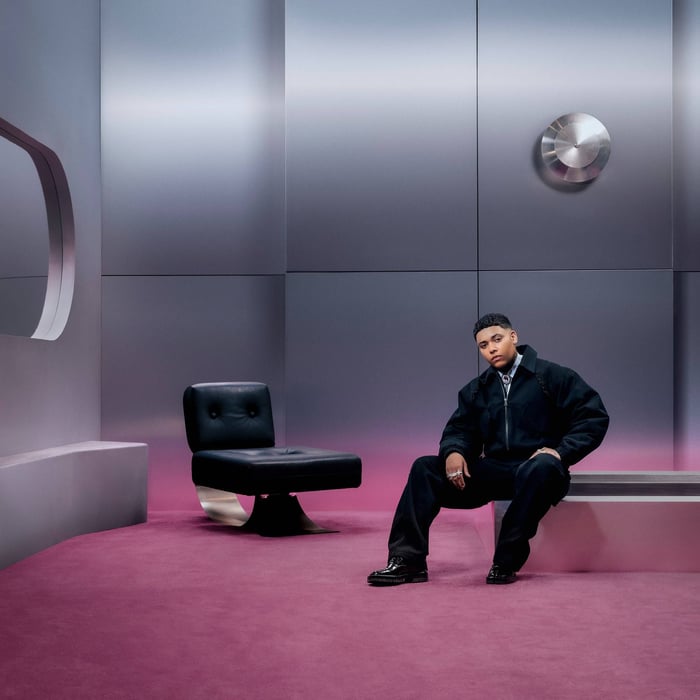
kwn EP Review: “and all pride aside” Is Horny… Then It Pulls the Floor Out


 See more Architeg Prints stories on Google.
kwn EP Review: “and all pride aside” Is Horny… Then It Pulls the Floor Out
An unfiltered listen through the kwn EP that starts as a seduction flex and ends as a quiet collapse—with “kwn EP” appetite, ego, and aftermath all left on the sheets.
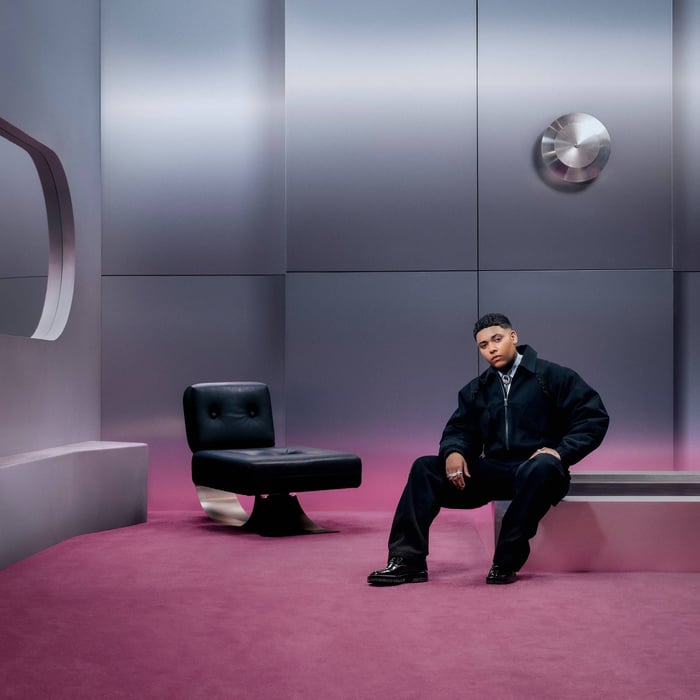
The Setup: kwn Isn’t Whispering—She’s Pointing
There’s a long tradition in R&B where women talk about sex like it’s a sport, a negotiation, a dare, a sermon. It’s not new and it’s not polite. What is new—at least in the corner of UK R&B that’s spent the last decade living in hushed tones and internal monologues—is how blunt this feels.
kwn (East London, 26) writes like she’s deliberately resisting the “keep it abstract, keep it atmospheric” rulebook. The words are simple on purpose. The phrasing leans toward that late-90s/early-00s American seduction-anthem diction—direct, catchy, almost conversational—except she’s aiming it at women. Not vague “you,” not genderless desire: it’s a woman talking to a woman she wants, and she doesn’t soften the edges to make it more “digestible.”
And the EP’s title tells on itself. and all pride aside is basically a confession disguised as a posture. It’s what you say right before you admit you want someone you can’t have.
“all fours”: Swagger With One Big Problem
Here’s where the kwn EP makes its first move: “all fours” opens with control. Not pretend control—real, chest-out, rules-on-the-wall control. She throws out a line like she’s setting the terms of the whole relationship: she won’t “date” someone who won’t treat her like the main course. She wants obsession, not a vibe.
“I could never date a bitch that don’t wanna make me main course,”
But the song’s whole flex buckles around the one thing swagger can’t brute-force: wanting someone who doesn’t return it. When she says she wants them even when they don’t want her, it’s not a clever twist—it’s the actual wound showing through the outfit. And that “karma” line lands like a private joke that isn’t funny anymore: the player getting dropped to their knees.
Destin Conrad’s part doesn’t rescue her from that tension—it mirrors it. He’s tuned to the thrill of being desired without needing to be attached, getting turned on by the lack of obligation, refusing the wedding-ring gravity. So the duet turns into two people trying to out-run feelings while clearly catching feelings. That’s the point. They’re “vying” to shed emotional commitments, and neither of them sounds convinced by their own performance.
A reasonable listener might call this empowering. I think it’s sharper than that: it’s ego acting like armor while the soft parts keep bleeding anyway.
“good girl”: Consent, Control, and the Weird Joy of Being Told What to Do
From there, “good girl” doesn’t mellow out—it tightens the leash. The pleasure here isn’t just sex; it’s structure. It’s the satisfaction of being “punished” by desire and liking the rules because the rules are attention.
The lines play like a smirk that refuses to explain itself: behaving only when someone gets their way, revenge worn like a cosmetic, the whole thing delivered with delighted compliance. There’s even a quick gag of a visitor being waved away—small detail, but it reads like a quiet refusal in itself. No long speech, no apology. Just: not now.
You could argue it’s pure fantasy with no consequence. I don’t buy that. The track feels like kwn staging control because she can already sense where control will fail later.
The Appetite Section: When the EP Turns Hunger Into a Megaphone
The middle of and all pride aside goes hard on one specific skill: making appetite feel loud, almost funny in how unashamed it is.
- “’til u cry” is basically a chant—one phrase repeated like a dare you can’t take back. It’s crude, sure, but it’s also strategic: repetition turns it into a hook, and the hook turns it into a mantra. If you find it one-note, that’s fair. Still, the one note is the entire point: obsession doesn’t develop, it loops.
- “’til the room stinks” (feat. Ty Dolla $ign) is the most instantly satisfying “slice of life” moment here—fogged windows, security outside the door, the scene sketched in just enough detail to feel real. It’s lightweight in the best way: two verses, a mood, done. No over-writing, no long detours.
Even when a track doesn’t hit as hard as the standouts, it doesn’t lose sight of what the EP is chasing: hunger, attention, the messy overlap where confidence turns into need.
“touch myself”: The Mask Slips, and Loneliness Walks In
Then “touch myself” does the thing a lot of brash projects avoid: it drops the act without announcing it.
The confidence starts unraveling, and what’s underneath isn’t some poetic abstraction—it’s plain loneliness. She keeps pictures “for when I’m alone,” and the line lands with that small, ugly realism nobody posts on purpose. And then she corrects herself, insisting she’s “not” a pillow princess—like she can hear the assumptions forming in the room and wants to cut them off before they settle.
I wasn’t sure on first listen whether this track was a detour or a doorway. On second listen, it feels like the hinge of the whole EP: the moment where the swagger stops being a costume and starts looking like a coping strategy.
“rather never love again”: Therapy Mentioned Like It’s a Chore
What makes this shift work is that it doesn’t sound like kwn “trying on” vulnerability for aesthetic variety. It’s the same voice. Same bluntness. Same unflappable delivery. The difference is she starts acknowledging the bill that comes due for all that bravado.
“I’m a better me now, I let all my ego get me down,”
“rather never love again” keeps things weirdly light in tone while saying heavy things. She talk-sings about being “better” now, admits ego dragged her down, vows to take blame and pain for the rest of her life—then tosses out “Therapy, is next,” completely flat. No inspirational swell, no self-help glow. Just a to-do item.
You could say the flatness undercuts the emotion. I think it’s more honest: when you’re actually spiraling, you don’t always sound cinematic. Sometimes you sound bored because you’re tired.
“hopeless romantic”: Tiny Domestic Wants Instead of Big Sexy Claims
“hopeless romantic” narrows her wants down to something almost aggressively normal. Matching slippers. Dancing in the kitchen. Phones not even in the frame. That’s not a quirky detail—it’s the fantasy of being chosen without competition, without performance.
And she reduces love to a sentence that hits harder than the explicit stuff: wanting somebody who’ll choose her every day. That’s the opposite of the earlier posture. Earlier, she demanded obsession. Here, she wants consistency.
A listener could call it soft. I think it’s the bravest thing on the EP—because it admits the real craving was never just sex. It was being kept.
“idea of love”: When the Concept Starts Beating Her Up
By “idea of love,” the swagger’s basically been scrubbed off.
“I don’t like the idea of love/Shit keeps beating me, then beats me up,”
She says she doesn’t like the idea of love because it keeps beating her, then beating her up—an ugly, physical way to describe something people usually romanticize. And she draws a line between real love and the concept of it, asking the question that makes everything else on the EP click: is it the idea of you, or the idea of us?
Now the obstacle isn’t only unreturned desire—it’s timing, affordability, emotional bandwidth. And she drops a quick admission—maybe she’s depressed, maybe she needs meds—like she’s saying it to herself in the mirror, not to the listener for sympathy.
That’s where the EP lands its peak gut-punch: she thinks a player got played. The project started as a flex; here it admits the flex was a bluff.
“better on my own”: Breakup Details, Then a Self-Sabotage Swerve
“better on my own” plays the breakup in real time, and it’s the mundane details that make it sting: boxers still in the drawer, toothbrush where she left it, the apartment left messy like neither person had the energy to “close the scene” properly.
Then the resolve cracks. The drinking shows up—drinking until she can’t see straight—and suddenly the whole “I’m fine” script sounds like it’s being read by someone whose hands are shaking.
If I’m nitpicking, this is where I wanted one more sharp musical left-turn to match the emotional spiral. The writing does the heavy lifting; the production stays comparatively steady. It’s not a dealbreaker, but it’s the one moment I felt the EP could’ve risked being uglier.
“heaven’s in your hands”: Grief Interrupts the Bedroom Plot
“heaven’s in your hands” aims somewhere else entirely. It’s addressed to someone she loves and is losing, and it folds in a simple plea to her mother to be okay. The emotional temperature changes fast: the sexy-command energy is gone, replaced by that careful poise you put on when you’re trying not to fall apart in public.
And then she drops one of the strangest, most human lines on the whole project: she asks the dying person not to ruin all the “gangster” she’s got. It’s not a joke—it’s a desperate attempt to keep her identity intact while something bigger than her is happening.
Underneath it, she isn’t asking for a grand explanation. She’s asking for reassurance—confirmation that she was enough. That’s the EP’s real ending, emotionally: not triumph, not empowerment, just the ache of wanting proof.
“risk it all”: A Party Sample Turned Into a Failed Pursuit
Even the EP’s retro move is engineered to underline the same theme. “risk it all” flips the familiar party heat of Nelly’s “Hot in Herre” into another chase that doesn’t quite resolve. The sample anchors the track in something instantly recognizable, but kwn uses that familiarity like a trap: you expect carefree fun, and she turns it into yet another pursuit that slips through her hands.
Honestly, it could be a song-of-the-summer contender in a different universe—one where summer is mostly texting someone who won’t text back.
What kwn Is Really Doing Here (And Why It Works)
The slick trick of and all pride aside is that kwn never “shows the seams” of the emotional shift the way most projects do. There’s no big coming-of-age arc, no neat lesson, no moment where she announces she’s changed. She scripts the sexed-up demands with the same steady hand she uses to script the breakdown. That’s why the EP lands: it doesn’t pretend growth is linear, or even required.
She stays plain and exposed the whole time—still willing to love people who couldn’t care less in return.
My personal standouts
Not a score, not a trophy—just the moments I’d go back to first:
- “all fours”
- “idea of love”
- “heaven’s in your hands”
kwn didn’t make a “sexy EP.” She made a kwn EP about what happens after sexy stops working as a strategy.
Conclusion: and all pride aside starts as an unbothered seduction playbook and ends as proof that pride is usually just fear with better lighting.
Our verdict: People who like R&B that says the quiet part out loud—then pays the emotional consequence—will eat this up. If you only want polished confidence with no bruises, you’ll bail halfway through and pretend you “just weren’t in the mood.”
FAQ
- Is the kwn EP “and all pride aside” more about sex or feelings?
It starts with sex as the headline, but the deeper story is what desire does to your pride when the other person won’t meet you halfway. - Does the EP keep the same vibe throughout?
The voice stays consistent, but the intent shifts—from control and appetite into self-doubt, breakup fallout, and grief. - What track best represents the EP’s emotional turning point?
“touch myself” feels like the hinge, where the confident pose stops being fun and starts looking like a defense mechanism. - Is “risk it all” just a nostalgic sample flip?
The recognizable anchor is the bait; the real move is turning a party reference into another story about pursuit not paying off. - Who is this EP not for?
Anyone who needs their R&B to stay flattering and tidy. This one lets the room get messy and doesn’t apologize for it.
If you’re the kind of person who treats album artwork like part of the emotional receipt, you can shop your favorite album cover poster at our store: https://www.architeg-prints.com/
 | DISCOUNTGET 30% OFF*Use code on your next order:
|
* This post may contain affiliate links, meaning we earn a commission if you make a purchase through these links, at no additional cost to you.