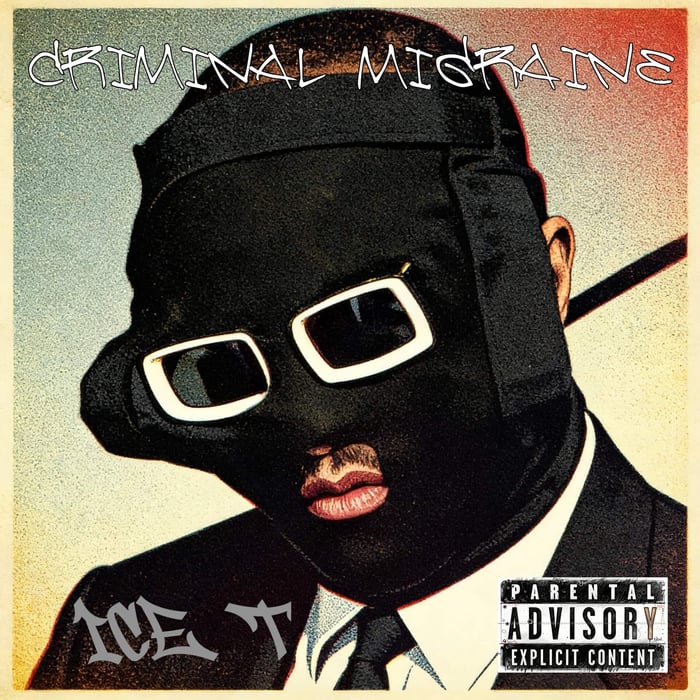
Criminal Migraine Review: Ice-T Returns Like Your Past With Receipts


 See more Architeg Prints stories on Google.
Criminal Migraine Review: Ice-T Returns Like Your Past With Receipts
Ice-T’s Criminal Migraine isn’t a “comeback” so much as a stress test—Criminal Migraine shows what happens when you leave the street but it won’t leave you.
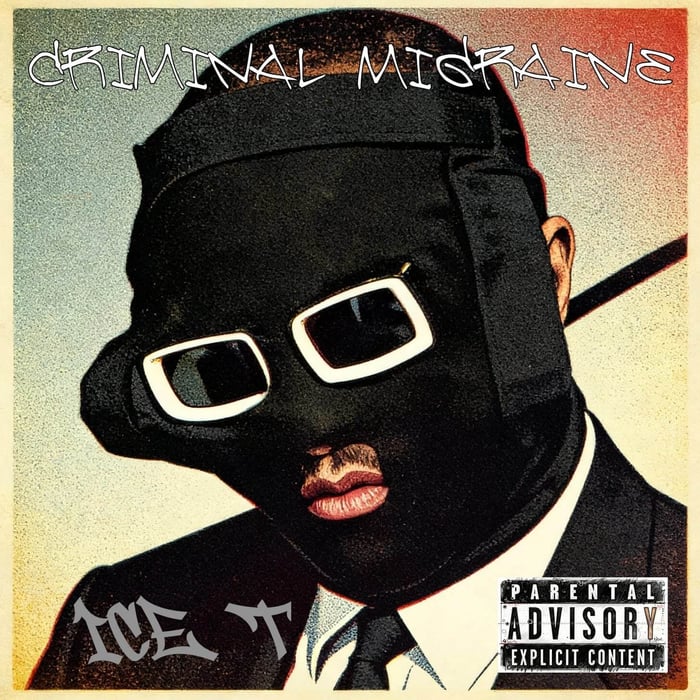
Courtesy of Ice Touring Inc.
The Real Problem: Gangsta Rap Only Has Two Costumes
Gangsta rap loves a binary. You’re either the guy still in it—loud, reckless, inventorying violence and money like it’s a grocery list—or you’re the guy who “got out,” delivering warnings like traffic signs: don’t get trapped, get a plan, the feds and the cemetery are both taking appointments.
That’s the genre’s comfort food. Two roles. Two scripts. Wolves and prey. Easy.
But there’s a third type the genre never really learned how to write for: the person who left a long time ago, built something legitimate, raised a family, and still walks around with the same reflexes humming under the surface of a normal afternoon. Not active, not exactly healed. Just… calibrated. The threat assessment never shuts off.
That’s the energy all over Criminal Migraine, and I’m going to be blunt: it’s more interesting than another “I’m still outside” victory lap, because it’s basically a man admitting the street is permanent software. The album’s intent feels obvious—Ice-T isn’t trying to prove he can rap. He’s trying to show you what it costs to stop rapping like you’re still trying to survive.
And yeah, that’s an arguable take. You could hear this as simple throwback storytelling. I hear it as the missing third option.
Ice-T Isn’t “Back”—He Never Really Left His Own Head
Ice-T’s rap timeline is ridiculous when you say it out loud. He dropped Rhyme Pays in 1987. Back then, Tracy Marrow was known for two things that fed each other: South Central/Crenshaw street life and the music that came out of it.
Then came Power, then the heavy hitters: O.G. Original Gangster, The Iceberg, Body Count, and more. And from there—acting, films like New Jack City, and relentless work. By 2000 he had a role on SVU that ran for over 20 years. At a certain point he was so far into “America’s TV uncle” territory that a whole generation probably didn’t even realize he was a rapper first.
And here’s the part that matters for Criminal Migraine: he hadn’t put out a solo rap album since Gangsta Rap (2006). Meanwhile Body Count kept doing the touring-life grind, plus the TV schedule, plus the social media era turning everybody into a walking microphone.
So when this album starts talking like a man who’s been watching the culture mutate from a distance—podcasts, self-snitching, clout trials—it doesn’t sound like cosplay. It sounds like someone re-entering a room and immediately noticing the exits.
I’ll admit, my first impression was that this record was just going to be Ice-T doing a nostalgic sweep—old stories, old warnings, old muscle memory. But the longer I sat with it, the more it felt like something else: an argument with time. Not “I can still do this,” but “you’re doing it wrong now, and I’m not dying because you wanted content.”
Why “Criminal Migraine” Is a Title, Not a Punchline
The title Criminal Migraine is doing more than sounding cool on a playlist. It’s the dilemma baked into anyone who tries to go legit after the street trained their nervous system.
A migraine isn’t a cute headache. It’s your body hijacking your plans. “Criminal” here isn’t a brand—it’s the leftover wiring. The old mistakes and the wins living in the same skull, elbowing each other for space. The album keeps coming back to that: transition is real, transition is ugly, and a lot of people don’t survive it. Not because they can’t change, but because the past keeps waiting in parking lots.
I’m not 100% sure Ice-T even wants the listener to feel “entertained” by that idea. Sometimes the writing feels like he’s documenting symptoms, not chasing hooks. And if you came here for pure bang-bang escapism, you’re going to feel him staring at you like you asked a dumb question.
“Follow the Leader” and “Jewel Lick”: Lessons Disguised as Stories
The record gets sharp early.
On “Follow the Leader,” Ice-T walks you through a world where life is cheap and fentanyl makes the whole game darker. Not “dangerous” in the abstract—dangerous like every word you say out loud is being decoded. The feds aren’t just watching; they’re translating. And a simple mistake doesn’t lead to consequences, it leads to death.
He drops it casually: most street cats snitch. He moves with “true boys.” His lawyer used to be a prosecutor. That’s not flexing; that’s paranoia turned into a resume. The track ends like a sign at the edge of a cliff: get organized or you’ll be on the run.
Then “Jewel Lick” swings into a heist setup with CJ Mack, set like early-80s Los Angeles—Oscar’s club, cocaine everywhere, the whole cinematic grime. The two men outline the plan: track the mark, watch the safe, take what you can.
And then Ice-T interrupts the fantasy. This is where the album reveals what it’s actually doing. The lesson cuts through the scene:
- trust no woman (his words, his worldview—arguable, dated, revealing)
- skip the jewelry
- kill the social media
- once you get enough to leave, don’t “recross that line”
That last bit lands because it’s not performed like wisdom. It’s performed like someone who knows exactly how easy it is to get pulled back in by ego and habit.
This is the album at its best: it sets up a familiar genre moment, then yanks the camera to the consequence.
“Shut the Fuck Up”: Ice-T vs. the Podcast Economy
Next bridge, same destination: modern self-incrimination.
“Shut the Fuck Up” isn’t subtle. The hook pins it down: podcasters know what they’re selling, and you’re the one telling on yourself. The track basically argues that the new street trap isn’t a corner—it’s a microphone.
People call you soft until you start bragging bodies, and then—surprise—you’ve provided a map. Ice-T makes it clear he won’t be on those shows, which is funny in a dry way because it’s the rare flex that’s actually defensive:
“You can’t clip me because I won’t hand you the scissors.”
You could disagree and say he sounds like the old guy yelling at the internet. But I think he’s right, and that’s what makes the song work: the paranoia is practical now. It isn’t mythology anymore. It’s just media training.
“No Regrets”: A Farewell That Doesn’t Sound Peaceful
“No Regrets” is where the album starts to feel like a door shutting, politely, but permanently.
He says he “politely stepped out the game,” and the tone matters. He’s not romanticizing the exit. He’s measuring the difference between eras: back when players got caught and didn’t turn whole states against each other, versus now, where “the code is gone” and you’re on your own.
The track also makes a simple point that stings because it’s true: cameras changed everything. Everybody’s filmed, everybody’s documented, everybody’s one screenshot away from a case. In older gangsta rap, the danger was the street. Here, the danger is the record of the street.
That’s a shift plenty of modern rappers pretend is normal. Ice-T treats it like a disease.
The Title Track “Criminal Migraine” Opens the Door and Then Dares You to Look
On “Criminal Migraine,” Ice-T warns you not to look too deep into his mind and then immediately shows you what’s in there.
Dead bodies. Bricks of cocaine. Sawed-off shotguns. Broken glass. Ski masks. And the image that sticks: ice picks in his brain. Not as a cute metaphor—more like a repeating dream you can’t stop rerunning.
He keeps wearing black. He keeps a suit pressed for funerals. The funerals keep coming, so the suit never goes away. That’s dark, sure, but it’s also mundane in the way trauma is mundane: you don’t “process it,” you schedule around it.
He describes writing rhymes in the dark with his eyes closed. He doesn’t want it, but his soul is haunted. Everybody dies in his head. He’s killed thousands of times in imagination—anyone who crossed him. And then the coldest detail: if a doctor ever tells him he’s terminal, he’s got a list, and he’s taking people with him.
Here’s my uncertainty: I can’t tell if that terminal-list line is meant to be literal menace or just the ugliest form of honesty—admitting that even at the end, the street part of you still wants a scoreboard. Either way, it’s not comforting. It’s not supposed to be.
This is Ice-T using extremity the way some writers use a confession: not to shock you, but to tell you the truth faster.
“The Hate Is Real” and “No One Ever Wins”: Betrayal as the Permanent Plot
A different wound runs through “The Hate Is Real”—betrayal, specifically the kind that comes from close range.
The track plays like a biography in flashes: first strap at thirteen, crack at sixteen, balling off Sherman, a cut-out black Cadillac, women on his hip—and then the shift that always arrives once you have anything worth taking. Friends turn to foes. Smiles in your face, hatchets in your back.
Smoothe Da Hustler shows up with his own verse, and it fits the album’s thesis too neatly: set up, double-crossed, laid down by a friend who’s not around anymore, hated by people who never met him. That’s not just paranoia—it’s the emotional hangover of living in an environment where loyalty is a rumor.
Then “No One Ever Wins” pushes the lesson further by giving you two stories that end the same way:
- A drug plan collapses when the cartel plug turns out to be DEA.
- A woman lines up tricks for twenty years and ends up burnt out and alone, watching old friends live regular lives—marriage, children, stability.
Ice-T’s point isn’t “crime is bad.” His point is harsher: the game doesn’t even reward the people who play it well. It rewards luck, and luck gets bored.
That’s a claim you can argue with, but the album makes it hard to dismiss because it’s so committed to consequences.
The 24-Track Problem: When the Ground Drops Out
Here’s where Criminal Migraine starts tripping over itself. At 24 tracks, the album has so much runway that not every song needs to land sharply—and you can feel the focus blur.
“Hustle Hard” turns into generic encouragement—keep grinding, keep trying, your next move could be your best move. It floats above any particular street detail or personal moment. And when an Ice-T album gets vague, it loses the whole reason it’s interesting in 2025: specificity. I didn’t come here for motivational wallpaper.
“To Be a Man” zooms out to survey masculinity across a whole life so wide-angle that it starts sounding like it could be anybody talking. Maybe that’s the intention—make it universal—but I think the record is stronger when it’s stubbornly personal and a little unsafe.
“It’s All About” is the one that annoyed me because it almost nails a great trick. It spends two verses cataloging opulence—pure list-making—then flips one word at the end to reveal the cost: he died over islands, diamonds, yachts, and champagne. That final switch is genuinely the best move in the whole song… which makes the earlier catalog feel like unnecessary homework.
“Keep It Gangster” has energy—Kenny Ivy is amusing, Treach stays lively—but it’s covering subject matter the album already hit repeatedly on the flex side. By the time it arrives, it feels like a track that should’ve been cut in favor of the darker, sharper stuff.
Honestly, a 16-track version of Criminal Migraine—dead weight removed—would hit harder and leave fewer places to hide. The extra tracks don’t ruin the album, but they dilute the mood like someone kept topping off a strong drink with ice.
The Tracks I Kept Rewinding (Even When I Didn’t Want To)
Not “best,” not “greatest,” just the ones that actually told me what the album’s trying to do:
- “Criminal Migraine” — the thesis stated as a horror inventory
- “Jewel Lick” — a heist fantasy interrupted by survival advice
- “Ego” — it snaps with the kind of self-awareness the album needs to stay human
And yeah, you could pick other highlights depending on what you want—warnings, flexing, regret. But these are the ones that feel like the album speaking in its real voice.
Conclusion
Ice-T made Criminal Migraine like a man who’s been “successful” long enough to admit success doesn’t erase the old math. The street isn’t a chapter; it’s a permanent background process. When the album stays on that nerve—paranoia turned practical, memory turned violent—it’s gripping. When it drifts into generic motivation or repetitive flexing, you can feel the tension leak out.
Our verdict: People who like rap when it’s blunt, consequence-heavy, and a little haunted will actually like Criminal Migraine—especially if you’re tired of artists performing “authenticity” for cameras. People who want tight, trimmed albums or who can’t stand long tracklists will bounce halfway through and complain (fairly) that it could’ve been meaner with an editor. And if you think podcasts are harmless fun? Ice-T would like you to stop talking immediately.
FAQ
- Is Criminal Migraine more warning-rap or brag-rap?
It leans warning-rap, but it keeps slipping into flex moments like a bad habit it refuses to quit. - Does Ice-T sound like he’s trying to relive the old days?
Not really. He sounds like he remembers them too well to romanticize them for long. - What’s the main theme that keeps repeating?
Transition—trying to go legit while your mind still runs on street logic, especially around betrayal and surveillance. - Is the album too long?
Yes. The strongest moments hit hard, but 24 tracks means some songs drift into generalities the album doesn’t need. - Which songs capture the album’s core idea fastest?
“Criminal Migraine” and “Jewel Lick” get there quick: one shows the haunted brain, the other shows the exit strategy.
If this album put a specific image in your head—pressed funeral suits, ski masks, a mind that won’t dim—turning that into wall art isn’t the worst idea. You can shop your favorite album cover poster at our store here: https://www.architeg-prints.com.
 | DISCOUNTGET 30% OFF*Use code on your next order:
|
* This post may contain affiliate links, meaning we earn a commission if you make a purchase through these links, at no additional cost to you.