Stoic PAELLA! Review: A Fancy Mixtape That Won’t Stop Oversharing


 See more Architeg Prints stories on Google.
Stoic PAELLA! Review: A Fancy Mixtape That Won’t Stop Oversharing
Stoic PAELLA turns producer flexing into group therapy over guitar loops—sometimes profound, sometimes messy, always too honest to ignore.
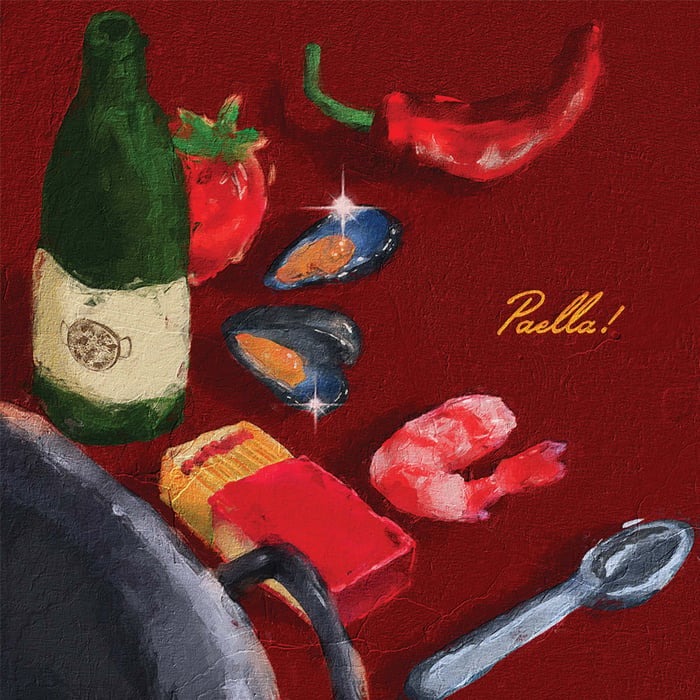
First, the album tells you what it is: a meal made of leftovers
PAELLA! doesn’t behave like a producer album that’s trying to “show range.” It behaves like a producer album that’s trying to catch people off guard while they’re mid-thought. The whole thing is built around a simple trick: Stoic hands artists warm, guitar-leaning loops and drum patterns that feel inviting, then lets them confess into the mic like the beat is a late-night car ride.
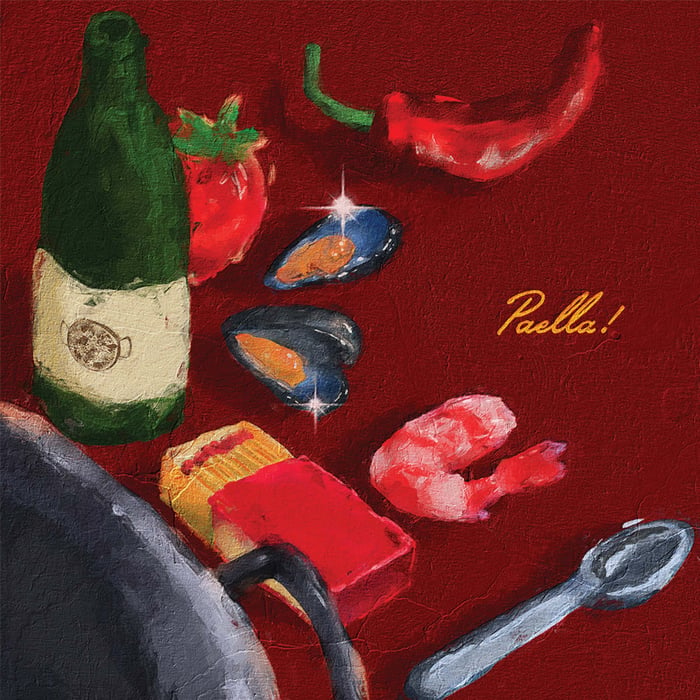
And yeah, the title is doing more than being cute. This record is basically Stoic saying: I’m not making one perfect dish—I’m throwing in whatever ingredients I can find and daring you to call it incoherent. That’s an arguable move, but I think it’s the point. PAELLA! wants the seams showing.
What surprised me early on is how little this feels like “a producer showing off.” It’s more like a producer setting a room temperature—comfortable enough that people start saying the stuff they usually save for 3 a.m.
Stoic’s origin story is baked into the drum choices
Here’s what I hear underneath all the features: a person who learned production by rebuilding other people’s taste from the ground up. You can practically feel the hours of recreating drum pockets and sample chops—like someone reverse-engineered their favorite records until the process became muscle memory.
The guitar obsession isn’t random either. The album has that “kid who played guitar first” sensibility where harmony matters as much as the knock. It’s not just loops—it’s chord progression as mood control. The bossa-nova touches, the classic-rock ear, the Strokes-ish tightness in places… it all reads as someone who didn’t enter music through rap first, even if rap is the main language now.
I kept thinking about how PAELLA! is sequenced like someone who used to upload beats just to hear them through car speakers. The low end hits like it was tested on actual streets, not studio monitors. That’s not a neutral compliment—it’s a bias: I trust music more when it sounds like it’s been driven around the block.
“FREEFALL” is where the album shows its real habit: questions, not statements
Now the pivot: this project isn’t mainly Stoic talking. It’s other artists interrogating themselves while Stoic quietly rearranges the furniture.
On “FREEFALL,” MAVI basically turns the track into a spiral of anxiety and suspicion—asking who’s even safe to learn from if the “advice” isn’t alive anymore, asking where escape is supposed to exist when elevation itself feels like a trap. The line about making too much money to believe someone’s “just in love” lands like the least-celebratory flex imaginable. The beat helps by staying firm: hard drums, guitar, vocal samples—enough movement to keep MAVI from drowning, not enough distraction to let him dodge the point.
I thought the record was going to be more of a victory lap—big placements, big moment, first solo project. But “FREEFALL” corrects that impression fast. This isn’t a trophy shelf. It’s a pressure cooker.
And when Ovrkast. follows, the emotional temperature flips. He falls through space with nothing to catch him, then immediately snaps into “let me put my people on” mode—talking cousins, racks, soul intact. That contrast is the album’s first big tell: PAELLA! isn’t about one mood. It’s about how quickly people switch masks when the beat gives them room.
That’s arguable, but to me, it’s the whole engine.
“GANG SAMBA” pulls the rug: the bravado is a decoy
Next bridge: once you accept the album is a confessional booth, the “fun” songs start sounding suspicious.
“GANG SAMBA” leans into bossa-nova swing, and Q THA HERO starts like he’s about to stunt—Cartier buffs, wrist shining, the usual armor. Then he strips it down to a teenage doubt you can hear in his throat: college soon, dreams big, belief shaky. The track turns into a moral interruption. How do you dance while your people are in trouble? How do you celebrate when cages are still the background noise?
He even lands on something almost painfully simple: it’s okay to tell people you love them now, today, while you can. The beat being breezy is the cruel part—it makes the guilt feel unavoidable.
If you wanted an argument: the bossa vibe isn’t there to make things “smooth.” It’s there to make the guilt feel unavoidable.
“LOSING TIME” draws a line between faith and obsession—and it’s blurry on purpose
From there, the album slides into a more existential pocket without changing the basic setup.
On “LOSING TIME,” Deante’ Hitchcock wonders where faith stops and obsession begins—especially when nobody else is paying attention. There’s a nasty little truth embedded here: the difference between you and your peers might not be talent, it might just be consistency. That sounds empowering until you realize how easily it becomes a prison.
The hook (with Nina Taylor) floats over a groovy backdrop—overthinking, stressing, seeking answers that never show up, losing time. It’s catchy in a way that almost annoys me, because it wraps anxious thought loops in something you can nod to. That might be the intent: make the spiral feel normal.
I’m not totally sure whether the song is warning against obsession or quietly justifying it. On second listen, I started thinking it’s both—which is more honest than picking a side and pretending.
“PAY NO MIND” turns paranoia into a personality
Next step: the record gets sharper, more twitchy.
Starting on “PAY NO MIND,” jev. sounds like he’s negotiating with God and his own reflection at the same time. He talks about God watching like the feds watch. Meds make him in-and-out of his mind. Bottles show up. Bad habits get watered like houseplants. It’s messy in a way that feels deliberate—like the verse is built to contradict itself.
“A fashion nigga outrapping niggas / I’m the feeling you get after pulling the trigger / I’m the healing you get analyzing on Twitter.”
And then he drops a line that’s basically the album’s sickest thesis statement: confidence as a drug, a wicked world with no affection, someone trying to go platinum in a comment section. That’s not just a rap bar—it’s a diagnosis.
There’s another moment elsewhere where he describes a “friend” crashing out online, nobody coming to shows, praying coin flips, homeless, begging for a promotion… then admits the friend is him. That reveal isn’t clever. It’s bleak. It’s Stoic’s beats doing what they keep doing: making it comfortable enough to admit the ugly part out loud.
Arguable claim: PAELLA! isn’t anti-fame—it’s anti-performance. It hates the idea that you’re supposed to look successful while you’re actively coming apart.
“HAIRCUT” is controlled cruelty, and Wynne knows it
Here’s the relief valve—kind of.
“HAIRCUT” comes in laidback, but Wynne doesn’t sound relaxed. She sounds in charge. The whole verse is breakup dominance delivered with a grin you can’t see but can absolutely hear. She talks like she’s ending the relationship and billing you for the privilege. Finder’s fee on whoever gets you next. Don’t make it a rivalry. Stop acting like there’s a scoreboard.
And then she hits you with a domestic, ridiculous flex that somehow works because she commits to it:
“I’m the mac and cheese with brisket / Cream of spinach, cornbread biscuit.” — Wynne
That bar is funny in the way real people are funny when they’re serious. Like: I’m not just a delicacy, I’m a whole menu, behave accordingly.
She also drops the scissors line—couldn’t pull out a rock, so here I am with the scissors. That’s a clean metaphor, but it’s also a warning: she’s not waiting around for your romantic competence to arrive in the mail.
If you want a hot take: “HAIRCUT” is one of the album’s strongest moments because it’s not fragile. Everyone else is questioning themselves; Wynne is stating terms.
“COULD NEVER BE ME” and the album’s one-liners that actually bite
From there, “COULD NEVER BE ME” comes in chopped-up, and Trevor Spitta plays character-hopscotch: speech impediment jokes, drunk-texting an ex again, best friends with Benjamin, Italian leather in his closet, your skeletons in yours. The verse is built like a comedic rant, but it’s still part of the album’s larger pattern: humor as a cover for neediness.
He even tosses a modern little dagger that lands because it’s so casually petty:
“I chat hoes, you ChatGPT ’em.” — Trevor Spitta
It’s not profound. It’s just specific enough to feel like a real person talking, which is rare in a genre where people love sounding like slogans.
“UP & AWAY!” vs. “HEAT UP”: Mick Jenkins removes the jokes
Next bridge: the album starts measuring ambition against sanity.
On “UP & AWAY!”, Kaicrewsade fires off a rapid hook over a jazzy composition, and Mick Jenkins shows up grounded—calling out people chasing “chicken” with blurred vision, dropping a Ruth’s Chris comparison, landing on a QP in the air. It’s playful but still pointed, like he’s scolding you while holding a drink.
Then the solo outing “HEAT UP” happens, and the jokes evaporate. He says the pharmacy will keep you sick, so he needs it farm-to-table—clean, direct, unfooled. There’s a line about honesty not being for “just joking,” and it hits like Mick is tired of the internet tone where everything is ironic until it isn’t.
Stoic gives him electric-guitar boom-bap goodness—big, satisfying, muscular. Mick fills it with distrust: vultures, optical illusions, pride people couldn’t swallow. The track works because it refuses to wink.
Mild criticism, though: “HEAT UP” is so locked-in on message that it flirts with stiffness. It’s effective, but it’s not as elastic as the best moments here. I wanted one more left turn—one more moment of weirdness—to keep it from feeling like a sermon with great drums.
When the writing turns generic, the album briefly loses its teeth
And here’s the part that lost me a little.
On the posse-cut “HUNTING SEASON,” Nyck Caution and CJ Fly show up with verses that could’ve been dropped onto basically any beat, any year, any album. Lots of “sick of people acting like they’ve got it,” lots of “stay in your field.” CJ Fly even says he rapped it off the dome—and yeah, it sounds like it. That’s not automatically bad, but on an album built around uncomfortable specificity, this kind of general tough-talk feels like filler.
Arguable claim: “HUNTING SEASON” is the moment where PAELLA! briefly turns into the exact kind of rap project it otherwise avoids.
Similarly, LIFEOFTHOM’s “BY MY SIDE” rides an ‘80s soulful sample and circles the same relationship questions for the whole runtime—how you love me when you don’t care, why we fuss, why we cry, you by my side. The repetition is the point, sure, but it also risks feeling like the song is stuck in place instead of deepening. Some listeners will find that hypnotic; I found myself waiting for the writing to evolve.
“PEGAO” opens the door with a sea monster—and it’s not just a gimmick
Looping back to the start clarifies what Stoic was doing all along.
The album opens with Blvck Svm’s “PEGAO” and this extended sea-monster conceit—kraken under the surface, tentacles reaching for the hull, a vessel losing inertia, villainous swells, entropy discouraged. It’s vivid in a way rap doesn’t always allow itself to be anymore, like he’s building a myth just to talk about pressure.
Then he lands on a line that ties the whole project together: him and Stoic in a remote location talking paella, hushed inflections, bossa-nova collusion. He calls an earlier collaboration a prototype and this one “level three” of the fusion.
That framing matters because PAELLA! doesn’t feel like Stoic following a template. It feels like he’s humming whatever melody is stuck in his head that day and building outward—less assembly line, more impulse. You can disagree and call it inconsistent. I’d argue the inconsistency is the human part.
So what’s PAELLA! actually doing? Making everyone admit the cost
By the end, the common thread isn’t “sadness” or “flexing” or “jazz rap” or whatever tag people will slap on it. The common thread is that Stoic keeps putting artists in situations where they have to answer for themselves.
- Fame shows up, but it doesn’t feel glamorous.
- Money shows up, but it doesn’t feel stabilizing.
- Faith shows up, but it doesn’t feel simple.
- Love shows up, but it keeps sounding like negotiation.
I’m still not sure the album is perfectly paced—there are moments where the specificity fades and the spell breaks. But when it hits, it hits because it sounds like people telling the truth while trying not to.
PAELLA! plays like Stoic invited a bunch of talented friends over, dimmed the lights, looped the guitars, and let everybody say the part they usually edit out. That’s the “dish” here: not polish—exposure.
Our verdict: People who like producer-led rap when the beats push the writing into awkward honesty will eat this up. If you need every verse to be quotable and every hook to be an event, you’ll get impatient and start checking your phone around “HUNTING SEASON.”
FAQ
- What is the core vibe of Stoic PAELLA?
Stoic PAELLA feels like warm guitar loops and hard drums designed to make rappers confess, not posture. - Which tracks best represent the album’s strengths?
“FREEFALL,” “HAIRCUT,” and “GANG SAMBA” are where the writing gets specific and the beats feel purpose-built. - Does PAELLA! sound like a typical producer compilation?
Not really. It’s less “look at my range” and more “watch how different people unravel on the same kind of comfort-food beat.” - What’s the weakest moment on the album?
“HUNTING SEASON” drifts into generic toughness that doesn’t match the album’s usual uncomfortable detail. - Is this album more about Stoic or the featured artists?
The features carry the stories, but Stoic’s real “voice” is how he shapes the space—guitars, drums, and pacing that nudge people into saying too much.
If this album got you staring at the cover like it’s part of the experience (it is), you can always shop a favorite album cover poster at our store—tastefully, not pushy: https://www.architeg-prints.com
 | DISCOUNTGET 30% OFF*Use code on your next order:
|
* This post may contain affiliate links, meaning we earn a commission if you make a purchase through these links, at no additional cost to you.