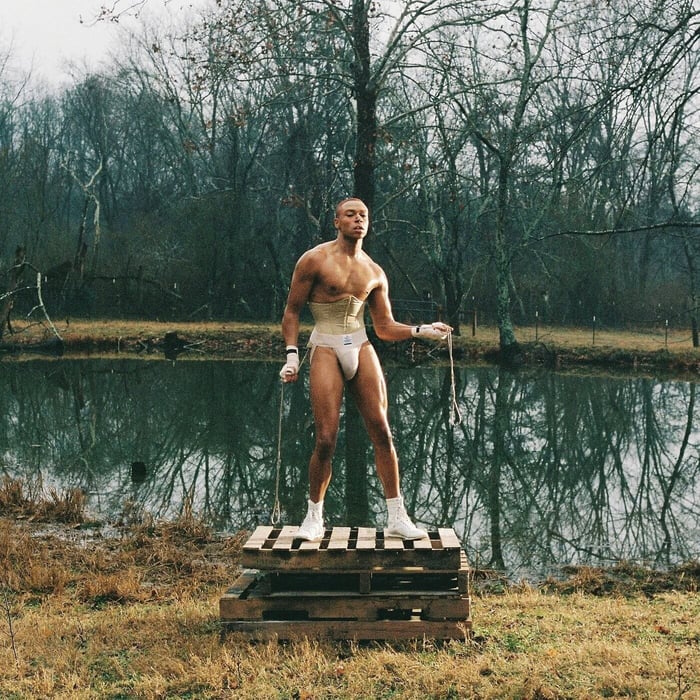
Portrait of a Boy: Houston Kendrick Sets Himself on Fire (On Purpose)


 See more Architeg Prints stories on Google.
Portrait of a Boy: Houston Kendrick Sets Himself on Fire (On Purpose)
Houston Kendrick’s album Portrait of a Boy turns pop ambition into American drag—big hooks, bruised honesty, and costumes that start to feel like skin.
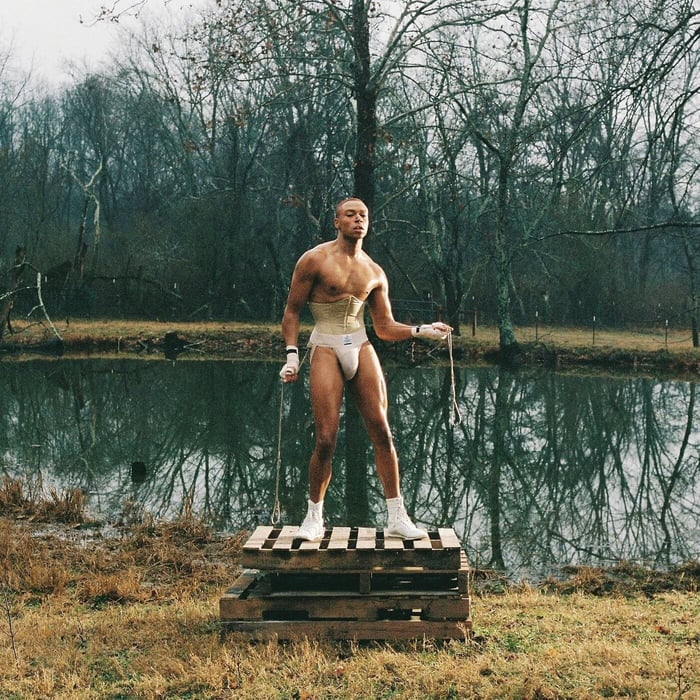
A pretty album title, and then it bites
This record doesn’t ease you in. It struts up, adjusts its own crown, and dares you to notice the seams. Portrait of a Boy isn’t “confessional” in the soft, playlist-friendly way—it’s closer to watching someone rehearse a persona until it starts rehearsing them back.
And yeah, I thought I knew what I was getting from the first minute: big pop voice, big pop swing, big pop drama. On second listen, the drama isn’t the point. The point is control—who gets to look polished, who has to look grateful, and who’s allowed to look messy without being punished for it.
An arguable claim right out the gate: this album’s real genre isn’t R&B or pop. It’s costume.
Birmingham isn’t backstory here—it’s the pressure cooker
Let’s not pretend geography is just a fun Wikipedia corner. The air around this album is thick with Birmingham gravity: the long memory of a city where power once depended on keeping Black people in “their place,” down to the insultingly specific complaint of educated Black women cleaning white homes during the 1963 Birmingham campaign—when economic justice and anti-discrimination weren’t separate conversations, they were the same fight in different clothes.
Then, decades later, Kendrick is born just south of Birmingham in 1996 and grows up in Hoover—suburb country, which has its own quiet violence: the kind that smiles while it labels you. Listening to Portrait of a Boy, I don’t hear someone “influenced by the South.” I hear someone who learned early that you can be tolerated as long as you behave like a role.
That’s why the album keeps returning to performance as survival. It’s not a metaphor he’s trying on. It’s a reflex.
Arguable, sure, but I’m sticking with it: the suburban setting matters because it teaches you to audition for normalcy every day, and this album sounds like someone finally tearing up the headshots.
The Nashville dream breaks, and the album gets built like a salvage job
The album’s creation story leaks into the sound: Kendrick studies commercial music in Nashville in the mid-2010s, and you can practically hear him looking around at the system and thinking, Why can’t I do it all? Not just “be versatile,” but pull off the cultural weight of artists who get to be maximal without being called delusional for it.
Then the system fails him anyway. The label arrangement falls apart before the second album is finished, and instead of politely shrinking his vision, he goes full stubborn: he hands a hard drive packed with everybody’s files to his old Belmont classmate Bobby Knepper, and they spend long stretches organizing the chaos into something release-ready.
That detail matters because it explains the album’s vibe: it feels assembled with obsession. Not in a cold, perfectionist way—more like the frantic focus of someone trying to prove the world wrong with spreadsheets and vocal takes.
Here’s my mild criticism, though: you can sometimes hear the “hard drive” nature of it—the sense that the universe in his head is bigger than the track beneath it. When the instrumentals sit a little too still, the vocals have to do all the landscaping. It’s impressive… and occasionally a bit cramped.
Arguable take: the slight static quality underneath is intentional. Kendrick wants the voice to be the set, the lighting, and the plot.
“American Trash” is the crown—and it’s made of cans
Now we hit the core flex: “American Trash.” Kendrick frames American identity as drag—bravado and exceptionalism as costume, pride as something you can put on and take off depending on who’s watching. That idea could’ve turned into a lecture. Instead, he turns it into a character: a trash-crowned, cocky American king performing his own myth like it’s a halftime show.
And the hook is the whole thesis delivered with a grin you don’t fully trust:
- “Look at me all in my American drag”
- “Look at them kissing my American ass”
- “Look at how I blow this American cash”
- “I’m from Alabama I’m American black / Made a little crown from American trash.”
He’s staring straight at the flag and basically saying: I can see the flaws in your design up close. And then—this is the part that sticks—by the second verse, the suffering turns weirdly seductive. The blisters on his feet become something he thinks he likes. That’s not just writing. That’s a diagnosis.
I’m not totally sure whether Kendrick is mocking the character or admitting he still wants what the character wants. Maybe it’s both. That uncertainty is part of what makes the track feel alive instead of tidy.
Arguable claim: “American Trash” isn’t a protest song—it’s a coronation, and that’s why it stings.
“Shine On U” and the performance of confidence (with pills in the pocket)
The cockiness returns on “Shine On U,” but it’s not the same kind of confident. It’s the kind that needs maintenance. The scale of everything gets exaggerated like a nervous lie: a dirt road becomes an interstate, fast food landmarks get swapped like symbols on a map, a breeze turns into a hurricane. It’s self-mythology as coping mechanism.
Then Kendrick drops the line that makes the whole “pop star” pose feel like a threat to himself:
- “Yeah I pretend to be conceited / So eventually I might believe it”
- “Adderall everyday and evening / Chase with alcohol numb the demons.”
That’s not a diary entry. It’s a strategy—and a shaky one. The song makes a strong case that confidence is just another outfit, and sometimes you wear it into a boardroom while your body’s sweating through the seams.
Arguable statement: the song is less about addiction than it is about productivity as drag—the idea that you can medicate yourself into being “acceptable” on schedule.
“Paper Doll” is where the album admits the cost of being styled
If “American Trash” is Kendrick crowning himself, “Paper Doll” is him handing someone else the scissors.
There’s a particular kind of exhaustion in letting other people dress you “however they want”—not literally, but socially: pick a lane, pick a sound, pick a version of yourself that won’t scare the room. Kendrick’s album keeps circling that trap: the urge to be a pop star who makes big songs, who can sing with operatic inflection and then swerve somewhere else entirely… while the industry (and the audience, if we’re being honest) keeps trying to pin him down like a sample on a mood board.
Arguable claim: “Paper Doll” is the album’s quietest power move, because it’s not asking for freedom—it’s pointing out how often freedom gets traded away for a little approval.
“White Lies + Different” is two acts: the drunk costume, then the morning after
“White Lies + Different” plays like a single track with two faces. First: drunk Kendrick as “best Kendrick,” the version somebody fell in love with—the loose, shiny, socially lubricated costume. Second: the obsession with trying to be sexy, like sexiness could replace safety.
Then comes the wreckage report, blunt and unglamorous:
- “Woke up smelling like swishers”
- “Don’t remember taking these pictures”
- “Don’t remember burning these bridges”
- “Today I gotta do different.”
That’s the album staring into a mirror and refusing to sweeten the lighting. The meanest person in the room is his own reflection. And the track doesn’t frame change as inspirational—it frames it as inevitable. Like: the day you mourn the death of your youth is also the day you start your coup.
Arguable statement: this is the album’s most adult moment, and it’s adult in the least flattering way—hungover, embarrassed, and still trying to sound cute.
The real influence isn’t a sound—it’s ballroom logic
There’s a straight line from teenage Kendrick watching Paris Is Burning to the way this album treats performance. Ballroom isn’t just “aesthetic” here. It’s the idea that performance can be a life raft: the distance between who you are at home and who you become the second you walk out the door.
Growing up in Hoover, Kendrick tried on costumes and none of them fit. He was one of very few Black kids, one of very few queer kids, and also one of very few Black kids who weren’t excelling in athletics—which sounds like a small detail until you remember how aggressively communities enforce their little scripts.
He learned individuality through high school choir and community theater: places where inhabiting a role is honest because everyone admits that’s what’s happening. Even his first single plays with that line—filmed at his real high school with real friends, flirting on camera with a friend, described as “straight man drag.”
Arguable claim: calling it “straight man drag” isn’t a joke—it’s Kendrick confessing that heterosexuality, in his world, was treated like the default costume you’re supposed to wear until further notice.
The “box” problem: when institutions recruit you, then try to shrink you
Kendrick’s time in a commercial music program comes through like a cautionary aftertaste. The pressure to fit into what Black R&B singers are “supposed” to be—while being recruited to become a professional musician—creates a familiar contradiction: Come here, be great… but not like that.
And the record keeps resisting that. It wants to be big, it wants to be weird, it wants to be successful without sanding off the edges that make it personal. The album’s insistence on naming all these selves—giving each aspect a voice—lands on one word that keeps making sense the longer you sit with it: drag.
Not drag as a gimmick. Drag as method. Drag as survival. Drag as truth told through costume because plain truth gets punished.
Arguable statement: the album doesn’t “blend identities.” It stacks them like outfits and dares you to admit you do the same thing.
“Hard Drive” and “Bro”: where the universe gets built on vocals
One of the clearest creative choices across Portrait of a Boy is how much weight Kendrick puts on vocals—building a huge universe over relatively static instrumentals. That can sound like a limitation until you realize it’s the point: the voice is the set design. The voice is the camera angle.
“Hard Drive” reads to me like a wink at the album’s real-life assembly: the literal hard drive full of everybody’s files, the long hours organizing, the obsession with details. It’s a song that carries the anxiety of holding your whole world in a fragile object you could drop.
“Bro” lands as a different kind of performance: intimacy mixed with posture, tenderness with a guarded shoulder. If “American Trash” is public theater, “Bro” feels like private theater—where you still can’t quite stop acting.
I’ll admit I didn’t clock “Bro” as a favorite on first pass. I thought it was just a lighter moment. Then it kept sticking in my head—not the loud parts, but the way it balances closeness with the fear of being seen too clearly.
Arguable claim: “Hard Drive” is the real heart of the album, because it admits the whole “save the world” thing is partly just a guy trying not to lose his files—literally and emotionally.
One line that explains the whole act
“This bravado, this exceptionalism… all of it is drag. All of it is a costume.” — Houston Kendrick
That’s the thesis, but the album doesn’t stop there. It adds the harder part: there are real things to be proud of. So what happens when pride and performance start wearing the same clothes?
That question hangs over every big chorus like smoke.
Conclusion: the fire is the point, not the emergency
Portrait of a Boy doesn’t ask to be understood gently. It wants to be watched closely—like you’re supposed to notice when the outfit changes, when the confidence slips, when the “American” mask turns into a mirror.
The album’s best trick is that it makes ambition sound like a coping skill. The big songs aren’t just big because pop is fun. They’re big because smallness was never safe.
Our verdict: People who like pop that’s theatrical and psychologically nosy will eat this up. If you want neat genres, clean heroes, and lyrics that don’t sweat through their makeup, you’re going to get irritated fast—and you’ll probably call it “too much,” which is kind of the point.
FAQ
- What is the core idea behind Portrait of a Boy?
It treats identity like drag—something you perform to survive—and then refuses to pretend the performance doesn’t leave bruises. - Which songs feel like the album’s centerpieces?
“American Trash” is the crown. “White Lies + Different” is the hangover truth serum. “Hard Drive” ties the whole “built-from-chaos” feeling together. - Is this album more political or personal?
It’s personal in a way that becomes political without trying to sound like a pamphlet—especially when “American” gets treated like a costume you’re forced to wear. - Does the album sound polished or raw?
Both. The vocals feel meticulously shaped, but some instrumentals stay relatively still, like the record wants the voice to do all the heavy lifting. - Who should skip it?
Anyone allergic to theatrical self-mythmaking, or anyone who hears “drag” and assumes it’s just an aesthetic instead of a framework.
If this album put images in your head—crowns, costumes, a flag turning into stage curtains—you might want that feeling on your wall. We keep art-forward album cover posters over at our store, in case your room needs a little more dramatic lighting.
 | DISCOUNTGET 30% OFF*Use code on your next order:
|
* This post may contain affiliate links, meaning we earn a commission if you make a purchase through these links, at no additional cost to you.