God Gotta Afro: Rapsody’s Gold Hoops Album Isn’t Here to Behave


 See more Architeg Prints stories on Google.
God Gotta Afro: Rapsody’s Gold Hoops Album Isn’t Here to Behave
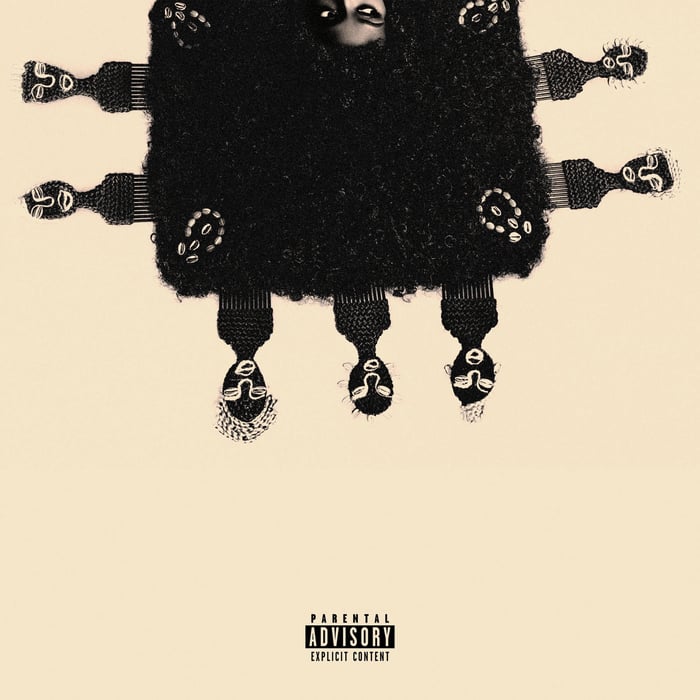
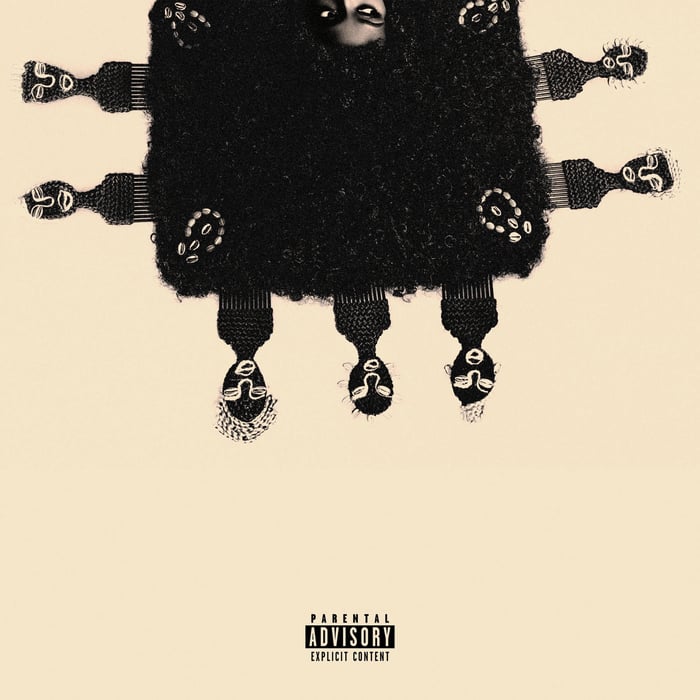
Rapsody’s latest album God Gotta Afro & Gold Hoops breaks free from her previous style, embracing new sounds, geography, and a bold redefinition of identity through powerful lyrics and diverse production.
A quick warning: this album doesn’t “settle in”
If you came here for the comfortable version of Rapsody—the one who glides over the same sturdy, barely-breathing pocket—you’re going to spend this runtime adjusting your posture.
For about a decade and four albums, her whole approach felt like dense, referential verses laid onto beats that didn’t really move so much as hold position. The Jamla house feel—loops, trills, grooves—often sat in one tempo and one mood like it was a point of principle. It worked because her pen was basically the event. Sometimes it felt like her verses were their own kind of sample collage: long, layered, and packed with nods.
And yeah, there were obvious signposts: the Grammy-nominated Laila’s Wisdom era, that scene-stealing verse on Kendrick Lamar’s To Pimp a Butterfly, and then Eve—where even the naming scheme carried a thesis, each track titled after a different Black woman. All of that felt like it came from the same room, the same circuitry.
Then God Gotta Afro & Gold Hoops shows up and shuts that door. Different room. Different air. Different risk tolerance.
The real “new sound” is geography—and she treats it like a weapon
Here’s what I hear: this album is what happens when the artist decides the old methods were starting to become a cage, even if the cage was decorated with trophies.
After moving to Ghana in 2025, Marlanna Evans ends up in Johannesburg and records most of this fifth album there. You can tell the setting isn’t trivia—it’s the whole temperature of the record. The executive production coming from Denaun Porter (Mr. Porter from D12) is basically a formal announcement that the old production lane is closed. Not “expanded.” Closed.
At first, I thought this was just going to mean “more eclectic beats,” like the usual press-release promise. On second listen, it hit me: the bigger shift is that she’s no longer treating her environment as a backdrop. She’s treating it like a co-writer that keeps interrupting her.
“God Gotta Afro” isn’t a cute hook—it’s an argument
The lead single “God Gotta Afro” doesn’t behave like an intro track or a mission statement in the corny way. It’s more like she’s picking a fight with a whole inherited image library.
The spark comes from a pretty specific discomfort: driving across Ghana, scanning radio stations full of gospel music—and realizing it still sounded American, still sounded colonized, still sounded weirdly “white” in its polish and choices. That’s a haunting moment if you actually sit with it. The album does.
So when she gets to Johannesburg and Mr. Porter’s setting up drums, that satirical line lands: God gotta Afro too. It becomes “God Gotta Afro,” and the track pulls in the South African choir KARABO YA MORENA, which matters because the choir isn’t just decoration—it’s the sound of communal insistence. The choir makes the claim feel public, not private.
And Rapsody’s writing on it is purposefully visual:
- picking out the fro and dripping afro sheen
- rollers in her crown
- naming Miriam Makeba
- riding a ’64 Chevy Chevelle with “oil wells” in her thighs
- calling herself the Black Madonna
Then she hits that generational line—“Look just like my momma’s momma’s momma’s momma’s continent”—and it doesn’t feel like a metaphor. It feels like she’s trying to physically reattach the cut wire.
She even swings through Diana Ross, then brings in Auntie Em like a voice memo from home: come home, but don’t get lost in their images. That’s the tension. The album keeps asking: whose “divine” are we looking at, exactly?
The vulnerability didn’t start in Africa, and she doesn’t pretend it did
This part matters, because it’s easy to romanticize the “went to Africa, found herself” narrative. What I hear is messier and more believable.
The pandemic stripped distractions away before she ever moved. There’s a stretch of about three years of meditating, praying, and sitting in silence. In guided meditation, she realizes she’d been putting other people first to earn love and value—like devotion as a bargaining chip. That’s not a trendy confession. That’s a root-system confession.
Please Don’t Cry in 2024 was where she first dropped the protective barriers between herself and the listener. This album goes further—geographically (Ghana, Johannesburg) and musically (past every fence the older production style set up). The point isn’t that she’s “more honest” now. The point is that she’s more willing to make honesty sound expensive.
I’m not totally sure every listener is going to follow her into that space, though. Some people prefer their rap “vulnerable” in neat, quotable fragments. This record makes it structural.
Mr. Porter’s production: finally, the beats can carry her whole personality
If you’ve ever felt like Rapsody’s writing had to do all the work—theme, rhythm, color, momentum—this is the first time I’ve heard her get production that actually shares the load.
Mr. Porter produces or co-produces most of the tracklist, but the key is that the collaborators stretch the palette beyond the old boom-bap pocket:
- Madlib produces “The Peejays” and co-produces “Black Is Beautiful”
- Groove produces “Pretty Bird / Way U R” and co-produces “Apple Juice”
- “Joyful” (produced by BLK ODYSSY and Rapsody too) moves through slow crawl and uptempo bounce, and flips feel like channels: trap, piano, soul, African textures, funk, spoken word
This isn’t “genre-hopping” for fun. It sounds like she wanted the beat choices to stop reinforcing one fixed identity. The production keeps widening the frame until multiple versions of her can exist at the same time—intellectual, spiritual, playful, revolutionary, sensual, nurturing, ambitious. It’s the first time I’ve heard her sound like she’s not squeezing herself through a doorframe.
If I’ve got one mild gripe, it’s this: the widened palette occasionally makes the album feel like it’s showing you how many rooms it has rather than letting you forget the walls exist. That’s not fatal, but you can feel the architecture.
“Apple Juice” uses D’Angelo’s shadow like a paintbrush
“Apple Juice” is built on a sample of D’Angelo’s “One Mo’Gin,” and it plays like a love letter that refuses to be simple. Mr. Porter initially reached out for her to provide vocals; they recorded it months before his death in 2025, which adds a quiet weight to the track’s softness.
Rapsody’s writing aim here is specific: she tries to be more poetic, comparing love to an apple—the kind of sensual, symbolic move D’Angelo was famously dangerous with. And the song leans into a key truth about performance: you don’t have to be a powerhouse; people just have to feel you.
That line is basically the thesis of her delivery across this record. She’s not trying to “out-rap” the room anymore. She’s trying to haunt it.
She stops being polite—and “No Way” and “Pick a Side” are the proof
There’s a chunk of this album that reads like a decision: stop being politically correct.
On “No Way,” she names targets directly—No Jumper and Vlad—and tells you to put a gate on the culture, turn the key, pull the curtain on Oz. That’s not subtle. It’s meant to be a public boundary, not a private complaint. And it hits harder because she’s spent years being the “respectable” technician. Now she’s saying respectability can become a muzzle.
Then “Pick a Side” turns into a pressure-cooker: prison pipeline, sexualization, stereotyping. Capitalism gets called out as a system that isn’t freeing any of us. And she ends the song with a run of questions that sound like she’s daring you to admit what the industry rewards:
- “Should I pop a titty for niggas to get it?”
- “Should I pop some pussy for niggas to get it?”
- “Should I kill some niggas for niggas to get it?”
- “I need to clout chase for you niggas to get it?”
And then she crowns herself the rap Sade—smooth, yes, but stubborn. That’s accurate. The smoothness is the Trojan horse; the stubbornness is what survives after the hook fades.
“Black Love” refuses to be a feel-good montage
This is where the album gets emotionally nosy.
On “Black Love,” a cousin collect-calls from jail. She sends cologne, socks, a cell phone. The chorus pins time down with specific dates—“Twelve long… last day 2012… halfway house… still in ‘94”—and that detail matters because it shows what incarceration does: it traps the calendar and the mind in different decades.
Then she widens it: brothers who love brothers, women who love women, the loans they wouldn’t give, redlined districts. There’s even that line about a wise woman who once said nothing—so she learned to listen and meditate instead. That’s the kind of bar that sounds small until you realize it’s describing survival.
The verse pivots through hair grease, Black hugs, Sunday soul food, bathtub baptisms—then slams into George Floyd, “can’t breathe,” and lands on the insistence of ordering the house: man to man, father and son, mother and daughter. The track isn’t trying to make Black love look pretty. It’s trying to make it look true.
“You” and “Black Is Beautiful” put the bloodline on the page
On “You,” her mother tells her the womb has power like a watchtower. That’s a bar with roots. It makes ancestry sound like surveillance—in a good way. Protective. Always there.
Then she sees the sphinx and asks what happened to its nose—“like us”—and follows it with “Still bleaching?” The album keeps poking at the quiet violence of “beauty” as assimilation. She loops in Aretha’s “you a natural,” and keeps pressing the listener: “What you mean you forgot how bad you was?” She pushes that question until Lizzo pops up admitting Ms. Lauryn Hill is her favorite—like a little detour into modern confession.
“Black Is Beautiful” comes from her grandmother’s world: singing while sewing the Ankh onto clothes, Gil Scott-Heron playing on the tape deck. It’s domestic and cosmic at the same time.
And then she drops the family history like she’s tired of carrying it alone: her father’s father took the eye out of a cop who called him a slur. Two years in prison. Then the line that ties it all together:
“I guess my pen the same as his is.” — Rapsody
That’s the album in one sentence: art as inherited resistance, but also inherited consequence.
“Pretty Bird” and “Act II” are where she talks to the dead without getting corny
To keep the emotional arc moving, the album starts asking for messages.
On “Pretty Bird,” she asks the bird who flew to heaven—an errand she takes on a song—to come talk to her and tell her who it saw. She names artists, an activist, and Makaylah (a family member) as people she wants news about. There’s a line that stuck with me: some days she cries, and sometimes she feels the other person cries too when it rains. She asks the bird to perch on her windowsill and sing songs about love lost while she soaks in the tub thinking.
That’s a ridiculous image if you describe it wrong. Here, it works because she doesn’t oversell it. She says it like it’s normal to talk to grief that way—because it is.
The opening “Act II: Bloodline / Growing Older” features Amber Navran singing about divine design and bloodline. Then Rapsody enters with “Momma, I’m home,” singing about the drum and footwork in New Orleans and in Ghana. She repeats a section about her mother getting older—house smelling like her granny’s used to, memory slipping, the same questions again and again. Then she notices time brushing by fast: a family member just got sent off and it rocked everyone.
And then comes the line that makes the whole thing painfully human—her mother telling her: if I die before your daddy, don’t you let him bring another woman into my home. Rapsody answers, “Gladly, I got her.” That’s not “concept album writing.” That’s real-life responsibility with a beat under it.
George Clinton, Sun Ra love, and the projects: she stitches cosmos to concrete
When George Clinton shows up on “OMG (Love to Sun Ra),” the album basically dares you to accept the absurdity as history. Clinton’s 85, and he sounds like he knows exactly how much myth a Black artist has to invent just to breathe.
He calls himself Sirius B, mentions the Dogon, says the mothership’s in rotation, then talks about a fragile, fearful, mortal being behind the curtain—expand your mind and you’ll see him. JOJO ABOT opens the same track by insisting the Divine belongs to no race, and that when we talk cosmos we’re listening for ancestors.
The move here is bold: she doesn’t choose between spirituality and politics. She stacks them.
Then “The Peejays” drops you back into the projects over a Madlib beat: yard fights with the homies she likes, bullets with the ones she doesn’t; homeless folks at corners with liquor; a “meal ticket” that’s eight quarters for nuggets and fries; crackheads losing teeth but keeping wisdom; Five Percenters on the corner asking “What’s the math?” That morning.
She calls the melanin God gold and protected—God’s complexion, God projected—and ends on the blunt truth: these are projects “they’re still studying,” still trying to exterminate. It’s not pretty. It’s not meant to be.
“Joyful” asks why nobody dances—and then rewrites creation
“Joyful” is groove-driven, almost teasing at first. She asks what happened to dancing. People don’t anymore—brothers don’t, lovers don’t, family doesn’t. That’s a sharper critique than it sounds. She’s basically saying we lost a basic human technology.
Then the second verse flips joy into a weapon: joy as resistance. There’s a hymn-like passage—“joyful, joyful Lord, we adore Thee… until we reach the light of day”—and she frames it like the party keeps going while caravans pass by. Like survival is happening in public while history tries to drive through without looking.
And then she does something that will absolutely annoy some listeners: she rewrites the origin story. In the beginning, God created Eve in her own image through vibration, placed her in the universe. Later, from her womb, Adam was.
If you want theology that sits politely, you won’t like that. If you want an artist actually willing to rewire inherited language, it’s one of the album’s bravest moments.
Conclusion: she isn’t widening the door—she’s tearing out the frame
God Gotta Afro & Gold Hoops sounds like Rapsody got tired of being “allowed” into rap spaces for being excellent and decided to build a bigger room instead. Some of it feels like a spiritual diary, some of it feels like a culture memo, and some of it feels like a family photograph you weren’t supposed to see—but you did, and now you can’t unsee it.
Our verdict: This album will hit listeners who like rap that argues with the world and still has rhythm in its hips—people who don’t panic when a song goes from projects to cosmos in one breath. If you need every track to stay in one lane, or you think joy is “soft,” you’ll probably bail halfway through and call it “a lot,” which is exactly the point.
FAQ
- What is the core idea behind “God Gotta Afro” on the album?
It’s Rapsody rejecting a whitewashed default image of the divine and insisting on a Black, culturally specific holiness—Afro, braids, gold hoops and all. - Does the production actually sound different from her earlier albums?
Yes. The beats move more, switch moods more often, and leave the old one-tempo comfort zone behind—mostly driven by Mr. Porter’s wider palette. - Which songs get the most directly political?
“No Way” and “Pick a Side” are the sharpest: she names media targets, calls out exploitation, and questions what behavior the industry rewards. - Is there a lot of personal/family content here?
Absolutely—“Act II: Bloodline / Growing Older,” “Black Love,” “You,” and “Pretty Bird” all carry intimate family memory and grief without trying to make it tidy. - Will fans of classic boom-bap like this record?
Some will, especially where Madlib shows up, but the album doesn’t cater to boom-bap purity. It’s more interested in range than tradition.
If you’re the type who attaches memories to album covers, it’s worth keeping a print around—especially for a record this obsessed with imagery and lineage. You can shop your favorite album cover poster at our store: https://www.architeg-prints.com
 | DISCOUNTGET 30% OFF*Use code on your next order:
|
* This post may contain affiliate links, meaning we earn a commission if you make a purchase through these links, at no additional cost to you.