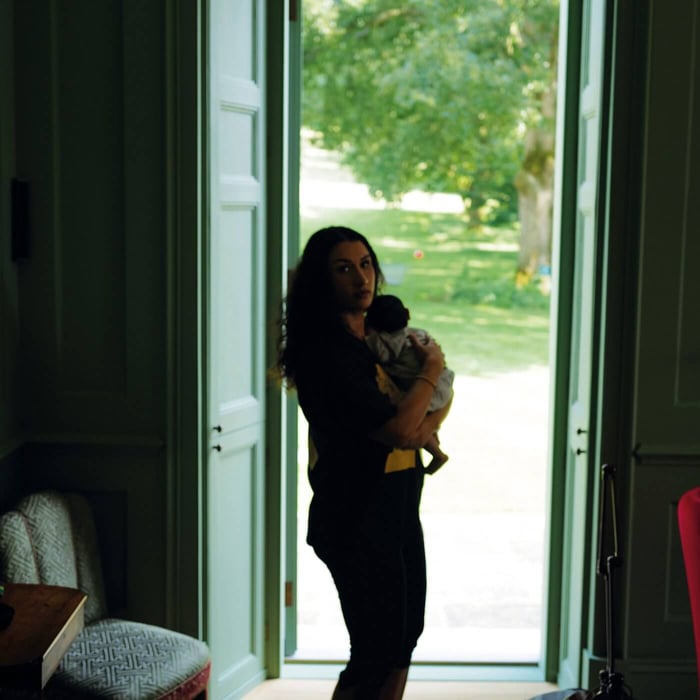
Jorja Smith’s What Are Odds Album Review: Dance Therapy or Bare Knuckles?


 See more Architeg Prints stories on Google.
Jorja Smith’s What Are Odds Album Review: Dance Therapy or Bare Knuckles?
Jorja Smith turns What Are Odds into a sleek dance record that still drags a liar into the light—sometimes gracefully, sometimes clumsily.

A record that smiles while it’s taking your phone away
This album doesn’t walk in like it wants your approval. It walks in like it already heard your excuses and left you on read.
And yeah, What Are Odds is absolutely built to move—house, grime, UK garage—the whole London-after-midnight toolkit. But it’s not “club music” in the lazy sense. It’s closer to the feeling of dancing because sitting still would make you text someone you shouldn’t.
The real setup: three years later, same producer, sharper intent
Here’s what I hear right away: time passed, habits formed, and Jorja Smith clearly decided to stop shopping around for a new sound just to prove she can. It’s been three years since Falling or Flying, largely shaped in Walsall with DAMEDAME*, and in that gap she’s leaned into the same creative partnership again and again.
You can tell she’s gotten comfortable returning to one producer’s world—P2J—because the music sounds like it was made quickly on purpose, not rushed. I picture the “we’ve done this before” ease: shared vocabulary, fewer explanations, more “run it back, that’s the one.”
There’s also this long-teased idea hanging over the whole thing: the friendly chatter about doing a dance project together. By the time the sessions actually happen—East London studio energy, a backlog of ideas—the album comes off like a stack of sparks caught before they could cool. Not some grand concept album, more like: three sessions, right place, right mood, hit record.
And that choice matters. When you build from house, grime, and UK garage, you’re choosing physical impact. You’re choosing repetition, pressure, and the kind of rhythm that doesn’t ask how you feel—it tells you.
She writes like she’s done tolerating half-truths
The biggest difference this time isn’t the beats; it’s the writing. On What Are Odds, she pushes more of herself into the lines, and the patience level is basically gone. This is not “let’s talk about it.” This is “answer me or disappear.”
There’s a practical, public-facing confidence wrapped around it too: she’s out here co-headlining All Points East with Tems on release night, and popping up as a musical guest for Saturday Night Live UK’s inaugural season in April. That’s not small energy. That’s “I can do this live in front of anyone” energy.
But the album’s private story is uglier. These songs orbit a liar—or maybe a whole genre of liar:
- the promise-maker who never delivers and never explains
- the guy professing love while literally standing in front of another woman
- the “dream home” salesman whose dream is, shockingly, imaginary
- the person who tells her she has no voice (bold move, telling a singer that)
The mood isn’t theatrical. It’s weary in a way that feels earned, like she’s already argued these points internally and now she’s just logging the final receipts.
“For Life” is the album’s meanest contradiction—and it works
Here’s the trick “For Life” pulls: it says “you can’t be saved by me now,” but it also admits she’d sacrifice her peace anyway. The bond feels real on her side, and totally absent on his.
Then the chorus plants the flag—“got you for life”—and suddenly the entire song is that gap. What she’s sure of versus his silence. It’s maddening in a way that feels intentional: she’s basically documenting how devotion can turn you into your own hostage.
I’ll make a claim some people will hate: the song is less romantic than it sounds. It’s not a love song. It’s a report from inside the trap.
When she strips the language down, the songs hit harder
Nobody can accuse her of writing with less ornament. But when she does go plain, it lands like a door closing.
“I Lied, You Lied” cuts deepest because it refuses to decorate
“I Lied, You Lied” is already in the leaving phase. She’s outside. The pre-chorus is brutally straightforward:
“Never really had a choice with me / I still stand here, and I can’t believe / When you said I had no voice, you see / I lied, you lied.”
No poetry contest. Just a verdict.
And then the second verse outclasses the first—because it’s specific, humiliating, and clear: he’s telling her he loves someone else while he’s in her face. Meanwhile it was all a game, and it only took her a second to see what was underneath.
She tells him to get over her. She even frames leaving him last time as “kind,” which is such a sharp little twist—because it implies he wasn’t hard to drop. That’s not bitterness. That’s clarity finally getting a spine.
Arguable but I’ll say it: this is the album’s best writing because it doesn’t sound like songwriting. It sounds like someone finally saying the sentence they’ve been rehearsing in the shower for six months.
“Pretend” and “What’s Done Is Done” aren’t sad—they’re done
The next move is interesting: she doesn’t just mourn; she audits.
“Pretend” plays from a different angle, but the conclusion is the same
On “Pretend,” she’s called it off so many times it’s almost comedic that he’d try to argue. She runs down the inconsistencies like she’s reading out a list she kept in her notes app:
“Many times, many ways, many games, many lies / What you say, how you moved, shit you do, don’t align.”
The bridge seals it:
“Now I’m done, I’m too good for this… I’m not like him, no, I can’t pretend.”
That last line matters. She’s not claiming moral purity. She’s claiming she’s not built for that level of fake.
“What’s Done Is Done” finally lets the mask drop
In “What’s Done Is Done,” she actually pauses long enough to ask what it was—work, his boys, or her—that made him move like that. And then she stops playing therapist and snaps the mirror up:
“You ain’t nobody / So quit lying to yourself.”
That’s not a diss for sport. That’s her refusing to keep treating his behavior like a mystery novel. Sometimes the explanation is: he’s not who he thinks he is.
The title track stops being about a man and starts being about the cost
The title track, “What Are the Odds,” is where the album breaks away from relationship debris and stares at the larger machine. No more “him.” Just her perspective, her exhaustion, her suspicion that the whole setup is rigged.
The second verse is the one that sticks:
- being young on a stage, mic in hand
- realizing everything… and still feeling like nobody’s really there
- nobody caring when the lights go out
- the crowd going quiet eventually
That’s the actual fear beneath fame: not that people don’t love you, but that their love has an off switch.
She points out something else that’s almost uglier: everybody wants something from you. She frames it like she’s asking how she even got here, but you can hear the answer—this is what success “costs,” and everyone sends an invoice.
Then comes the sharpest line on the track, a reference that’s almost too neat, but she sells it:
“Like Oliver Twist, you give, but quick like, ‘Please, can I have some more?’”
It’s funny in the bleak way, because it’s true. The giving becomes the expectation, and the expectation becomes a kind of hunger that never thanks you.
She also clocks the bigger world outside her bubble: people are scraping by, surviving however they can. And she admits the fantasy—if she had the means, she’d be the saving grace. But she doesn’t. And she knows she doesn’t.
I’ll admit I wasn’t sure, first listen, whether this track was going to feel preachy. It doesn’t. It feels resigned, which is somehow more unsettling.
“This City” is the album’s smartest mismatch—and it’s on purpose
There’s a London song here, and it’s not postcard London. It’s “This City,” featuring Devlin, and the entire point is that they’re not singing the same London.
Jorja’s verse sounds like the bill finally arrived. She lists what the city has taken: the running, the drained passion, the sense that it was better back when she had nothing. There’s a push-pull between needing to leave and wanting roots anyway. That’s the most adult thing on the album: wanting stability while your life refuses to slow down.
Then Devlin comes in and basically time-travels. He redoes his 2010 “London City” verse, and it’s like he’s sending a voice note from another era—A13 chaos, hundreds deep, “high on life,” wind in his face, tears in his eyes, smoking out the window with boys who might start a fight just to feel something.
And here’s the key: his words don’t respond to hers. Not even slightly. That’s why the feature works. The whole reason they share the record is the chasm—her weariness versus his reckless affection.
Arguable claim: it’s the album’s best “storytelling” moment precisely because it refuses to become a tidy duet. It’s two Londons passing each other like trains.
Where it slips: a few songs coast on sweetness instead of saying something
Not everything bites like that, and I don’t think that’s accidental—but it does make the middle stretch wobble.
“Dancing” is cute, not convincing
“Dancing” is sweet enough: the simple question of whether he fancies a dance, holding hands, putting yourself out there for romance. But for me it doesn’t get under the skin of the feeling. It circles the moment instead of stepping into it.
Maybe that’s the intent—keeping it light to avoid turning the whole album into court testimony—but it also means the song doesn’t linger once it’s over.
“Young Heart” aims backward, but doesn’t bring much back
“Young Heart” points at an earlier self, which should hit hard on an album this reflective. Instead, it feels like a note she’s already written before. I kept waiting for the line that would flip the perspective—something only she could say now—but it never quite arrives.
“Make It Your Home” is a breather… and then it disappears
“Make It Your Home” functions as a breather in the tracklist. She asks him to make her heart his home—simple, intimate framing—but an hour later (or honestly, a few tracks later) there isn’t much to grab onto.
On second listen, I liked its role more than the song itself. It’s a palate cleanser. It just doesn’t taste like much.
“Alive” is chemistry first, meaning second—and she knows it
Even the Wizkid single “Alive” plays like a chemistry experiment more than a lyrical statement. The switch into Pidgin and Yoruba in his verse definitely changes the texture—your ear perks up, the rhythm of the language pulls you forward—but what they’re expressing is pretty standard desire.
And maybe that’s fine. Not every track has to bleed. Still, placed next to songs where she’s calling out manipulation and silence, “Alive” can feel like a flirtation that wandered in from a different night.
Arguable claim: this track sells vibe better than it sells stakes.
“When It Gets Like That” is where she finally stops being polite
She saves some of her best work for “When It Gets Like That.” This is the one where the mess gets specific: up late, can’t sleep, making a thousand calls—maybe. That “perhaps” feeling is baked into it, like she’s half-ashamed she even tried.
She’s tired of being tested, even while admitting she loves him. And then the second verse hits with one of the most vivid images on the whole record:
“Another wave and I watered my seeds down / Watch it bloom then you tear it down / Feel like your favorite shoes the way you wear me out.”
That’s not just pretty writing. That’s a whole relationship dynamic in three lines: she nurtures, he destroys, and he still treats her like something comfortable he can use up.
Then the closer thought is brutal—sink or swim, he’d watch her drown. That’s the moment the album stops sounding like “heartbreak” and starts sounding like self-preservation.
I’ll be honest: my first impression was that the album might be too sleek to feel dangerous. By the time I got to this track again, I realized the sleekness is the point. It’s the polished surface over something rotting.
Where I land: solid, with three tracks that actually haunt me
I’m not going to pretend every song hits the same level. The record is solid, and it’s strongest when she’s either (1) stating things plainly or (2) letting the production carry tension while she stays controlled.
The ones that stick hardest for me:
- “For Life”
- “I Lied, You Lied”
- “When It Gets Like That”
Conclusion
What Are Odds sounds like Jorja Smith choosing motion as a coping mechanism: dance rhythms as the delivery system for lines that would be unbearable in a quiet room. When she goes for the throat, it’s gripping. When she coasts, you feel the air leave the tires.
Our verdict: People who like emotionally blunt R&B threaded through UK dance DNA will actually love this—especially if you enjoy lyrics that don’t beg, they invoice. If you want every track to be a dramatic showdown or a hook massacre, you’ll get impatient and start checking the timestamp like it owes you money.
FAQ
- Is What Are Odds a dance album or an R&B album?
It leans dance in its bones—house/garage/grime textures—but the writing keeps dragging it back into R&B intimacy. - What’s the main lyrical theme across the record?
A liar in various disguises: broken promises, public contradictions, and that exhausting refusal to explain. - Which songs hit the hardest emotionally?
“I Lied, You Lied” for the clean-cut finality, “For Life” for the contradiction, and “When It Gets Like That” for the imagery that actually stings. - Does the Devlin feature add anything real?
Yes, because it doesn’t “blend.” The mismatch is the point: two versions of London, two emotional temperatures. - Are there any weaker moments?
“Dancing,” “Young Heart,” and “Make It Your Home” feel lighter and less memorable—useful for pacing, but not the album’s sharpest writing.
If this album put you in the mood to stare at cover art like it’s an emotional document, you can shop a favorite album cover poster at our store: https://www.architeg-prints.com.
 | DISCOUNTGET 30% OFF*Use code on your next order:
|
* This post may contain affiliate links, meaning we earn a commission if you make a purchase through these links, at no additional cost to you.