Cleo Sol Gentlewoman Review: Self-Care Gospel, With Strings Attached


 See more Architeg Prints stories on Google.
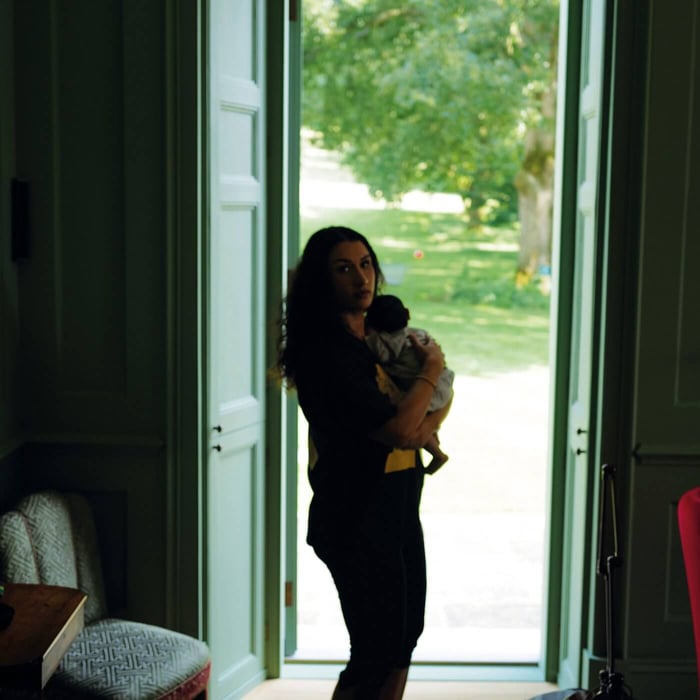
Album Review: Gentlewoman by Cleo Sol
An in-depth look at Cleo Sol's Gentlewoman album, exploring themes of self-care, faith, and emotional honesty wrapped in lush arrangements and intimate lyrics.
The Album’s First Trick: It Sounds Like Comfort—Until It Isn’t
I put on Gentlewoman expecting Cleo Sol to keep doing what she’s been doing for years: handing out warmth like it’s free tea. And yes, the album arrives wrapped in velvet. But it’s not a blanket this time—it’s a boundary.
The whole thing feels like a pivot that’s been overdue, like she’s tired of being everybody’s emotional emergency contact. Five solo records deep—still with Inflo producing under Forever Living Originals—she’s clearly decided the “healing for everyone else” era has limits. I’m not saying she’s stopped caring. I’m saying she’s stopped volunteering.
And the funny part is, the sound stays generous even when the message stops being so accommodating. That tension is the point.
“Freedom is no fear.” — Nina Simone
“I Only Look to You” Kicks the Door In (Quietly)
The opener, “I Only Look to You,” is piano balladry that plays it calm while the lyrics do something more radical: they prioritize her. The first line—“Finally, I’m looking out for me”—lands like someone turning around mid-sentence and realizing they’ve been facing the wrong direction for years.
At first, I thought it was just another graceful affirmation track. On second listen, it’s sharper than that. The verse is basically her ripping up old agreements: relearning trust, refusing to waste time where she doesn’t belong. The chorus pulls the classic forgiveness move, but she doesn’t frame it as sainthood—she frames it as escape. “The only way to heal myself is to forgive them.” That’s not mercy; that’s self-preservation.
And the bridge (“I’m getting stronger,” “it is time to set me free”) doesn’t feel like a climax as much as it feels like paperwork getting filed. She’s not begging for liberation. She’s processing it.
Arguable take: this is her most decisive “soft” song—because it isn’t soft at all.
Inflo Goes Big, Sometimes to the Lyrics’ Detriment
Here’s the ongoing Gentlewoman paradox: Inflo gives her some of the biggest arrangements of her career, and a few songs don’t fully earn that scale lyrically.
“Sweet Thing” starts with bass guitar and then keeps adding bodies to the room: Camilla Pay’s harp, strings under conductor David Campbell, a choir directed by John McGough, and James Williams on drums. It’s gorgeous in the way a cathedral is gorgeous—designed to make you look up whether you wanted to or not. Cleo tells someone, “You bring out the God in me,” and hopes he knows he’s not alone. The sentiment is sincere, but the production is so lavish it almost over-explains the emotion.
“Force of Love” leans dancehall-influenced and pulls in Rick Nowels on guitar. It frames love as “personal,” like something earned through what they’ve survived. “Sentimental Love” swings bossa nova-influenced, and it’s pretty in that sun-through-blinds way. “Together” rides bongos and Nick Ramm’s piano while she insists, “There is no doubt we are meant to be together.”
She means it, sure—but I kept waiting for a line that only she could write. “Nothing’s ever perfect/But we make it worth it” is true in the way a greeting card is true. The band is doing cinema; the words sometimes do shorthand.
Mild gripe, because it matters: when the arrangements are this high-budget emotionally, generic phrasing starts to show.
Arguable take: the romantic songs are the least specific writing on an album that’s supposedly about specificity—hers.
Then “Family Ties” Shows Up and the Gloves Come Off
The album turns when the lyrics stop settling. “Family Ties” is where she stops being the calm narrator and starts being the witness.
“Look me in my eye and you lie / Then I call you out and you cry… This ain’t family ties.” That’s not poetic fog. That’s a living-room confrontation. She lays out estrangement plainly and then drops the line that actually stings: “I know I’m my mother’s child / I could never be that cold / When you need me the most.”
She admits she can’t fix somebody else’s demons. She’s done doing the emotional labor and calling it love. She forgave, the cycle still held the other person back anyway, and now she has to be “the change.” It’s blunt, and it’s the first moment where the album’s mission statement feels non-negotiable.
Arguable take: this is the album’s real thesis track, not the opener.
“Honest Talk” and “Let Me Cry” Are Where the Production Learns Restraint
“Honest Talk” strips down to acoustic guitar—at least at first—and it’s the rare Cleo Sol moment that feels like it’s happening in real time instead of being arranged afterward. The first verse is practical almost to the point of cold: if they leave you, they were going to do it anyway, and you still have to be the change.
Then the second verse flips the mirror toward herself: “An honest talk with myself/How have I not seen this?” She calls out the truth that hurts because it’s ordinary: you can’t change someone’s direction; insecure people do insecure things; someone can “have the world” and still feel like something’s missing. That line doesn’t moralize. It just sits there like a receipt.
“Let Me Cry” brings piano and live instrumentation back in, but the feeling stays exposed. The whole song circles one exhausted question: can she please just be tired? “It’s a bit of a long, long day,” she sings, “I’ve been waiting so long.” It’s not dramatic; it’s depleted. And honestly, that’s why it works.
These three—“Family Ties,” “Honest Talk,” “Let Me Cry”—are where the musicians finally know when to get out of her way. The background stops trying to be beautiful and starts trying to be accurate.
Arguable take: the quieter production choices hit harder than the grand ones, because the album’s conflict is internal, not cinematic.
“Their Smiles Are Not the Same” Makes the Room Suddenly Huge
“Their Smiles Are Not the Same” starts with a bongo-laced arrangement and a clear-eyed admission: she learned again not to lose herself, but the people around her have changed. She’s not to blame, but she should’ve caught it earlier. That’s a brutal kind of maturity—owning the part where you ignored the obvious because it was convenient.
“Someone has to lose/So I have to choose/I know my heart is kind/But trust me, I’m no fool.” That’s the album’s spine: kindness without naivety.
And then at about 2:30, the whole thing opens up—drums, choir, strings arriving together. The effect isn’t just “bigger.” It’s like she’s singing the same sentence over a room that finally agrees with her. That swell feels earned because the song’s already done the hard part: naming the loss without turning it into theater.
I’m not totally sure whether that big arrival is meant to feel triumphant or just inevitable. Either way, it’s the kind of moment you replay because your body understands it before your brain does.
Arguable take: this is the album’s most satisfying “lift,” because it doesn’t pretend joy fixes anything.
God Shows Up Here Like a Conversation, Not a Billboard
Cleo Sol addresses God across the album, but it doesn’t come off like a performance of faith. It sounds like what it probably is: a person talking to the only listener who doesn’t interrupt.
“Thank You” is a dark time-waltz where Inflo plays nearly everything—plus synthesizer—and Cleo lands in a higher register at the end than anywhere else on the record. It’s not flashy; it’s a stretch, like she needs that height to get the words out.
God gets asked to let her mourn on “Let Me Cry.” God gets asked to show the way on “Imagine,” a slow-burn piano piece that eventually names what the trials cost: “It’s a tough, tough, tough, tough, tough situation/But I know it will change after the rain/Now you finally know your worth.” That isn’t cheap optimism. It’s the exhausted kind—earned, not sold.
If there’s a risk here, it’s that faith language can sometimes sand down the edges of human conflict. But on Gentlewoman, the prayers don’t erase the mess. They sit beside it. And that’s why they don’t sound preachy.
Arguable take: this album’s “spiritual” tracks work because they aren’t trying to convert anyone—they’re trying to survive.
“All Because of Love” and “Little Things” Show the Album’s Real Flex
“All Because of Love” is, to my ears, one of the strongest R&B songs she’s put in this era. It starts with emotional discipline: “I don’t wanna burden you with things I’ve been through/Even though it’s anger, babe, I swear it’s not at you/I’m just speaking my truth.” She recalls someone who shows up when nobody else does: “Just like magic, you appear when nobody cares.”
The bridge hands the steering wheel to God’s will—survive, you’ve got fight, you’ve got the blessing of life—and then she stops singing and starts talking. That choice matters. It turns the song from performance into confession. She thanks him for being there, admits she knows it’s been hard, and wonders if she’s actually been there for him. Then the line that hits because it’s too recognizable: “It seems like everybody goes when it’s really tough times.” She ends up telling him not to go a day without giving thanks for something—less like advice, more like a rope she’s tossing them both.
“Little Things” brings the band into focus: Max Ramey on bass, Austin Bohlman on drums, James Payne on guitar, Kate Hainsworth on horns. The lyric is simple—“It’s just the little things/Gives me hope in this big, cold world”—but here, simplicity works because the arrangement isn’t trying to audition for elegance. It feels like community around a central voice.
Arguable take: the album is at its best when she lets the song turn conversational—when she stops aiming for “beautiful” and starts aiming for “true.”
Where I Landed: Favorite Moments and One Lingering Complaint
By the end, Gentlewoman doesn’t feel like a reinvention—it feels like a correction. The album’s new direction isn’t that Cleo Sol suddenly cares about herself. It’s that she finally says it out loud, repeatedly, until it sticks.
Still, I can’t pretend every love-song line matches the sophistication of the musicians behind her. When the writing drifts into universal promises, it briefly dulls what’s otherwise a very specific emotional arc. The best tracks don’t just say “love”—they say what love costs, who it turns you into, and what it forces you to refuse.
Favorite tracks I kept returning to:
- “Sweet Thing”
- “Let Me Cry”
- “Family Ties”
- “All Because of Love”
Arguable take: if you only listen for the lushness, you’ll miss the actual story—because the story is her choosing herself and not apologizing for the noise it makes.
Conclusion
Gentlewoman is Cleo Sol letting the world keep its problems for once. The arrangements still sound like care, but the lyrics stop acting like care means compliance. It’s self-respect set to live strings—and when it hits, it hits because she’s finally the subject, not the service.
Our verdict: People who like soul music that feels like an honest text message (with a choir budget) will actually love this. If you need big hooks every 30 seconds or you get itchy when an album pauses to reflect, you’ll call it “pretty” and move on—probably missing the point while you do it.
FAQ
- What is the main theme of this Cleo Sol Gentlewoman review?
It’s about how Gentlewoman turns inward—self-worth, boundaries, forgiveness, and faith as lived experience rather than decoration. - Is Gentlewoman more about love or self-healing?
Both, but self-healing drives the album. Even the love songs feel like they’re being measured against her own stability. - Which songs feel the most emotionally direct?
“Family Ties,” “Honest Talk,” and “Let Me Cry” are the least polite and the most revealing. - Does the production ever overpower the writing?
Sometimes. A few romantic tracks have huge arrangements where the lyrics lean a little too universal. - What’s the best “big moment” on the album?
The swell around 2:30 in “Their Smiles Are Not the Same,” when drums, choir, and strings arrive together and the emotion finally fills the room.
If you’re the type who treats album art like part of the emotional package, you can always shop a favorite album cover poster at our store: https://www.architeg-prints.com — it’s a nice way to keep the mood on the wall without replaying the heavy parts daily.
 | DISCOUNTGET 30% OFF*Use code on your next order:
|
* This post may contain affiliate links, meaning we earn a commission if you make a purchase through these links, at no additional cost to you.