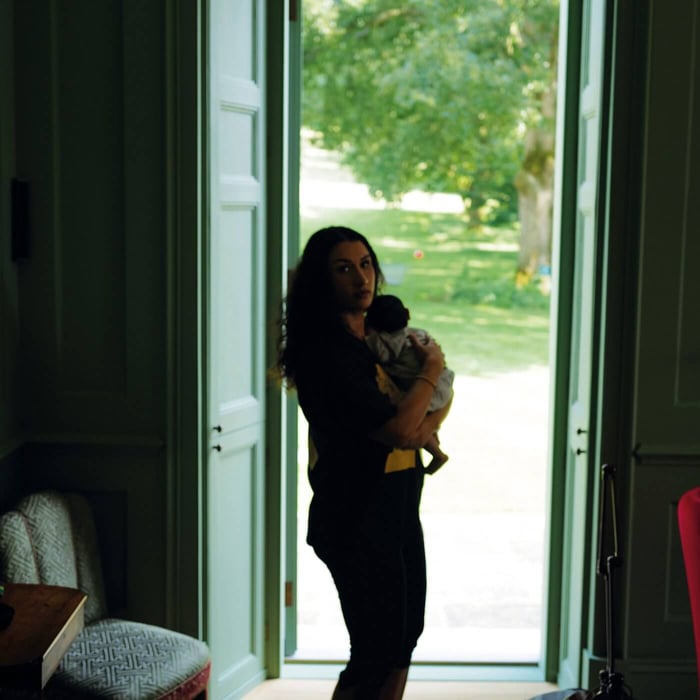
Sam Smith’s Hazel Eyes Review: Too Romantic, or Just Barely Real?


 See more Architeg Prints stories on Google.
Sam Smith’s Hazel Eyes Review: Too Romantic, or Just Barely Real?
Hazel Eyes is Sam Smith trying to make romance feel physical again—sometimes it hits like a bruise, sometimes it’s just pretty weather.

The Setup: A Voice That Won Too Much, Too Early
Here’s the thing about Sam Smith: the voice has been the cheat code for so long that it’s easy to forget the songs sometimes weren’t doing equal labor. On Hazel Eyes, that imbalance becomes the whole story—whether Smith meant it that way or not.
Smith’s path into this album feels like an escape and a return at once: leaving London, settling into New York after collecting the kind of awards people spend lifetimes chasing, and then circling back to ballads—the zone where the voice doesn’t just perform the lyric, it makes the lyric seem better than it is. That’s been the trick for years. Even a so-so line can sound carved in marble when Smith sings it.
After the club-pop detour of “Unholy” and the broader Gloria stretch, the mood swings back: smaller rooms, ballad-first instincts, and a long writing window—three years—built with David Odlum, Simon Aldred, and a few close collaborators, with some of it shaped at Electric Lady Studios. The whole process sounds like someone trying to learn how to sweat again after being applauded for breathing.
And yes, the album clearly wants to be “romantic.” But not the perfume-ad kind. More like the type of romantic that repeats itself until you either believe it or you don’t.
The Opening Move: Love Songs That Float on Purpose
The first stretch plays like Smith doing what they’ve always done: point directly at an emotion and trust the voice to deliver the meaning. And at first, I honestly thought, “Okay, same Sam—gorgeous, safe, untouchable.” But on second listen, I noticed something else: the album keeps testing how long it can stay in metaphor before it has to say something human.
The opener asks a night walker to dance—classic Smith territory, leaning into invitation and devotion. The promise is big and soft: becoming an echo in someone’s heart, a sparkle on the darkest nights. It’s sweet, but it’s also deliberately non-specific, like Smith is trying to make the words universal enough to fit anyone’s memory.
“Everlasting Love” doubles down on that hazy-romantic strategy. The second verse basically mirrors the first with only slight changes, which is either lazy writing or a calculated decision to make devotion feel obsessive—like love is circling the same thought until it wears a groove into your brain. I’m not totally sure which one it is, and that uncertainty kind of becomes part of the listening experience.
The Title Track: Four Seasons in a Blender
The song “Hazel Eyes” (the album’s anchor whether it wants to be or not) goes full painting-mode: autumn leaves, summer breezes, winter freezes, evergreens—all jammed into a single verse until the seasons stop being seasons and turn into one pastel smear of feeling.
That’s a choice. A bold one. And also a slightly suspicious one.
Because when you compress that much imagery, you’re not describing a person anymore—you’re describing the idea of being in love. The track sounds like Smith trying to freeze-frame a relationship before reality can walk into the shot. It’s pretty. It’s also evasive. And I think that evasiveness is intentional: Hazel Eyes is romantic in the way people get romantic when they’re scared the spell will break.
“Moondance” (feat. Feist): When the Metaphors Finally Risk Something
Then “Moondance” shows up with Feist and pushes the same approach into stranger territory—almost cosmic. Smith turns into sand, rides a river of sunlight, bumps into celestial bodies, and writes a constellation out of identity and devotion.
It’s dramatic, sure, but the drama works because it’s committed. The duet energy matters too: Feist’s presence makes Smith sound less like they’re singing at love and more like they’re inside a scene with another person. The track is proof that when Smith leans into the surreal hard enough, it stops sounding like cliché and starts sounding like obsession.
Still—this is where a weird truth shows itself: these first big, lyrical songs could be sung by almost anyone. The voice is the differentiator, not the writing. And Smith knows that. You can hear the confidence: “I don’t need the perfect line if I can make you feel it anyway.”
“My Guy”: The Album Finally Touches the Ground
The song that actually snaps into place is “My Guy.” It has the energy of being written in daylight—friends around, windows open, that kind of loose confidence where the melody smiles without begging you to cry.
“Like all good things, he caught me by surprise / You could dream he’s yours all you want, but he’s mine, mine, mine.”
That “mine, mine, mine” could’ve been obnoxious. Instead it lands as childish and lovable—possessive in a way that sounds like giggling, not controlling. The bridge doubles down, almost daring someone to argue: you can try, try, try, but you can’t have him.
And then—this is the key—the end of the chorus finally locks lyric and emotion together. Smith calls him “a breath of fresh air, a rose on the vine,” and admits people can stare all they want. Those images are small, grounded, easy to picture. No galaxies, no seasons colliding. Just a real-life brag with a little sunlight in it.
If the album has a thesis, it might be this: Smith sounds most convincing when romance stops trying to be infinite.
“When He’s Gone”: The Fight That Doesn’t Get Redeemed
The mood turns sharply on “When He’s Gone,” and it’s one of the album’s clearest wins because it refuses to romanticize the damage.
It opens mid-fight:
“Hate it when you speak to me with cruel and careless words / Everything you say to me, can’t you see it hurts?”
There’s no poetic curtain here. It’s plain talk, and the plainness makes it sting. Smith sounds like they’re looking around their own relationship like, how the hell did I end up here? The song treats fighting like a rigged casino—throw the dice, lose the same way, every time.
Then comes the flip, and it’s brutal because it’s self-aware:
“That’s the thing with passion, it passes like the weather / If he stays with me tonight, I promise I’ll be better.”
That promise expires inside the sentence. Smith knows it. The line admits the cycle while still participating in it. That’s what makes the track feel adult: it doesn’t pretend insight fixes anything. It just names the trap clearly.
My only gripe—and it’s mild, but it’s there—is that the song is so strong lyrically that it makes a few surrounding tracks sound even more like sketches. This album accidentally grades itself on a curve.
“Thief”: Time Zones, Wine, and Silence
“Thief” is quieter but just as pointed, opening with one of the album’s best concrete details:
“You’re on New York time / Over here it’s way past midnight / I drank a bottle of wine / So I can sleep tonight in silence.”
That’s the album actually doing life, not just mood. The distance is measured like an adult measures it: time zones, insomnia, the dull ritual of drinking just to turn your brain off. And that last word—silence—as the best-case scenario? That’s a bleak little victory.
From there, the song expands into bigger images—the gold rush, shaking the whole ocean, no cavalry coming—but it earns the scale because it started with a clock and a room and a body that can’t sleep. When Smith says, “Baby, you held heaven,” it doesn’t feel like a Hallmark line. It feels like someone trying to make sense of what they lost without giving themselves closure.
If Hazel Eyes is “incredibly romantic,” “Thief” is the part where romance starts to look like withdrawal.
The Album’s Best Writing Trick: A Dialogue That Can’t Finish
“Oh Mother” is the album’s sharpest writing because it stops being a monologue. It becomes a conversation—and not a neat one.
It’s a mother and daughter talking about a man who hurt her, and the tension comes from the fact that nobody can complete the story. The mother warns with almost mythic rage: beware the woman scorned, she could move mountains, cross the driest desert, tear the earth’s roots apart.
The daughter fires back with denial and panic in the same breath:
“He’s no man of mine.”
Then immediately:
“Mother, I don’t know where to start / If I stay, will he break my heart? / Maybe there’s still time to explain / But I’m too tied up in my pain now.”
That’s the real psychological mess: she wants rescue and permission to stay at once. By the fourth verse, the anxiety turns physical—sweat, breathlessness—begging her mother to come faster. It’s messy, embarrassing, familiar. And because it’s so specific, it hits harder than the album’s prettier abstract songs.
If Smith was “pushing themselves” anywhere, it’s here: allowing a song to remain unresolved, because real conversations don’t wrap up on the chorus.
Where the “Push” Shows… and Where It Doesn’t
From here, Hazel Eyes gets uneven—sometimes in a charming way, sometimes in a “did we run out of ink?” way.
“Constant Companion” commits to a cowboy image so fully that you can’t accuse it of half-trying. The image is kind of strange on Smith—like trying on boots that aren’t yours—but the commitment is the point. Smith is testing character, not just vocal performance. Whether you buy the cowboy frame is up to you, but the song at least sounds like it made a decision.
“Sugar Rush” kicks off with a flirty question—“Who’s that with the killer smile?”—and then, to my ears, it runs out of ideas before the second verse even arrives. The vibe stays pleasant, but pleasant isn’t the same as satisfying. This is one of those moments where the voice is working harder than the writing deserves.
“Hold On” and “To Be Free” lean on repeated language—rivers, feathers, freedom’s wings—and they’re nice to sit with, but they don’t go anywhere. They feel like songs that want to be cathartic without doing the narrative work that earns catharsis. After the specificity of “When He’s Gone” and “Thief,” these tracks can sound like the album slipping back into safe wallpaper.
And that’s the contradiction I can’t ignore: the album claims “pushing in every possible way,” but the push is audible in maybe four or five songs. The rest sound like Smith letting the voice do what it’s always done—carry the weight the pen didn’t pick up.
The Tracks That Actually Stay With Me
To be clear, when this album hits, it sticks. Not because it’s loud or trendy—because it gets concrete.
The tracks I kept replaying were:
- “My Guy” for turning romance into something you can actually picture
- “When He’s Gone” for letting the fight stay ugly and honest
- “Oh Mother” for writing the kind of conversation people avoid having out loud
That trio feels like the real Hazel Eyes: love as brag, love as damage, love as inherited warning.
Conclusion
Hazel Eyes isn’t Sam Smith “returning to ballads” so much as Sam Smith arguing with their own habits. When the lyrics stay in the clouds, the voice makes them glow—but glow isn’t always enough. When the writing drops into a room with a clock, a bottle, a mother’s warning, the album stops being pretty and starts being real.
Our verdict: People who like romance that occasionally shows its teeth will actually like Hazel Eyes—especially if you’re here for “When He’s Gone,” “Thief,” and “Oh Mother.” If you want every track to hit with the same lyrical precision, you’ll get annoyed halfway through and start side-eyeing the bird/river imagery like it owes you money.
FAQ
- Is Hazel Eyes mostly ballads or more pop-focused?
It leans back into ballad-first writing, even when the arrangements flirt with brighter energy—this is a voice-forward album at heart. - Which songs feel the most emotionally specific?
“When He’s Gone” and “Thief” land hardest because they use rooms, time, and ordinary damage instead of vague romance fog. - Does the title track “Hazel Eyes” define the album well?
Yes and no: it captures the album’s dreamy intent, but it also shows how often Smith prefers pastel metaphor over lived-in detail. - What’s the role of “Oh Mother” on the album?
It’s the sharpest writing here—dialogue, conflict, panic—because it refuses to tidy up the story. - Will fans of Sam Smith’s bigger, clubbier moments enjoy this?
Maybe in spots, but Hazel Eyes mostly prioritizes intimacy over spectacle; if you’re chasing another “Unholy,” this isn’t that party.
If this album put you back in an “album art matters” mood, it’s kind of nice to hang a favorite cover on your wall like a little receipt from your listening life. You can shop album cover poster-style prints at our store: https://www.architeg-prints.com
 | DISCOUNTGET 30% OFF*Use code on your next order:
|
* This post may contain affiliate links, meaning we earn a commission if you make a purchase through these links, at no additional cost to you.