Denzel Curry’s ii Album: Lo‑Fi Brilliance or Just a Fancy Argument?


 See more Architeg Prints stories on Google.
Denzel Curry’s ii Album: Lo‑Fi Brilliance or Just a Fancy Argument?
The ii album sounds like Denzel Curry and Kenneth Blume dared each other to regress—and somehow turned that friction into hooks, threats, and self-checks.
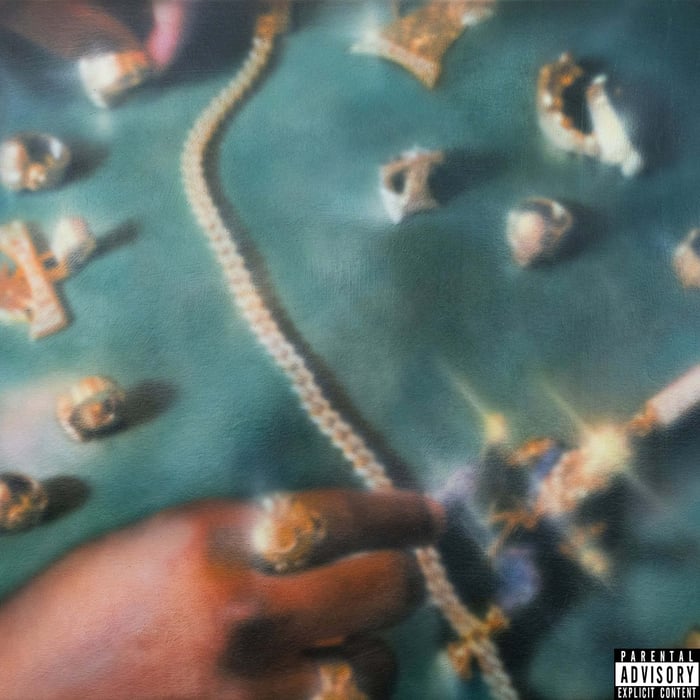
This album doesn’t “reunite” them—it corners them
Some albums feel like a victory lap. The ii album doesn’t. It feels like two people walking back into the same room after years apart, shutting the door, and deciding they’re either going to make something real or annoy each other to death trying.
The weird part is how intentional that tension feels. Not “chemistry” in the cute sense—more like the kind of chemistry where you’re not supposed to mix the liquids, but somebody does anyway just to see what happens.
The time gap is the point, not trivia
Here’s what you can hear before you even get precious about it: UNLOCKED happened fast—three days in 2020—and it wore that speed like a clean outfit. The follow-up taking six years isn’t some romantic “art takes time” slogan. It sounds like time got in the way.
In that span, Denzel Curry didn’t just sit around waiting for the sequel button to light up. You can feel how he’s been pulling his own sound toward abrasion: building a band called The Scythe, putting an album out with them this year, running the roads with Deftones across the UK and Europe, lining up fall dates with Knocked Loose, and talking like hardcore isn’t just a phase but a direction.
And Kenneth Blume—yeah, the guy most people still reflexively think of as Kenny Beats—doesn’t sound like he’s interested in being frozen in that old name either. He’s moved toward rock bands, and that shift is all over the edges of this record. He’s been stacking albums with Rico Nasty, Nate Smith, CARRTOONS, and Kiefer, and linking up on projects with Geese, IDLES, and Show Me The Body. Two careers splitting off like train tracks.
So when they meet again here, it’s not “Part Two.” It’s “What are we now, and can we stand it?”
That’s an arguable take, sure—but I don’t know how else you explain an album that sounds this much like compromise with teeth marks.
You can hear the disagreement baked into the setup
The ii album doesn’t flex a fancy room. It deliberately doesn’t. They trade the polished toolkit of UNLOCKED for an SP-404 beat machine and a cheap microphone, and the move feels like a dare: Let’s see what survives when we stop cushioning everything.
At first, I thought the lo-fi angle was going to be cosplay—one of those “back to basics” gestures that’s really just a new aesthetic for the same old control freak tendencies. But on second listen, it’s clearer: the roughness isn’t there to sound gritty. It’s there to make editing harder. It forces decisions. It forces them to live with the mess.
And yeah, I’m not totally sure how much of that mess is “private” versus performed. The album keeps that door closed. But it absolutely wants you to feel like you’re not supposed to be hearing it this close.
Denzel’s pen turns outward—then immediately turns on himself
The loudest trick here is that Curry doesn’t just rap well; he uses rapping like a method of confrontation. On “GONE FISHING,” he’s not subtweeting—he’s pointing. The target comes off like a fraud whose whole résumé proves he was never built for the job in the first place. Curry paints the booth like a gas chamber, calls himself a gorilla in the mist, and lands this humiliating image: the guy wanted to be a baller, but he’s really just an angry fan stuck in the stands.
That’s not “battle rap energy.” That’s someone enjoying the precision of disrespect.
Then “COLD NIGHT IN HELL” goes colder. The insults are structured like a career obituary: Wu-Tang said it’s yours, people confuse you for him because he took you on tour, you went from next up to busboy. Curry even slips in that line about there being a seat at the table—like he’s offended he ever made room.
If you think this stuff is just for drama, I’d argue the opposite: it’s Curry cleaning house so he can hear himself think.
And “EVIL GRIN” brings in JPEGMAFIA, who doesn’t show up to shock anybody. He rides the mood like it’s normal—calls it gospel—then casually considers starting beef with Peter, like the album is daring religion to respond. The targets keep shifting, but Curry’s delivery doesn’t: he keeps his hands around somebody’s neck the whole time.
That consistency is a choice. And it’s a risky one, because if you don’t buy the anger, you’re going to call it one-note. I bought it… mostly.
The other half of the record is Curry interrogating Curry
What keeps this from being a petty victory parade is how often he turns the blade inward.
“PRODUCT” starts almost too neatly: he’s from the hood, so he’s a product. But then he actually sits in the consequences. He raps about the cost of being packaged, the jealousy “recipe” with salt added because you have to preserve yourself, pressure spiking too high, kickbacks from deals he doesn’t even want anymore because he can’t tell who’s coming back for him. He lands on a detail that sticks: some problems don’t dissolve with drugs. And he basically admits he’s likely to try to handle it solo instead of calling his therapist.
That’s not a moral lesson. It’s an ugly little confession.
Then “BENJAMIN” pivots. Suddenly he’s walking around with moxie, talking with gusto, holding a titanium mic like Magneto handed it over personally. But the line that matters is the one that undercuts all that: if it’s all about the Benjamins, it’s not about him. He’s chasing money so hard the verse starts naming cheeses—Gouda, Ricotta—like he’s turning greed into grocery shopping just to make it feel less sick. From morning to pajamas, dollar-chasing becomes routine, not aspiration.
That’s the point: greed isn’t exciting here. It’s exhausting.
Arguable claim: this record’s most revealing moments aren’t the disses—they’re the places Curry sounds bored of his own coping mechanisms.
Blume’s beats aren’t the spotlight—they’re the trapdoor
Kenneth Blume’s production is doing something sly. You can tell he can go hard and gritty, and he can chop a soulful sample like it’s second nature. But on this album, his bigger job is restraint: build the floor, then get out of the way so Curry can stomp around on it.
There are other hands involved—j.robb co-producing “UPS,” and Homer Steinweiss, Leon Michels, Nick Movshon, and Paul Castelluzzo helping shape “EVIL GRIN”—but the larger design still feels like Blume’s. It’s his taste in what not to overdo.
And “UPS” is the clearest example of the “leave the verses alone” philosophy paying off. Curry stacks wordplay like he’s trying to bury somebody under it: lower than a handout, thoughts trained like a locomotive, metaphors piled until the enemies get the message—U-P without the S. Then the chorus slides in like the villain stepping into frame: closed casket for all your friends.
The second verse gets even more unhinged in a fun way—hand holding your head underwater, Capone-as-God for geriatric cats, a Louis Vuitton body bag shipped over Yosemite. It’s absurd imagery, but it works because the beat gives him space to sound confident saying ridiculous things.
Arguable take: “UPS” proves Curry sounds best when the beat isn’t trying to impress you—just trying to corner him.
“CROWN” is where luxury meets Curry’s skepticism
Then Westside Gunn shows up on “CROWN” and immediately changes the air in the room. He opens with bodies and hundred stacks, plants the scene in Eastside Buffalo, counts riches off fiends, notes plug prices dropping, then throws designer trunks in a bubble bath like that’s normal household maintenance. Jerk shrimp by the sand. Buffalo, Bahamas, promised land—all in one breath.
And what’s wild is how specific his luxury details are compared to Curry’s usual version of flexing. Gunn’s verse is like a travel brochure written by a man who doesn’t sleep.
Curry’s response is pointed, not jealous. He talks about legends without trophies. He calls out “targeting your audience” as obvious marketing. He sells out shows but claims he never sold out himself.
You can disagree with him—plenty of people do. But the tension is the song. Gunn revels in the excess; Curry treats excess like a test you can fail.
“DIFFERENCE” softens the punch without defanging it
“DIFFERENCE” is one of the album’s smartest emotional pivots because it doesn’t pretend softness is weakness—it uses softness as a weapon.
“Whiplash in my neck, I caught a glimpse of your regret / But your thinking cap is long lost through the wind.” — Yebba
Her refrain drops below ground zero: fighting everyone you know, worn thin on your rollercoaster. And Curry raps over it with the kind of practical cruelty that hits harder than name-calling—like giving someone money for a chain but not letting them buy their masters with it. Like beating someone at their own game the way Ali beat Liston.
Arguable claim: Yebba’s hook isn’t just decoration—it drags Curry’s pride into daylight where it looks a little less heroic.
Where it wobbles: “CANDLELIGHT” and the hook problem
The album isn’t flawless, and I don’t mean that in the boring “nothing is perfect” way. I mean there are moments where you can hear the seams.
On “CANDLELIGHT,” Curry says he’s never worked a nine-to-five, but people still have the nerve to ask what he’s working with. He flips an Eartha Kitt line and immediately pays respect—R.I.P. to the greatest Catwoman. That part lands.
But the spoken bridge—about a car with butterfly doors being a Pegasus—kind of wanders like it got left in because deleting it felt like admitting defeat. And the bounce run in the outro feels stapled on. Not disastrous, just… not as sharp as the album’s best instincts.
And “PRODUCT,” for all its great writing (the jealousy recipe, the hammer like Judge Joe Brown, the therapist detail), has a hook that starts to dominate the track. It’s one of the few times where the album’s minimal setup makes repetition more obvious instead of more hypnotic.
Still, the larger arc holds: Blume builds the floor, Curry stands on it, and what sounds like fighting turns into rapping—and then, when it’s lucky, rapping turns into art.
The tracks that actually carry the argument
If you want the ii album at full strength—where the push-and-pull becomes the whole appeal—these are the songs I keep coming back to:
- “GONE FISHING” (Curry at his most openly contemptuous)
- “CROWN” (luxury vs. principle, with no comfortable resolution)
- “DIFFERENCE” (proof the album can bruise without shouting)
You could pick others, sure. But these feel like the spine: insult, temptation, consequence.
Conclusion: the ii album wins by refusing to smooth itself out
The ii album isn’t trying to recreate the clean snap of UNLOCKED—it’s trying to show what happens when two collaborators grow apart, then force themselves back into the same cramped workflow anyway. It’s blunt. Sometimes it’s messy on purpose. A couple moments drift. But the central choice—to work “backward” with an SP-404 and a cheap mic—turns out to be the whole point: you can’t hide behind polish when the room is this small.
Our verdict: People who like rap when it feels like a real confrontation—ego vs. guilt, success vs. paranoia, luxury vs. principle—will eat this up. If you want your hip-hop smoothed, shiny, and politely inspirational, this will feel like sitting too close to someone else’s argument on public transit.
FAQ
- What is the core vibe of the ii album?
A tense collaboration where lo-fi tools and sharp verses make the songs feel like they were wrestled into shape, not carefully decorated. - Does ii sound like UNLOCKED?
Not really. UNLOCKED felt fast and clean; ii feels like a longer, rougher process that refuses to hide the friction. - Which tracks stand out most on repeat listens?
“GONE FISHING,” “CROWN,” and “DIFFERENCE” are the ones where the album’s conflict and clarity meet in the middle. - Is the album more about disses or self-reflection?
Both—but the self-reflection is what makes the disses matter instead of just sounding like sport. - What’s the main weakness?
A couple structural choices wobble—especially “CANDLELIGHT,” where the bridge drifts, and “PRODUCT,” where the hook can take over.
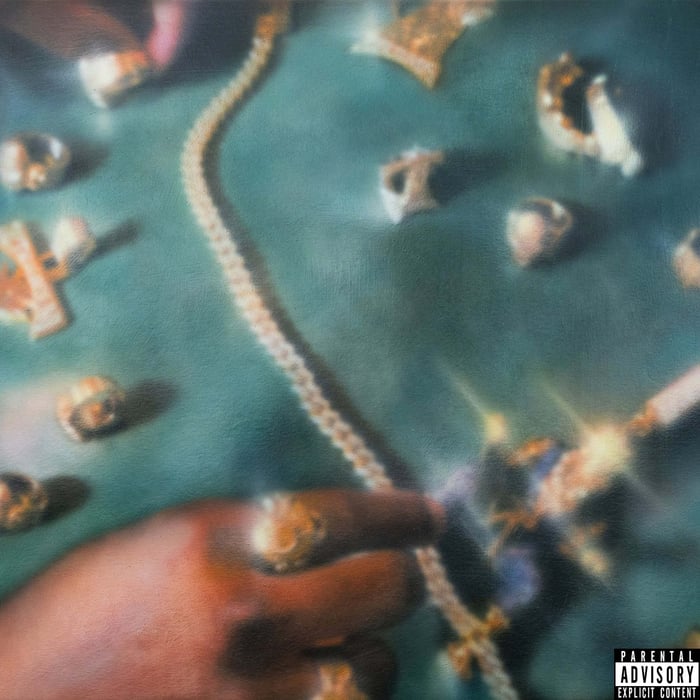
If this record’s cover is living in your head the way the hooks do, a clean poster of your favorite album art just makes sense on the wall—browse options at our store: https://www.architeg-prints.com/
 | DISCOUNTGET 30% OFF*Use code on your next order:
|
* This post may contain affiliate links, meaning we earn a commission if you make a purchase through these links, at no additional cost to you.