You Say I Romanticize Review: Post-Punk That Grins While It Swings


 See more Architeg Prints stories on Google.
ALBUM REVIEW: You Say I Romanticize – Sweeping Promises
You Say I Romanticize turns DIY post-punk into bright, nervy new wave—like dancing through a problem you refuse to “professionalize.”
A record that shows up already in motion
Some albums politely introduce themselves. You Say I Romanticize just starts pacing your living room like it’s got somewhere to be—and it’s not asking permission.
Sweeping Promises are a post-punk duo—Lira Mondal and Caulfield Schnug—and you can hear the bones of what this project has always been: two people building a whole little world without waiting for anyone to approve the blueprint. It began as a home-recorded thing, the kind that feels like it exists because not making it would be worse. Their debut landed in 2020 (lockdown timing basically forced a lot of artists to either rot or create), and a follow-up in 2023 pushed them deeper onto the radar of anyone who actually pays attention to DIY punk scenes instead of just wearing the shirt.
The title isn’t poetic—it's a dare
Here’s what You Say I Romanticize is really doing: it’s taking the “outcast” posture and refusing to sand it down for career-friendly reasons. The title reads like an accusation someone throws at you—
you’re making it all prettier than it is—and the album answers by making it prettier anyway, on purpose, like that’s the whole point.
This thing was put together across 18 months, and you can feel that span in how the record keeps switching lighting. Not in a sloppy way—more like it’s testing which version of itself survives contact with the outside world. The concept nods to Mary Shelley, which tracks: there’s a faint “assembled creature” energy here, like these songs were stitched together from urgency, jokes, dread, crushes, and static-y determination—and then sent out to get stared at.
I’m not saying it’s a literal concept record. I’m saying it has that built feeling: the album wants you to notice the act of making something while people are telling you to stop being weird about it.
“Shooting Shadows” opens the door by kicking it
The opener, “Shooting Shadows,” sets the terms quickly. It comes in on energetic guitar riffs, and the production has that rougher, slightly vintage edge—like it’s borrowing attitude from the 70s without cosplaying it. The sound isn’t “lo-fi for nostalgia points.” It’s more like: this is what the song looks like when you don’t polish away the friction.
At first, I thought the rawness might get in the way—like it was going to flatten everything into the same color. But a minute in, it clicked: the grit is the contrast paint. It makes the melodic parts feel brighter because they’re leaning against something coarse.
That’s also the first big clue about the album’s intent. It doesn’t want pristine. It wants alive. And alive usually means a little messy.
The second track acts like the album’s social life
Then “My Friend’s An Entomologist” slides in with the same general DNA—indie rock and punk—but it starts sneaking in psychedelic rock touches. The vibe is oddly specific in the best way: it feels like the song that plays when you’re trapped in a long car ride with friends and the conversation goes from dumb to weird to accidentally sincere.
This is where Sweeping Promises start smuggling in something people don’t always allow punk-adjacent music to have: ease. The album isn’t trying to prove it’s tough. It’s trying to prove it can move.
And honestly, that’s a more interesting flex.
Video: “Cocoon” (and why it matters here)
The record’s sense of movement really comes into focus around “Cocoon”—a track that, to my ears, sits in that sweet spot where alternative rock hooks and punk undercurrent share the same bloodstream.
If you’re expecting the record to only punch forward, “Cocoon” is part of the evidence that it also knows how to pull—how to make momentum feel like a lure, not a shove.
New wave isn’t an influence here—it’s a strategy
The most obvious shift across the record is how much new wave gets folded in. Not as decoration—more like a change in posture. Suddenly the songs get funkier and a little dreamlike, and the whole thing can nudge you into a better mood almost against your will.
What it reminds me of is that early new wave moment in the 70s and 80s, when punk’s urgency started flirting with pop structure and dance-floor instincts. It’s not subtle, and it’s not supposed to be. The album is basically saying:
I can keep the bite and still let my hips work.
Tracks like “Rapture, Or…” and “Does He Want To Be The Weatherman?” are where that collision feels most intentional. They’re the cleanest epitome of the record’s new wave/punk handshake—sharp edges, but with a cool grin. If you’ve ever thought certain punk records confuse joy with “selling out,” these tracks feel like a rebuttal.
Easy comparisons to Blondie come to mind here—not because the band is trying to impersonate anything, but because the songs understand that “cool” can be rhythmic, not just aggressive. That’s a hill I’ll stand on: the album’s most punk move might be letting itself sound fun.
The jokes aren’t throwaway—they’re protective coating
“Accent” lands as a tongue-in-cheek moment, and that matters because it shows the band isn’t trapped inside their own seriousness. The humor isn’t a skit; it’s a defense mechanism. It’s the kind of levity that keeps a record like this from turning into a manifesto.
Then “Abduction On Camera” pulls the energy into something more lowkey on the punk side, but it leans hard into funky synth territory. There’s also an element in there that sounds like a flute—and I’ll admit I’m not 100% sure it is. But whether it’s a flute or a synth patch pretending to be one, the choice is hilariously human: it’s the sound of a band thinking, “What if we add this?” and not talking themselves out of it.
That kind of decision is where the album’s personality shows. It’s not “perfect taste.” It’s taste with nerve.
Mild criticism, though: that same playful layering can also blur the punch a little. In a couple moments, I found myself wanting the rhythmic idea to hit harder, or for the mix to choose one main muscle instead of flexing several at once. The record usually gets away with it, but it doesn’t always.
When it goes alt-rock, it keeps the scuffed knees
Outside the new wave lane, the album also drops into alternative rock shapes while keeping an unpolished edge—like it refuses to put on clean shoes even when it’s walking into a nicer room.
“Last Man” is the obvious example. It’s bass-heavy, and it has this in-and-out-of-focus feel—like the song keeps stepping behind a curtain and coming back. The intrigue sticks partly because Mondal’s vocals hold attention even when the arrangement starts playing coy. If anything, the track feels like it’s testing how little it can reveal while still keeping you locked in.
Arguably, this is where some listeners will split: if you want everything to be a clean hit of chorus satisfaction, “Last Man” might feel evasive. I liked that it doesn’t beg. It just keeps walking.
Then you’ve got “My Anchoress” and “Cocoon,” which I’d describe as upbeat alternative tracks that pretty much guarantee some head-bobbing—except the punk undertone keeps them from turning into harmless indie bounce. They’re upbeat, sure, but they aren’t soft. They feel like smiling while clenching your jaw.
Finally, “Write Lightly” closes the record as a bouncy send-off. And that closer choice says a lot: this album doesn’t end by collapsing. It ends by moving. That’s a decision. It’s basically telling you the point isn’t catharsis—it’s continuation.
So what’s the album actually saying?
By the time the record finishes, what sticks isn’t one giant emotional statement. It’s the refusal to get “cleaned up.”
The whole title idea—outcasts trying to stay true to themselves while “professional” concerns try to scrub it away—doesn’t feel theoretical when you’ve heard the tracklist. The production keeps a rough edge even when the hooks get brighter. The punk attitude stays present even when the groove turns funky. The songs flirt with being crowd-pleasers, then side-eye you for expecting them to behave.
And I’ll be honest: on my first run, I mostly heard the bright new wave sheen and thought,
Okay, they’re leaning poppier.On second listen, I heard what’s underneath: they’re not going pop. They’re using pop structure as camouflage for stubbornness.
That’s not the same thing.
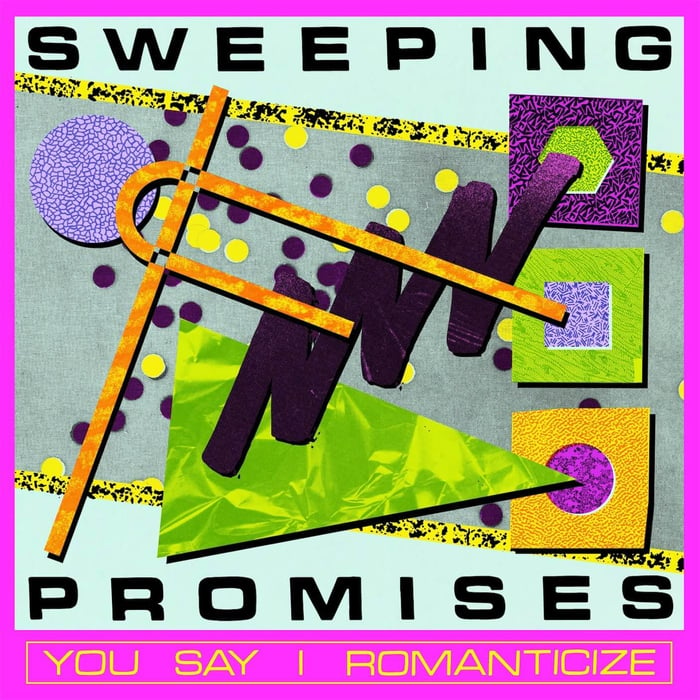
Album cover
Release note (because it matters)
You Say I Romanticize is out now via Sub Pop.
Conclusion
You Say I Romanticize doesn’t “grow up.” It learns how to sneak into adult rooms without taking off its boots, then dances just politely enough to avoid being thrown out.
Our verdict: People who like post-punk that actually moves—with new wave bounce, grit left intact, and zero interest in sounding “professional”—will click with this fast. If you need punk to be humorless, or you think fun rhythms automatically mean the edge is gone, you’ll probably roll your eyes and miss the point… which is very on-brand for an album like this.
FAQ
- Is You Say I Romanticize more punk or more new wave?
It’s punk in attitude and new wave in motion—the grooves and synthy touches aren’t decoration, they’re the engine. - What’s the best entry point track if I’ve never heard Sweeping Promises?
“Shooting Shadows” lays out the raw production and energy immediately, then the rest of the album starts reshaping that foundation. - Does the production feel intentionally rough?
Yes. The scuffed sound gives the brighter hooks something to push against, and it keeps the music from feeling too polished. - Are there any standout “weird” moments?
“Abduction On Camera” leans into funky synth textures, and there’s a part that sounds like a flute (or a synth pretending to be one). Either way, it’s a bold little twist. - Will fans of upbeat alternative rock enjoy this?
If they can handle some punk grit and a slightly vintage edge, tracks like “My Anchoress,” “Cocoon,” and the closer “Write Lightly” should land.
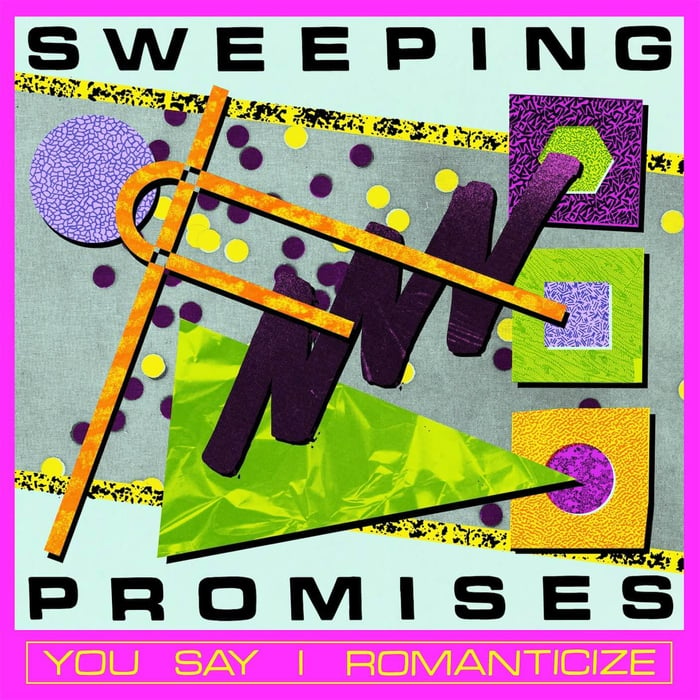
If this album’s visual vibe is living in your head now, it’s the kind of cover art that actually works as a poster—hang the obsession where you can see it. You can grab a favorite album cover print at our store: https://www.architeg-prints.com
 | DISCOUNTGET 30% OFF*Use code on your next order:
|
* This post may contain affiliate links, meaning we earn a commission if you make a purchase through these links, at no additional cost to you.