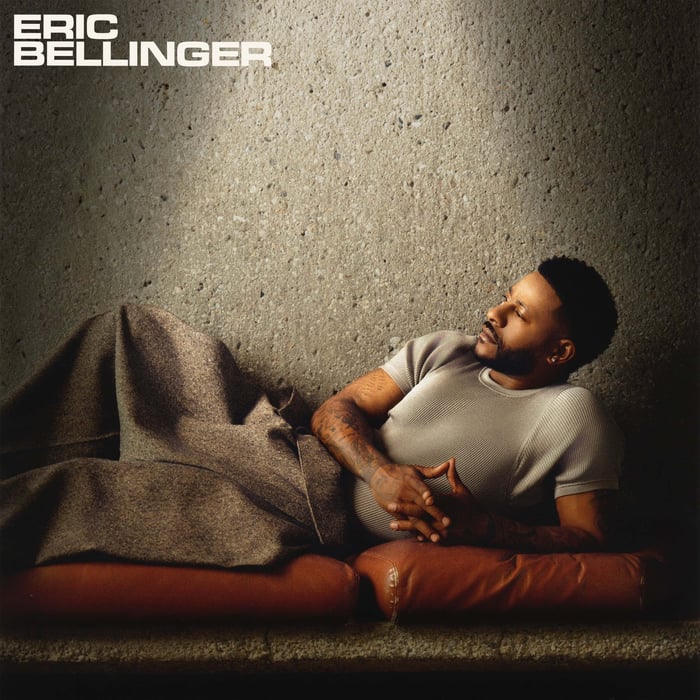
ROADRUNNER Album: Destin Conrad’s “Pretty” Rebellion (and It Bites Back)


 See more Architeg Prints stories on Google.
ROADRUNNER Album: Destin Conrad’s “Pretty” Rebellion (and It Bites Back)
Destin Conrad’s ROADRUNNER album turns dancehall history into a flex—and a dare. It’s catchy, loaded, and not always comfortable.

The hook: this album smiles while holding a lit match
This isn’t one of those records that politely “pays tribute.” ROADRUNNER album feels like Destin Conrad walking into a room full of inherited baggage, grabbing the loudest object, and saying: watch me use this anyway.
And yeah—sometimes that confidence is the whole point, even when it makes you squint.
“Chi Chi Man” history is the ugly shadow in the first few minutes
Before Destin even gets clever, the context is already radioactive. “Chi Chi Man” (T.O.K., 2000) wasn’t just a dancehall hit—it was a chorus that called for burning gay men in a bar. That phrase didn’t stay local either; it traveled wherever the music traveled, dragging the same meaning with it. It even got used as a campaign song by the Jamaican Labour Party in 2001, which is an almost absurd reminder that pop music can be a political weapon without changing a single drum pattern.
Other dancehall artists made their own versions of that violence: Buju Banton’s “Boom Bye Bye,” recorded when he was fifteen in 1988, goes straight for execution imagery. Beenie Man, Elephant Man, Bounty Killer, Vybz Kartel—same neighborhood of messaging, different coats of paint.
By the mid-2000s, backlash became organized. LGBT organizations in Jamaica, the UK, and North America pushed the Stop Murder Music campaign hard enough that it had teeth: Scotland Yard stopped Beenie Man at Heathrow Airport; concerts got canceled across the UK, Europe, and Canada; visas got refused. The point wasn’t subtle: if the music insists on exporting hate, the world can refuse the shipment.
That’s the stain the phrase carries. Not “controversy.” Not “debate.” A stain.
So when T.O.K. walked it back, Destin picked it up—on purpose
T.O.K. eventually removed “Chi Chi Man” from their discography and live performances in 2023—twenty-three years after it first ripped through Kingston. But the phrase didn’t vanish just because the originators got nervous (or got wise). A Jamaican government minister was still playing the song at a political rally as late as 2024, which tells you exactly how “retired” that idea really is.
Then Destin Conrad names a 2026 song “CHI CHI” after that bar-scene line. Not a wink. Not an accident. A direct grab.
And he twists it. He quotes the burning line’s imagery in the same breath as money, trust issues, and the paranoia of moving through a space where you’re not sure who wants you there. The verses don’t stay in the old hate; they sprint elsewhere:
“I never put my trust in no man…
I come and get my money and then I’m dipping…
Just in case shit get sticky…”
He even frames it like a getaway scene—driving off in a Benz because he knows they’d rather not see him driving at all. That’s not just songwriting. That’s someone using luxury as armor.
Then the hook flips the vibe again: he pulls up with his girl, drops, “And all of di man name Chichi/And we look pretty like Ricky.” That’s the move. He takes a phrase used to end people, and he uses it to preen. It’s almost outrageous.
I’m not totally sure it’s “safe” reclamation, if that’s even a thing here. But it is a choice with teeth.
Destin’s background isn’t trivia—it’s the engine
This record doesn’t work unless you understand the personal contradiction powering it. Destin’s mother is Jamaican. He grew up hearing this kind of music in the house. He’s openly gay. So when he steps into dancehall textures, it doesn’t sound like costume jewelry—it sounds like an inheritance he’s arguing with.
He also isn’t some brand-new hobbyist. He went viral on Vine as a teenager, wrote songs for numerous artists, and dropped four EPs between 2021 and 2024. His first album landed in 2025: Love on Digital (Grammy-nominated for Best Progressive R&B Album), and then wHIMSY—a jazz album—arrived four months later. By June 2026, he’d been nominated for Best New Artist at the 2026 BET Awards.
So ROADRUNNER album doesn’t feel like “Destin tries dancehall.” It feels like he finally stops asking permission.
The patois isn’t seasoning—he uses it like a passport
Here’s the part people will argue about: Destin sings in Jamaican Creole (Patois) across most of ROADRUNNER, and it doesn’t come off as a quick accent for flair. It’s more like he’s building the album’s floorboards out of it.
And that’s loaded, historically.
Jamaican Creole was built by enslaved Africans in the seventeenth century—people thrown together from dozens of languages, forced onto the same plantations, needing to communicate with each other and with the British who owned them. English words plus West African grammar. For three centuries, the colonial hierarchy treated it as broken English—speech of the uneducated and rural poor. That “broken” label was never about linguistics; it was about control.
Dancehall itself—growing from Kingston sound systems in the late 1970s—was always closer to street life than roots reggae. You can hear the lineage: U-Roy, Yellowman, General Echo shaping vocal styles over riddims engineered by producers like King Tubby and Junjo Lawes. The whole thing moves like a living broadcast.
And it traveled. Jamaican diaspora carried the culture on established Miami–New York City routes: Brooklyn, the Bronx, Brixton, Notting Hill, Toronto, and down into Caribbean communities in Florida—Tampa included. As of the 2020 U.S. census, almost a million Jamaicans lived in the U.S., with the largest population in Florida, then New York.
So when Destin leans into patois, it reads like diaspora behavior, not gimmick behavior.
Miss Lou, Rastafari, and why “deliberate” language changes the mood
Louise Bennett—Miss Lou—was one of the first writers and performers to put Patois forward as art starting in the 1940s. Then Rastafari adopted it as anti-colonial resistance. Reggae exported it. Dancehall exported it even harder.
In diaspora, Patois often shifts from everyday speech into something more intentional—a marker. A way for the children of immigrants to say this is where I’m from when they’re far away and surrounded by different rules.
Destin uses it like that marker. On “NERVOUS,” all the raps are in it:
“Boy ah vex ‘cause him girl want itch up/I spend cash every time I get up/Nah sell out, mi friend dem won’t switch up/When I walk in the room, dem get up.”
Then he does something sneakier: he brackets that patois with a sample of a Chinese folk song sung in Mandarin by Yuyuauas33b, connected by an English-language bridge—“Got a Blasian one weh speak Chinese.” Three languages in one song, and patois is the ground everything stands on.
That’s not “fusion.” That’s him insisting the center of gravity stays Jamaican even while the room fills with other voices.
“NO MORE” makes distance sound like a subwoofer problem
The Florida diaspora detail matters because the album keeps treating geography like emotional weight. There’s a specific kind of family reality here—living between continents the way other Americans live between states. The distances aren’t just miles; they’re alternate lives.
On the dub-induced “NO MORE,” Destin drops one of the cleanest relationship lines on the record because it’s so casually brutal:
“The love I had for you moved on to a new apartment outside the continent…”
Then he pins it down: “You in New York City, babe, New York, New York.” The breakup crosses an ocean. Someone says “come home,” and he can’t. The music leans into that spacey dub pressure so the separation doesn’t sound poetic—it sounds logistical, like missed flights and time zones and ego.
And the “DAY DRINKER INTERLUDE” right after? It lands like the little human collapse between big decisions: a workday drinking session, him mentioning someone he shouldn’t, then second-guessing whether to swallow pride and call the ex. It’s messy in a convincing way, like he doesn’t even enjoy the drama but keeps touching it anyway.
I thought that interlude would feel like filler on first pass, but it started making sense once I heard how it functions as the album’s “hangover breath” before the next flex.
The title track’s shopping spree is basically character development
On “ROADRUNNER,” he walks into Neiman Marcus and spends “a light three.” The number is tossed off like it’s pocket lint, which is exactly why it works: he’s performing ease. He introduces himself like a cartoon of capitalism—Mr. E, Mr. Get Money, Mr. Spend—then softens it with a lover detail: vintage denim and a white tee.
That contrast is the album’s whole trick. It wants you to notice how fast he can switch between tenderness and transaction. Some listeners will call it shallow. I think it’s closer to a diary written on receipts.
“SKIN OUT” and the album’s love of testimony
“SKIN OUT” is where the record stops pretending it’s only introspective. It turns into a little courtroom of bodies and confidence.
Miss Tito pops in saying the skirt fits perfect, the bumpa’s heavy, and she doesn’t skip dinner. Then Stalk Ashley, calling herself a judge, gives testimony. The whole thing plays like Destin curating a community voice—almost like he wants the album to be overheard, not merely listened to.
If I’ve got a mild complaint, it’s that this section flirts with feeling like an audio cameo parade—the energy is real, but the song risks leaning on personality snippets instead of building a hook that hits just as hard on its own.
The closer is a cover that refuses to be polite about it
The show closes with a cover of Kevin Lyttle’s 2003 soca hit “TURN ME ON.” Destin stays on the original wining-party structure—one hand on the ground, bumper cocked sky-high, winding hard, whispering in your ear to whine harder. It’s not subtle, and it’s not trying to be.
And the detail that matters: Kevin Lyttle isn’t Jamaican—he’s Vincentian. That matters because ROADRUNNER album keeps blurring Caribbean lanes on purpose. It’s not a museum display; it’s a living playlist where borders don’t get the final word.
“DANGER” and “FAVORITE LOVER” are where he admits he’s the problem
“DANGER” rides sweet reggae warmth while Amanda Reifer opens with flirtation:
“Hold a minute/If I touch you will it disappear/Bring it to me let me test your gear/And if you good for the ride I’ll steer…”
Destin comes in and basically refuses the fantasy:
“No, babe, I can’t just give this shit away like it’s not nothin’/You can’t just drop out when you want den come pop in.”
That’s a boundary, sure. It’s also control. He’s making romance pass a credit check.
Then “FAVORITE LOVER” goes even further into contradiction. He delivers one of those lines that’s honest because it’s unfair:
“Oh, did he say, ‘I love you,’ under covers?/But is it wrong if I say/That I don’t want you that way…”
And then: stay the night, leave in the morning. He invites and ejects in the same breath. It’s not “conflicted”; it’s managerial. Like he wants intimacy with terms and conditions.
A reasonable listener could say this emotional push-pull is the album’s real theme—not culture, not language, not luxury. I wouldn’t fight them.
“DADAMAN” is where the flex becomes a camera angle
KAYTRANADA produced “DADAMAN” with kwn, and the track hits with that bass-kick heft that makes the room feel smaller. Destin “lifts the latch,” picks up the MacBook, turns on the camera—suddenly the flex isn’t just lyrical, it’s staged.
He says:
“Get bags then spend like ten racks on shoes/Fifteen on the bag twenty on the coat/Hatin’ niggas mad I don’t give a fuck.”
It’s brash, and it’s supposed to be. But here’s the twist: the confidence reads a little defensive, like he’s daring someone to call him undeserving. The money talk doesn’t feel like celebration; it feels like proof-of-life.
What ROADRUNNER is really reclaiming (and why it’s not comfortable)
Destin clearly likes taking what he loves from R&B and applying it while he explores other genres. ROADRUNNER album feels like his personal “reclaiming” statement—less a lecture, more a physical act. He even threw a dancehall bashment at The Steel Yard in London the week the record dropped, and he’s booked all over the world for the rest of 2026.
That trajectory makes sense because the album is built like a door kicked open: the music his mother brought into the house made room, and he walked straight in.
Still, I keep circling back to “CHI CHI.” Naming your song after a phrase tied to real harm is a high-wire move. Some will hear it as necessary confrontation. Some will hear it as reckless. I’m honestly torn—what surprised me is how unbothered the song sounds while carrying all that history, like he refuses to perform apology even when the context begs for it.
Maybe that refusal is the point. Or maybe it’s the risk.
Conclusion
ROADRUNNER album doesn’t “blend genres” so much as it drags personal history onto the dance floor and makes it dance anyway—money, patois, dub haze, lovers rotating like a door that won’t latch. It’s bold enough to reuse a cursed phrase and pretty enough to make you sing along before you remember what you’re singing near.
Our verdict: People who like their R&B playful but sharp—and don’t panic when culture gets messy—will love this. If you need your dancehall references sanitized and your love songs emotionally responsible, this album will irritate you like sand in a shoe (designer shoe, obviously).
FAQ
- What is the core sound of the ROADRUNNER album?
It leans into vintage dancehall riddims, reggae warmth, dub space, and R&B instincts—often in the same track. - Why is “CHI CHI” a loaded title?
Because “chi chi man” historically traveled as a slur tied to violent anti-gay dancehall lyrics, and Destin intentionally repurposes the phrase. - Does Destin Conrad sing in Patois on the album?
Yes—across most of ROADRUNNER album, with “NERVOUS” featuring patois raps and additional language elements layered around it. - Which track best captures the album’s long-distance emotional angle?
“NO MORE,” especially the line about love moving “outside the continent,” followed by the wobblier human moment of “DAY DRINKER INTERLUDE.” - Is the album more romantic or more transactional?
Both, and that’s the tension—songs like “FAVORITE LOVER” practically turn intimacy into a checkout lane.
If you’re the kind of person who misses album covers that say something, consider grabbing a favorite cover poster to live with for a while at Architeg Prints—it fits the whole “music as identity” thing without you having to explain it to guests.
 | DISCOUNTGET 30% OFF*Use code on your next order:
|
* This post may contain affiliate links, meaning we earn a commission if you make a purchase through these links, at no additional cost to you.