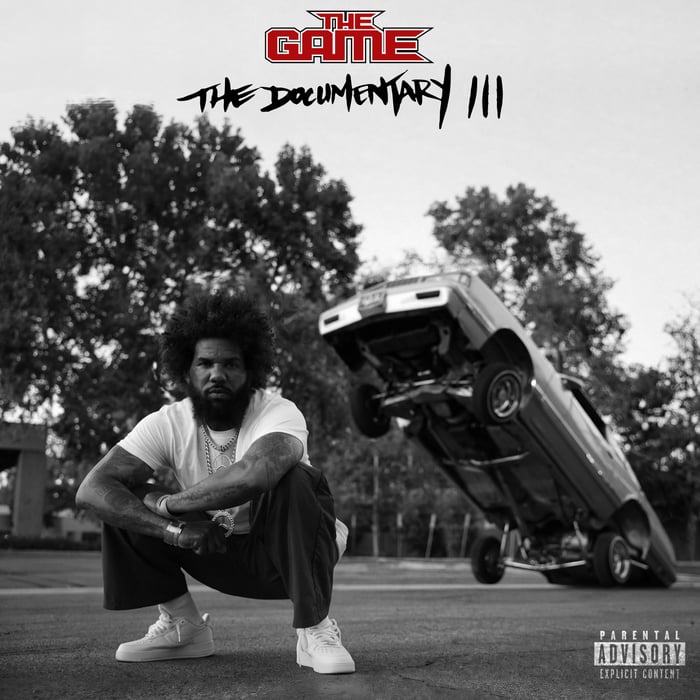
The Documentary III Review: The Game’s Petty Victory Lap (Oops)


 See more Architeg Prints stories on Google.
Album Review: The Documentary III by The Game
A deep dive into The Game’s eleventh studio album, exploring his legacy, struggles, and moments of raw honesty amid nostalgia and tension.
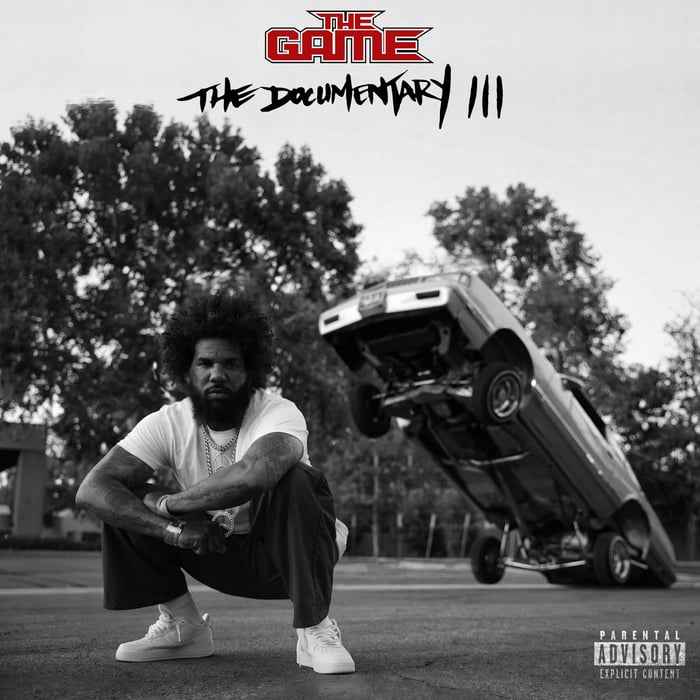
Courtesy of Numinati/FTS Global Management LLC.
A quick warning: this album isn’t begging for approval
The first thing The Documentary III does is act like it doesn’t need anyone. And that’s the point: this is The Game operating like every major door that once swung open for him got quietly bolted shut—so he built his own hallway and started pacing in it.
He came into rap with the full machine behind him—Dr. Dre production, 50 Cent’s cosign, the whole “next up from Compton” institutional rollout. Then that relationship snapped early, and he’s been moving like a lone franchise ever since. This record lands independently through his own setup (Numinati with FTS Global Management), and it’s framed like a return to the era when he had a label and a crew holding the story together.
That framing matters, because The Documentary III isn’t trying to sound “new.” It’s trying to sound placed. Like: put me back where I belong, even if I have to draw the map myself.
Hip-hop status is a group project—and he keeps turning in solo work
Here’s the ugly truth the album keeps circling: rap doesn’t just grade you on rapping. It grades you on your alliances, your umbrella, your co-sign web, and the critical audience that decides you’re worth treating seriously.
The Game has been missing those buffers for a long time. And listening to this, I kept thinking: he raps like somebody who knows he can still outrap plenty of people, but also knows that skill alone doesn’t reassign you a seat at the table.
There’s even a moment later where a clip (pulled from the Joe Budden Podcast) flat-out says what the album implies: he’s one of the nicest ever, and his public behavior is why his legacy doesn’t match his pen. That’s not a gentle observation—it’s basically a eulogy for his reputation, delivered while he’s still very alive and very loud.
I don’t totally know if The Game includes that clip as self-awareness or as a dare. Maybe both.
“Game Recognize Game” is him talking to himself like it’s a court transcript
This section hits different because it’s structured like an argument between versions of him.
On “Game Recognize Game,” a younger voice talks betrayal—labels turning their back, silence from Dre. Then the older voice comes in with the stuff that actually changes you: he’s been shot, he has a son, and then—fast—two more kids. And then the hardest line isn’t even about rap: his father died, and he didn’t have enough time to show up the way he wanted to for his sick mother.
That’s the album telling you what the real conflict is: not “they don’t respect me,” but “life kept happening while I was busy proving a point.”
It’s also where I had my first “wait, okay” moment. Going in, I thought this might just be another long The Game album stuffed with name-drops and old beef fumes. But the personal losses land with enough weight that the nostalgia starts feeling less like a costume and more like a coping mechanism.
“The Pen” is nostalgia, but not the cute kind
“The Pen” runs over a Statik Selektah beat and rewinds to early-career snapshots: him and RJ posted up on a crate with forty-ounce drinks, gangs driving by, Snoop Dogg telling him he’s going to be successful.
The important part is that he says he was ready to quit. That one detail changes how all the flexing reads later—like he’s been arguing with himself for two decades, and the verses are just the paper trail.
Then the album flips back into the grudges. There’s a mention of a 50 Cent jab that took up half a verse and got a direct response. There’s also the Kendrick Lamar situation: dismissed in a single bar… yet he keeps slipping in GNX multiples anyway, like he wants credit for not escalating while also keeping a finger on the bruise.
That contradiction is very Game: he’ll swear he’s above it, then spend the next minute proving he’s still tracking the scoreboard.
“Geezus” is recruitment, ego, and threat—all in the same breath
“Geezus” is The Game pitching belief like he’s trying to build a following. He runs through the options—Allah, Jesus, yourself—and then, casually, adds himself as a fourth. That’s either hilarious or horrifying depending on your tolerance for rappers treating charisma like theology.
The verse stays dense: threats, set claims, car-chase energy. And then he tosses out a line about Drake being “in a treason,” and insists Westside people don’t pick sides.
And yet, later he absolutely contradicts that posture on the truly awful “No Brakes” (yes, ironically featuring Drake), where he raps: “Nigga said pick a side, then I’m pickin’ homicide.”
It’s a bad song, and not in a fun way. It feels like the album briefly forgets it’s supposed to be a statement and turns into a checkbox: big feature, hard line, move on. I get what he’s going for—menace as branding—but it plays like a forced grin.
“Steppers” is where the wordplay actually earns its calories
The album’s most entertaining technical trick might be “Steppers,” mostly because Lil Wayne treats the title like it’s a suitcase with infinite compartments.
Wayne flips “steppers” through every meaning available: stepping up, stepping on, stepping onto the moon like an alien. Then the hook pivots into a Greek-letter step show, shouting out Kappas, Deltas, and AKAs—suddenly the track is doing choreography in your head.
The Game’s verse keeps the pattern going but swerves wide: video game references, a tango, a woman keeping score. And right when it’s about to feel too clever, he drags it back to the street with a line that sticks: ice on his neck, still yelling for his vatos against ICE.
That’s what he does well on this album—stack meanings until they feel like pressure, then puncture the wordplay with something real enough to sting.
“I Won’t Be Afraid” is the high-wire moment—and it doesn’t flinch
If you want the album’s sharpest rapping, “I Won’t Be Afraid” is the spot. Black Thought’s verse is a whole end-of-life scene rendered in rhyme: imagining his death day, threading Malcolm at the Audubon and Martin on the terrace of his parents’ house, then asking heaven to receive his spirit.
He even compares it to his own “Severance”—wanting only the closest people around when it’s time. That’s not rap therapy; that’s a man deciding how he wants the room arranged for the last chapter.
Sade’s “Cherish the Day” gets sampled, which gives the track a weird kind of grace—like the beat is trying to hold the ceiling up while both rappers talk about collapse.
The Game’s opening imagery is cinematic and bleak: a pool of blood, a chariot on fire, a Mercedes full of bullets, and he’s still alive asking where his head is supposed to go. He says he came in with a pure heart and vultures ate it.
That line feels like the album’s real thesis—more than any “I’m the best” claim. It’s him insisting the world corrupted the intent, not the talent.
“40 Nights” tries to talk power, then sabotages itself
“40 Nights” starts like a conversation about label math: sell a hundred million records before you recoup. He points at the obvious scam—labels keep the money—then lands on a solution: take the power back, break the hourglasses.
I’m not sure the song fully explains what that means in practice, but the mood is clear: he’s tired of watching time get weaponized against artists.
Between sections, singer Antony Santos appears with a Spanish-language passage. Later, Santos references Kanye’s comments about Jews and pushes back on them—only for Kanye’s own final verse to end in coarse sexual imagery and a punchline about a coat store.
And that’s where the song collapses. Whatever it’s building toward, the ending makes it feel unsatisfying, like the track trades its momentum for shock value and then doesn’t even get a clean shock out of it. It’s a weird choice, and it makes the social commentary feel disposable.
“Geekin” chases danger, then dodges it on purpose
On “Geekin,” Drakeo the Ruler comes in with a verse that moves like a drive-by thought process: target in sight, body in a bag, and a warning about the price of leaks. It’s tense without sounding theatrical.
The Game follows him into the street on twenty-fours, talking about dodging RICOs. But then the scanner dies, and instead of going straight into the confrontation, he turns the car the other way—saving the clash for another day.
That detail matters: the album keeps acting like it wants war, but sometimes it chooses survival. And honestly, those moments read more believable than the constant “I’ll do anything” posturing. The grown-up decision is the swerve.
The club detour: “In the Way” is the album going numb
Tyga shows up on “In the Way,” and the whole track feels like it was assembled from a folder labeled “2014 Club Attempts.”
It’s a butt-focused club song that runs through the usual geography roll call—women in Atlanta, Miami, Toronto—strip club talk, who’s got the juice. Three verses, one idea, and the idea wasn’t even fresh when the beat got made.
What bugs me isn’t that it’s raunchy. It’s that it’s lazy in a way The Game could’ve prevented. A dozen songs like this have the same weight, and the only person who could’ve cut it is the guy who insisted on keeping it.
That said, the album almost uses these moments as contrast: like, “See? I can still do the dumb stuff too.” But being able to do something isn’t a reason to make me sit through it.
“Nothing 2 Hide” is the mirror scene—the one that actually hurts
“Nothing 2 Hide” opens with sustained self-harm imagery, then pivots into a scene where he’s in front of a mirror, trying to lift himself up, but also admitting he wants to fight the person staring back.
That’s the real cost of performance: pour your insides out under lights long enough and you start confusing confession with punishment.
The track includes a phone clip of Suge Knight telling him he doesn’t need to apologize. The Game also recounts a studio session from years back before a friend died. And Suge drops the line that doesn’t leave the room: life is in the fourth quarter, and there’s no overtime coming.
That’s not “rap wisdom.” That’s a clock ticking in your ear.
“Do You Love Me” is him begging without admitting he’s begging
“Do You Love Me” runs on samples and plainspoken need. He asks to be loved like the Bloods love, like his mama loves, like drama loves. The second verse turns into a question about whether he has to die to get his flowers.
Then he sketches a hypothetical that lands because it’s not heroic: if a coward kills him in his own neighborhood, he loves rap—but only up to the point where his daughter still gets to have him at home.
The third verse becomes a numbered list of rules he’d tell his younger self. It’s not motivational; it’s grim logistics:
- there’s no love in this business
- pick music or the streets (because you don’t get both clean)
- bring war-ready people on tour
- trust the right people
- get the weapon
- get the family out of the hood
- and end on keeping the nine
It’s advice delivered like somebody sealing an envelope. Not proud, just necessary.
“Meet the Parents” is the album finally dropping the tough-guy mask
“Meet the Parents” is one of the best things he’s done in years, because it doesn’t decorate the trauma—it stacks it until it’s undeniable.
He brings up:
- a tenth-grade teacher telling him he’d never be anything
- his mother and the mother of his child asking him for things
- his sister running away at twelve
- his father teaching him how to cook
- and then his father’s death
And through all of it, he keeps repeating: “I ain’t ask to be born, I ain’t ask for the drama / I ain’t ask for my daddy to hit my mama.”
The repetition turns into a hammer. He adds details: being woken up by the noise, crack cooking in the kitchen, gang affiliations around him, maybe of his own. Then the song goes somewhere most rappers tease but don’t say plainly—direct suicidal ideation.
The second verse digs into the sister’s story, how she turned to the streets, and then the ending flips into something almost tender: a line to his mother saying it’s not her fault, and thanking her for trying.
That’s The Game’s oldest trick—rapping and diagnosing the damage in the same breath. The tragedy is he’s been doing it for twenty-one years, and it’s proven people right on both counts: yes, he can rap; yes, the chaos follows him.
Conclusion: this is what it sounds like to fight your own myth
The Documentary III isn’t a comeback. It’s The Game arguing—sometimes brilliantly, sometimes sloppily—that the version of him people file away is incomplete. The best tracks (“Meet the Parents,” “Do You Love Me,” “I Won’t Be Afraid”) don’t just show skill; they show the cost of never getting to put the character down.
Our verdict: This album will hit for listeners who like The Game when he’s spiraling into honesty—family pain, survival math, legacy panic, the whole messy ledger. If you only want bangers, tidy hooks, and a main-character victory speech, you’ll get annoyed fast and probably start skipping around like you’re searching for the “real” album. The funny part is the real album is the uncomfortable one.
FAQ
- What is the core theme of The Documentary III?
“Documentary III” plays like a fight over legacy—who he was allowed to be, who he became anyway, and why skill didn’t guarantee respect. - Which songs feel most personal on this record?
“Meet the Parents” and “Do You Love Me” go straight for family trauma and mortality without dressing it up. - Where does the album stumble?
The club detour “In the Way” feels dated and unnecessary, and “No Brakes” is hard to defend even if you like the feature. - Is the rapping still high-level?
Yes—especially on “I Won’t Be Afraid,” where the verses are built like speeches, not just bars. - Does the album sound like he’s chasing old glory?
Sometimes. But the better moments twist nostalgia into something darker—less “remember when,” more “here’s what it cost.”
If this whole record put you back in an “album cover matters” mood, you can always shop a favorite album cover poster at our store—tasteful on the wall, less chaotic than a rap career.
 | DISCOUNTGET 30% OFF*Use code on your next order:
|
* This post may contain affiliate links, meaning we earn a commission if you make a purchase through these links, at no additional cost to you.