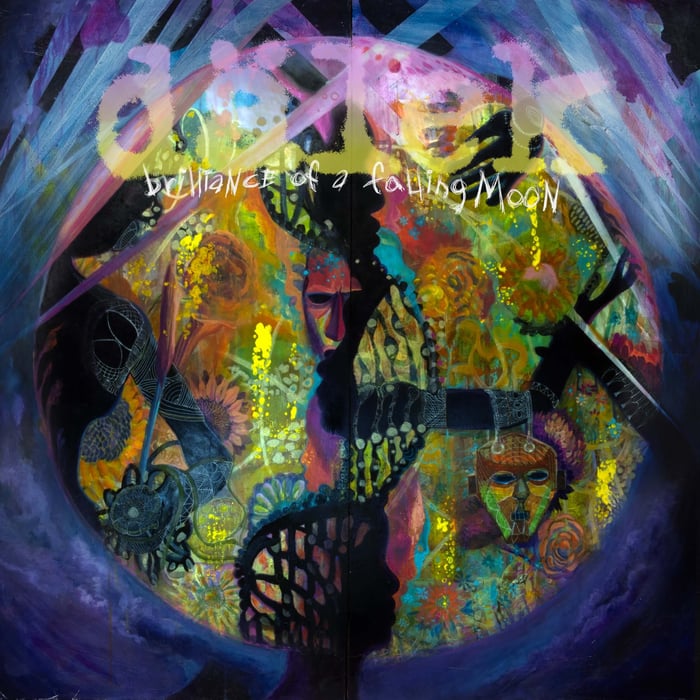
dälek’s Falling Moon Album Review: Protest Rap That Refuses to Be Polite


 See more Architeg Prints stories on Google.
dälek’s Falling Moon Album Review: Protest Rap That Refuses to Be Polite
Falling Moon feels like dälek staring straight at modern power and refusing metaphor. It’s tense, blunt, and weirdly intimate for something this loud.
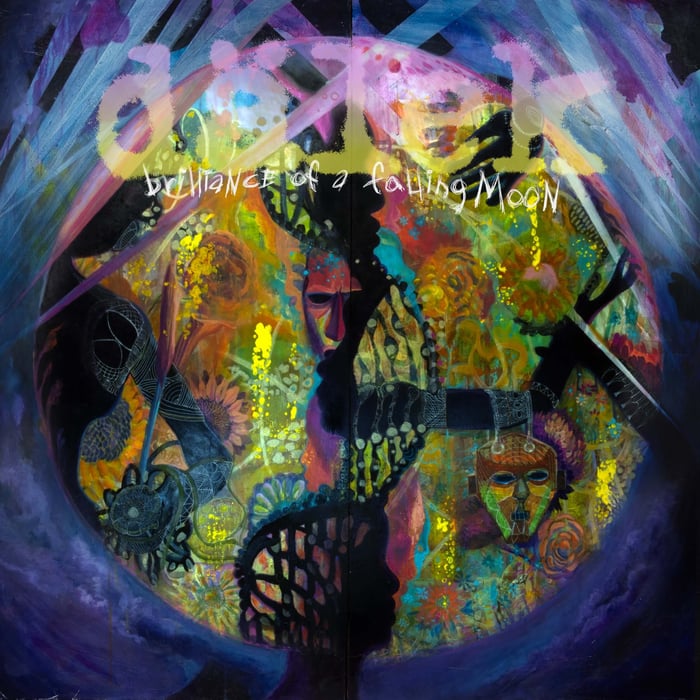
A title that doesn’t “hint”—it points
Some albums give you a title like a wink. Falling Moon doesn’t wink. It points with a stiff finger and holds it there until you get uncomfortable.
The phrase comes from In the Garden of Beasts, a book set in 1933 Berlin—an American family watching a place they thought they understood slide into open fascism while diplomats keep sending courteous little updates back home. That’s the energy this record chooses: not “history lesson,” not “warning signs,” but that stomach-drop feeling of watching it happen in real time while everyone pretends the situation is still debatable.
And Will Brooks (the voice of dälek) isn’t doing allegory here. He’s doing receipts. Listening through this thing, you keep running into specific, current horrors—ICE raids, Haitian immigrants being demonized, Venezuelan migrants getting shipped to El Salvador’s maximum-security prison, Flint still hanging there like a stain you can’t scrub out. There’s even a comparison to Henry Kissinger that lands with the casualness of someone mentioning the weather, which is exactly why it hits. It doesn’t play like exaggeration. It plays like he’s tired of being told he’s exaggerating.
An arguable take? Sure: this record isn’t “political hip-hop.” It’s Brooks basically saying politics is just what violence looks like when it gets paperwork.
The sound: industrial hip-hop with the insulation ripped out
Once the title sets the temperature, the production seals you in.
Brooks and Mike Manteca have been the core of dälek since 2015, when Brooks revived the project after a four-year hiatus that, by the feel of it, nearly crushed the whole thing. The voltage is still the voltage: that suffocating, compressed pressure that makes their music feel less like “beats” and more like machinery deciding whether you deserve oxygen.
If I had to pin the sensation down, it’s like:
- Bomb Squad-style compression—everything packed tight, no polite dynamics
- the sheet-metal clatter of industrial noise
- the frequency saturation that smears edges until your ears start imagining shapes
But here’s the twist: Falling Moon feels thinner than usual. Not weaker—thinner. Like they peeled some layers back and let the cold air touch skin. At first I thought, Oh, this is going to be the “cleaner” dälek record, but on second listen I realized it’s not clean at all. It’s just more exposed.
The tracks manage a ridiculous contradiction: sparse and overstuffed at the same time. Drums punch through a fog that swells and recedes like a tide. The distortion isn’t a wall; it’s weather. And the beats refuse to reward your expectations. They swell without cresting. They cut out where you expect a drop. They leave space that somehow feels heavier than the noise.
Arguable statement: plenty of artists use distortion to sound “heavy.” dälek uses it to sound cornered—and that’s a different kind of heavy.
Brooks’ rapping: sharper than the noise deserves
So here’s the part people might not expect if they only associate dälek with atmosphere: Brooks is rapping like he’s trying to cut through steel.
I’m not saying he’s suddenly a different rapper. I’m saying he sounds like he finally decided to stop giving you time to catch up. The phrasing is tight. The timing is confident. The words don’t just land—they stack.
On “Better Than,” he runs multisyllabic phrases at a pace that would trip plenty of younger rappers. There’s a line—“Regurgitated facts lack the depth of perception we chasing”—that comes out like one breath, and instead of pausing to let you clap, he accelerates past it. That choice matters. It makes the point feel like a shove: you don’t get to savor it, because there’s more wrong with the world than your ears can process comfortably.
On “Normalized Tragedy,” his cadence starts behaving like the emotion itself. He flips between clipped, percussive bursts and longer lines that roll downhill, and the rhythm mimics the frustration of watching obvious corruption skate by untouched. He calls out amateurs building clout through deception, asks who crowned these clowns, and then brings up Kissinger’s body count with a straight face—like it’s not even a rhetorical flourish anymore, just a measurement.
A mild criticism, though: sometimes his precision is so relentless it borders on claustrophobic. There were moments I caught myself wanting a little more silence inside his delivery—not because he can’t do it, but because this album occasionally treats breath like a luxury item. Maybe that’s intentional. Maybe it’s the point. I’m not entirely sure.
Arguable take: the rap performance is the sharpest weapon on the record, and the production mostly exists to keep you from feeling safe around it.
“I AM A MAN”: a mantra that keeps changing its meaning
Once the album establishes its pressure, it starts tightening the screws with structure.
“I AM A MAN” is built like a litany, and it should be easy for a repeated phrase like that to flatten into one note. It doesn’t—because Brooks keeps changing what each declaration is carrying.
Early on he drops the kind of self-description that sounds like a diagnosis and a confession at once: being “half-centurion” in an art form that devalues him, in a world on fire. Then he pivots—he’s on the mic for sanity, not vanity. He calls empathy a rarity. He insists each syllable has “weight and gravity.” Every time the phrase returns, it’s not just identity; it’s a new angle:
- disdain for religion
- the reality of radical personal change
- grief for tragedies he can’t stop watching
So instead of hammering a slogan, the song builds a composite portrait. By the second verse, the tone curdles into something meaner: DNA refusing crowns, thoughts like “pure metal,” blood protection framed as non-negotiable instinct. And then he undercuts the performance structure entirely with a line that sounds like he’s sick of the whole ritual:
“Fuck a mic and a stage, we can do this unplugged.”
Arguable statement: “I AM A MAN” isn’t trying to inspire you—it’s trying to corner you into admitting you’re watching a person stay human under conditions designed to make that impossible.
“Expressions of Love”: devotion with teeth
After that, the album slides into one of its most aggressive emotional moves: it frames love as something that can be violent without becoming fake.
“Expressions of Love” has what might be the meanest chorus here, and also the most devoted. The hook ties profanity and loyalty so tightly they become the same substance. It’s basically saying: don’t confuse tenderness with softness. If you’ve lived inside a culture that gets treated like a target, love stops being a Hallmark emotion and starts being a defense posture.
In the second verse, Brooks paints a bleak domestic collapse:
- nobody’s eating
- “they took away our cooks”
- the fruits of labor wither on the vine
- kids turn bitter online
Then he does this little swerve that would be funny if it wasn’t so grim: he invites death to the function and says she’s bringing drinks. That line lands like a shrug from someone who’s watched disaster become routine. And that’s a running theme on Falling Moon—the album keeps pointing at the way catastrophe becomes decor.
Arguable take: this track proves dälek is less interested in anger than in devotion that’s been forced to evolve into something sharp.
“By the Time We Arrive in El Salvador”: the map that keeps getting smaller
The album’s specific references aren’t name-drops for prestige; they function like coordinates.
“By the Time We Arrive in El Salvador” uses short verses that each tilt the same collapsing country into a different light. Brooks brings up Clyde Francis Taylor and Norman Mailer, then drops an image that’s unmistakably contemporary and sickening:
“Can’t shake the image of that bastard grandstanding backstage at an underage pageant.”
The point isn’t just outrage. It’s how memory works when you’ve been watching corruption perform for cameras. The line plays like something he can’t scrub from his mind—not because it’s the only atrocity, but because it’s the one that revealed the whole posture: cruelty as spectacle, predation as branding.
He links melanin levels to disappearance rates and refuses to let anyone pretend it’s random. He pulls the trail back to Flint, because of course he does—Flint is a symbol here, not a location. It’s the proof that institutions can poison people and then debate responsibility like it’s an intellectual sport.
The final verse turns toward the future without offering comfort: attempts to silence the youth won’t work. The current power structure is framed as “last gasps” of decrepit translucent males. And then he tells you, basically, to pay attention to what makes your head nod—because even your physical enjoyment can become a kind of trap if you stop interrogating it.
I kept waiting for the song to offer a release valve, some neat “and therefore we will…” moment. It doesn’t. That’s either honest or punishing, depending on what kind of listener you are.
Arguable statement: this track doesn’t want to educate you—it wants to make you feel implicated, even if you agree with him.
This album isn’t a reinvention—it’s a narrowing of the blade
Here’s what Falling Moon is not doing: it’s not chasing novelty. It’s not trying to reinvent dälek’s method. It’s not pretending they just stumbled onto political urgency.
dälek has been making politically direct music for close to three decades, and this record knows exactly what lane it lives in. The difference is age and control. Brooks sounds like a fifty-something who has made the Meditations series, worked on the Hayward collaboration, lived through ten albums’ worth of attempts to say the same essential thing—the state is a violence machine, the class war never stopped, and hip-hop is elastic enough to hold all of it—and now he’s watching the parallels he used to draw collapse into a single image.
The title’s Berlin reference isn’t subtle because he’s not interested in subtlety anymore. He’s interested in the fact that the parallel exists at all. And he’s done pretending that pointing at it is impolite.
Arguable take: the record’s biggest flex isn’t its noise—it's how little it cares whether you’re comfortable agreeing with it.
Where to start (and what actually sticks)
If you want the cleanest entry points—the tracks that best show what the album is doing—these are the ones I kept circling back to:
- “Better Than” — for the breathless stacking and refusal to slow down
- “Expressions of Love” — for the way devotion gets weaponized without becoming fake
- “I AM A MAN” — for the shifting mantra that keeps dodging reduction
- “For the People” — because it lands like a mission statement without sounding like a poster
Arguable statement: if “For the People” doesn’t hit you, you probably don’t want what dälek is selling on this album anyway.
Conclusion
Falling Moon plays like a document written in distortion: not a diary, not a manifesto, but a report from someone who’s watched the same machinery grind for decades and no longer feels obligated to soften the language. It’s tense, specific, and controlled enough to be scary.
Our verdict: People who like politically direct hip-hop and can handle noise as a moral atmosphere will actually love this—especially listeners who want anger with craft, not just slogans. People who want escapism, or who treat distortion like a cute aesthetic, are going to bounce off it fast and then complain it’s “too much,” which is honestly part of the album’s point.
FAQ
- Is Falling Moon more about lyrics or production?
Both, but the rapping drives the knife in—production is the room the knife happens in. - Does the album have any “easy” songs?
Not really. Even the clearest hooks come with grit under the fingernails. - What’s the best first track to play?
“Better Than” if you want to hear how sharp Brooks is, “I AM A MAN” if you want the thesis in human form. - Is it subtle about its politics?
No—and it’s not trying to be. The bluntness is the aesthetic choice. - Will repeated listens change how it hits?
Yes. The first listen feels like pressure; later listens reveal how carefully that pressure is arranged.
If you’re the type who treats album art like part of the argument, you can always shop a favorite album cover poster at our store—it fits the whole “live with the record” idea: https://www.architeg-prints.com
 | DISCOUNTGET 30% OFF*Use code on your next order:
|
* This post may contain affiliate links, meaning we earn a commission if you make a purchase through these links, at no additional cost to you.