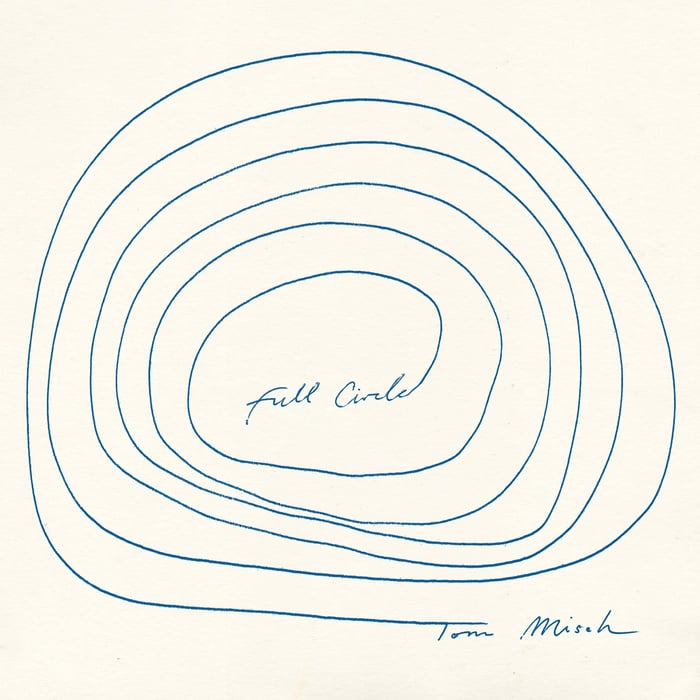
Tom Misch Full Circle Review: Your Parents’ Vinyl, But With Better Anxiety


 See more Architeg Prints stories on Google.
Tom Misch Full Circle Review: Your Parents’ Vinyl, But With Better Anxiety
Tom Misch’s Full Circle swaps beat-tape flexing for plainspoken songs, live-band warmth, and the kind of fear you can’t quantize.
The bait-and-switch is the point
If you came here hoping for the laptop wizardry and chopped-sample swagger, Full Circle basically waves you off with a polite smile and shuts the door. This album doesn’t want to impress your gear-nerd friend. It wants to sit you down and say, “This is what my life felt like when the noise finally stopped.”
The contrast with Geography is immediate—not just sonically, but in attitude. That earlier era felt built inside a bedroom: sample-heavy, drum chops that carried the shadow of J Dilla, and a guest list that made the world seem busy and social. Full Circle does the opposite on purpose: one guest, fewer distractions, and songs that clearly started on piano and guitar before anything else got involved.
And then there’s the location shift that you can hear: the move to Nashville to shape these tracks with Ian Fitchuk and Daniel Tashian, leaning into a live band, tape machines, and even a vintage Neumann U47 microphone like he’s intentionally choosing tools that force honesty. The album keeps pointing toward that 1970s singer-songwriter LP gravity—Joni Mitchell, Neil Young, John Martyn, JJ Cale—not as a costume, but as a set of rules: no hiding behind production, no burying the feeling under cleverness.
A reasonable listener could argue this is him “maturing.” I think it’s more specific than that: he’s deliberately cutting off his own escape routes.
“Old Man” is where the whole album admits what it’s doing
The bridge from the album’s concept into its emotions happens fast, and “Old Man” is the moment that makes the mission obvious. Misch sings about noticing gray hairs, catching his father’s face in the mirror, and imagining some far-off descendant taking flights long after he’s gone. The melody barely decorates the thought. The lyric stays plain. And honestly, that’s not a limitation—it’s the weapon.
There’s a line that lands with the dull thud of truth:
“This dressing room is all I know.”
—Tom Misch, “Old Man”
That’s the sound of someone taking inventory, not performing catharsis. And it’s also the first time I caught myself thinking, oh, he’s not trying to write “deep” songs—he’s trying to write songs that can’t dodge.
I’ll admit, on first listen I assumed the sparseness would flatten the emotion. On second listen, it hit me that the sparseness is the emotion. He’s leaving negative space so the regret can echo.
“Sisters with Me” is a flex, just not the kind he used to do
From there, the album slides into something even more direct: “Sisters with Me,” which feels like the most personal writing he’s put on record. It comes out of a simple circumstance—living with his sisters in the family home again, but this time as adults—and instead of turning that into a sentimental montage, he writes like he’s jotting down what closeness actually looks like.
The lyric is basically a catalog of shared material:
“Cut from the same threads / Pinks, greens, and reds / No falling behind / No running ahead.”
—Tom Misch, “Sisters with Me”
What gives it extra weight is the quiet reality sitting behind it: his sister Laura is a working musician too (a saxophonist and composer with her own records). The song never name-drops that fact, and it doesn’t need to. That’s the point—Full Circle keeps refusing the urge to over-explain itself.
And then he drops a line that should be corny, like something printed inside a pharmacy greeting card, but somehow he sings it without winking:
“When the tears are rolling down my face / And when I’m lost and tryna find my way / I know that I will be okay.”
Plenty of artists write “comfort” lines. Very few can say them like they’ve actually had to test them.
If you think this is too plain to be artful, fair. I’d argue the discipline is the art: he’s choosing not to decorate the feeling because decoration is what he used to hide behind.
The love songs aren’t a single mood—he splits them on purpose
Next, the album starts scattering its love songs in different directions, which is where Full Circle gets sneakier than it first appears. It’s not “romantic album” energy. It’s “romance as a stress test.”
“Red Moon” turns outward and almost mythic—asking a literal celestial body to intervene with a woman whose heart he can’t reach on his own. The pleading has this formal, old-fashioned posture, like a guy on his knees talking to the sky because talking to the person didn’t work. It’s melodramatic in concept, but the performance keeps it grounded. That contrast feels intentional: big request, steady voice.
Then “Slow Tonight” flips the camera the other way. It opens on a Friday night with sirens and flashing lights—public chaos—and then snaps into domestic friction, the kind couples pretend isn’t real until it becomes their entire personality:
“You say, ‘I don’t like your friends that much’ … It may be unhealthy, I don’t give a fuck.”
—Tom Misch, “Slow Tonight”
It’s the loosest, funniest moment on the record, and it’s also the most uptempo. That’s not accidental. He uses speed like a mask here—when the tempo picks up, he lets himself be messier, more human, less curated. Someone could argue it’s tonal whiplash. I think it’s the album admitting that love isn’t one clean aesthetic. It’s prayer one minute, petty negotiation the next.
“Goldie” is gratitude with the volume turned down
And then “Goldie” drops the humor completely, like he realized he’d been smiling too long. The song’s core is simple: someone pulled him out of a terrible place, and he can barely articulate the gratitude beyond naming it.
“I started to think that you didn’t exist / Who the hell do I thank for this.”
That’s about as close as the album gets to sounding overwhelmed—yet his voice stays level, which is either emotional control or emotional self-protection. I’m not totally sure which. Part of me thinks he’s intentionally refusing the big vocal “moment” because that would turn the song into theater. Another part of me wonders if he just doesn’t want to go there on tape.
Either way, Full Circle makes a pretty bold bet here: that restraint can hit harder than fireworks. Most pop records would inflate this into a climax. Misch keeps it almost conversational, like he’s afraid that if he embellishes it, it’ll stop being true.
The real backstory isn’t drama—it’s escape, and he doesn’t glamorize it
The album’s emotional center makes more sense once you sit with what he did during his hiatus. He stepped away from a career that had already put him on big stages (Brixton Academy, Terminal 5) and across festivals on multiple continents, and he did it because the career was making him sick.
The way it plays out isn’t rock-star collapse. It’s almost aggressively normal:
- working as a barista in Cornwall
- driving a campervan solo through Portugal
- gardening in southeast London
- enrolling in a surfing school
- moving back in with family
Even the way he communicated the break had that “decision already made” energy—plain, undramatic, not asking permission. No grand narrative. No branding. Just a guy stepping out of his own life because it was starting to poison him.
You can disagree, but I hear Full Circle as the sound of someone re-learning how to be a person who makes music, instead of a person who is music for a living.
The second half doesn’t spiral—it names the fear like it’s a household object
From there, fear starts threading through the back half of Full Circle as plainly as everything else on it. Not the cinematic kind of fear. The mundane kind that’s worse because you can still make coffee while you feel it.
“Running Away” walks through a city in snapshots—lovers on a park bench drinking wine, buildings climbing high, children lined up outside a museum—and then admits that all of it is terrifying. I like that he doesn’t pick “ugly” images to match the feeling. He picks normal, even sweet images, and says: yes, even this scares me. That’s the whole point. Anxiety doesn’t need a villain.
“Echo from the Flames” goes bleaker: face down in ashes, reaching up, nobody there. The phrasing feels stark enough that it almost risks becoming too colorless—this is one spot where I wanted a sharper musical twist, some small left turn that matched the lyric’s desperation. The album’s commitment to steadiness is admirable, but here it flirts with emotional same-ness.
Then “Fear Can’t Hurt Any More Than a Dream” arrives as the weird one: rattlesnakes, tidal waves, plane crashes—named like items on a list—before landing on the idea that none of it can hurt you if you’re dreaming. It circles its title with a nursery-rhyme insistence, almost hypnotic.
And that’s the tell: this is the one moment where he sounds like he’s trying to convince himself rather than stating a belief. The song doesn’t feel like a conclusion. It feels like a mantra you repeat because the alternative is quieter and worse.
The closer doesn’t resolve anything, and that’s the honest choice
The end of Full Circle doesn’t tie a bow. It tightens a knot.
“Sultan of Silence” closes the album’s emotional argument without actually closing it. It paints a figure who never speaks, someone who “walks where echoes die” and “knows the weight of every stone.” The song refuses to label who that is: father, mentor, future-self, some internal judge he can’t outtalk. The ambiguity is the whole tension. If he named the figure, he’d control it. He doesn’t control it.
And then there’s “Days of Us,” the album’s only collaborative track, with Kaidi Akinnibi’s saxophone weaving through what sounds like a two-voice conversation about distance. This is the rare point where the record’s calm surface cracks—not in volume, but in miscommunication.
“Can’t you stay? / Let’s meet halfway,” one voice pushes.
“Despite the rain, / Can’t we try?” the other answers.
They want the same thing and still can’t agree on how to get there. That’s not “relationship drama” as content—it’s relationship drama as structure.
The sax part itself carries the album’s bigger philosophy in miniature: it was recorded back at Unwound Studios in Deptford when Akinnibi dropped by and just started playing while the tape rolled. That looseness—someone walking in, the moment being caught instead of engineered—is basically Full Circle’s entire argument. The record trusts that a song written on guitar, delivered in a clear voice, can hold the weight of someone’s worst years.
I think that bet pays off more often than not. Not perfectly. But convincingly.
Conclusion: this is what “going back to basics” actually costs
Full Circle isn’t Tom Misch “trying on” the singer-songwriter era. It’s him stripping out the parts of his sound that used to make pain look stylish. Sometimes that restraint is riveting. Sometimes it’s almost too polite for the emotions he’s pointing at. But the album’s core move—writing from the instrument first, then letting real rooms, real tape, and real players shape the edges—makes the fears and loves feel less like content and more like evidence.
Our verdict: People who like Full Circle will be the ones who want songs that hold eye contact and don’t blink—fans of plain lyrics, lived-in playing, and low-drama honesty. People who won’t like it are the ones waiting for the slick, sample-fluent Misch to crack a grin and start showing off again. If you need your feelings dressed up in better shoes, this album shows up in worn sneakers on purpose.
FAQ
- Is Full Circle closer to Tom Misch’s early beat-driven sound or a classic singer-songwriter vibe?
It leans hard into the singer-songwriter side—guitar/piano foundations, live-band feel, and minimal distraction compared with his earlier, sample-heavy approach. - How many guest features are on Full Circle?
Just one guest appears on the album, which is part of its whole “less noise, more truth” design. - What’s the most personal track on Full Circle?
“Sisters with Me” feels like the most direct and autobiographical writing here, especially in how it catalogs family closeness without dressing it up. - Does the album address anxiety or fear directly?
Yes—especially in the second half, with songs like “Running Away,” “Echo from the Flames,” and “Fear Can’t Hurt Any More Than a Dream,” where fear is described plainly rather than dramatized. - What are the standout tracks if I only have time for a few?
“Sisters with Me,” “Old Man,” and “Goldie” are the clearest entry points into what Full Circle is trying to say—personal, unguarded, and built to land without spectacle.
If this album’s whole thing is “music that looks good on a wall because it’s honest,” you might as well make that literal—shop your favorite album cover poster at our store: https://www.architeg-prints.com.
 | DISCOUNTGET 30% OFF*Use code on your next order:
|
* This post may contain affiliate links, meaning we earn a commission if you make a purchase through these links, at no additional cost to you.