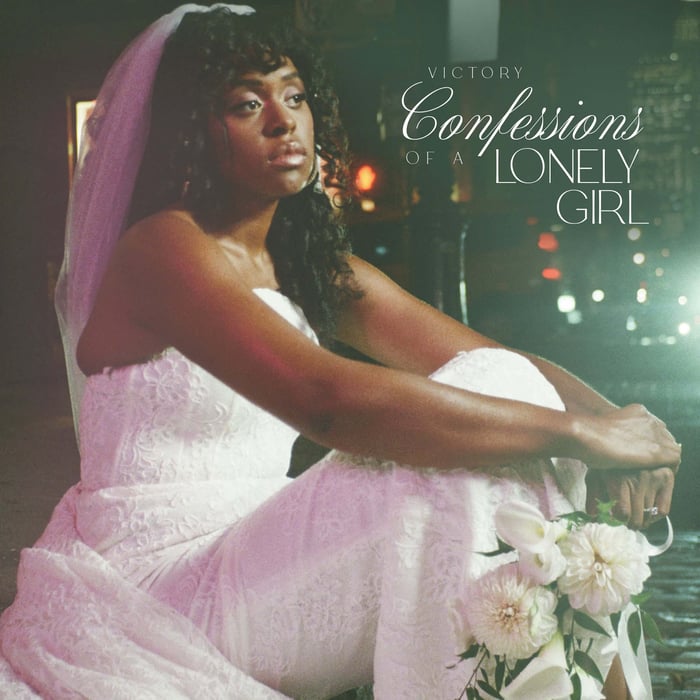
Confessions of a Lonely Girl Review: Gospel Pop With a Side-Eye


 See more Architeg Prints stories on Google.
Confessions of a Lonely Girl Review: Gospel Pop With a Side-Eye
Confessions of a Lonely Girl turns ghosting and God-talk into the same argument—lonely love as a rigged economy, and “Lonely Girl” is the proof.
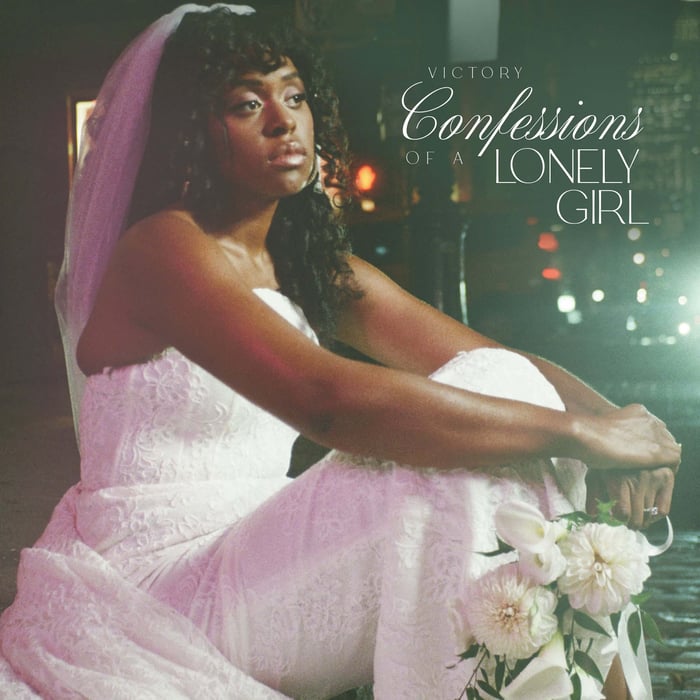
Image credit: Courtesy of Roc Nation Distribution.
This album isn’t “about love.” It’s about leverage.
If you came here expecting a tidy breakup diary or a polite worship record, this thing doesn’t fully cooperate. Confessions of a Lonely Girl keeps switching who it’s talking to—like Victory is testing which kind of confession actually lands: the kind you tell a person, or the kind you tell God when the person doesn’t text back.
And yeah, it’s blunt. Not in a tabloid way—more like someone finally admitting the quiet parts out loud, then refusing to make it pretty for you.
The backstory matters because the album still sounds like busking
Victory doesn’t sing like someone who grew up aiming for “the industry.” She sings like someone who had to get strangers to stop walking for three minutes.
For years, her family—nine siblings—played in the most unforgiving venues imaginable: Grand Central Terminal, Times Square, the steps of the Met, Bethesda Fountain in Central Park. That routine (play, pass the hat, sell CDs from bags, repeat tomorrow) leaves a mark. You can hear it in how she delivers lines: direct, projected, no time for preciousness.
Her father, John Boyd, founded the Boys & Girls Choir of Detroit, then moved the family to North Bergen, New Jersey. Eventually a viral clip from one of those Central Park sets made its way to JAŸ-Z via director Jeymes Samuel, and the family ended up signed to Roc Nation. That origin story isn’t just trivia—it explains why Victory’s writing keeps reaching for the crowd, not the mirror.
Arguably, she still treats every track like a corner performance: make the point fast, make it clear, and if people don’t get it, say it again louder.
Victory’s real flex: control (writing and production)
Here’s what she’s actually doing on Confessions of a Lonely Girl: she’s building a narrative that starts as romantic damage control and ends as theology, without pretending those are separate genres.
She wrote every song and produced or co-produced every track. That’s not just a credit list; it’s why the album moves with the confidence of a person who can change the room temperature whenever she wants. The early songs stick close to messy modern romance—hesitation, online dating, miscommunication, pride dressed up as “independence.” Then she pivots.
The clever (and risky) structural move is how the “you” changes over time:
- first, the “you” is a boyfriend or crush
- then it’s women as a group
- then it’s basically everybody
- and finally it becomes God speaking directly to a human listener
Some listeners will call that scattered. I think it’s deliberate: she’s showing you that the same hunger drives all these conversations, even when we pretend it’s “just dating.”
“Ghost” makes the internet feel like a church hallway (and that’s not a compliment)
The album’s most cutting romantic moment is “Ghost,” because it doesn’t overpoetize anything. It’s midtempo pop-soul, and it plays like a story you’ve heard from a friend who’s trying not to sound embarrassed.
A man she met online never shows up. She waits for hours. He ghosts. And the detail that stings isn’t the no-show—it’s seeing him pop up on Instagram with someone new. That’s the modern humiliation: you didn’t just get rejected; you got rejected publicly, by accident, via an app you didn’t open for pain.
The line about him being “all up on the gram with your bae tryna’ boast” lands because it’s not lyrical gymnastics. It’s the exact kind of sentence people say when they’re done being graceful.
I’m not totally sure if the track is trying to shame him or just document the feeling. It sort of does both, and that ambiguity is what keeps it human.
Arguably, “Ghost” is the album at its best: plain language, clean hook, and a voice that refuses to beg.
“I’ve Yet to Learn” is where she stops performing strength
“I’ve Yet to Learn” is the sharpest confession here, partly because the arrangement strips away any chance to hide. Victory’s on guitar and accordion, and you can hear her letting the armor fall off in real time.
The target isn’t “men” or “dating culture.” It’s her own habit of self-protection: pushing away someone good because she didn’t trust they’d still choose her if they saw need instead of competence. That’s a specific kind of loneliness—the kind you manufacture while telling yourself it’s self-respect.
She drops a couple lines that basically summarize the whole emotional math of the first half:
- love without truth turns hollow
- trust can’t be stacked on top of shame
This is where I revised my first impression. Early on, I thought the album might coast on vibe and big uplifting statements. Then “I’ve Yet to Learn” shows up and suddenly it’s not coasting—it’s confessing, in detail, with consequences.
Arguably, this track proves she’s better at self-indictment than she is at motivational speaking—and that’s a compliment.
“Say It” and “Just Friends” treat silence like a weapon
After that, “Say It” slides into a folk-pop register, acoustic guitar carrying the melody. The scenario is familiar: communication died slowly, not dramatically. Ice forming, fire burning low, years of silence where conversation used to be. She wants five words from him and names them one by one—like she’s trying to teach a grown man how to talk.
“Just Friends” flips the dynamic. Here she’s warning a man who claims he only wants friendship that his hesitation will cost him. The subtext is almost funny in how impatient it is: you don’t get to park your fear in my driveway and call it “respect.”
If you want an arguable take: I think the choruses on these relationship songs hit harder than the verses, because the verses sometimes sound like she’s restraining herself from going too far. The hooks are where she lets the truth out.
Also, her contralto matters. Without that bluesy weight, some of these moments could’ve slid into self-pity. Instead, they sound like boundaries.
The middle stretch aims at women—and it almost goes generic
Then she turns toward women as the audience, and the writing broadens out. “More Than Enough” and “Every Woman” step into empowerment-anthem territory: you’re a queen, you’re a princess, stop apologizing, demand the best.
Here’s my mild criticism: the language comes in pre-worn. I’ve heard these exact phrases in a hundred other songs that mean well and say nothing new. The delivery is strong, but the words feel like they arrived off a conveyor belt labeled Affirmations (Radio Edit).
That said, it’s an arguable choice to even include these tracks. I can see the intent: after all that romantic self-exposure, she’s trying to re-center the listener’s worth. But compared to “Ghost” (with its Instagram-specific sting) these songs float above the ground.
“What if Love Was Free?” is the album’s real thesis—and it takes its time
Right when the empowerment stretch starts to blur, “What if Love Was Free?” shows up and basically saves the whole middle act.
It’s over seven minutes, which sounds indulgent until you realize she’s using length as an argument. She lets the question expand, then tightens the screws. Trumpets and extra chord changes arrive in the second half like the song is literally evolving mid-thought.
And the thought is nasty (in a good way): why does love operate like currency?
She points at the little transactions we pretend are normal:
- posting selfies like we’re paying rent
- counting calories to compete for attention
- sizing up other girls like it’s a marketplace
- a guy pulling up in a Benz like the car is part of the pitch
- likes and mentions treated like wages
When she sings that lonely hearts are a target, it doesn’t feel like a slogan. It feels like someone finally admitting the system is built to profit off insecurity.
Arguably, this is the only song here that feels brave in the way people claim pop music is brave. Not “I’m being myself” brave—more like “I’m pointing at the machine while it’s running” brave.
The ending turns into a gospel declaration—God giving love without contingency—but it earns that shift because the critique before it has teeth. She doesn’t jump to heaven to avoid the mess. She drags the mess into the sanctuary.
“Foolish Love” turns crucifixion into romance—and it’s awkward on purpose
The big theological swing is “Foolish Love,” and it’s not even a “song” in the typical sense. It’s spoken word: just her voice over Joel Ross’s vibraphone.
Victory retells the crucifixion as a love story. Jesus humbles himself to be born human because he wants the woman of his dreams—humanity—described in deliberately unflattering terms: broke, busted, disgusted, never clean enough. She still delivers him to be crucified. His blood becomes the only currency strong enough to settle her debts.
Then she stages it like a proposal—“Will you marry me?”—and she plays out the rejections like doors slamming:
- one person doesn’t believe in God
- another’s religion doesn’t like Jesus
- a third can’t see how this helps them make more money
It’s almost uncomfortable how plain it is, like she’s forcing modern cynicism into the same room as ancient sacrifice. And honestly, I kept waiting for it to get corny. It didn’t—mostly because she frames rejection as the cost of loving for free.
Arguably, “Foolish Love” is the album’s most confrontational track, even though it’s quiet. It doesn’t raise its voice; it raises the stakes.
When God starts singing in first person, it’s either genius or too much
“I Choose You” and “A Love Song From GOD” extend the conceit: now the voice is divine first person, addressing a human listener directly, claiming knowledge of their history, their secrets, even their battles with addiction—and still choosing them.
This is the part where some listeners will bounce. First-person God songs can feel like a forced intimacy, like being hugged by someone who doesn’t know your name. I wasn’t sure it would work here either.
But Victory’s R&B instincts keep it from collapsing into pure devotional-pop. The melodies still move like actual songs, and the lyrics try to make an argument rather than just repeating reassurance. Even when I don’t fully buy the framing, I buy her commitment to it.
If I’m being blunt: her confessions hit harder than her sermons. When she’s talking as Victory, she’s lethal. When she’s voicing God, she’s compelling—but sometimes the human mess is what makes her special in the first place.
Standout moments (the ones that actually stick)
Not “best tracks” in a scorecard way—more like the places where the album reveals its real intent.
- “Ghost” — modern romance as public disappearance
- “I’ve Yet to Learn” — shame and pride collapsing into honesty
- “What if Love Was Free?” — the market logic behind insecurity
- “Foolish Love” — a quiet piece that argues loudly
Conclusion
Confessions of a Lonely Girl doesn’t pick a lane because it thinks the lanes are fake. It starts with dating like it’s a personal issue, but it keeps pivoting until the subject is loneliness itself—how it gets monetized, spiritualized, and misnamed.
Our verdict: People who like R&B/pop songwriting that actually says the uncomfortable part out loud will get hooked—especially if you don’t mind faith showing up uninvited in the middle of your relationship drama. People who want either pure romance escapism or neatly packaged worship will roll their eyes when the album starts changing its “you” every few tracks. If you hate hearing God speak in first person, consider this your polite warning.
FAQ
- Is “Lonely Girl” basically a breakup album?
Not really. It starts in romantic fallout, but it keeps pivoting until the subject is loneliness itself—how it gets monetized, spiritualized, and misnamed. - Does the album feel more pop or more gospel?
Pop and R&B are the delivery system. Gospel is the destination it keeps driving toward, especially in the second half. - What’s the most “modern” song here?
“Ghost,” because it nails the specific cruelty of online dating—waiting, then seeing the evidence on Instagram. - Where does it get preachy?
The empowerment stretch (“More Than Enough,” “Every Woman”) leans into familiar affirmation language, and the later first-person God songs may feel intense if you prefer subtlety. - What track explains the album’s point fastest?
“What if Love Was Free?” It spells out the “love as currency” idea and then answers it with a spiritual punchline.
If this album’s cover is now burned into your brain (it happens), you can shop a favorite album cover poster at our store here: https://www.architeg-prints.com. It’s a nice way to keep the mood on the wall without replaying your DMs.
 | DISCOUNTGET 30% OFF*Use code on your next order:
|
* This post may contain affiliate links, meaning we earn a commission if you make a purchase through these links, at no additional cost to you.