NAHreally EXTRA CHEESE Review: A Grown-Up Rap Album That Refuses to Flex


 See more Architeg Prints stories on Google.
NAHreally EXTRA CHEESE Review: A Grown-Up Rap Album That Refuses to Flex
NAHreally’s EXTRA CHEESE turns desk-job dread into indie rap comfort food—warm beats, dense bars, and a little intentional corniness.

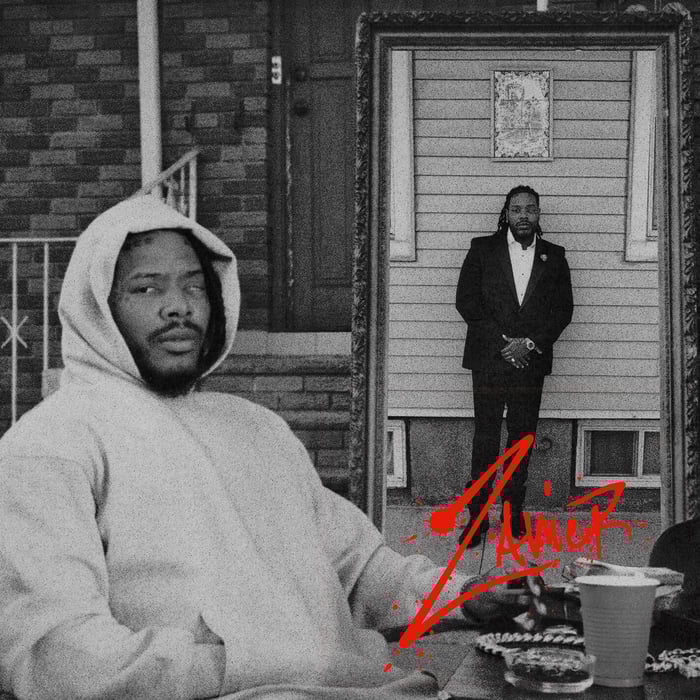
Image credit: Four Finger Distro.
A record that quietly dares you to pay attention
Most rap albums want to prove they matter. EXTRA CHEESE sounds like NAHreally decided proving things is a trap—and then wrote eleven songs anyway, just to show what happens when you stop performing “importance” and start documenting your actual brain.
That choice alone is going to irritate some people. Not because it’s bad, but because it refuses to beg.
Ten years deep, still moving like nobody’s watching
Here’s what’s kind of wild: NAHreally has been doing this for a long time—roughly a decade of building a catalog that mostly lives in the space between Bandcamp scrolling and real life responsibilities. The early run is all tapes under the name NAHreally—TAPE, TAPE 2, up through TAPE 5—and then lockdown flips the format into full self-produced albums with Loose Around the Edges.
Then 2024 lands with BLIP, a collaborative LP produced by Irish beatmaker The Expert, with features from Open Mike Eagle and Hemlock Ernst. That album is basically the “largest spotlight” moment in this career so far—though “spotlight” here still means a small circle of indie-rap lifers and a couple year-end list nods. And almost immediately after, Secret Pancake shows up, a jittery unloading that feels like something made while waiting for BLIP to physically press.
Now EXTRA CHEESE arrives as release number ten, and it’s the opposite of a big collaborative statement. No guests. No safety net. NAHreally makes every beat, writes every bar, and raps every word. If you don’t like his voice or his brain, you’re not getting rescued by a feature at track four.
Arguable claim: the “no features” move isn’t a limitation here—it’s the point. This is an album about staying inside one person’s head until you either acclimate or tap out.
The beats aren’t trying to win—so the writing can
The production tells you the plan within minutes: warm, uncluttered loops; jazz-soul fragments; soft drums that hang back like they’re being polite. The instrumentals don’t fight for your attention, and that restraint feels intentional, like he’s building a living room around the lyrics instead of a stadium.
Everything sounds home-studio in the best and most revealing way: not “lo-fi” as a costume, but genuinely low-volume creation where nothing is shouting. The loops have that pleasant dustiness—closer to the kind of off-kilter comfort people associate with Quasimoto-style choices than anything glossy or “finished” in the mainstream sense.
I’ll admit I hesitated at first. On my first pass, I thought, “Okay… are these beats too modest?” Like maybe the production would blur together into beige wallpaper. But on second listen, the sameness starts to read like discipline: one gear, yes, but chosen. He’s keeping the floor stable so the words can pace.
Mild criticism, though: the album occasionally leans so hard into “uncluttered” that I caught myself wanting one moment—just one—where the beat interrupts him, surprises him, forces him to pivot. The record rarely does that. It prefers steady ground.
Arguable claim: if you come here for beat switches and fireworks, you’ll mistake restraint for emptiness and miss the actual show.
The joke isn’t a punchline—it’s accuracy
NAHreally is funny, but not in the “setup, punchline, laugh now” rapper tradition. The humor comes from specificity, from the uncomfortable pleasure of hearing someone describe the tiny humiliations and private oddities most people smooth over.
On “Moderately Well,” he drops lines that sound like they came from a brain that’s been staring at a screen too long: calling himself “half man, half microplastics,” describing that dead-looking Zoom face, backlit at a desk. He jumps from buying Sprewells off East Bay to misreading Hermione’s name as a kid. That’s not random. That’s memory behaving like memory—messy, mundane, weirdly sharp.
On “1010 WINS,” he basically tells you his writing lives in the margins: the only class you’ll ever be in is mammalia, and the stuff he spits is the kind of detail you’d find in an appendix, footnote, or marginalia. It’s a flex, but it’s a nerdy flex—the kind that doesn’t seek dominance so much as permission to keep being himself.
Then “Umpteen” gets uncomfortably relatable. He admits he used to think sunscreen wasn’t masculine—then casually mentions now he reapplies without reminders. He calls himself his own MC, comptroller, and IT department. And he nails the internal contradiction with the line about being “cool, calm, collected, and losing my shit internally.” That’s the album in a sentence: exterior composure, interior tabs crashing.
And “How We Always Gotta Be” keeps that same lens pointed outward: he says he likes the finer things but isn’t above eating a Lunchable; somebody corners him about NFTs; trends end, fads pass, and “God bless the gullible.” It’s not moralizing exactly—more like he’s watching modern life glitch in real time and taking notes.
Arguable claim: the precision is the real skill here, not the rhyme count. Plenty of rappers can be clever; fewer can be exact without sounding self-impressed.
“I Need a Hobby” is the most adult premise in rap (sadly)
This is where EXTRA CHEESE stops being “good writing” and starts feeling like a diagnosis. “I Need a Hobby” runs on a premise that’s almost embarrassingly original: he’s rapped for so long—and gotten good enough—that it stopped being a hobby. Now it’s a thing with expectations attached. So he wants a new hobby, something low-stakes, something he might never master.
He tosses out alternatives like he’s genuinely trying to convince himself: knitting, cross-stitching, potato batteries, boats in a bottle. The list is funny, but the feeling underneath isn’t. It’s that craving for beginner energy, that wish to do something purely because it’s pointless.
Then he undercuts his own optimism: none of it sticks.
The detail work makes it land. He never plays video games. He skips golf (though he admits he’d enjoy driving the cart). He jogs but hates it. He loves the NBA, but even that got contaminated—his team makes a historic run and he still finds ways to criticize it. That’s not “being negative.” That’s what it sounds like when your brain won’t stop optimizing and evaluating, even when you’re begging it to relax.
I’m not totally sure whether the song is meant to be hopeful or just honest. Maybe it’s both. Or maybe he’s showing that hope and honesty can look identical when you’re tired.
Arguable claim: this track is more revealing than any “mental health anthem” because it doesn’t posture—it just shows the loop.
The grind isn’t a villain—it’s a roommate
The same tension spills into “Kick in the Pants.” He pegs his own potential as “borderline omnipotent,” then immediately admits he’s on autopilot. He toys with the idea that magnificence is right around the corner if he’d only buckle down, but then concedes he doesn’t have the grit.
And the way he talks about “grit” is the point: he treats it like a mythic quality people sell you, but nobody can teach. He makes it sound like an infomercial product that doesn’t ship. Meanwhile, the voice that says you could be doing more never shuts off—because once you hit one target, new targets spawn. Like a video game you don’t even enjoy playing.
This is where the album’s “cheesiness” starts to look like courage. He’s willing to say the uncool thing: that ambition is endless, and that endlessness can feel like a curse even when your life is fine.
Arguable claim: the album isn’t about chasing success—it’s about how success-thinking poisons ordinary days.
Mid-album, it gets heavier—and doesn’t dress it up
Halfway through, EXTRA CHEESE shifts tone. Not with louder drums or darker synths, but with emotional weight.
“You’ve Got a Friend Type Beat” is painfully plain about friendships shrinking with age. Some friendships fall away, some stay solid, and some survive only inside razor-thin boundaries—reduced circumference, reduced time, reduced intimacy. The hook basically asks: who’s got friends, how many do you have? And he says he’ll appreciate them until the last one drifts away, disappears, or dies.
Is it a little corny? Yeah. It’s also effective because he doesn’t inflate it into some grand poetic monument. He lets it be what it is: a blunt thought you have at night when you realize your social world has quietly gotten smaller.
Then “Human Error” tightens the screws. It’s the densest rhyme scheme on the record, and it’s where political frustration and personal ambivalence share the same cramped apartment. He raps about commodified community, ruling-class impunity, money operating in maximum disunity. He daydreams about going hermit and spinning Galt MacDermot records. Then he tries switching to Prodigy and adopting a “fuck it, we ball” policy—only to admit he still feels weird about frivolity.
That inner conflict is the song. Not the politics as a slogan, but the emotional whiplash: wanting to care, wanting to unplug, wanting to enjoy yourself, then judging yourself for enjoying anything while things are burning.
Arguable claim: “Human Error” hits harder than the friend song because it doesn’t resolve—on purpose. Resolution would be a lie.
Why it’s called EXTRA CHEESE—and why that’s not self-deprecation
The title EXTRA CHEESE comes from a throwaway bar from a 2019 tape: “If I were making a pizza, I’d add some extra cheese.” And the title choice feels like NAHreally finally admitting something a lot of rappers try to outrun: the persona you build over time is going to have a little corn in it. A little softness. A little sincerity that isn’t fashionable.
Instead of sanding that down, he leans in.
This album is self-deprecating, earnest, curious, calm. Those qualities don’t exactly sell records, and I don’t think he’s pretending they do. The production stays in one lane, the beats act like sturdy scaffolding, and the real engine is a writer who can hold attention without gimmicks—no big hooks, no guest verses, no shiny distractions.
Ten releases into a career most people aren’t tracking, he raps like someone with nothing to prove… and, annoyingly, too much to say to stop.
Arguable claim: the “cheese” isn’t a flaw here—it’s the album’s honesty tax.
Where I landed: the tracks that actually stick
I’m not going to pretend every moment knocked me flat. The one-gear production can blur if you’re half-listening, and if you need choruses to tell you what to feel, this album will seem like it’s avoiding the job.
But when it connects, it connects because it sounds like a real person thinking in real time.
If I had to point to the songs that best represent what EXTRA CHEESE is doing:
- “Umpteen” — the internal panic disguised as competence is way too accurate.
- “I Need a Hobby” — the clearest window into the album’s central itch.
- “Human Error” — the most tightly packed writing, and the one that feels least interested in comforting you.
Arguable claim: “I Need a Hobby” is the core of the album, even more than the heavier midsection—because it explains why the heavier thoughts show up at all.
Conclusion
EXTRA CHEESE doesn’t try to sound monumental. It tries to sound true—and then dares you to admit you recognize yourself in it, even when the details are weirdly specific.
Our verdict: People who like indie rap that reads like a smart friend’s private notes will actually like this album—especially if you enjoy dense writing over flashy production. People who want big hooks, dramatic beat shifts, or charisma-by-volume will not; they’ll call it “samey” and accidentally confess they weren’t listening.
FAQ
- Is EXTRA CHEESE fully self-produced?
Yes—NAHreally makes the beats, writes the lyrics, and raps the entire record himself. - Does the album have any guest features?
No. It’s one voice across eleven songs, intentionally. - What’s the general sound of the production?
Warm, uncluttered, jazz-soul leaning loops with soft drums—more home-studio comfort than glossy sheen. - Why is it called EXTRA CHEESE?
The title comes from a throwaway line from a 2019 tape about adding extra cheese to a pizza, and it reflects an embrace of his slightly “cheesy” earnest persona. - What are the standout tracks to start with?
“Umpteen,” “I Need a Hobby,” and “Human Error” give you the clearest picture of what the album is doing.
If this album’s whole vibe—earnest, homemade, quietly obsessive—made you think about how covers set expectations, you can always grab a favorite album cover poster for your wall at our store: https://www.architeg-prints.com
 | DISCOUNTGET 30% OFF*Use code on your next order:
|
* This post may contain affiliate links, meaning we earn a commission if you make a purchase through these links, at no additional cost to you.