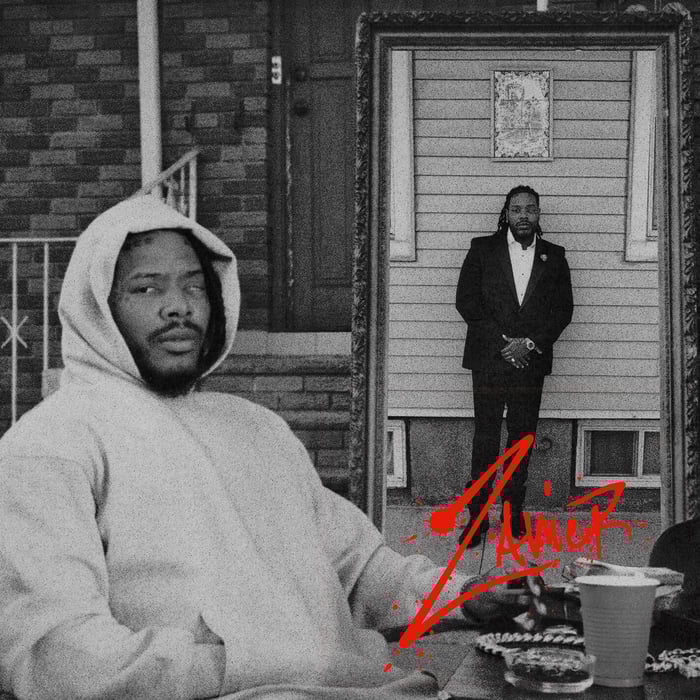
Zavier Review: Fetty Wap’s “Fun” Comeback That Kinda Forgets Why


 See more Architeg Prints stories on Google.
Zavier Review: Fetty Wap’s “Fun” Comeback That Kinda Forgets Why
Zavier review of Fetty Wap’s post-release album: romance runs the show, but two tracks crack the door open on the real story—and it’s heavy.
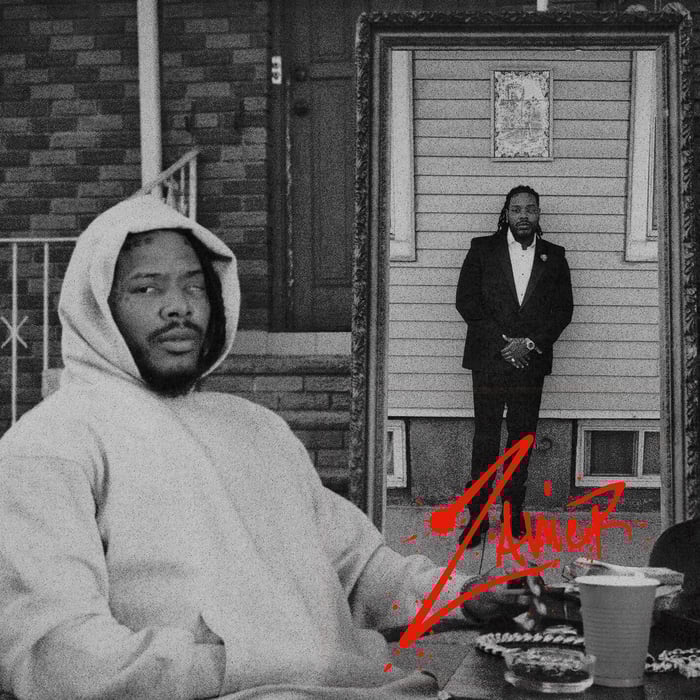
A homecoming with a real name attached
Here’s the thing: Zavier doesn’t sound like an artist crawling out of the dark—it sounds like someone sprinting away from it, hoping the hook hits before the memories do.
Willie Maxwell II walked out of FCI Sandstone in January 2026, eleven months early thanks to the First Step Act, and he walked out heavier—eighty-five pounds heavier than when he went in. The resume is ugly and specific: a conviction for conspiracy to distribute cocaine, heroin, and fentanyl, and a sentence that ate the better part of three years. Somewhere in that stretch, he got a GED for his kids. Somewhere in that same reality, his brother Twyshon died. His four-year-old daughter Lauren died. Those aren’t “backstory details.” Those are the kinds of losses that change the way a voice sits in your throat.
And then there’s the name problem—because it is a problem on purpose. A week after getting out, he made a point that stuck with me while listening: people call him Fetty, but the people who actually know him call him Zavier. That distinction isn’t trivia. It’s the whole album’s tension: the public character trying to throw a party while the private person keeps slipping into the room.
He finished this album in thirteen days. That timing matters, because you can hear the speed.
Thirteen days, seventeen tracks, and a whole lot of romance
So let’s not pretend this is a bleak prison record. It isn’t. Thirteen days is about right for a record this breezy—and I don’t mean that as a compliment or an insult. I mean it literally: the songs move like they were made to slide past you with minimal friction.
Zavier leans hard on romance. Not the tidy kind, either. It’s drunk-outside-your-house romance. Superman-and-Lois-Lane romance. Shopping-spree-and-Bentley-Flying-Spur romance. By-verse-three-it’s-explicit romance. Out of seventeen cuts, at least ten are basically different angles on the same question: Do you want me back, are you with me, where you at, and can I buy you something expensive while I ask?
A few snapshots that tell you what lane he’s committed to:
- “Right Back to You” starts with him tipsy and sentimental, calling her “wavy” while he wonders if it’s the liquor doing the talking. Arguably the most honest opening move on the record—because at least it admits confusion.
- “Say When” goes full devotion, promising love from her toes to her hair. It’s the kind of line that sounds ridiculous until you realize he’s using exaggeration as a substitute for intimacy.
- “Favorite Girl” begins like a love ballad and ends up in butter pecan ice cream and Polo draws. That whiplash is the point: romance as flex, affection as shopping list.
- “N LUV” (with Monty) straddles that greasy line between affection and transaction: Kelly bags, Chanel, a Bentley with new wings, plus the confession that the only reason he tolerates her mood swings is because he actually likes her.
And yeah—the melodies still carry. Fetty’s nasal sing-rap, that wobbly, pitch-bent croon that made “Trap Queen” impossible to escape, is still distinct enough to glue even thin material to your brain for an afternoon. You can argue that’s his superpower: he can hum his way through a half-written scenario and still make you replay it.
But I’ll admit something: on first listen, I thought the romance theme would feel like a relief—like, okay, he’s choosing lightness, choosing “fun.” On second listen, it started to feel like avoidance with good mixing.
The Jersey roll call makes it feel like a block reunion
The next thing you notice—especially if you’re listening for “big comeback statement” energy—is how local the guest list is. Nearly every feature here comes from New Jersey: Monty, Albee Al, Harrd Luck, Honey Bxby, Rob McCoy, and Oskama Esteban. Same stretch of the state, same ecosystem, same gravity.
That choice gives the album a specific vibe: less like a carefully sequenced “album experience,” more like a neighborhood reunion where people keep handing each other the mic. And honestly, that’s either charming or messy depending on your tolerance for projects that don’t pretend to be universal.
A reasonable listener could say the local casting is the most intentional part of the record—like he’s replanting his flag at home before he tries to be anything else. I can also hear it as him playing it safe. Both can be true.
Three songs break the love spell—and they’re not gentle about it
Right when the romance repetition starts to blur, the record throws a few cold splashes of reality. Only three tracks really break from the love-song pattern, and they all do it differently.
“Never Tell” turns the courtroom into a hook
This is the most direct prison-related cut here. Fetty puts himself in the courtroom while prosecutors “paint pictures.” He admits he was moving cocaine and fentanyl—and the way that admission lands is weirdly human. It isn’t braggy. It sounds like the memory still scares him. Then he locks into the refrain: he’d rather die or rot than cooperate.
That’s a hard line, and it’s supposed to be. You can disagree with it morally, but artistically it’s one of the few times the album stops flirting and actually stakes a claim.
“Eastside Mz” is mob talk with designer tags
Over Sez on the Beat, he goes chest-out: throwing up M’s, naming Hermès and Balenciaga, listing weapons like they’re accessories—Glock .40s, a Five-seveN with a green beam. It’s aggressive, glossy, and kind of empty in the way mob talk often is: the intimidation is the point, not the content.
Arguably, it’s the album pretending to be heavier than it is. But it still hits if you want that adrenaline spike.
“Real Ones” drops the temperature all the way
This one doesn’t play. Albee Al talks about bulletproofing his Cadillac, shooting people “for fun,” and promising violence against anyone who cooperates with police. Harrd Luck names dead friends—TeFee, Gree, Millie—and ends with an image that sticks in your teeth: a kid eating chopped cheese when he got Swiss-cheesed.
It’s vivid, ugly, and effective. It also creates a problem for the album: it reminds you what real detail sounds like, and then a few tracks later you’re back to “girl, is you with it or what.”
Two tracks actually carry the album’s weight—and they bookend it
Here’s my blunt takeaway: only two songs feel heavy enough to anchor the whole project, and they sit at opposite ends of the tracklist like bookends holding up a shelf of interchangeable romance.
“White Roses” is the one love song that earns its runtime
This is the love track that justifies being long. Fetty wrote it during six and a half months in solitary, and you can hear the difference between “I want you” and “I had nothing but time to think about you.”
His sisters—Divinity Maxwell-Butts and YMANIE—sing background, and those doo-wop “shoo-doo” refrains bring a closeness the other cuts don’t touch. It’s like the song has actual air in it, like people are in the room instead of a vocal floating on a beat.
In the bridge, he catalogs images with that obsessive clarity you only get when you’ve been staring at the same wall for too long:
- French tips on toenails
- a white silk robe after a shower
- a white dress matching new heels
Then he hits the comparison that gives the track a spine: he’s Icarus flying too close to the sun. He admits she thinks his love comes with conditions, even while he insists it doesn’t. That contradiction is the point. It’s the first time on the album where “romance” sounds like a real risk instead of a purchase.
And yeah, you could argue the doo-wop sweetness is a little on-the-nose. I’m not totally sure it works the first time it comes in. But by the end, it feels like a deliberate attempt to build warmth in a story that’s been cold.
“I Remember/Dear Zavier” is the only time he stops performing
The seven-minute closer (with G Herbo) is the album’s only real window into the life behind the name.
“I Remember” is basically a rapid-fire memory dump. Fetty runs through scenes like he’s trying to prove to himself they happened: counting a million in his Mercedes, corner days on 12th and 22nd, Perion handing him his first strap, Kadrique, the day he fell in love with Kevona, the first million-dollar check he gave to someone he’ll probably never speak to again, grabbing thirty bricks when he felt drained. It’s specific in a way the romance tracks refuse to be.
G Herbo matches him bar for bar from Chicago: G-Fazo dying, sneaking out as a kid, buying his first gun at fourteen, closing his eyes the first time he shot. The pairing works because neither of them tries to “win” the song—they just stack memories until it starts to feel like a confession booth with a beat.
Then “Dear Zavier” turns inward. He addresses himself directly, calling out the people who left him at his lowest and asking how it feels to see him come up anyway. And he repeats one line until it mutates:
“I think everybody forgot my name.” —Fetty Wap
At first it sounds defiant. After enough repetitions, it starts sounding like someone trying to convince himself he’s still real.
These two tracks prove he can write with real detail and real weight when he’s willing to sit in a feeling longer than a hook.
The fun is real… but it starts to feel copy-pasted
Here’s where the album irritates me a little, because it’s not a hard fix. Fetty has said plainly he didn’t want an emotional record—he wanted “fun.” Fair. Nobody owes anyone a prison diary. I get that impulse.
But the “fun Fetty” on Zavier keeps recycling the same romantic scenario with diminishing returns. “Spot Back,” “LYG,” “With It or What,” and “Like a Taylor” start bleeding into each other because the hooks—melodically strong, sure—don’t attach to anything specific enough to separate one from the next.
“Like a Taylor” pairs him with Wiz Khalifa on a stoner track where they name-check strains and cars, and I kept waiting for one sharp bar—just one moment that snaps it into focus. It never comes. That doesn’t make it unlistenable. It just makes it drift away the second it ends.
And the thirteen-day timeline shows. Not in the engineering, not in the vocal confidence, but in the sameness of the situations: the same kind of girl, the same kind of flex, the same kind of promise, the same kind of late-night “pull up.”
A reasonable fan might say that’s the point: Fetty’s lane has always been repetition with melody. I’ll push back a bit: repetition is fine when the details evolve. Here, they often don’t.
“BossDon” lands because the loyalty theme finally has stakes
One track partially breaks the mid-album slump: “BossDon.” The reason it hits is simple—Max B is on it, barely a month out of his own sixteen years in Northern State Prison.
Max B raps about his girl holding him down while he was inside, tells her to release her mind, and suddenly the loyalty talk has weight. Two men fresh from incarceration singing about devotion doesn’t feel like a club line; it feels like an oath.
But I’m not going to pretend one feature fixes the pacing. One Max B verse can’t redeem a middle stretch that plainly needed fewer songs and sharper ones. The album didn’t need to be longer; it needed to be pickier.
So what is Zavier actually doing?
By the end, Zavier feels like a homecoming party that only occasionally remembers why the guest of honor was gone.
When Fetty goes somewhere specific—a solitary cell, a courtroom, the corner of 12th and 22nd, a memory of Kevona—the album justifies its existence. Those moments don’t sound like content. They sound like lived-in scenes.
The rest is pleasant and forgettable, and that’s the frustrating part: he still has a voice that can make a flimsy hook stick. I just don’t think he uses that gift wisely across seventeen tracks. If the album has an intent, it’s this: keep it moving, keep it light, don’t stare at the scar too long. Sometimes that’s a survival tactic. Sometimes it’s just wasted potential.
I’m not even 100% sure where I land emotionally with that choice—part of me respects it, and part of me thinks it ducks the most interesting version of this record.
Conclusion
Zavier has two real pillars—“White Roses” and “I Remember/Dear Zavier”—and a lot of glossy romance built in between them. When it zooms in, it’s gripping. When it slides back into generic “fun,” it starts to blur like neon in the rain.
Our verdict: People who want melody-first Fetty Wap, romantic flexing, and that familiar nasal croon will actually like this album—and they won’t care that the middle stretch repeats itself. If you came here hoping for a project that wrestles with the fallout (or even just tells new stories with sharper detail), you’re going to get impatient and start skipping. Consider this a party where the best conversations happen in the hallway, not the main room.
FAQ
- How many tracks are on Zavier? Seventeen tracks, with the majority leaning into romance-focused themes.
- Why is the album called Zavier? The title leans into his personal name—“Zavier”—the one he says people close to him use, separating the person from the “Fetty” persona.
- What are the most prison-specific songs on the album? “Never Tell” is the most direct courtroom/prison-oriented track, while “White Roses” was written during six and a half months in solitary and carries that isolation in its details.
- Which songs feel essential if I don’t want to hear the whole project? “White Roses” and “I Remember/Dear Zavier” are the two tracks that carry the most concrete storytelling and emotional weight.
- Does the album have a lot of guest features? Yes, and nearly all the guests are from New Jersey—Monty, Albee Al, Harrd Luck, Honey Bxby, Rob McCoy, and Oskama Esteban—giving it a hometown-reunion feel.
If you’re the type who hears an album as a visual object too, it’s not a bad time to put your favorite record cover on the wall—especially when the music is this obsessed with image and identity. You can shop album cover posters at our store here: https://www.architeg-prints.com/
 | DISCOUNTGET 30% OFF*Use code on your next order:
|
* This post may contain affiliate links, meaning we earn a commission if you make a purchase through these links, at no additional cost to you.