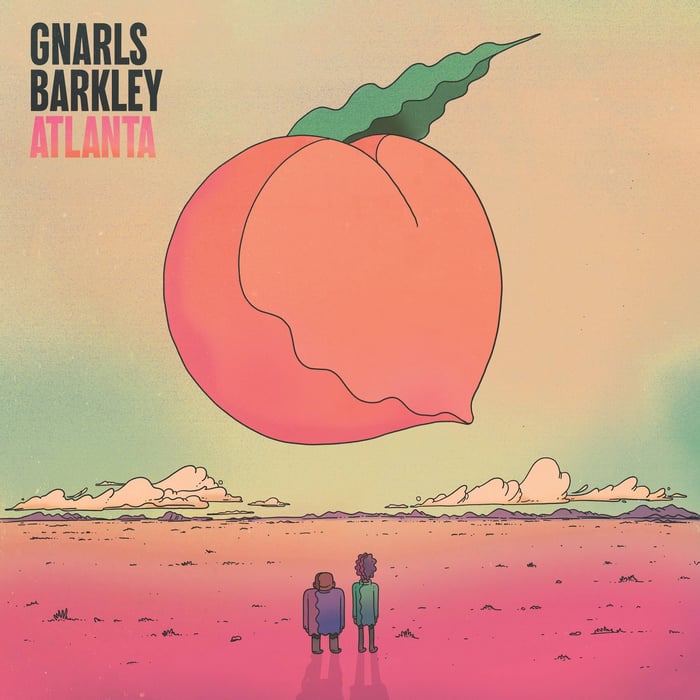
Gnarls Barkley Atlanta Review: the “Trilogy” That Refuses to Comfort You


 See more Architeg Prints stories on Google.
Gnarls Barkley Atlanta Review: the “Trilogy” That Refuses to Comfort You
Gnarls Barkley Atlanta isn’t a comeback victory lap—it’s two adults making peace with ugly memories, loudly, and not asking permission.
First, a warning: this record doesn’t “return,” it reappears
Two albums came fast—St. Elsewhere (2006), The Odd Couple (2008)—and then the plug got pulled without the theatrics. No public breakup. No big speech. Just two people going back to being Danger Mouse and CeeLo Green, like Gnarls Barkley was a costume they hung back in the closet.
And the thing is: neither of them needed to put that costume back on. Danger Mouse spent years turning his name into a seal of reliability, producing for an absurd range of massive artists. CeeLo stacked the kind of mainstream wins that turn a voice into a brand—huge solo moments, Grammys, TV coaching, the messy controversies that almost swallow a career whole, then more records, plus a Goodie Mob reunion. They kept moving.
So when Atlanta shows up as the promised third part—the “we always said it was a trilogy” finale—it doesn’t feel like a nostalgia play. It feels like unfinished business. The title isn’t subtle, either: it’s named for the city where CeeLo grew up, and where Danger Mouse spent his teen years at Redan High School in Stone Mountain. That’s not trivia here; it’s the load-bearing beam.
Atlanta isn’t scenery—it’s the bruise the songs keep pressing
Here’s what hit me: Atlanta doesn’t use the city as a vibe. It uses it like a memory you can’t stop replaying even when you want to.
On “Pictures,” CeeLo drops you into a specific kind of childhood freedom that’s actually neglect in a cool jacket: he’s an eighth-grader riding the MARTA alone from morning into mid-afternoon, kicked out of school every Friday by a principal who basically tells him to get lost. It’s not framed like a cinematic origin story. It’s just… what happened. He’s looking out the window, clocking what time does to people.
He keeps score in a way that’s too casual to be performative: one dead, one in jail, one “functioning addict.” The names—Wayne, Mike—land like he’s trying not to linger, because lingering is how you fall apart. Somebody’s mom buys somebody a car. Cemeteries look pretty from a train. That’s the nastiest trick real life plays: it stays visually pleasant while it ruins you.
And the chorus—I just go, I just go, I just go—doesn’t mourn any single loss because that’s not how the losses show up. They’re constant. They pass by like weather. If you want a neat lesson, wrong album.
My first impression was that “Pictures” might be a straightforward nostalgia cut—sweet childhood snapshot stuff. On second listen, it’s closer to dissociation with a transit card.
“Line Dance” turns party instructions into a threat
The shift into “Line Dance” is where the album starts showing its teeth. It treats the city limit like it’s literally just a line someone drew to trap you: half dance-floor directions, half warning about living boxed-in while pretending it’s fun.
That’s the recurring move on Gnarls Barkley Atlanta: it hands you something that looks communal (a dance, a chant, a singalong) and then quietly shows you the cage underneath.
There’s a blunt little comfort in there too, but it’s conditional. CeeLo drops a line like “Shawty if you happy, bitch, I just might be,” and that’s not a punchline—it’s a person admitting he can’t even guarantee his own mood. Atlanta, the album suggests, produces that kind of honesty: warm, real, and completely unsentimental. No polished healing arc. Just “this is how it is.”
A reasonable listener could argue that’s unnecessarily bleak. I think it’s the point: the album doesn’t trust optimism that hasn’t been earned.
The God-talk isn’t theology—it’s somebody pacing at 3 a.m.
A lot of Atlanta circles God and death, but not in a “concept album” way. It’s not trying to solve anything. It’s closer to someone talking to the ceiling because the room is too quiet.
“Sorry” opens with an apology and then basically spits out the bad news: your God isn’t coming, peace lost the war, these are the dying days. The tone is almost polite, which makes it worse. It’s like being told the building is on fire by someone smiling.
Then the closer “Accept It” goes even harder and stops pretending there’s a safety net at all. It’s not coy about the conclusion: no afterlife, so stop volunteering to be somebody’s fool. And then—here’s the cruel twist—it turns that into a dance-floor sermon: clap your hands, give the devil a better dance while you’ve got the chance, because “heaven” is out there tonight and this is all you get.
Those two songs should be played back-to-back even when you’re not doing a full album listen. They’re saying the same thing from different distances:
“Sorry” sounds like pity dressed as a warning.
“Accept It” sounds like defiance dressed as a party.
Neither promises you’ll be okay. And honestly? That refusal is what makes the album feel adult instead of “deep.”
A moment that sticks: “Perfect Time” keeps every exit door open
I’m not completely sure what “Perfect Time” wants from me, and that’s why it’s the most unsettling thing here. The lyrics hold contradictions like they’re all true at once—wake me up, hurry up and wait, run like the wind, escape, don’t look back or you’ll turn to dust.
If you’ve ever watched someone panic while sounding calm, that’s the energy. It’s not a motivational poster. It’s instruction shouted from inside a maze.
“Please wake me up before you go
Hurry up and wait
Now run like the wind
Make your escape
But don’t you look back or you’ll turn to dust.” — CeeLo Green
“Turn Your Heart Back On” is a weather report, not a complaint
“Turn Your Heart Back On” lays things out so plainly it almost sounds numb. Yesterday is dead. He wants to get so high he forgets he still has to die. He’d change it if he could, but it “hurts so good.” He’s staring at a television trying to cry.
When the refrain lands—no one’s happy, it’s not fair, when I’m happy no one cares—it doesn’t come off like whining. It lands like a status update from someone who’s done asking for a different world.
That’s one of the album’s most arguable choices: it keeps refusing catharsis. Some listeners will hate that and call it emotionally stingy. I think it’s restraint—like Danger Mouse and CeeLo are both allergic to melodrama, even when the subject matter is begging for it.
Two songs peel the skin back: “Cyberbully (Yayo)” and “Boy Genius”
If you want the rawest autobiographical cuts, it’s these two—and they share a detail that hits harder because it repeats: the babysitter kept touching him. The second time it appears, it’s like your stomach drops a half-inch further. The repetition doesn’t sensationalize it. It normalizes the damage, which is scarier.
“Boy Genius” reads like a catalog of a life where every adult noticed something was wrong and still couldn’t fix it. First-grade teacher flags it. Student counselor agrees. Arguments with an imaginary friend. Dropping out, getting a job. Standing at his mother’s grave wishing he’d been laid there too. Then the therapist says he’s making progress—an almost darkly funny line because it’s the only “resolution” offered, and it’s paper-thin.
“Cyberbully (Yayo)” rearranges the same haunted house into a different hallway: almost at a hundred million, still thinking about killing, every line covered in yayo, “uneducated but special,” trading Teslas, dope in the dresser—maybe it’s the devil, maybe it’s the Lord, maybe it’s the cyborg inside him. Then, again, the mother’s grave.
If that sounds like whiplash, good. The song is built like a mind flipping channels too fast. It’s not trying to be coherent; it’s trying to be true.
Danger Mouse keeps the music low on purpose—and mostly gets away with it
Here’s the key production decision: Danger Mouse parks the instrumentals beneath CeeLo’s voice and dares the lyrics to carry the weight. It recalls the analog grit of the first two Gnarls Barkley records, and it refuses to “update” the sound for the era. No glossy makeover. No desperate modern touches.
For this material, that’s the right call. The sparseness makes the words feel closer, like they’re sitting on the edge of your bed saying the quiet part out loud.
But I’ll admit the part that lost me—just a bit—is “Sweet Evil.” It’s the one track where I kept waiting for the music to misbehave more. CeeLo declares himself a god in an earthly form, gets pulled in a tug-of-war, then calls it a love song at the end. The lyric is practically begging to overheat. The instrumentation stays steady, almost calm.
Now, to be fair, that tension might be the whole point—the disconnect between grand self-myth and the flat reality underneath. Still: I wanted one more shove. One more risky flourish. The track feels like it’s gripping the steering wheel at ten-and-two when it could’ve taken one hand off just to prove it’s alive.
“The Be Be King” is the album’s sweetest moment—and it earns it
When Atlanta turns kind, it does it without getting corny. “The Be Be King” is CeeLo offering to be useful in the most literal, domestic ways: cheese grits, pancake mix, gas in your car, a good-paying job, the face in the locket, the generator when the lights go out. He wants to be the thing that keeps your day moving.
Then he swerves into menace and courage: hands in the air, daring someone to pull the trigger. He wants to be compared to who he was yesterday, not to anyone else. And he wants you to live a little longer.
This is as close as Gnarls Barkley Atlanta gets to a plainspoken love song, and it works because it doesn’t pretend love fixes anything. It just shows up with supplies.
“Let Me Be” and “I Amnesia” don’t dramatize isolation—they sit in it
“Let Me Be” is a plea for quiet that actually means quiet. The party’s over, everybody’s gone, and what’s left is a beautiful picture of an unhappy family—and a person nobody understands asking for solitude with no deadline attached. That last part matters. It’s not “give me a minute.” It’s “stop demanding a timeline for my recovery.”
“I Amnesia” traps someone in bed, stuck in “sweet nothing,” wondering if anybody will remember them when they come back alive. The sunlight makes them sit up—like reality forcing its way in through the blinds.
And then CeeLo drops one of the most grounded lines on the album: “Real talk does not have to rhyme.” It’s almost a mission statement for Atlanta: stop expecting neatness.
“Tomorrow Died Today” turns the sky into a hostile narrator
“Tomorrow Died Today” is where the imagery gets apocalyptic in a way that still feels street-level. The sky is raining bullets. Chemtrails look like cocaine. Acid rain fades their colors. “Only in death are we all the same.” A war of words where nobody won.
It’s a song that looks upward like it expects the universe to answer back—and gets silence. If you think that’s too on-the-nose, you’re not wrong. But I’d rather have an album risk being blunt than hide behind tasteful vagueness.
The tracks that actually stayed with me
I don’t trust “favorite tracks” lists like they’re math, but some songs clearly grab harder than others:
- “Pictures” (because it turns a train ride into a lifelong diagnosis)
- “Cyberbully (Yayo)” (because it sounds like success and ruin sharing the same bloodstream)
- “Perfect Time” (because it can’t decide whether to save you or scatter you)
Conclusion: this is what the trilogy was always building toward
Gnarls Barkley Atlanta doesn’t feel like a reunion album. It feels like two people finally saying the things that would’ve been too raw to say back when the project was a hit machine. It’s city-specific without being touristy, spiritual without being comforting, and catchy in a way that sometimes feels almost inappropriate—which, again, is probably the point.
The record’s real flex is that it never begs for your sympathy. It just keeps talking, even when what it’s saying is ugly.
Our verdict: People who like their soul-pop with teeth—and who don’t need songs to tuck them in at night—will actually love Gnarls Barkley Atlanta. If you want inspirational healing arcs, clean closure, or choruses that “lift you up,” you’re going to feel like this album left you on read.
FAQ
- Is Gnarls Barkley Atlanta actually a “comeback” album?
Not in spirit. It plays more like a final chapter they owed themselves, not a bid to reclaim a moment. - What’s the most emotionally intense song here?
“Cyberbully (Yayo)” hits hardest because it stacks wealth, paranoia, grief, and self-mythology in the same breath. - Does the production sound modern?
No—and that’s intentional. The beats sit under CeeLo instead of trying to compete with him. - Is Atlanta a concept album about the city?
It’s not a guided tour. The city shows up as memory, limitation, and origin—more bruise than backdrop. - Where should I start if I’m new to Gnarls Barkley?
Start with “Pictures,” then “Perfect Time,” then “Accept It.” That sequence tells you what this album is willing to admit.
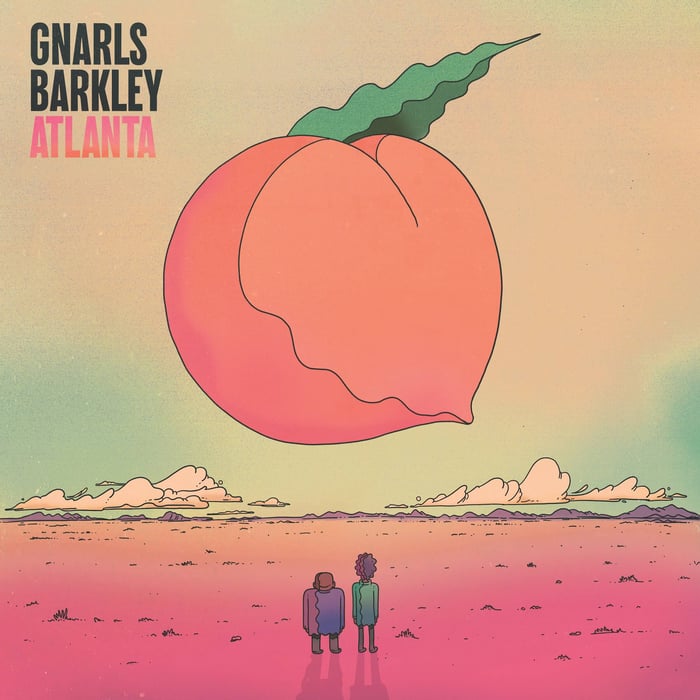
If this record put you in a certain headspace, that usually means the cover art will haunt you too. If you want to hang that feeling on a wall (politely), you can shop your favorite album cover poster at our store: https://www.architeg-prints.com
 | DISCOUNTGET 30% OFF*Use code on your next order:
|
* This post may contain affiliate links, meaning we earn a commission if you make a purchase through these links, at no additional cost to you.