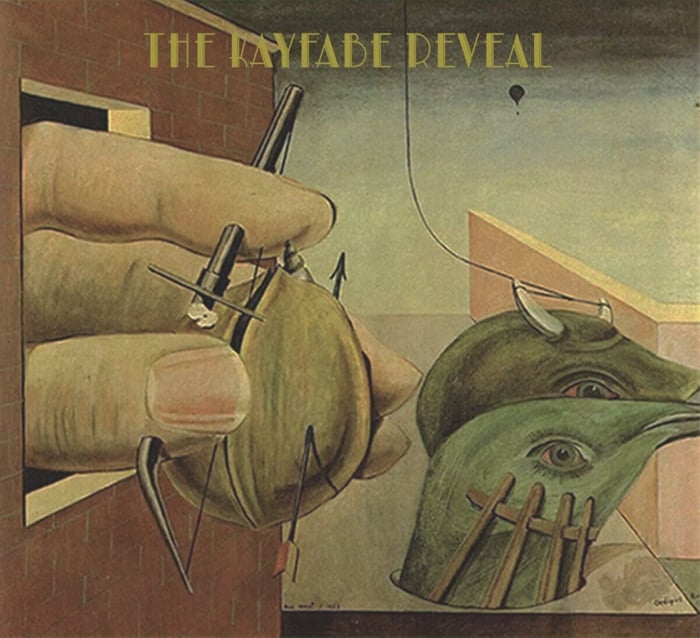
The Kayfabe Reveal Review: Ghais Guevara Stops Acting (Finally)


 See more Architeg Prints stories on Google.
Album Review: The Kayfabe Reveal by Ghais Guevara
An unflinching exploration of identity and truth as Ghais Guevara sheds his fictional mask and confronts reality head-on in The Kayfabe Reveal.
There’s a specific kind of silence that happens when a performer stops performing. Not the “end of song” silence—the oh, you’re serious silence. That’s the whole bet of The Kayfabe Reveal, and it’s a gutsy one: Ghais Guevara basically drags the stage lights into the dressing room and still expects the show to work.
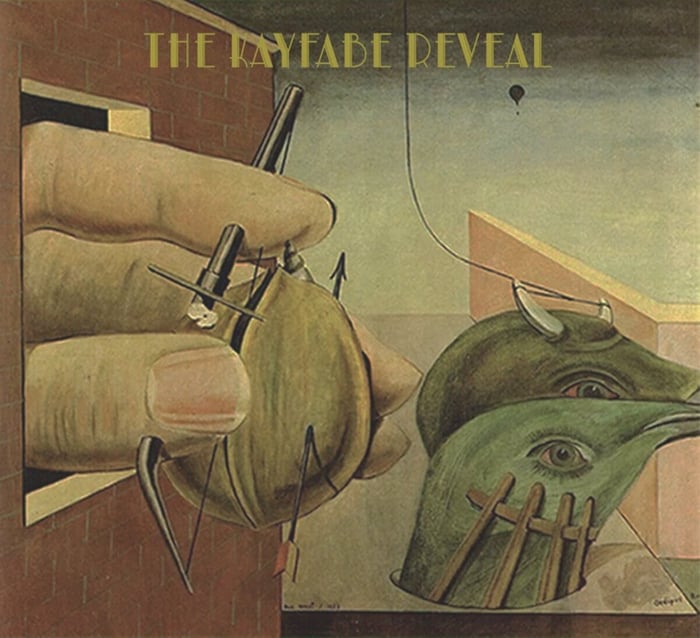
Why “kayfabe” matters here (and why he’s not using it as a cute title)
Here’s the deal with wrestling: “kayfabe” is the handshake agreement that everyone will pretend the fiction is real. The minute somebody admits it’s scripted—mid-match, in front of the crowd—the spell breaks. What’s left is a human in a ring that suddenly looks like a cheap, bright rectangle.
That’s the spirit this album is chasing. The title isn’t a reference so much as a warning label: the act is over, and you’re about to watch the person underneath try to keep standing.
And yeah, I’m aware how corny that could’ve been. At first I thought he was just borrowing a clever metaphor because rap loves borrowing metaphors like they’re free. But the way The Kayfabe Reveal behaves—how it introduces itself, how it keeps yanking the camera toward the seams—makes it feel literal, not decorative.
He kills the proxy and steps into the blast radius
Last time around, the story hinged on a fictional rapper—Goyard—who could absorb the impact. That’s a classic move: build a character, let the character suffer, and keep the real self safely behind the curtain. It’s not cowardice; it’s craft. But it’s also protection.
On The Kayfabe Reveal, that protection is intentionally missing. This isn’t “I’m going to be more personal” the way artists say right before hiding behind even prettier poetry. This is closer to: I’m going to take the hit myself and see what’s still standing afterward.
It’s also the album’s main contradiction: it keeps insisting it’s dropping the mask, while also reminding you that every confession is still a performance. That push-pull ends up being the actual tension—not whether he’s honest, but whether honesty even matters if it’s still shaped like a song.
The prologue: Nietzsche, Lacan, and a big blinking sign that says “don’t trust me”
The opening doesn’t tiptoe. It opens with spoken philosophy—Nietzsche on ressentiment, the sheep and the falcon, weakness reframed as virtue. The sample loops the self-congratulation until it starts to rot in your hands. Then Lacan shows up, talking jouissance—desire inside language, doing its own thing regardless of what the speaker thinks they mean.
And then the album basically tells you: the memories you’re about to hear come from someone unreliable. If you want “truth,” you should leave. If you want to watch somebody try to forgive himself in real time, stick around.
That’s not a neutral introduction. It’s a control move. He’s setting the rules so you can’t walk in later and demand purity. He’s telling you upfront that this will be partial, self-serving, and still—annoyingly—worth hearing.
I’m not totally sure the academic framing helps as much as he thinks it does, though. It’s effective as mood-setting, but it also risks making the album sound like it’s applying for permission to be messy. Still, it works because the music doesn’t stop at the ideas—it drags those ideas into lived scenes.
“History of Violence”: the album’s nerve ending, exposed mid-meal
There’s a moment on “History of Violence” where the song stops feeling like rap-writing and starts feeling like a memory that won’t behave.
The setup is almost normal: he takes a woman to a steakhouse he can’t really afford. She’s got direction—plans past high school, a sense of sequence. He doesn’t. He’s talking his talk, dressing insecurity up in expensive brand confidence, trying to sound like a person whose life makes sense.
Then the track pivots without asking permission. Suddenly you’re not at dinner anymore—you’re inside a catalog of what he grew up around:
- his father stopping the car and putting his mother out
- taking the long way because everyone knows what’s coming when he “starts acting ignorant”
- violence that isn’t announced with dramatic music cues—it just happens
- neighborhood stories that don’t land like anecdotes, more like local weather reports
And the title earns itself because the violence isn’t framed as a lesson. It’s listed. That’s the scary part: not that it happened, but that it’s remembered with the casualness of someone who had to keep eating dinner afterward.
The second half swings back into dating-but-not-really. He’s “off” her, she tells him that’s not normal, and he hits back with the obvious question: what’s normal? None of this is normal. He put confidence in Gucci and took a walk. He admits—without dressing it up—that he’s drawn to broken figures like it’s a subscription plan.
If this album persuades you of anything, it’s here: he’s not using pain as decoration. He’s using it as context. And context, on this record, is basically fate with better branding.
“ANTI-HERO”: three emotional commands, and none of them are comfortable
“ANTI-HERO” comes with instructions baked into the verses: get angry, get livid, get healed. That structure could’ve been corny—self-help rap is usually unbearable—but he makes it hit by keeping the details physical and humiliating in the way real memories are.
The “angry” section counts world tours and stipulations, like he’s tallying the rules of a game nobody honors. The “livid” section drops into specifics that feel lived-in:
- carrying boiling water upstairs without spilling
- learning how to mask feelings well enough to attract someone
- the True Religion jeans detail—petty, perfect, impossible to fake
Then “get healed” lands like the real punchline: mass incarceration is named as real, time gets stolen in decades, and attempts at escape don’t lighten the hatred—they feed it. The song doesn’t resolve; it admits the relief is temporary. The phrasing about art getting him “till tomorrow” is brutally honest: this is not salvation, it’s rent money for the next day.
And that’s an arguable take, but I’ll stand on it: the hook and post-chorus aren’t there to soothe you—they’re there to show you how flimsy soothing actually is.
“Performative”: calling out fake masculinity while still wearing it
If “ANTI-HERO” is self-directed, “Performative” is him turning the mirror outward and realizing his face is still in the frame.
The scene-setting is bleak and specific: nothing is open past eleven but the hospital. Existing as a Black man gets called “nonsense”—not as a slogan, more like a tired fact. He admits to dapping up abusers. He talks about being emasculated for linking with someone who made him feel okay. And then the line that feels like a deliberate self-own: he put Andrew Tate on a shirt.
That’s the point: he’s not speaking from purity. The featured voices (FARO and Teller Bank$) aim at “industry ornaments” and “conscious distortion,” but the bite lands because the track knows the accusation isn’t coming from some enlightened mountaintop. It’s coming from inside the same posture it’s criticizing.
The song’s claim is basically: we’re all acting, and some of us are just better at pretending it’s virtue. You can disagree with how broad it paints things—and I’m not sure every target it gestures at is equally earned—but the self-inclusion keeps it from turning into a lecture.
When he goes panoramic: empire, war, and the risk of sounding too grand
The album stretches widest when it leans into colonial and political imagery, and honestly, this is where it splits for me.
On “Jouissance, The Wealthy”, the sound is soulful and almost seductive while the content sketches a military figure with a fetish for collapsing empires—kissing the cross, feeling blessed while soldiers get chopped down, corpses lighting up the afterparty. Then the song drags Fortune 500 transplants into the same moral sentence: people who go to universities that steamroll locals, cosplay understanding, and call it “being cultured.”
That’s not subtle, and it’s not trying to be. The mercenary and the gentrifier get linked because he hears the same appetite at different altitudes.
“Battle of Ressentiment” doubles down: chemical weaponry creeping in, civilians pleading in another language, orders to burn anything “Iliad.” There’s a line that sticks because it finally narrows the lens back into a body: he talks about living through his body, being a spirit needing a vessel after the aftershocks. That’s the kind of phrasing that makes the war imagery feel internal instead of cinematic.
Then “Manufacturing Lack” comes in somber and blunt. He calls himself an end result—a consequence of testing a regime. There’s a promise of speech, and the result is people left undeveloped, incomplete, able to pass damage down like inheritance. The fetus growing old as trees is a nasty, memorable way to say: the cycle doesn’t wait for you to catch up.
But here’s my mild complaint, and it matters: when the album zooms out to centuries, empires, Nietzsche, and sweeping doom, the writing sometimes gets looser. Not “bad,” just less tethered. When he’s describing boiling water on stairs or the discomfort of a date where the other person’s life actually has a roadmap, he’s unbeatable. When he’s painting the whole sky, he occasionally settles for the grand claim when the record really needs one more concrete detail to nail it to the ground.
And the problem isn’t that he reaches big—it’s how often. When every third track tries to speak for civilization, the songs rooted in one room, one body, one memory end up doing the album’s real convincing.
The title track: the room clears out, and the real voice shows up
The title track “The Kayfabe Reveal” is where the concept stops being theoretical and gets personal fast. He talks to someone specific, like the audience isn’t there. The tone feels almost private: now that it’s just “us,” you should know that half the nightmares aren’t true anymore.
Then he admits he’s drained—like the best of him got siphoned—and that exhaustion is going to project onto the person he’s addressing. That’s a nasty kind of honesty: not “I’m hurting,” but “I might take it out on you.”
By the later verse, the impulse wins. He gets high in the studio and starts wilding—dissing the whole city, saying he can get away with anything, talking Glock fantasies like the mask slipped and the worst version of confidence walked in.
That’s the “reveal” I think he actually means: not that he’s secretly tender, but that the character used to keep the uglier reflexes contained. Without the proxy, they leak into the open.
I kept waiting for the song to moralize that moment—to step back and explain it—but it doesn’t. It just lets it hang there, which is either brave or irresponsible depending on your tolerance for art that won’t hold your hand. I’m torn, and I think he wants you torn.
The ending: celebration on the surface, loneliness underneath
The album closes in a club, which sounds like release, but it doesn’t play like victory. People want to celebrate. Relationships get reframed in bitter hindsight—somebody needed three years to realize his hell was her solace. There’s talk of an East Coast killer writing rap operas because orphans keep him honest, which is a surreal detail that lands like a sideways confession: morality doesn’t arrive clean, it arrives crooked.
He wants different terrain, more content, something like “God’s offering”—and he expects the gang back home to disavow him for wanting it. That’s the loneliest kind of ambition: the feeling that growth will cost you your original witnesses.
The planning keeps going, but it doesn’t sound like confidence. It sounds like someone staring at time and not knowing what to do with it. The last note isn’t triumph. It’s isolation.
So yeah—I think this one’s great, even when it wobbles
After living with it, I land where I didn’t expect to: I think The Kayfabe Reveal is great not because it’s perfectly written at every moment, but because it’s willing to show you where the writing can’t fully contain the life. It’s messy on purpose, and you can feel him resisting the urge to tidy it up into a marketable message.
Favorite tracks (the ones that actually do the persuading)
- “History of Violence”
- “ANTI-HERO”
- “The Kayfabe Reveal”
Conclusion
The Kayfabe Reveal is what happens when the costume comes off and the person underneath doesn’t look relieved—just exposed, still performing, but now without the padding. That’s the point, and it’s why the album sticks even when it reaches a little too far for the skies.
Our verdict: People who like rap that names the wound and the ways we decorate it will actually like this album—especially if you’re allergic to neat redemption arcs. If you want clean “inspirational” messaging, or you need every political swing to come wrapped in perfectly concrete storytelling, you’re going to get annoyed and wander off to something safer (and, frankly, less honest).
FAQ
- What does “Kayfabe Reveal” mean in this album’s context?
It’s the moment the act collapses on purpose—no character buffer, no proxy taking the hits. The album treats that as both freedom and danger. - Is The Kayfabe Reveal more personal than his previous work?
Yes, and not in a “diary entry” way—more like he removes the safety mechanisms that used to keep the worst impulses and fears at a distance. - What’s the most emotionally direct track here?
“History of Violence.” It’s built like a normal night out until it suddenly isn’t, and that’s why it hurts. - Does the album ever get too conceptual?
Sometimes. The philosophy and big political panoramas can drift into grand phrasing, especially compared to how sharp he is when he’s locked into one physical memory. - Where should I start if I’m new to Ghais Guevara?
Start with “ANTI-HERO” and “The Kayfabe Reveal.” They show the album’s main tension—performance versus person—without requiring you to decode every reference first.
If you’re the kind of listener who gets attached to album aesthetics as much as lyrics, it’s worth grabbing a favorite album-cover poster and letting it haunt your wall a little. You can browse options at our store: https://www.architeg-prints.com
 | DISCOUNTGET 30% OFF*Use code on your next order:
|
* This post may contain affiliate links, meaning we earn a commission if you make a purchase through these links, at no additional cost to you.