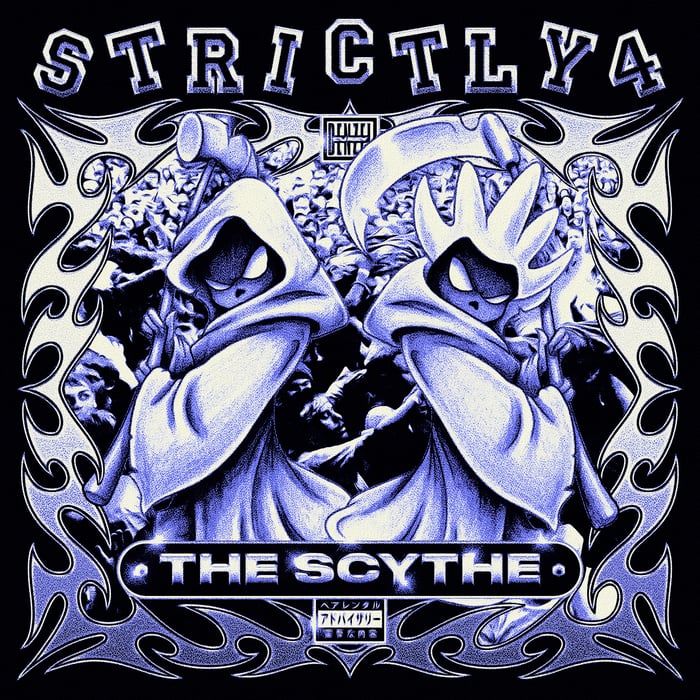
Strictly 4 the Scythe Review: A Crew Tape That Hits Like a Group Chat


 See more Architeg Prints stories on Google.
Strictly 4 the Scythe Review: A Crew Tape That Hits Like a Group Chat
Strictly 4 marks Denzel Curry’s return to the crew mindset—loud, nocturnal, and occasionally padded. It bangs, but it also reveals its own limitations.
A comeback that isn’t really a comeback
Thirteen years is a long time to go without believing in the “group” idea. And that’s what makes Strictly 4 feel less like a casual side quest and more like a statement: Denzel Curry didn’t need a crew, so choosing one again is the point.
Back when Raider Klan dissolved, it didn’t end with some big dramatic explosion—more like the classic early-internet collective fade-out: people drifting into solo lanes, grudges forming without anyone bothering to wrap them up neatly in public. Curry had been pulled into that world as a teenager, rapping over lo-fi Memphis loops beside names that later became their own ecosystems. He left in 2013, then spent the next decade proving he could carry entire albums alone—sometimes as the bruiser, sometimes as the thinker.
So yeah, when a guy who built a whole identity as a singular act walks back into a “we” format, I hear intent. The question isn’t whether the idea is interesting. The question is whether Strictly 4 earns the return—or whether it’s just a convenient way to multiply energy without multiplying risk.
The lineup is a map, not a coincidence
Here’s what The Scythe actually is: Curry, Ferg, TiaCorine, Bktherula, and Key Nyata. On paper, it looks like a “bridging generations and regions” move—and in the headphones, it still feels deliberate, not random.
Ferg brings that decade of A$AP Mob DNA, plus the post-prefix era where he tried to be taken seriously again. TiaCorine shows up with the kind of confidence that comes from having already lived a normal-job life before rap started paying attention. Bktherula’s been in the upload trenches since she was a kid, which you can hear in how unbothered she is by traditional “rap performance” expectations. And Key Nyata… Key Nyata is the pivot. He’s the missing-then-returned piece. After years off the radar, he pops back up through ULTRAGROUND—Curry’s label/collective lane—and suddenly you can tell this isn’t just a feature swap; it’s a reconnection.
I kept thinking the group name “The Scythe” is basically telling you what they want to do: not build a world, but cut through one. That’s the vibe—quick hits, sharp edges, no warm introductions.
BNYX and BRYVN make one giant beat… and dare you to complain
Every track is produced by BNYX and his younger brother BRYVN (BeautifulMvn), both from Upper Darby outside Philadelphia. That “one producer team handles the whole tape” decision gives Strictly 4 its strongest asset and its biggest limitation at the same time.
The asset: consistency that feels physical. The low end doesn’t just sit there—it leans on you. The percussion snaps through sub-bass like it’s trying to crack pavement. The keys stay minor-key and nocturnal, like the music’s permanently lit by one flickering streetlamp.
The limitation: that same consistency becomes a ceiling. After a few tracks, you realize the project is betting that weight and murk are enough to keep you locked in.
There’s a clear Memphis shadow over this thing—early Three 6 Mafia energy in the dread and darkness, that “something moving in the next room” feeling. But it stops short of the sample-collage weirdness that made those old tapes feel haunted. This tape wants the menace without the possession.
“Phony” leans the hardest into that Memphis pull—organ stabs, stripped drums, a Hypnotize Minds-era shape. And then there’s “Hoopty,” where the second half is Tay Keith-produced—literally the only moment where a different hand touches the boards. It lands like a patch sewn onto the end of a shirt you already bought. Not terrible, just obvious.
What they talk about is the point—and also the trap
Most of the talk on Strictly 4 circles money, fraud, and what happens when somebody approaches the group wrong. It’s familiar subject matter, but the tape treats it like doctrine: keep your circle tight, treat outsiders as potential liabilities, make the flex sound like a warning.
Sometimes it lands because the conviction is real. Sometimes it lands because the beat does the heavy lifting.
The sharpest writing comes from Key Nyata, which surprised me a little—I expected Curry to dominate every room automatically. Nyata doesn’t try to out-perform everyone; he just drops the one line that makes you rewind because it’s actually saying something clean. On “Phony,” he slices into that fake-street posture, the kind where someone’s “turf” only exists in their imagination. It’s a simple idea, but he delivers it like he’s pointing at a specific person across the room.
“Mutt That Bih” is where he sounds most locked in. There’s a moment where he compresses a whole moral decline into one tight jab, and that’s the kind of writing you can’t fake with charisma. He closes the same track with a line in the “I won’t cross you unless you cross me” tradition—standard code, but he makes it feel like policy, not posturing.
Curry’s best moment hits on “Lit Effect,” in his second slot. He admits half the audience doesn’t recognize him yet—then flips it into hunger instead of insecurity. He raps like he’s been holding receipts, stacking money until it looks like pages, then finishes by sniffing out weakness in the game and going straight for it. The last punch—clocking someone and seeing unemployment—is that clean hostility Curry’s always been good at: not loud anger, but precise contempt.
“Clocking someone and seeing unemployment is that clean hostility Curry’s always been good at: not loud anger, but precise contempt.”
And Juicy J popping up on “Phony”? He sounds exactly like Juicy J. Unbothered. A little cruel. The kind of voice that can say something ridiculous—like hiring your favorite rapper as a chauffeur around Los Angeles—and make it sound like normal scheduling.
TiaCorine and Bktherula don’t “fit in”—they refuse to
Here’s the thing: TiaCorine and Bktherula don’t get softened to match the crew. They hold their space and let the tape adjust around them, which is how it should be.
On the title track, TiaCorine says she fixes her lips to talk shit because it feels good. That’s not just a bar—it’s basically her mission statement. She flexes designer worries while everyone else worries about rent, walks with a limp like a pimp, and never sounds like she rehearsed any of it in the mirror. The confidence is the performance.
On “Hoopty,” she drops a detail that’s so casually absurd it works: spending a stack on a white tee, then barking something filthy without changing her tone. That’s her superpower—she doesn’t “sell” the line. She just says it like she’s already bored of your reaction.
Then “Tan” happens, and Bktherula basically takes ownership of the official release version. Her alias, Rue Santan, isn’t just a tag—it’s the engine of the track. She’s got this cadence that floats between singing and muttering, closer to cloud rap’s blurred delivery than the sharper attack most of this tape runs on. That shift gives “Tan” a different pulse than everything else here.
One line in particular is so specific it breaks through the usual brag fog—taking someone to see Spider-Man at 8, scheduling head at 10. It’s funny, sure, but more importantly it’s visual. Most flex bars are just nouns stacked in a pile; that one is a little scene. TiaCorine shows up on the same song filthier and more direct, but Bktherula sets the tone first. The track moves at her pace.
If you told me before listening that “Tan” would be the cut that feels most alive, I’m not sure I’d have believed you. On second listen, it’s obvious: it’s the only time the tape briefly stops trying to be hard and just gets weirdly human.
Not every guest belongs here (and the short tracklist makes it worse)
This is where Strictly 4 loses some points with me—not because it’s bad, but because it’s careless in a way that’s avoidable.
“You Ain’t Gotta Lie” is the flattest stretch. 454 sings a hook about telling a girl she can come through without pretending, and then the verses—454, Curry, and Luh Tyler—cover sex, spending, and pretty feet with zero friction. No surprise phrasing. No moment where someone bends the track into their own shape. It just… happens. And on an eight-track tape, “just happening” is basically unforgivable.
Luh Tyler has a line about not needing to graduate. In a solo context, maybe that would land like a shrugging flex. Here, inside a group tape that needs every minute to feel necessary, it evaporates.
Then “Up” brings in Rich the Kid, and he does what he does: luxury nouns in a row—Molly, vintage Chanel, Eliantte ice, Lamborghini—without a verb that sticks or an image that cuts. It sounds like he’s reading the contents of a very expensive junk drawer.
These guest choices feel like they came from a different Rolodex—picked for name recognition more than chemistry. And again, the tape is short. Dead weight doesn’t hide.
Ferg stumbles into the one moment that feels real
Ferg is the most uneven presence on the whole project—and weirdly, that’s what makes his best moment matter.
Most of the time, he’s in inventory mode: Fruit Roll-Up paint on the car, bipolar-colored mink, rubies falling to his knees, Cartier bust. It’s fun enough on “The Scythe” and “Phony,” mostly because the group energy carries him like a crowd carries a half-drunk friend. The momentum keeps it moving.
But then on the closer, “Up,” over SadBoi’s hook about vibing and doing butterflies, Ferg suddenly starts talking like a person who’s not sure he’s winning. He gets into breakup territory—wondering if they’ll get back together, mentioning bouncing from Atlanta to Santo Domingo, calling her mind the real cheat code, admitting she’s the queen while he’s with the hoes, even missing the way she twerked.
It’s clumsy and honest in equal measure. And I’m not even fully sure it was intentional, which is why it hits: it sounds like he stumbled into sincerity by accident after seven tracks of airtight swagger.
I thought I’d roll my eyes at that kind of late-album vulnerability swerve, but it ended up being the one thing that broke the tape’s sameness in a useful way.
The beats are relentless—and that’s both the selling point and the warning label
If you’re looking for variety, Strictly 4 doesn’t really negotiate. The brothers’ production keeps the tape in a tight corridor: heavy low end, nocturnal keys, drums that crack like they’re trying to leave dents.
That relentlessness is why the tape is easy to replay. It’s also why the subject matter can start to blur. When everybody’s rapping about money and consequences in the same tone over the same shade of darkness, you start listening for tone changes the way you’d listen for exits on a highway at night.
Still, when the energy is this good, it’s hard to stop mid-drive. I don’t say that as a blanket compliment—I say it because the tape’s main trick is momentum, and it works more often than it should.
Favorite tracks that actually justify the crew concept
If someone asked me what songs make Strictly 4 feel necessary, it’s these:
- “Lit Effect” (Curry sounds hungry instead of comfortable)
- “Phony” (Memphis lean, big personalities, Juicy J doing exactly what you want)
- “Mutt That Bih” (Key Nyata earns his spot with writing that bites)
Conclusion: this tape wants to feel like a warning, not a hangout
Strictly 4 doesn’t sound like five people making friends. It sounds like five people forming a unit because being alone is inefficient. That’s the real vibe: a crew tape built like a tool.
The production is a locked aesthetic—thudding, nocturnal, and intentionally narrow. The best performances (Curry at his sharpest, Nyata at his most surgical, Bktherula making “Tan” breathe) prove the crew model can create sparks. The weakest guest spots, though, expose the risk: once you’ve committed to a short, all-killer tape, you don’t get to hide filler behind “it’s just a vibe.”
Strictly 4 will appeal to those who like rap that hits like a closed-door conversation—heavy bass, threats wrapped in jokes, zero daylight. If you need track-to-track variety, big conceptual arcs, or hooks that feel like songs instead of chants, you’re going to get bored and start checking how many tracks are left like it’s a microwave timer.
FAQ
- What is the core sound of Strictly 4?
Dark, Memphis-haunted production with huge low end, snapping drums, and minor-key keys that rarely let the mood brighten. - Who stands out the most on the tape?
Key Nyata hits hardest on writing, Bktherula gives “Tan” its own heartbeat, and Curry’s best verse run is on “Lit Effect.” - Are the guest features all necessary?
No. On a short tracklist, “You Ain’t Gotta Lie” and Rich the Kid’s run on “Up” feel more like name pulls than chemistry picks. - Does the single-producer approach help or hurt?
Both. It makes the tape feel cohesive and physical, but the lack of sonic left turns can make the middle blur together. - What’s the most surprising moment?
Ferg getting oddly sincere on “Up.” It’s messy, but it’s the one time the tape cracks open and lets something human leak out.
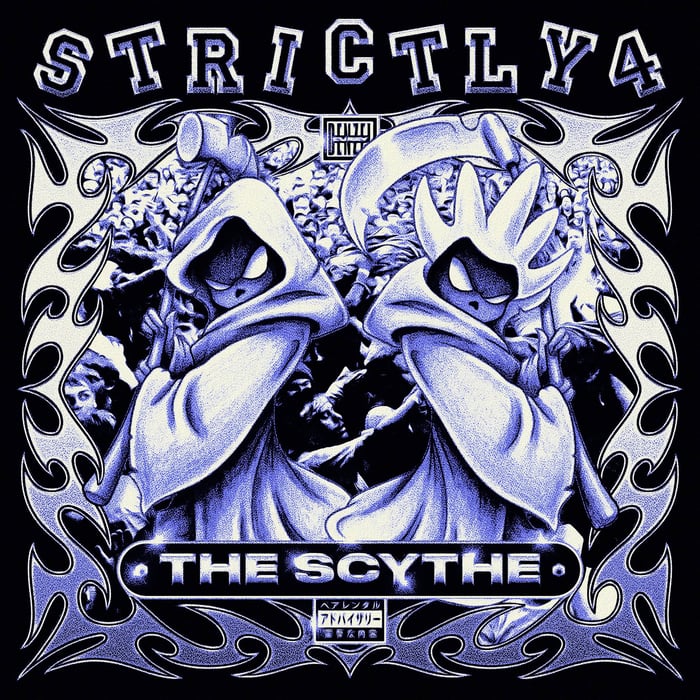
If you’re the type who treats album covers like part of the music, it’s not a bad idea to put your favorite one on the wall—especially with a tape this visually moody. You can grab an album cover poster at our store here.
 | DISCOUNTGET 30% OFF*Use code on your next order:
|
* This post may contain affiliate links, meaning we earn a commission if you make a purchase through these links, at no additional cost to you.