Odd Marshall “Seconds album”: Desert Rock With a Teenage Flashback Problem


 See more Architeg Prints stories on Google.
Odd Marshall “Seconds album”: Desert Rock With a Teenage Flashback Problem
Odd Marshall’s Seconds album drags Blind Melon ghosts into Joshua Tree—and somehow turns a near-EP into eight songs that sound like second chances.
This record isn’t “new”—it’s a do-over with better gear
Some albums feel like an artist chasing the next thing. The Seconds album feels like an artist chasing the old thing—the one that first rewired their brain as a teenager—except now he can actually afford the studio time and the musicians show up.
Odd Marshall doesn’t hide the origin story here: he wanted a certain prominent Canadian producer for the follow-up to his 2024 debut Sand & Glue, got turned down, and did what people only pretend they’d do—he dug back into his 14-year-old taste and asked himself who he used to worship. The answer was Blind Melon. That’s not just trivia; it’s basically the mission statement. This album moves like someone trying to re-enter a past life, not someone polishing a brand.
The boldest move is how casually he pulls the “cold email” lever
Here’s what’s actually happening under the hood: Marshall finds a contact, sends a cold email with demos, and ends up talking to Christopher Thorn, who doesn’t just give advice—he produces the album. Thorn also brings in his long-time six-string counterpart Rogers Stevens, which matters because it’s framed as the first major project they’ve done together outside of Blind Melon.
That’s a wild swing, and I don’t mean “cute fan story” wild. I mean it changes the power dynamic of the entire record. The album isn’t trying to cosplay 1992; it’s letting two players who helped define a certain kind of loose-but-hooky guitar language step into the room and do what they do naturally. And Marshall’s choice—whether he admits it or not—was to stop trying to impress the gatekeepers and instead impress the version of himself who used to live inside a debut album.
A reasonable person could argue this is nostalgia-bait. I’d argue it’s more specific than that: it’s a targeted attempt to rebuild creative momentum by putting the right idols within arm’s reach.
Joshua Tree turns the sessions into a pressure cooker (in a good way)
Once the recording starts at Fireside Studios in Joshua Tree, the cast gets bigger. Not “random friends hanging around” bigger—real working musicians drop in to contribute:
- Rami Jaffee (Foo Fighters, Wallflowers) on keys
- Denny Weston Jr. (KT Tunstall) on drums
- Jon Ossman (known for work with jazz trumpeter Chris Botti) on bass
That lineup doesn’t just add polish—it adds gravity. It tells you Marshall wasn’t building an EP in a bedroom. He was building a room worth entering.
And it’s funny: what was supposed to be an EP turns into a full eight-song album because, once the sessions start, Marshall reaches deeper into his “song bag” and pulls out more material that can actually show off the talent he has access to. That’s a very particular kind of creative decision: not writing to a concept, but writing to the room. Some listeners hate that approach because it can feel opportunistic. I think it’s the opposite here—Marshall finally acts like someone who understands that songs change when the right hands touch them.
I’ll admit I’m not totally sure the EP-to-album pivot always results in the tightest possible statement—sometimes “more songs” is just “more songs.” But in this case the expansion feels like the point: this is literally a record about not wasting the chance.
“Outta Here” gives away the real agenda: guitar first, therapy second
The first real taste of the desert chemistry shows up on the single “Outta Here”, and it doesn’t tiptoe. It’s described as a hard-driving roots rock number, and that’s accurate in the most functional way: it moves forward, it wants the chorus, and it makes room for Thorn and Stevens to put their guitars right in your face.
Marshall ties the core riff to his own past—he says it’s one of the first riffs he wrote for his high school band, and the lyrics came later. And that’s the Seconds album in miniature: old DNA, new context.
“There’s so much more outside of these doors… but you’re afraid of change.” — Odd Marshall
What makes that line land isn’t poetry; it’s placement. It’s a lyric that sounds obvious until you hear it delivered like a decision someone is making out loud. The track treats leaving as an act of self-respect, not melodrama. And yes—there’s also something quietly ridiculous (in a charming way) about a guy still processing his teenage listening habits while recording with the very guitarists he used to obsess over. But that’s also why it works: the album refuses to pretend we become different people. We just get better at arranging our old selves.
If I’m nitpicking, here’s the part that slightly loses me: the “hard-driving” approach can flatten nuance if every big moment is solved with more push. I kept waiting for a left turn in dynamics—something that forces the guitars to shut up for a second. Still, the choice is coherent: this song wants to be the engine, not the scenery.
The album’s real hinge point is the crash—and he doesn’t romanticize it
Underneath the gear, the guests, and the desert lore, this album is also a marker on Marshall’s route back to music being the main pillar of his life. The reason is blunt: a car accident made it hard to keep postponing what mattered.
He says he stopped writing songs for 10 years until he flipped his truck in a snowstorm. He was fine, but the image is sticky: crawling out the passenger window, sitting in the back of a cop car, and hearing a song on the radio that reminded him he used to do that—he used to write. That’s not a triumphant montage; it’s a humiliating moment of remembering your own neglect.
And that’s the thing I respect about how Seconds album carries itself. It isn’t trying to sell the accident as mythology. It uses it as a reset button. Some listeners might hear that backstory and assume the music will be fragile and whispery. It’s not. It’s closer to a person grabbing the steering wheel with both hands and deciding the next hour will not be wasted.
On first listen, I honestly expected the “second chance” framing to turn the record sentimental. On second listen, it hit me that it’s basically the opposite: it’s impatient. It’s an album made by someone who’s done bargaining with time.
“Seconds” isn’t trying to be indie rock—it's trying to plant a flag
After the accident, Marshall starts working like someone making up for lost time. He records Sand & Glue with producer Don Kerr (connected to artists like Ron Sexsmith, Rheostatics, Dan Mangan, Bahamas), and songs like “Midsummer” and “What You Take” do well at radio.
That matters here because the Seconds album doesn’t sound like a debut scramble. It sounds like a follow-up made by someone who already watched a couple songs connect, then decided to raise the stakes by changing the whole creative environment. Getting Thorn to produce isn’t just a flex; it’s a way to commit to a sound that’s anchored by musicianship instead of trend-chasing.
And yes, Marshall is “poised to plant his flag within the indie rock world,” but I’d sharpen that: this album isn’t begging indie rock to accept it. It’s acting like it’s already inside, and it’s dragging a very specific strain of rootsy, guitar-forward attitude with it.
A listener could disagree and say the album leans too comfortably into classic rock muscle memory to count as planting anything new. I get that. But I think the point is that Marshall isn’t trying to innovate—he’s trying to re-enter. The ambition is personal, not historical.
The guest players don’t steal the show—they widen the doorway
It’s tempting to treat big names as trophies, but that’s not how the record plays. Rami Jaffee shows up and the keys don’t scream “celebrity cameo”; they behave like someone quietly installing extra rooms in the house. Denny Weston Jr. brings a drummer’s kind of authority—the sort that makes a song feel like it knows where the “one” is without arguing about it. Jon Ossman on bass keeps the floor sturdy enough for the guitar story to happen.
The arguable claim: the album’s best trick is restraint—not in volume, but in ego. It doesn’t feel like Marshall is competing with his guests. He’s using them as proof that these songs can survive contact with serious players.
Still, I’m a little unsure whether every listener will be thrilled by how “guitar-forward” the whole premise is. If you’re the kind of person who needs production gimmicks to stay awake, this album might feel like watching a very competent band refuse to do backflips. That’s not an insult; it’s the aesthetic.
Streaming link (because the album wants to be played, not explained)
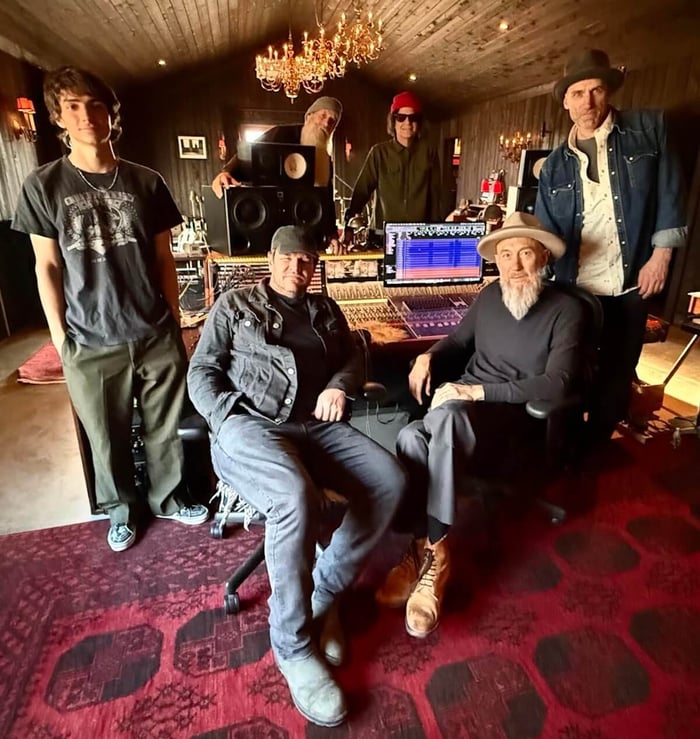
Photo by Heather Thorn.
Conclusion: the Seconds album is what happens when fandom turns into infrastructure
The Seconds album isn’t just eight songs recorded in a desert studio. It’s a guy taking the version of himself who loved Blind Melon at 14 and finally giving that kid a real budget, real collaborators, and a reason to stop stalling. The cold-email origin, the Joshua Tree sessions, the guest musicians drifting in, the EP that couldn’t stay small—none of that reads like marketing. It reads like momentum that finally got permission to exist.
Our verdict: People who like guitar-driven indie rock with real players in the room will actually like this album—especially if you enjoy hearing songs tighten up under experienced hands. People who want maximalist pop sparkle, ironic detachment, or constant stylistic swerves will not; they’ll call it “dad-adjacent” and miss the point while doing it.
FAQ
- Is the Seconds album an EP or a full album?
It ends up as a full eight-song album, even though it starts out intended as an EP. - Who produced Odd Marshall’s Seconds album?
Christopher Thorn produced it, and Rogers Stevens is brought in as well. - Where was Seconds recorded?
The sessions take place at Fireside Studios in Joshua Tree. - Who are the guest musicians on the album?
Rami Jaffee contributes on keyboards, Denny Weston Jr. on drums, and Jon Ossman on bass. - What’s the single that introduces the album’s chemistry?
“Outta Here,” a hard-driving roots rock track with Thorn and Stevens’ guitars up front.
If you’re the kind of listener who treats album art like part of the experience, you can always grab a favorite cover as a wall poster over at our shop. It fits the whole “live with the records that rewired you” theme.
 | DISCOUNTGET 30% OFF*Use code on your next order:
|
* This post may contain affiliate links, meaning we earn a commission if you make a purchase through these links, at no additional cost to you.