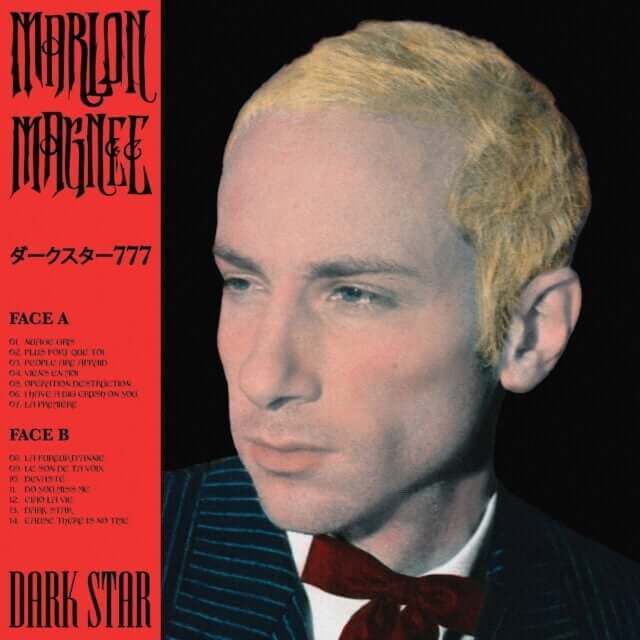
Marlon Magnée’s Dark Star: Rock’s Loud Comeback or Stylish Chaos?


 See more Architeg Prints stories on Google.
Marlon Magnée’s Dark Star: Rock’s Loud Comeback or Stylish Chaos?
Dark Star smashes rockabilly, punk, cold wave, and psychobilly into one fast, bilingual spark—raw, synth-drunk, and weirdly stubborn.
A record that refuses to “pick a lane”
Some albums feel like a well-lit room. Dark Star feels like someone tore out the wiring on purpose, then kept playing anyway.
Marlon Magnée isn’t trying to make a neat statement here—he’s trying to make a collision. Rockabilly gets shoved into punk tempos, cold wave gloom gets splashed with psychedelic grime, and the whole thing moves like it’s late for something. It’s the kind of record that basically dares you to complain about the mix of styles… because the mix is the point. And yes, that’s an arguable choice: plenty of listeners will hear “unusual blend” and translate it to “indecisive.” I don’t think it’s indecisive. I think it’s deliberate restlessness.
The sound palette is a time machine with a cracked screen
Once you get past the opening shock, the ingredients start flashing in recognizable ways.
The guitars lean hard on that ’60s snap—the kind of tone that doesn’t “soar,” it cuts. Then, just when you think it’s going to live in retro-land, the album drops what can only be described as an orgy of synths pulled straight from the ’80s playbook: bright, pushy, and not at all apologetic about taking up space. Underneath that, there’s a lot of pounding drum machine momentum, plus the smear of analog delays that makes everything feel slightly haunted at the edges.
Here’s the arguable part: the rawness doesn’t read like “lo-fi charm” so much as “weaponized impatience.” It’s not warm. It’s not polite. It’s a record that wants friction—and it gets it.
Also, I’ll admit I wasn’t sure at first if the drum-machine thump was going to get monotonous. On a first pass, I kept waiting for a “traditional band” moment to step in and rescue the pulse. But the longer I sat with it, the more I realized the rigidity is part of the pressure system: the album likes sounding a little boxed-in because it makes the outbursts hit harder.
Bilingual vocals that don’t translate— they change the temperature
The songs jump between French and English, and it doesn’t feel like a gimmick. It feels like Magnée is using language the way he uses genre: as a switchblade, not a comfort blanket.
English lines tend to land with that clipped rock urgency, while the French sections carry a different kind of cool—more insinuation, more slant. The same melody can feel cockier in English and more shadowy in French, even when the energy stays high. A reasonable listener could disagree and say bilingual writing breaks immersion. For me, it does the opposite: it makes the record feel like it has multiple faces, and you don’t get to choose just one.
Still, there’s a small downside: the constant switching sometimes makes the hooks feel like they’re sprinting away before they fully settle. That’s not a dealbreaker, but it’s the part that occasionally lost me—like, hold still for two seconds, you’re allowed to be catchy.
Influences aren’t hidden— they’re basically the wallpaper
This album doesn’t “hint” at its influences. It wears them like pins on a jacket. You can hear the spirit of:
- The Velvet Underground (that stubborn, minimal cool—less “pretty chord,” more “keep staring”)
- The Stranglers (tight tension, wiry attitude)
- Motörhead (speed as an argument)
- The Cure (cold sheen sliding under the skin)
- The Stray Cats (rockabilly swagger, but dirtier)
- JJ Cale (a sense of groove that doesn’t need permission)
- the Nuggets compilations (garage DNA: punchy, unpolished, compulsive)
And then there’s a set of French-speaking touchstones running through it too—Serge Gainsbourg, Les Rita Mitsouko, Métal Urbain, Plastic Bertrand, and Marc Charlan—which helps explain why the record can pivot from stylish sleaze to abrasive insistence without blinking.
Here’s my hot take: Dark Star isn’t trying to “innovate” as much as it’s trying to re-wire nostalgia into something combative. It’s not a museum. It’s a street fight where everyone showed up dressed as their favorite decade.
Speed as a philosophy (and yes, it gets kind of ridiculous)
The album runs fast—sometimes very fast, with tempos reaching up to 240 bpm. That’s not “upbeat.” That’s “the room is vibrating and you’re suddenly aware of your heartbeat.”
At that speed, subtlety becomes a choice. Magnée mostly chooses not to be subtle. The faster moments feel radical not because they’re technically complex, but because they’re emotionally impatient. It’s like he’s allergic to settling into a groove for too long.
And honestly? On my first listen I thought the speed was going to be the whole trick—fast for the sake of fast. But on second listen, I caught something else: the record uses speed the way punk used speed originally—as a refusal to be slowed down by expectations. It’s not cardio. It’s defiance.
That said, I do think the “always moving” approach can make a few parts blur together. When everything is urgent, the truly urgent moments have to work harder to stand out. That’s the mild flaw in the design: relentlessness is thrilling, but it can also flatten contrast if you’re not careful.
The “raw energy” isn’t accidental— it’s staged, and that’s why it works
The album’s energy feels deliberately raw, like Magnée made choices that avoid polish even when polish was available. You can hear it in the edges of the sounds: the way the delays smear instead of shimmer, the way the synths crowd the air instead of sitting back politely, the way the rhythm hits like it’s trying to dent something.
“Made ‘for those with blood in their hearts and the urge to fight back.’ And yeah, that’s dramatic. But the record earns the drama by never winking at it. It commits.”
An arguable statement: the album isn’t “bringing rock back” so much as dragging rock back by the collar, refusing to let it become background music. If you came here for tasteful retro vibes, this thing will pick a fight with your taste.
Co-production, a legendary studio, and a return-to-roots move
What makes the chaos feel so intentional is that it didn’t happen in a vacuum. Dark Star was co-produced with Renaud Letang (whose work includes Feist, Manu Chao, and Peaches) at Ferber Studio in Paris—a place with enough legacy baked into the walls that you can almost hear the room pushing performers to mean it.
And this being Magnée’s first solo effort matters. It sounds like someone returning to their roots, not in the “soft sentimental” way, but in the “I’m going back to what made me loud in the first place” way. The album doesn’t feel like a debut trying to please people. It feels like a statement made by someone who’s already decided what they’re willing to risk.
Arguable but I’ll say it anyway: putting this much speed and synth density inside a “return to roots” framing is a flex. It’s him claiming the roots aren’t gentle—they’re volatile.
If you want to hear it straight, here are the official embeds
This is the part where you stop reading me and go verify whether I’m exaggerating.
So what is Dark Star actually doing? Picking a fight with passivity
By the end, Dark Star comes off less like a genre experiment and more like a personality test. Can you handle a record that treats style like ammunition? Can you enjoy an album that references half a century of rock lineage without turning it into a respectful tribute?
I’m not completely sure every moment lands exactly the way Magnée wants—there are stretches where the album’s “go go go” instinct keeps it from letting a great idea breathe. But the commitment is real, and the craft underneath the mess is sharper than it first appears.
The main contradiction is also the hook: it’s built from familiar influences, yet it refuses to behave in a familiar way. That’s why it feels like a comeback—not of rock as a genre, but of rock as a stance.
Conclusion
Dark Star doesn’t ask politely for your attention. It grabs it with drum machines, ’60s bite, ’80s synth overload, and bilingual swagger—and then it runs at 240 bpm like it’s being chased.
Our verdict: People who like their rock messy, fast, and stylishly confrontational will actually love Dark Star—especially if they enjoy hearing punk, cold wave, and rockabilly fight in the same room. If you need clean genre boundaries, warm production, or songs that politely introduce themselves before getting loud, this album will feel like someone slamming doors in your hallway on purpose.
FAQ
- What’s the core sound of Dark Star?
A volatile blend: rockabilly bite, punk speed, cold wave chill, and psychedelic psychobilly grime, pushed by synths and drum machines. - Does the bilingual (French/English) approach feel natural?
Mostly, yes—it changes the mood track-to-track. Occasionally it can make hooks feel like they don’t sit still long enough. - Which influences are most obvious while listening?
You can hear echoes of The Velvet Underground, The Cure, Motörhead, and The Stray Cats, plus Nuggets-style garage energy and major French icons like Gainsbourg. - Is it a polished studio album or a raw one?
Raw by choice: analog delays, pounding machines, and aggressive textures that avoid glossy “radio” finishing. - Who is Renaud Letang in this context?
The co-producer (known for work with Feist, Manu Chao, and Peaches) helping shape the record at Ferber Studio in Paris.
If Dark Star put a visual stamp on your brain, you can keep that feeling around with a poster-worthy print. Shop your favorite album cover poster at our store: https://www.architeg-prints.com
 | DISCOUNTGET 30% OFF*Use code on your next order:
|
* This post may contain affiliate links, meaning we earn a commission if you make a purchase through these links, at no additional cost to you.