X’s For Eyes Deluxe Review: Emo Revival or Just Extra Laps?


 See more Architeg Prints stories on Google.
ALBUM REVIEW: X’s For Eyes (Deluxe) – The Red Jumpsuit Apparatus
Exploring The Red Jumpsuit Apparatus’s latest emo-infused release, X’s For Eyes (Deluxe), this review delves into the highs and lows of the album amidst the current pop-punk and emo revival.
Let’s be honest about what this “emo” album is trying to do
Pop-punk and emo are back in rotation, and a lot of bands are cashing in with records that feel lean, loud, and actually hungry. X’s For Eyes (Deluxe) by The Red Jumpsuit Apparatus wants to land in that wave—but it also wants to be an album, the kind that hangs around long enough to feel “substantial.”
And that’s the whole problem. This isn’t a catastrophic listen. It’s worse than that in a very specific way: it’s often fine. The record keeps handing you songs that function, then asking you to pretend they’re different songs. If this had been trimmed down into a sharp EP, it could’ve come off like a confident return. As a full experience, it starts to feel like watching a movie that keeps fading to black… and then continuing anyway.
The opening tries to convince you the band still has claws
“Always The King” kicks the door in with the exact kind of broody, nostalgic emo posture the title promises. The riffs have bite, the pacing moves, and the occasional harsher edge helps it feel less like a museum piece. The smartest move is the feature: Kellin Quinn (Sleeping With Sirens) drops in with instantly recognizable vocals, and that alone gives the track a jolt of personality.
Here’s the arguable part: I think the band knew they needed a guest right away to raise the ceiling. It works. It’s punchy. For a moment, I thought, “Okay, they’re back.”
Then the album immediately starts sanding itself down.
Then it slips into the blur (and pretends that’s a vibe)
“Purple Halo” comes next and doesn’t capitalize on anything the opener set up. It’s not offensively bad—it’s more like it’s content to occupy space. And once the album shows you it’s willing to do that, you start noticing how many tracks share the same emotional temperature.
The boldly named “Perfection” should’ve been a statement, but it mostly underlines the record’s biggest self-own: Ronnie Winter sounds committed on vocals, yet the music around him doesn’t give him anything risky to chew on. The song feels like it’s aiming for catharsis, but it lands closer to polite competence.
I’m not even 100% sure this is laziness. Part of me wonders if the band intentionally chose “safe” as a strategy—like, don’t scare off the casual fans, don’t challenge the playlist gods. If that’s the plan, it’s a very 2020s plan. It’s also a boring one.
The “emo” branding gets loud, and the music stays weirdly polite
The album leans hard into titles that practically wear eyeliner. “Angels Cry” is the clearest example—like the band is flashing a neon sign that says REMEMBER: EMO. To be fair, it’s a decent ballad, and it’s placed in a way that makes sense: it acts as a breather after louder stretches, and you can already picture the phone lights in a live crowd.
But it’s not the kind of ballad that changes the weather in the room. It’s the kind that fills time gracefully.
The title track finally acts like the center of the record
When “X’s For Eyes” arrives, it finally breaks the pattern a bit. The tempo has more snap, the structure feels more deliberate, and the song carries that classic Red Jumpsuit Apparatus shape—tight enough to move, dramatic enough to stick.
It’s the first time the album sounds like it had a little extra focus put into it. The track feels designed to trigger muscle memory: you can practically feel yourself brushing the old emo fringe out of your face, whether you ever had one or not.
This is where my first impression revised itself. After the earlier stretch blurred together, the title track made me think the record might actually climb from here—like the band had been warming up and was about to start landing punches.
It doesn’t really climb. It mostly stays in the same lane.
The mid-album “same-ness” isn’t a disaster—just a slow leak
“Bad Beat” is a perfect example of the album’s ongoing issue. It’s not a bad track. The frustrating part is how hard it is to distinguish it from what’s around it. The melodies don’t separate enough, the dynamics don’t shift enough, and the hooks don’t feel like they’re trying to win a fight.
That’s the running theme: the album doesn’t collapse, it just stops advancing.
And that makes the Deluxe framing feel a bit cheeky. “Deluxe” usually implies extra value. Here, it mostly amplifies the sense that the album could’ve been leaner.
A stadium-sized detour finally gives the record a different silhouette
At the midpoint, “Slipping Through (No Kings)” finally widens the screen. It reaches for a stadium-scale sound—anthemic, big-armed, the kind of track built for a crowd response. Even if you don’t love it, you can’t deny it tries harder than the surrounding run.
Arguable take: this is one of the only moments where the band sounds like it’s chasing something instead of maintaining something.
Then “Angels Cry” follows, and the sequencing basically says: Here’s your big singalong moment, now here’s your softer emotional moment. It’s sensible. It’s also a little calculated.
The stretch that tests your patience (and your track counter)
Then the momentum drops again—almost like the album keeps forgetting it has to earn your attention repeatedly.
“Home Improvement” is the clearest “why is this here?” moment. It’s not offensively messy. It’s just… nothing. If you trimmed the album, this would be first on the chopping block.
“Twenty Hour Drive” accidentally becomes a metaphor for the listening experience. You think you’re nearing the end, you look up, and somehow you’ve still got a chunk of record left. The track bleeds into “Kins And Carroll,” which—ironically—has more drive than the song literally named after driving. It’s a minor highlight mostly because it finally sounds awake.
Mild criticism, since it needs saying: the album’s pacing is its own enemy. Not the playing, not the vocals, not even the production choices. The pacing. It keeps setting up momentum and then stepping on its own shoelaces.
Near the finish line, guest features start proving a point
By the time “Getting By” arrives, the sense of recycled motion returns. It feels like another earlier-song cousin, and it reinforces the feeling that the album didn’t need to be this long.
Then “Worth It” shows up and actually earns its title. Craig Mabbitt (Escape The Fate) brings in a heavier, higher-octane energy, and the track has real bounce—like the band suddenly remembered they’re allowed to punch the drums harder and let the chorus hit with teeth.
Arguable take: this album is at its strongest when it borrows another vocalist’s personality, not because Ronnie Winter can’t carry songs, but because the writing gets more intentional when a guest is involved. It’s like the band tightens up because they know someone else is stepping into the room.
Late-album fun arrives… a little too late
“Not Today” brings in more pop flavor and mixes it with harsher vocals in a way that actually clicks. It’s a late burst of energy that makes you wish the earlier tracks had taken similar risks instead of sitting comfortably in mid-tempo familiarity.
And then, at the end, “Perfection” returns—this time with Derek Sanders (Mayday Parade). It’s a rare highlight with a cleaner pop-punk feel, and it kind of backs up the suspicion that the guest tracks got the most care.
It’s satisfying to end on something that actually pops, but it’s also annoying because it arrives after the album has already asked a lot of your attention.
The ending tries to cheat the finish with a “screamy version”
There are moments on this record that genuinely shine, which almost makes the duller stretches more frustrating. You keep wanting it to become great throughout. Instead, it mostly plays out in a gray zone where you don’t hate it, but you also don’t feel pulled back for another full run.
And then the album slips in a screamy version of “Slipping Through (No Kings)” near the end, like a little mirage of intensity. It perks you up—briefly. But it also feels shoehorned in, like a last-minute attempt to leave you with the impression of impact.
If you’re going to do that kind of alternate version, I wanted it to feel like a deliberate final swing. Here, it lands closer to “bonus content” energy—except it’s treated like a closing statement.
Artwork and release notes (because the packaging tells on the music)
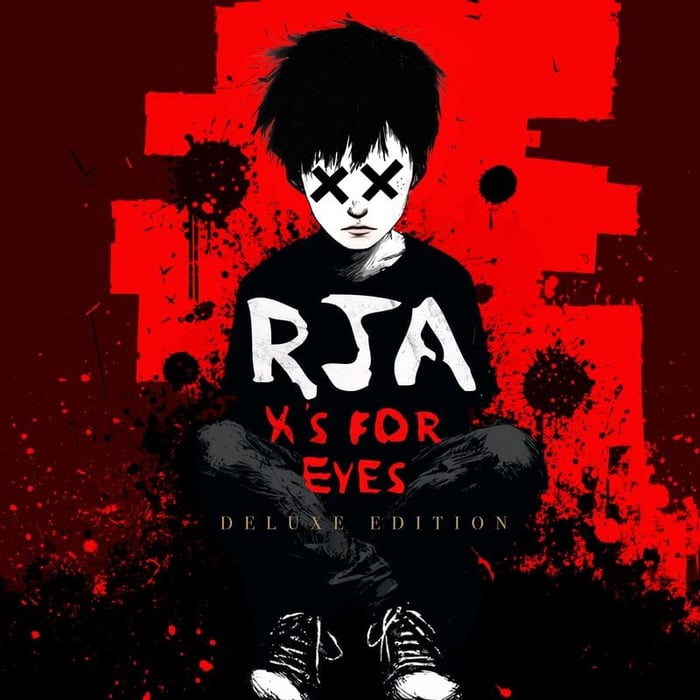
The cover for X’s For Eyes (Deluxe) looks exactly like the album sounds: dramatic on the surface, cleanly presented, and not particularly interested in being complicated.
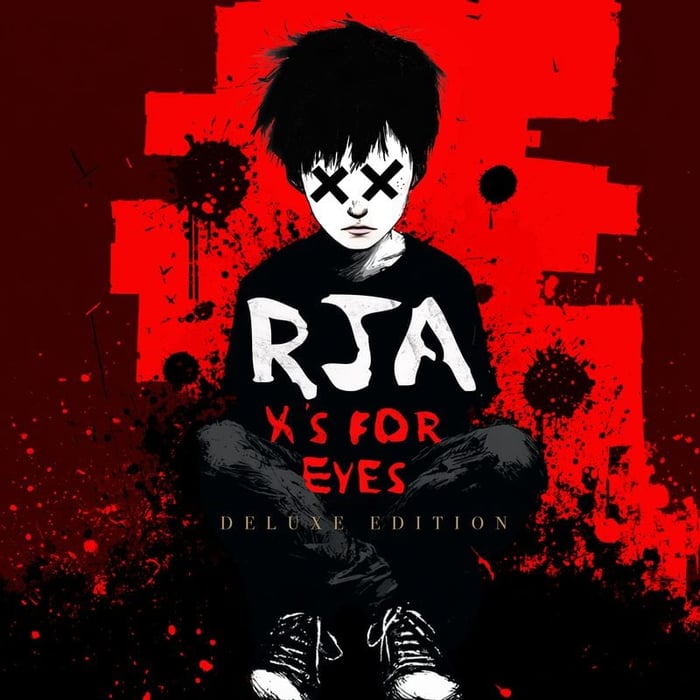
X’s For Eyes (Deluxe) is out now via Better Noise Music.
So where does that leave it?
If I had to slap a blunt number on the experience, I land around a 5/10 feeling—not because it’s broken, but because it’s padded. The highs are real. The boredom is real too. And the worst crime this album commits is that it doesn’t give you much to argue about after it ends.
You almost wish it were messier—at least then it would have a personality you could wrestle with.
Conclusion
X’s For Eyes (Deluxe) has flashes of the band’s old instinct—especially when the tempos lift and the guest spots force sharper choices. But too much of the runtime settles for “serviceable,” and the album’s habit of draining its own momentum turns the full listen into a long walk for a short view.
Our verdict: People who love polished, familiar emo-pop-punk—and don’t mind songs blending together—will have a good time, especially with the guest-driven highlights. If you’re the kind of listener who needs every track to justify its existence, this one will feel like a “deluxe” edition of waiting for the good part.
FAQ
- Is X’s For Eyes a return to classic The Red Jumpsuit Apparatus energy?
In moments—especially on “Always The King” and the title track—but the album often plays it safer than their most memorable peaks. - Which songs stand out the most on X’s For Eyes (Deluxe)?
“Always The King,” “X’s For Eyes,” “Slipping Through (No Kings),” “Worth It,” and the Derek Sanders-assisted “Perfection” are the clearest standouts. - Do the guest features actually improve the album?
I think they do. The guests seem to trigger more focused writing and more distinct vocal moments, which the album sometimes lacks elsewhere. - Does the Deluxe edition feel necessary?
If you already felt the album was long, the extra “screamy version” moment can feel tacked on rather than essential. - Who should skip this album?
Anyone allergic to mid-album blur, or anyone who wants an emo record that constantly escalates instead of cycling through similar moods.
If you’re the kind of person who bonds with album artwork as much as the choruses, you can grab a favorite album-cover poster vibe over at our store: https://www.architeg-prints.com/ — it fits this record’s dramatic-on-purpose energy pretty well.
 | DISCOUNTGET 30% OFF*Use code on your next order:
|
* This post may contain affiliate links, meaning we earn a commission if you make a purchase through these links, at no additional cost to you.