Morrissey’s Make-Up Is a Lie Proves Misery Is Still His Day Job


 See more Architeg Prints stories on Google.
Morrissey’s Make-Up Is a Lie Proves Misery Is Still His Day Job
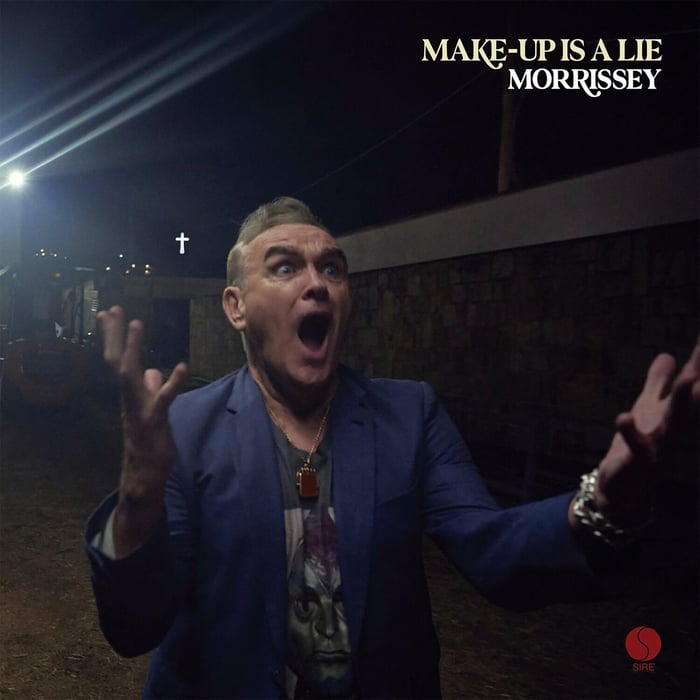
Make-Up Is a Lie isn’t a comeback—it’s Morrissey picking his favorite masks off the floor and putting them back on, proudly, like they still fit.

First, a warning: this album isn’t trying to charm you
This is one of those records that plays like it already knows what you’re going to complain about—and it’s halfway dared you to do it. Make-Up Is a Lie is Morrissey’s 14th album, and he shows up dressed in the same costumes he’s been rotating for decades: eternal romantic, tireless crank, brittle old soul, free-speech martyr, rock nostalgia preservationist, professional heavenly miserablist.
And yeah, I hear the intention in that mix. He’s not “returning” to anything. He’s reasserting himself. The album wants you to accept that these personas aren’t phases—they’re the whole operating system.
The “censorship” angle: he’s writing himself into a corner
The record arrives with a cloud hanging over it: he frames his years of controversial political talk as the reason it’s been hard to land a label, and the album carries that grievance like a stone in its pocket. It’s also his first album in five years, and it sounds like he’s been saving up arguments, not just songs.
He ended up releasing it through Sire—the same label that handled the Smiths and his early solo run. That’s not just trivia; it feels like a choice meant to imply legitimacy, lineage, and maybe a little “look who came crawling back.” The album keeps leaning on the idea that he’s being pushed out of polite culture while still being historically central to it. That contradiction is basically his favorite chord progression.
“You’re Right, It’s Time” is where the mission statement gets embarrassingly clear. Over Eighties alt-rock guitar sparkle—bright enough to feel like it’s trying to bleach the room—he sings:
“I want to move away from those who stare at screens all day”
“I want to speak up and to not be trapped by censorship”
The song sounds good in that jangly, clean, nostalgia-forward way. But the lyrics are so clunky and self-focused that they keep stepping on the melody’s toes. I kept thinking, this could’ve been one of the stronger tracks, and then he drops another line that feels like he’s addressing a comment section that isn’t even here. It’s a classic Morrissey move: build something pretty, then scribble his own face over it.
When he goes “provocateur,” the album slips into its worst self
Here’s the part that lost me—at least at first. The album’s nadir is “Notre Dame,” a sallow disco-ish provocation that floats a xenophobic conspiracy theory: the idea that the 2019 Notre Dame cathedral fire was really an uninvestigated terrorist attack.
He’s apparently made the lyrics a little more vague than a version he performed live, but I’m not going to pretend the intent becomes mysterious just because the wording gets foggier. It still feels obvious. And worse, it feels lazy—like he knows exactly what kind of attention that topic summons, and he wants the spark without doing the work of writing something that stands up as an actual song.
If I’m being fair, I’m not even certain the track is meant to convince anybody. It might be designed more like a stain: something he can point to later and say, see, you’re proving my point by reacting. But even if that’s the idea, it’s a cheap trick—especially set against production that sounds like it’s trying to make controversy danceable. It’s one of the few moments here where the album stops sounding wounded and starts sounding smug.
Most of the time, he dodges the minefield and writes about himself instead
The more interesting stretch of Make-Up Is a Lie is when he backs away from the culture-war posture and goes back to autobiographical songwriting—the thing he’s always been better at, even when he’s insufferable.
“Zoom Zoom the Little Boy” is the cleanest example of him doing what he does best: he takes two classic themes—passionate animal-rights advocacy and deep misanthropy—and sets them to a fun Swinging Sixties tune. That contrast works because it’s what Morrissey has always understood: sweetness is a weapon, and cheer can carry cruelty farther than a snarl.
This is an arguable take, but I’ll say it plainly: when Morrissey hides his bitterness inside bright, old-fashioned pop shapes, he sounds more dangerous—and more alive—than when he states his complaints directly. He’s always been better at implication than declaration, even if he pretends otherwise.
He keeps circling his childhood influences like they’re a life raft
A bunch of songs on this album feel like him walking backward through his own musical origin story. Not to “pay tribute” in some polite way—more like he’s checking the foundation for cracks.
“Lester Bangs” is a tribute to the 1970s rock critic whose writing about the New York Dolls and Roxy Music apparently hit Morrissey hard when he was a miserable teenager. The key line—“this nerd hangs on your word”—isn’t just fan devotion. It’s self-mythmaking. He’s telling you: I was the kind of lonely kid who got saved by sentences.
Then there’s “The Night Pop Dropped,” which returns to the shock of David Bowie’s death to honor Bowie’s greatness. It’s not subtle. It’s grief presented as historical fact, like losing Bowie wasn’t just personal—it was a cosmic event. Morrissey is good at that move: he turns private emotion into public architecture, and suddenly your feelings feel like a cathedral too.
And then he does something that almost startled me because it’s so straightforwardly musical: he knocks out a zesty cover of Roxy Music’s deep cut “Amazona.” No grand speech, no long justification—just a real nod to an old love. On first listen I assumed the cover would feel like cosplay, but it’s actually one of the moments where he seems least tangled in his own story.
That said, I’m not totally sure the album benefits from how often it looks back. Sometimes it plays like a man thumbing through old photos while insisting he isn’t sentimental.
The whiplash: youthful devotion vs present-day self-pity
Here’s the real tension in Make-Up Is a Lie: the songs about youthful passion and formative idols sit right next to songs soaked in present-day self-pity. And the album doesn’t resolve that clash—it leans into it like it’s the point.
On “Boulevard,” the only thing he can empathize with is a lonely street that gets senselessly abused. That’s not metaphor-by-accident; it’s Morrissey admitting he relates more easily to an inanimate object than to people. He moans:
“Birds shit / Schoolboy’s spit / Right at you”
It’s bleak, but it’s also weirdly revealing. He’s not describing hardship as much as he’s curating indignities, stacking them like evidence that the world is inherently disrespectful. A reasonable listener could argue it’s overdramatic. I’d argue that’s exactly why it works: he’s not writing realism—he’s writing emotional law.
“Headache” turns mortality into a complaint… even by his standards
He recently had to cancel some tour dates due to health issues, and the album’s body-count mood shows up most sharply on “Headache.” He gives you an assessment of mortality that’s grim even for him:
“Man born of woman has a short time to live / And it’s still too long”
That’s the kind of line that sounds like it was written to be quoted, but it doesn’t feel like a slogan. It feels like a man staring at the ceiling at 3 a.m., irritated that biology exists. He’s 66 now, and the record doesn’t hide the exhaustion—though I can’t decide if it’s genuine exhaustion or performance exhaustion, the kind he’s learned to deploy like stage lighting.
This is also where my first impression shifted. Early on, I thought the album was going to be mostly posturing—another round of “I’m misunderstood” dressed up as art. But “Headache” doesn’t sound like a press release. It sounds like the room got cold.
The uncomfortable truth: the album won’t fix his reputation—and it doesn’t try
For many people, even longtime fans, dealing with Morrissey has basically become… a headache. This record doesn’t attempt to change his strange place in the world. If anything, it reinforces it. He still wants the romance, the grievance, the nostalgia, the spotlight, and the martyr narrative—sometimes all in the same verse.
And here’s the part that makes the album hard to dismiss: his pain still comes through as real. Not always noble, not always tasteful, and definitely not always helpful. But real.
If you’re hoping Make-Up Is a Lie is a redemption arc, you’re going to leave annoyed. If you accept it as a document of a person doubling down—sometimes brilliantly, sometimes petulantly—it starts to make a brutal kind of sense.
Conclusion
Make-Up Is a Lie plays like Morrissey standing in front of a mirror, trying on every old identity he’s ever worn, and insisting the mirror is the one with the problem. Some of the songwriting hits because it’s personal in a way that doesn’t beg permission. Some of it misses because he mistakes provocation for insight. But the album’s main achievement is also its main warning: he’s not changing, and he’s not pretending to.
Our verdict: People who still enjoy messy, literate self-mythology—especially when it’s draped over jangly alt-rock shine and Sixties pop bounce—will actually like this album. People who want humility, restraint, or even a basic sense of “read the room” should probably sit this one out and go listen to someone who doesn’t treat grievance like a hobby.
FAQ
- Is Make-Up Is a Lie mostly political?
Not mostly. The loudest controversy is “Notre Dame,” but much of the album sticks to autobiography, nostalgia, and self-portraiture. - What’s the album’s strongest musical mode?
When he leans into bright, classic pop frameworks—like the Swinging Sixties feel of “Zoom Zoom the Little Boy”—the bitterness lands harder because the tune keeps smiling. - Does the record feel connected to his early era?
Yes, and not subtly: releasing through Sire and writing songs like “Lester Bangs” makes the past feel like a deliberate reference point, not an accident. - What track best captures the album’s emotional center?
“Headache.” The mortality lines are stark enough that the usual theatrics fade into something more human. - Will this album change anyone’s mind about him?
Probably not. It doesn’t sound built to persuade; it sounds built to insist.
If you want to keep the vibe on your wall—part devotion, part side-eye—shop your favorite album cover poster at https://www.architeg-prints.com/
 | DISCOUNTGET 30% OFF*Use code on your next order:
|
* This post may contain affiliate links, meaning we earn a commission if you make a purchase through these links, at no additional cost to you.