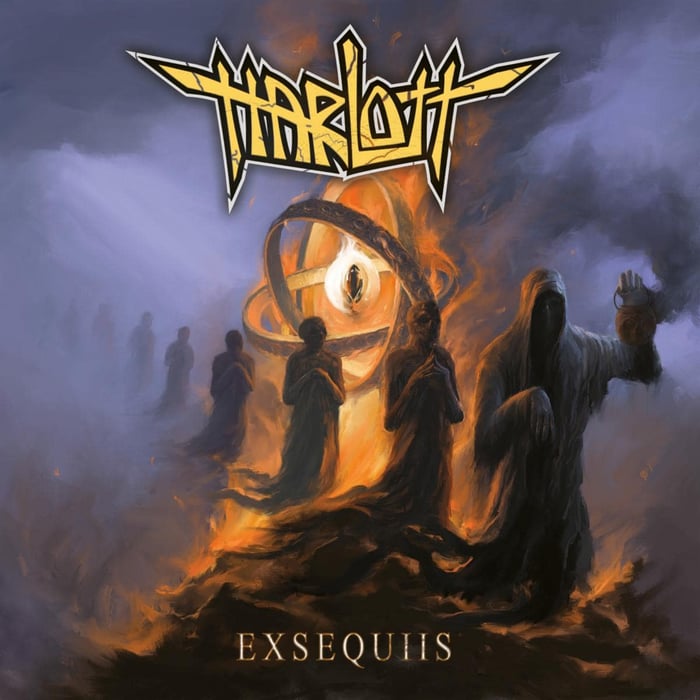
Harlott Exsequiis Review: Thrash That Lectures You (And Wins Anyway)


 See more Architeg Prints stories on Google.
Harlott Exsequiis Review: Thrash That Lectures You (And Wins Anyway)
Harlott Exsequiis is political thrash with a scorched-throat sneer—fast, harsh, and weirdly hopeful when it lets melody slip through the cracks.
A record that doesn’t “set the mood”—it starts a fight
Some albums want you to feel something. Harlott Exsequiis mostly wants you to do something—clench your jaw, grit your teeth, and admit the world’s getting stupider in real time.
And yeah, that’s a blunt setup. But this album is blunt on purpose. Ever since Harlott first showed up swinging on their debut Origin (2013), they’ve acted like thrash is still a living language instead of a museum exhibit. Exsequiis keeps that streak going: politically charged, perpetually irritated, and laser-focused on the daily chaos we’re all supposedly “coping” with.
I went into this expecting a competent modern thrash record with good chops. What I got is a band that sounds like they’re trying to out-run the news cycle.
The opening stretch is basically a controlled burn
The first thing Exsequiis does is not ease you in.
“Incipiam” is brief and ominous—less “intro track” and more the moment right before a door gets kicked off its hinges. It doesn’t overstay. It just points at what’s coming.
Then “Void” hits with rapid shredding that feels like it’s been sharpened on concrete. Frontman Andrew Hudson comes in with that signature sharp tongue—he’s got the right voice for this kind of record: vitriolic, clipped, and angry without sounding cartoonish. If anything, the record’s early aggression flirts with black metal ferocity—not in aesthetics, but in sheer hostility. The start is incendiary enough that I caught myself thinking, okay, they’re going to try to sustain this and burn out.
They don’t.
“Messiah Simplex” keeps the pressure on immediately, coming out with crushing blast beats like the band’s allergic to “build-up.” It’s stomping belligerence colliding with skin-searing speed, and it works because the violence has shape—there’s intention behind the impact.
Then “Trial by Liar” shows up and basically dares you to keep your neck intact. The hooks snap hard, the adrenaline content is irresponsible, and the arrangement feels like someone threw riffs and carnage into a blender and purposely didn’t put the lid on. That’s the vibe: chaos you can dance to, barely.
Face-melting lead sequences show off the guitar work without turning the song into a technique demo, and the drumming turns into machine-gun punctuation—less “keeping time,” more “starting riots.”
Arguable take: if the album has a “mission statement,” it’s this early run—it’s not trying to modernize thrash, it’s trying to weaponize it.
When it slows down, it’s not mercy—it’s a different kind of threat
After that opening barrage, “The God That Knows No Name” pulls back from pure frenzy. Not soft—just less rabid. It walks with a menacing stride and carries more groove than the previous tracks, like it’s confident it can hurt you without sprinting.
The drum segments here feel emphatic, used to tighten tension instead of just accelerate it. And you can hear flurries of melody poking through the aggression—little flashes that make the riffs feel “composed” rather than merely launched.
I’ll admit a moment of uncertainty here: I couldn’t decide on first pass if this track was a slight dip in momentum or a smart pivot. On second listen, it felt like the album deliberately widening its palette—like Harlott refusing to be trapped in one speed because speed alone doesn’t equal rage.
That choice matters, because Exsequiis keeps hinting that it’s not just angry. It’s focused.
Arguable take: this song proves the band hits harder when they stop trying to be the fastest thing in the room.
“Kleptogenesis” is where the drummer gets dragged behind the car (lovingly)
“Kleptogenesis” dials the aggression back up and does it with frantic instrumentation that feels borderline punitive. Drummer Glen Trayhern sounds mercilessly worked—like the kit is being flogged to within an inch of its life. It’s not just fast; it’s relentless in a way that feels personal.
The dual guitar work turns majestic in the leads, and that contrast is part of the album’s trick: it keeps stuffing moments of grandeur into songs that otherwise want to punch through drywall. The leadwork isn’t decorative—it’s the quick flash of light in the middle of a riot, the reminder that the band can do more than bludgeon.
Here’s my mild criticism, though: there are moments where the sheer intensity becomes the point, and the song risks feeling like it’s sprinting in place. It’s still impressive. But I kept waiting for one more structural left turn—something stranger than “faster and sharper.”
Arguable take: “Kleptogenesis” is thrilling, but it’s also the track most likely to make a casual listener say, “Okay, I get it—you’re good at this.”
The record’s most interesting gamble: melody, and the nerve to use it
Then “A Still More Glorious Dawn Awaits” comes in and starts eating riffs like it’s starving. The rhythms land with that deliciously executed precision—tight, intentional, and almost smug about it.
And then the key detail: melodic vocals show up.
Not in a “we’ve gone soft” way. More like Harlott adding a new blade to the same weapon. It’s a fresh string on their bow, and it changes the emotional temperature without changing the genre. The song suddenly has lift, like the record looks up for a second and sees something beyond the next pile of rubble.
I didn’t expect to want more of that, but I do. If they expand this approach on future releases, it could make their anger feel even more pointed—because contrast sharpens meaning.
Arguable take: the melodic vocal touch doesn’t dilute the record; it makes the brutality feel smarter.
Hooks for the headbangers, and yes, they know exactly what they’re doing
“The Joyful Stain” (and yeah, that title reads like a threat delivered politely) serves up another mosh-ready anthem. It’s built on addictive hooks—real headbanger bait—and it leans into that role without pretending it’s above the pit.
This is where I revised my first impression of the album: early on, I thought Exsequiis was going to be an unbroken wall of fury. But tracks like this show the band understands pacing. They’re not just trying to be extreme; they’re trying to be effective. There’s a difference.
Arguable take: the hooks are doing more heavy lifting than the “message” here—and honestly, that’s why the message lands.
The late-album sprint: no victory lap, just more gasoline
By the time “Endling” arrives, the album slams its foot to the floor and commits to speed-infused onslaught. This isn’t “closing time” energy. It’s “we’re not done yet” energy.
“Vice Borne” refuses to be left behind, coming in with razor-sharp riffing that feels like it’s chasing the previous track down the highway. The two tracks together function like a final test of stamina—yours and theirs.
Then the title track, “Exsequiis,” shows up with a particular vibe: it arrives like the second coming of Seasons in the Abyss—not as a copy, but as a clear nod to that era’s sense of ominous weight and swagger. And just when you think it’ll stay in that shadowy, classic-thrash posture, it leans into one final triumphant volley of infectious grooves.
That last push matters. The album doesn’t end by collapsing. It ends by planting a flag.
Arguable take: the title track is the album’s cleverest moment because it proves Harlott can summon legacy energy without sounding like cosplay.
So, is thrash “aging”? Not if bands like this keep acting like it’s urgent
There’s always this hand-wringing idea that thrash is getting old because so many key flagbearers won’t be around forever. Exsequiis doesn’t waste time arguing with that fear—it just steamrolls it.
What I hear is a band evolving into something more formidable with each release, not by “reinventing” the genre, but by tightening their attack and expanding their toolkit in small, strategic ways. The politics aren’t pasted on; they match the music’s sense of constant crisis. The anger isn’t vague; it’s sharpened into delivery, pacing, and tone.
And if the wider world still treats thrash like a nostalgia product, that’s their problem. This record sounds like it’s earned bigger opportunities than “nice set, next band.”
Arguable take: the genre doesn’t need saving—listeners do. They just need to stop settling for watered-down heavy music that’s afraid to sound mad.
Track-by-track quick hits (because your neck asked for it)
To keep it concrete, here’s how the album behaves in my ears:
- “Incipiam”: a short omen that makes silence feel unsafe.
- “Void”: shredding plus venom; the album lights the fuse.
- “Messiah Simplex”: blast beats as architecture—built to withstand impact.
- “Trial by Liar”: hooks + speed + leads that melt edges off the room.
- “The God That Knows No Name”: groove-forward menace; less frantic, more deliberate.
- “Kleptogenesis”: frantic and punishing, with heroic leadwork peeking through.
- “A Still More Glorious Dawn Awaits”: riffs stacked like steel beams; melody becomes a weapon.
- “The Joyful Stain”: pit-ready hooks that actually stick.
- “Endling”: full-throttle surge.
- “Vice Borne”: sharp, breathless chase music.
- “Exsequiis”: classic-thrash shadow with modern muscle, finishing on groove.
Arguable take: the album’s best “songs” aren’t always the fastest ones—they’re the ones that make room for groove and melody without losing the bite.
Conclusion
Harlott Exsequiis doesn’t politely remind you thrash still matters. It stomps into the room, points at the mess outside, and plays like it wants the argument to get physical. It’s fast when it needs to be, groovy when it’s smart, and just melodic enough to prove the band isn’t trapped in one emotion.
Our verdict: People who like their thrash sharp, political, and slightly unhinged (in a disciplined way) will eat this up. If you want “classic vibes” without modern hostility—or you think hooks are optional—this album will feel like getting yelled at by someone who’s technically correct.
FAQ
- Is Harlott Exsequiis straight thrash or does it drift into other styles?
It’s thrash at the core, but the ferocity sometimes brushes up against black-metal-level intensity, and there are melodic vocal moments that widen the sound without changing the foundation. - What’s the most relentless stretch of the album?
The early run—“Void,” “Messiah Simplex,” and “Trial by Liar”—hits like a stacked combo and barely lets you breathe. - Does the album actually have groove, or is it all speed?
It has real groove, especially on “The God That Knows No Name” and the title track, where the riffs swing instead of just sprint. - What’s the biggest surprise on Exsequiis?
The melodic vocal addition on “A Still More Glorious Dawn Awaits.” It’s not a makeover—it’s a tactical upgrade. - Who should skip this album?
Anyone who thinks thrash should stay “fun” and avoid politics, or anyone who wants their heavy music smoothed down into background noise.
If you’ve got a favorite album cover that you want to live with (instead of just streaming past), you can grab a poster-worthy print at our shop: https://www.architeg-prints.com. It’s a nice way to pin the chaos to a wall and call it décor.
 | DISCOUNTGET 30% OFF*Use code on your next order:
|
* This post may contain affiliate links, meaning we earn a commission if you make a purchase through these links, at no additional cost to you.