Razorblade Bay Review: Space Chaser’s Sci‑Fi Thrash Isn’t Deep—It’s Loud


 See more Architeg Prints stories on Google.
Razorblade Bay Review: Space Chaser’s Sci‑Fi Thrash Isn’t Deep—It’s Loud
Razorblade Bay turns Space Chaser into a lean mosh machine: new vocals, short runtimes, and pit-first thrash that dares you to overthink it.
A quick warning: this album wants your neck, not your analysis
I put on Razorblade Bay expecting a “next step” record. What I got instead was Space Chaser basically shrugging and choosing violence—three-minute songs, gang shouts, and riffs that sprint past before you can start philosophizing about them.
And honestly? That might be the most self-aware move they could make right now.
The big context you can hear: momentum got interrupted
Space Chaser had a noticeable rise a few years back—bigger label attention, better chart placements, festival slots, the whole “okay, they’re about to level up” vibe. Then the gears jammed: lineup changes, delays, and enough downtime that a comeback album like Razorblade Bay arrives with an awkward question hovering over it—did everyone move on without them?
You can hear them answering that question in the bluntest way possible: they’re not trying to reclaim attention with a grand statement. They’re trying to win the room back the old-fashioned way—by writing stuff that makes beer slosh out of cups.
The lineup change isn’t subtle—and they don’t pretend it is
Here’s the glaring shift: Siegfried Rudzynski is out, and guitarist Leo Schacht takes over vocals. I noticed it immediately. At first, I wasn’t sure it would work, because the old voice had that classic metal edge—more NWOBHM-adjacent, the kind of singer that makes even straightforward riffs feel like banners in the wind.
Schacht doesn’t chase that. He goes for a more traditional thrash bite, and the album seems built to match him. On my first listen it felt a little jarring, like someone replaced the frontman and didn’t dim the lights first. On second listen, though, the choice clicks: these songs don’t want a “distinctive” vocal personality looming over them—they want a hype man who can ride the riffs and cue the pileups.
That’s an arguable call, sure. Some people will miss the older character. But Razorblade Bay is basically telling you: we’re not roleplaying the past.
“Mind Melting Machine” explains the mission in about five seconds
This record is mosh music, and it doesn’t bother dressing that up.
The band avoids the proggy end of thrash like it’s an unpaid internship. No labyrinth structures, no “let’s impress the drummer community,” no long scenic routes. The songs come in fast, land their punches, and leave.
Here’s the official video embed included with the album’s rollout, and it’s honestly the right doorway into the whole thing:
“Mind Melting Machine” is an early highlight because it’s not trying to be clever. It’s built to wreck necks and spill pints. And I mean that as a compliment: the chorus feels engineered for a sweaty room where everyone suddenly remembers they have shoulders.
If you came here hoping the sci‑fi concept would steer them into something weirder and more angular, you might leave slightly annoyed. The space theme is mostly set dressing; the riffs stay very Earthbound.
Sci‑fi aesthetics, classic-thrash instincts (and that’s the point)
The sci‑fi angle tempts you to compare them to more left-field, dimension-hopping bands. I kept waiting for the moment where the songs would mutate—some disorienting detour, some “oh, they’re going there” pivot.
It never really happens.
Instead, what I hear is a band using sci‑fi like a paint job on a street racer: it’s flashy, it’s fun, and it doesn’t pretend the engine is anything other than pure go-fast thrash. If you want a reference point in spirit, it’s closer to that modern, straight-ahead, neck-first school of thrash than anything artsier. The band seems almost proud of that limitation, like complexity would just slow the pit down.
That’s also where one mild criticism sneaks in: the concept occasionally feels like it promises a bigger world than the music actually visits. Not a dealbreaker. Just a slight mismatch between costume and behavior.
“Blade Serpents” and the joy of being tightly written
When “Blade Serpents” hits, the album’s discipline shows. It’s focused—no wasted motions, no “we had this riff so we kept it for 90 extra seconds.” The band’s best trick here is restraint disguised as energy: the songs feel lively because they don’t overstay, not because they’re reinventing anything.
And yeah, I can already hear someone arguing, “That’s not restraint, that’s just playing it safe.” Maybe. But safety isn’t always laziness. Sometimes it’s a band deciding the fastest way to your brain is repetition, not surprise.
The runtime is the real flex: it’s over before you can get bored
Razorblade Bay runs just over half an hour, and somehow it feels even shorter. That’s not magic—it’s the songwriting. The pacing is a whip. Tracks flash by in a blur of solos and chants, and the album’s whole personality is “don’t think, move.”
“8 Minutes” is the funniest example of that philosophy. Despite the name, it’s basically a quick jab—nowhere near eight minutes. That kind of fake-out tells you exactly how allergic this band is to indulgence. It’s like they titled it “8 Minutes” just to reassure you they would never actually do that to you.
Then “We Are The Night” rips past in a haze: solos slicing through, gang vocals locking the room together, the kind of track that’s practically built to be shouted back at the stage by people who arrived sober and left as cartoon versions of themselves.
The record is so easy to digest you can loop it without noticing. I did. Not because it’s hypnotic—because it’s frictionless.
Traditionalists, yes—and kind of proudly “meat and potatoes”
Space Chaser are traditionalists at heart. They’re not trying to drag thrash into bold new shapes. If anything, this album argues that thrash doesn’t need a makeover—it needs efficiency.
They also come off lighter on their feet than some of their harder-edged countrymen. I can imagine someone calling this the more light-hearted option: same genre, fewer clenched teeth. That might bother listeners who equate “serious” with “better,” but it’s part of why Razorblade Bay works. The band sounds like they actually enjoy playing these songs, which is weirdly rare for a style that often performs toughness like a job requirement.
Will it change anyone’s worldview about heavy metal? No. It’s not here for that. It’s here to feed the genre—solid, familiar, cooked properly.
And that brings us back to the awkward question: did they miss the boat? I genuinely don’t know. The scene moves fast, attention spans move faster, and comeback narratives are a coin toss. But as a listening experience, Razorblade Bay doesn’t sound like a band begging for relevance. It sounds like a band reminding you that a good riff still works even when the algorithm forgets your name.
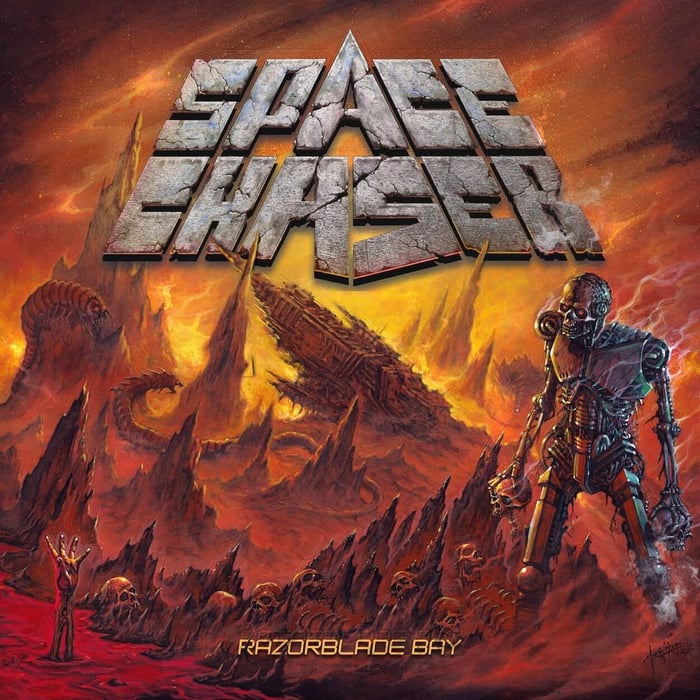
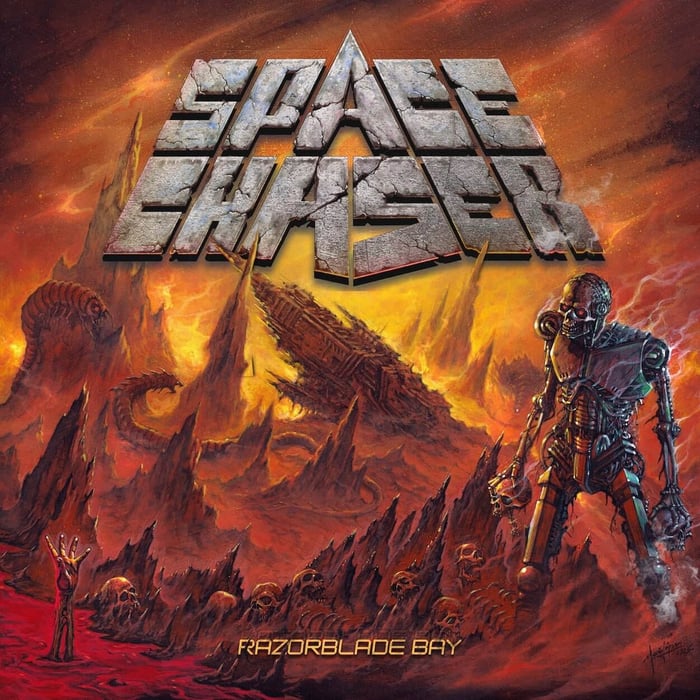
Album art (yes, it looks like it sounds)
Release note that matters: it’s out now
Razorblade Bay is out now via Testimony Records.
Conclusion
Razorblade Bay doesn’t act like a grand comeback statement—it acts like a brawl in a small room where the point is to leave with your shirt stuck to you. The new vocal approach shifts the band’s personality, the songs stay short on purpose, and the sci‑fi dressing mostly exists to make the punchlines look cooler. It’s not visionary. It is, however, effective at what it’s clearly trying to do: get bodies moving before anyone can start asking for “growth.”
Our verdict: If you like your thrash fast, simple, and built for the pit, you’ll actually love Razorblade Bay—especially if you don’t need every album to be a personality seminar. If you want progressive curveballs, sprawling song structures, or sci‑fi that sounds as strange as it looks, this will feel like a spaceship with a very normal car engine.
FAQ
- What is Razorblade Bay about, musically?
It’s tight, fast thrash built around short runtimes, shoutable hooks, and riffs that prioritize momentum over complexity—pure mosh logic. - Did Space Chaser change vocalists on Razorblade Bay?
Yes. Siegfried Rudzynski is no longer on vocals, and guitarist Leo Schacht steps in, bringing a more traditional thrash vocal style. - Is Razorblade Bay a long album?
No—just over half an hour, and it feels even shorter because the songs move quickly and don’t linger. - Does the sci‑fi theme make the music more progressive or experimental?
Not really. The theme is there, but the songwriting stays grounded in straightforward thrash rather than going off into stranger territory. - Which tracks best show the album’s “pit-first” intent?
“Mind Melting Machine” is an obvious mission statement, and “We Are The Night” leans hard into solos and gang-chant energy; “Blade Serpents” shows the tightest writing.
If you’re the type who bonds with an album’s visual identity as much as its riffs, you can always shop a favorite album cover poster at our store—tastefully—over at https://www.architeg-prints.com.
 | DISCOUNTGET 30% OFF*Use code on your next order:
|
* This post may contain affiliate links, meaning we earn a commission if you make a purchase through these links, at no additional cost to you.