Hell Is Here Album Review: Bodysnatcher Turn Trauma Into a Weapon


 See more Architeg Prints stories on Google.
Hell Is Here Album Review: Bodysnatcher Turn Trauma Into a Weapon
Hell Is Here hits like self-defense: Bodysnatcher’s bluntest breakdown album, built on boundaries, revenge fantasies, and riffs that don’t apologize.
A record that doesn’t “introduce itself” — it grabs you
Some albums ease into the room. Hell Is Here walks in like it owns the lease and starts moving your furniture around.
I caught the same thing on their recent UK run: Bodysnatcher aren’t acting like a promising deathcore band anymore. They’re acting like they’ve already decided they’re the ones carrying this sound forward, and everyone else can either keep up or get flattened.
The title tells you the point: home isn’t safe, so make it loud
Even without being a strict concept album, Hell Is Here, Hell Is Home is clearly organized around a single obsession: stop giving yourself away to people who treat you like a resource. It’s about standing up for yourself, refusing to perform kindness for predators, and—when the mood turns—paying somebody back with interest.
That theme isn’t subtle, either. The album keeps circling the same blunt moral: if the world takes, take your hands back. Reasonable listeners can argue it’s one-note emotionally, but the whole point is that it refuses to “develop”—it just tightens the screws.
“The Maker” opens with a threat, and the band knows exactly why
The opener “The Maker” is the first obvious tell that this album is built like a confrontation. Kyle Medina repeats “Are you scared?” three times, and each repetition feels like the band stepping closer. Then he lands the line that turns the song into a dare:
“Are you scared? … You fucking should be!” — Kyle Medina, on “The Maker”
What makes that moment work isn’t just the scream—it’s the pacing. The band uses short gaps of silence like they’re pulling the floor out from under you. Those micro-pauses don’t feel “clever”; they feel like someone holding eye contact too long. The breakdown doesn’t arrive as a surprise so much as an outcome you were warned about.
I’ll admit, on first listen I thought the intro was almost cartoonishly aggressive—like it wanted to win an argument that hadn’t started yet. On second listen, it clicked: the exaggeration is the aesthetic. The album isn’t trying to sound reasonable. It’s trying to sound done.
The lyrics don’t “vent” — they set rules and punishments
The album keeps firing off lines that sound like ultimatums, not diary entries. In the closing title track, Medina throws out a line that reads like a personal constitution:
- “This world gives you nothing; give it nothing back!” — shouted in “Hell Is Here, Hell Is Home”
And then you get the colder, more cinematic threats—like “Two Empty Caskets” dropping:
- “My work is done; they will never find your bones.”
That’s not metaphor dressed up as poetry. That’s the point. Bodysnatcher are making deathcore that treats emotional boundaries like physical force. You could argue it’s juvenile. I’d argue it’s intentional: the record wants the satisfaction of saying the unsayable out loud.
“May Your Memory Rot” is where the album stops being a persona
The most personal cut here is “May Your Memory Rot,” and it doesn’t hide behind generalities. It’s aimed straight at drummer Chris Whited’s dad, with a Father’s Day line that’s so venomous it almost makes the room feel smaller:
“So as your gift, choke on this truth: Happy Father’s Day Mike, FUCK YOU!”
That’s one of those moments where I can’t fully tell what I’m “supposed” to do as a listener. Part of me hears it as catharsis. Part of me flinches because it’s so specific it stops being entertainment for a second. I’m not even saying that’s bad—it’s just the rare time a deathcore album makes the anger feel literal rather than theatrical.
If someone says this track is too much, I won’t argue. I also won’t pretend the album would hit as hard without it.
They’re not reinventing deathcore — they’re sharpening it
Musically, Hell Is Here doesn’t pretend to reinvent the genre’s blueprint. No grand “new era” tricks. No fake progress-report songwriting. It’s breakdowns, grooves, and violence-by-design.
And honestly: why would they need to reinvent anything when they’re this good at weaponizing the existing tools?
- When they want massive breakdown impact, “Blade Between The Teeth” is built to drop the ceiling.
- When they want two-step propulsion, “Writhe And Coil” and “Violent Obsession” lean into that hard groove that makes the pit feel like a machine with opinions.
The album is ten tracks, and it’s lean in a way I respect: it doesn’t wander off to “show range” just because that looks mature on paper. A reasonable listener might call that limiting. To me, it reads like discipline—like they showed up to do one job and didn’t get distracted by résumé-building.
The little curveballs are small on purpose (and that’s the joke)
There are a couple moments where the band deliberately lets something “unusual” slip in—almost like they’re reminding you they could do more, they just don’t want to.
- “Plague Of Flies” runs a cleaner guitar tone underneath the riffs during the first half, like a smear of clarity under the carnage.
- “No Savior” pulls out a guitar solo—rare enough in this lane that it feels like seeing a wolf wearing a tie.
Here’s my mild criticism: I wanted “Plague Of Flies” to commit even harder to that cleaner undercurrent, because it teases this slightly different emotional color and then goes right back to blunt-force habits. Maybe that restraint is the point. Still, it felt like a door cracked open and then shut again.
“Survive Or Die” brings in Scott Vogel to punch the walls wider
Scott Vogel (from Terror) shows up on “Survive Or Die,” and it’s exactly what it sounds like: a hardcore legend stepping into the track and giving it a new kind of urgency.
The feature doesn’t feel like a “look who we got” marketing move. It feels like the song’s philosophy getting a second mouth. Vogel’s performance adds this extra dimension—less deathcore demon-mode, more street-level rage. If you think deathcore and hardcore are supposed to stay in their lanes, this track basically laughs at you.
This album was clearly hard to make — and it sounds like they didn’t soften it
The band hasn’t been shy about how hard this record was to create, and you can hear that strain in how direct it is. Hell Is Here doesn’t romanticize suffering. It turns it into something procedural: identify the target, state the boundary, execute the consequence.
And yet, the record still manages to feel like a release valve. If you’re frustrated with the darkness hanging around everything lately, these songs don’t “heal” you—they give your anger somewhere to go. That’s the album’s actual service.
That opening sample is basically the mission statement
Right at the beginning, the album uses a sample from Lars von Trier’s 2011 film Melancholia, and it’s a bleak little thesis that frames everything afterward:
“The Earth is evil’ we don’t need to grieve for it. Nobody will miss it.” — Melancholia (2011)
I’m not totally sure whether the album agrees with that line or just uses it as set dressing. But it does a smart thing either way: it lowers the emotional ceiling to “end of the world,” which makes personal revenge and self-protection feel like basic survival rather than melodrama.
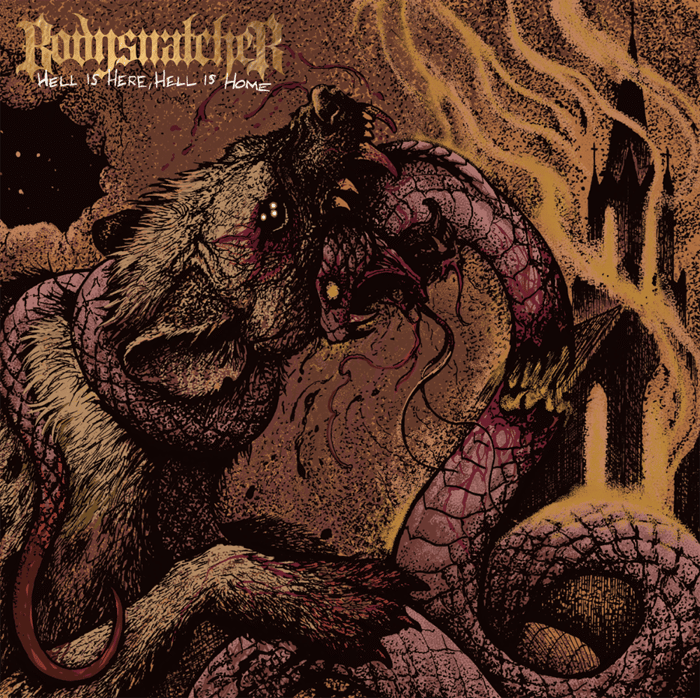
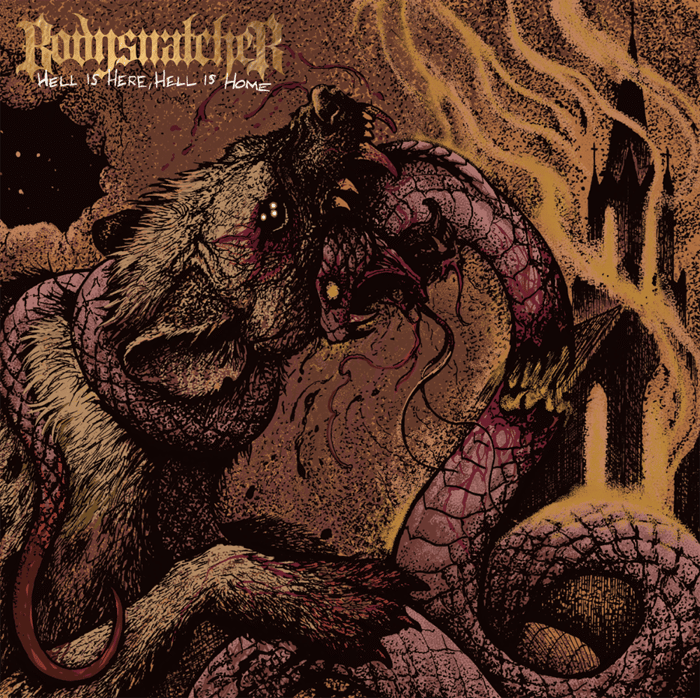
Artwork / cover
Release info (yes, the blunt practical details still matter)
Hell Is Here, Hell Is Home is the band’s fourth album, released April 10 via MNRK Heavy.
And sure—if you want the old-fashioned scoreboard moment: 8/10.
Not because it’s perfect, but because it’s effective at what it’s clearly trying to do: make your boundaries feel like a weapon you’re allowed to carry.
Hell doesn’t show up here as a metaphor. It shows up as a routine, and the record treats “home” like the place you finally stop negotiating.
Our verdict: People who actually like Hell Is Here are the ones who want deathcore that sounds like it’s enforcing a rule, not expressing a feeling—fans of breakdown-first writing and zero-polish hostility. People who won’t like it are the ones waiting for nuance, dynamic softness, or a big “evolution” moment. If your idea of growth is fewer breakdowns and more tasteful atmosphere, this album will politely shove you out the door.
FAQ
- Is “Hell Is Here” a concept album?
Not strictly. It’s themed tightly around self-preservation, refusing exploitation, and revenge when it boils over. - What song sets the tone fastest?
“The Maker.” The repeated “Are you scared?” and the silence-before-impact structure tells you exactly what kind of album you’re in for. - What’s the most personal moment on the record?
“May Your Memory Rot.” The Father’s Day line aimed at Chris Whited’s dad is raw enough to feel like the room changes temperature. - Does the album try anything new musically?
Small twists: the cleaner guitar tone under “Plague Of Flies” and a rarer guitar solo in “No Savior.” Mostly, it’s focused on executing the core style brutally well. - Is there a notable guest feature?
Yes—Scott Vogel appears on “Survive Or Die,” and his presence adds hardcore bite that makes the track feel bigger.
If you’re the kind of person who bonds with an album’s mood as much as its riffs, you might want a piece of it on your wall too—take a look at album cover posters at our store.
 | DISCOUNTGET 30% OFF*Use code on your next order:
|
* This post may contain affiliate links, meaning we earn a commission if you make a purchase through these links, at no additional cost to you.