Heaven Wept Review: Inferi Turns Tech-Death Into Feelings (Oops)


 See more Architeg Prints stories on Google.
Heaven Wept Review: Inferi Turns Tech-Death Into Feelings (Oops)
Heaven Wept is Inferi going full precision-brutality—then sneaking in real melancholy like it’s contraband.
A cold open that doesn’t ask permission
There’s no warm-up lap here. Heaven Wept kicks the door off its hinges and starts rearranging your nervous system before you’ve even adjusted your volume.
“The Rapture Of Dead Light” opens with that classic tech-death flex: riffs stacked like scaffolding, gutturals shoved right to the front, and blast beats that don’t “accelerate” so much as simply exist at maximum speed. The album keeps that pressure on for about thirty-eight minutes, and it’s so relentless it weirdly feels longer—not because it drags, but because your brain has to do constant math to keep up.
And yes, it’s vicious. Not “heavy in a friendly way,” but heavy like a machine that doesn’t notice you’re in the room.
The twist: it’s not as emotionless as it pretends
Here’s the part that surprised me: Heaven Wept keeps slipping emotional content through the cracks, even though the whole genre usually treats emotion like an impurity in the lab.
Tech-death often comes off clinical—hyper-competent, borderline sterile, like it was designed to impress musicians and terrify drummers. Empathy doesn’t come naturally when the music is busy juggling time signatures and vocal cords are being used as industrial equipment. But Inferi manage to make the coldness feel like a surface layer, not the whole point.
My first impression was basically: “Cool, a sleek metal exoskeleton doing sleek metal exoskeleton things.” On second listen, that reads differently. The record still feels robotic—but now it feels like a robot that’s quietly malfunctioning in a very human way.
When “Eternally Lie” starts bleeding through the armor
The emotional leak becomes obvious in “Eternally Lie,” especially in the second half. The vocals stop feeling like pure brute force and start sounding like something closer to a tortured, fragile scream, dragged across melodies that spiral instead of just shred.
Inferi do this smart thing where certain notes aren’t just “nice lead lines”—they cut. Not in an “emo record” way (this album would rather bite its own tongue off than wear eyeliner), but in a way that suggests there’s an actual pulse under all that polish.
If you’ve ever accused this style of metal of confusing difficulty with meaning, this track is the rebuttal: it’s still difficult, but now it’s pointed.
The musicianship is obscene—and occasionally a little too proud of itself
Inferi are still, first and foremost, a technical death metal band, and they absolutely act like it here. There’s enough fretboard gymnastics to make you wonder if the guitars are being powered by caffeine and spite.
And I mean that as a compliment… mostly.
Because there’s a point where the “noodling” threatens to become the main character. I kept waiting for one or two passages to breathe—just a moment where the record lets a riff sit in the room without immediately decorating it with six extra limbs. That never really happens. If you’re the type who wants a hook to repeat long enough to hypnotize you, this album might feel like it’s constantly changing the subject.
Still, when it works, it really works. The guitar work is frequently ridiculous in the best way.
The title track: a solo like dancing on the sun, then a caveman club swing
The title track “Heaven Wept” has one of those solos that feels physically impossible—bright, fast, and strangely vivid. The image that stuck with me was like dancing across the surface of the sun: weightless and dangerous, elegant but one mistake away from combustion.
Then, almost immediately, Inferi slam into a breakdown that’s the polar opposite—filthy, blunt, and prehistoric. It’s a great contrast, and it also reveals what the band is doing across the album: they’re showing off, then reminding you they can still punch a hole in drywall.
A reasonable person could argue that these transitions are a little “look what we can do,” and honestly, that’s fair. But the whiplash also keeps the record from becoming one long, glossy tech demo.
“Atonement Denied” is the late-album payoff
If I had to point to the track that compresses the whole album into one concentrated dose, it’s “Atonement Denied.” It lands late and feels like the record tightening its grip rather than letting go.
It’s preposterously heavy, but not just for the sake of heaviness—there’s shape to it. The performance from Stevie Boiser stands out here as especially charismatic; the vocals don’t just ride the riffs, they command them. When the track hits its climax, it doesn’t feel like a random “big ending,” it feels apocalyptic on purpose.
And then there’s this subtle thing in the final moments: a tragic vibe that undercuts the violence instead of decorating it. That’s the album’s best trick—making the aggression feel like it’s covering something up.
What this album is really doing (and why it’s sneaky about it)
Heaven Wept feels like Inferi making a very specific decision: keep the exterior as sharp and technical as ever, but let the inside of the machine start sounding… bothered.
It’s not a dramatic reinvention. It’s more like they took their usual hyper-precise template and started adding tiny fractures—melodic choices that feel mournful, moments that imply exhaustion, stretches where the “cold” tone starts reading like grief processed through circuitry.
I’ll admit, I’m not entirely sure whether the emotional pull is intentional in every spot or if I’m projecting because the melodies are that effective. But the repeated experience is consistent: the more I replay it, the more the record stops sounding like a pure flex and starts sounding like a statement.
Is it their best? It might be—and that’s the point
This is the kind of album that makes it hard to argue against the band’s craft. The effort is obvious. The musicianship is ridiculous. And crucially, the songs don’t vanish the second they end—they stick, even when the arrangements are dense.
So yeah, it might be the strongest work Inferi have put out so far, because it doesn’t just execute the style flawlessly—it adds a human tremor inside the precision. That’s the difference between “impressive” and “haunting,” and this record keeps flirting with haunting even when it’s moving at 200 mph.
The catch: it’s still a genre piece with a glass ceiling
Here’s the reality check: as much as I enjoyed Heaven Wept, it’s still deeply, unapologetically for death metal kids. It doesn’t really translate itself for outsiders, and it doesn’t soften any edges to chase wider attention.
There’s a glass ceiling baked into this approach. The band can sharpen their blades forever, but this specific kind of technical brutality isn’t suddenly going to become mainstream background music. And honestly, that’s not a tragedy—it’s just the nature of what they’re making.
If anything, the album seems comfortable with that. It’s not asking to be everyone’s new favorite; it’s trying to be the thing it is, executed with absurd competence. The result is death metal that ticks your brain and your neck at the same time—provided you actually like having your brain tickled with a hammer.
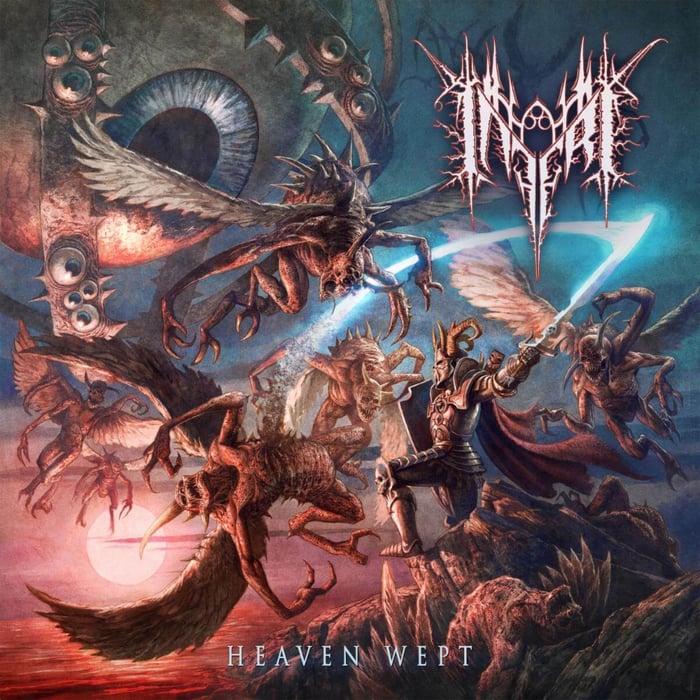
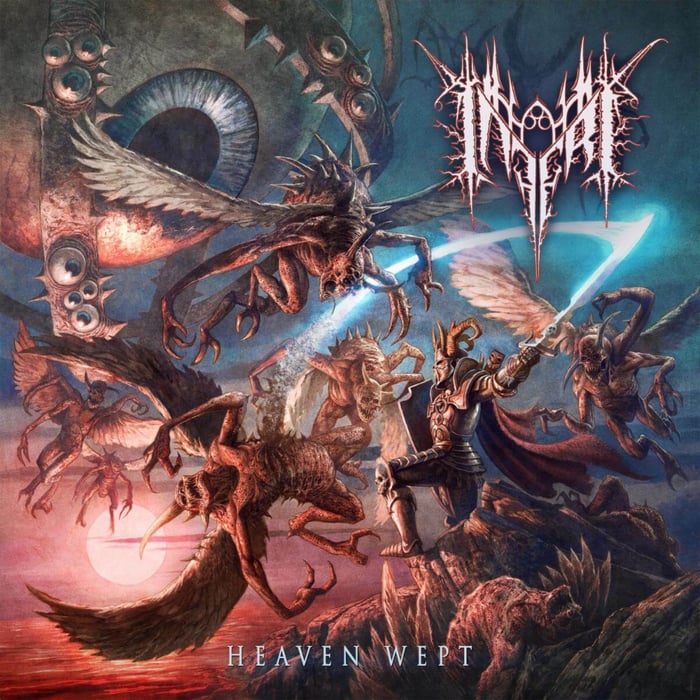
Album artwork
Release note (kept simple)
Heaven Wept is out now via The Artisan Era.
Conclusion
Heaven Wept doesn’t “ease you in,” doesn’t apologize, and doesn’t pretend to be anything but technical death metal—then it quietly slips in melodies that feel wounded enough to make the brutality sound like a mask. It’s exhausting in a deliberate way, occasionally a bit too eager to show its work, and still one of those records where the craft is so sharp it almost becomes emotional by accident. Almost.
Our verdict: People who love tech-death for the riffs, the stamina, and the “how are they doing that?” factor will eat this alive—especially if they also secretly want a little melancholy hiding inside the blast beats. If you need big simple choruses, roomy production that breathes, or songs that chill out for even ten seconds, you’re going to feel like this album is chasing you around the house with a calculator.
FAQ
- What is “Heaven Wept” in plain terms?
It’s a technical death metal album that goes all-in on complex riffs and blast beats, but it also sneaks in unexpectedly mournful melodic turns. - What track hits hardest right away?
“The Rapture Of Dead Light” starts swinging immediately and basically sets the terms: intensity first, questions later. - Where does the album get surprisingly emotional?
The second half of “Eternally Lie” is where the fragility really shows up—screams over spiraling melodies that actually linger. - What’s the standout late-album moment?
“Atonement Denied” feels like a condensed mission statement: heavy, sharp, and ending with a bleak atmosphere that sticks. - Will non-death-metal listeners enjoy it?
Some might, but it doesn’t translate itself. If the genre’s usual “clinical” vibe turns you off, this album won’t hold your hand—even if it does show more feeling than expected.
If you’re the kind of person who falls for an album’s visual identity as much as its riffs, you can always grab a favorite album cover poster for your wall over at our store: https://www.architeg-prints.com — it fits the whole “sleek menace with hidden sadness” vibe pretty well.
 | DISCOUNTGET 30% OFF*Use code on your next order:
|
* This post may contain affiliate links, meaning we earn a commission if you make a purchase through these links, at no additional cost to you.