Hemlocke Springs’ Apple Tree Under Review: Storybook Pop With Dread


 See more Architeg Prints stories on Google.
Hemlocke Springs’ The Apple Tree Under the Sea Review: Storybook Pop With Dread
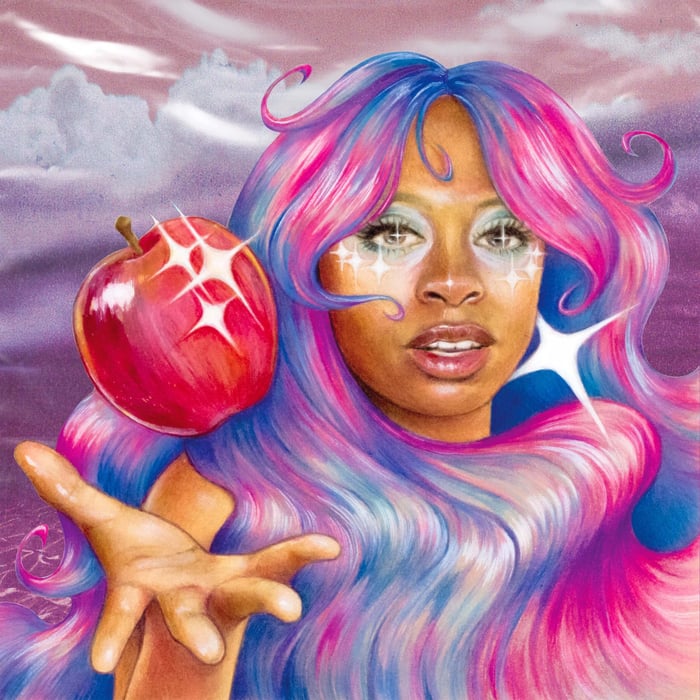
Hemlocke Springs’ Apple Tree Under the Sea frames pop songs in fairy-tale language while keeping the vocals tense and human, even when the scenes get strange.
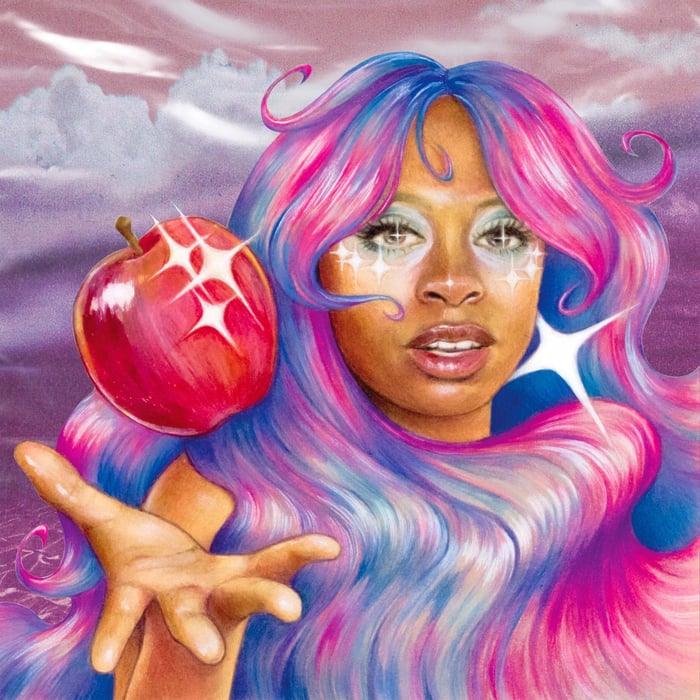
Album context and credits
The Apple Tree Under the Sea is a ten-song album by North Carolina-raised singer-producer Isimeme “Naomi” Udu, who records as hemlocke springs. Across the record, Udu co-produces with BURNS, translating a bedroom-pop instinct into something larger, busier, and consistently theatrical without sounding comfortably disguised.
A concept setup that refuses to stay safely “in character”
The album operates in a vocabulary that borrows from children’s books, scripture, and old folk menace—then keeps using that vocabulary even when it becomes inconvenient. Words and images cycle: fairy-tale roles, religious phrasing, bodily discomfort, and the kind of moral consequence that usually arrives with a stern illustration.
What keeps it from reading as costuming is that the singing keeps slipping out of the mask. The “concept” is present, but the voice doesn’t settle into it. Udu delivers these lines with a steady panic that doesn’t change just because the scenery does. The result is less “story time,” more a person trying to speak clearly while the set department keeps swapping backdrops.
Early tracks: prayers, pirates, and the practical limits of obedience
The album opens with a prayer to El Shaddai, later detours into pirate hunting, and at another point refuses the familiar punishment of dissolving into pillars of salt. These gestures arrive as plain plot actions, not theatrical winks. The through-line is the vocal delivery: Udu sounds cautious about who gets trusted with information, and that caution persists no matter which myth is currently being referenced.
Across these shifts, obedience is treated less like virtue and more like a process that fails quality control. The album keeps returning to the idea that compliance doesn’t automatically equal safety. Faith is present as language and posture, but the tension in the performance reads as something closer to lived realization than doctrine.
From viral single to a record that carries heavier material
Udu previously went viral in 2022 with “girlfriend,” a fizzy, jagged pop single that placed her voice in bright, quick motion. The 2023 EP going…going…GONE! established that the vocal could sit at the center of a track and hold it, even when the presentation stayed colorful and kitschy.
Here, the same theatrical impulse is tasked with heavier cargo. The storybook language gets stretched until it has to accommodate addiction, coercion, and religious guilt at the same time—without the album dropping the fairy-tale diction that keeps trying to make everything sound tidier than it is.
“the beginning of the end”: saying the word, keeping the melody
“the beginning of the end” opens by using the word “opioids” in the first verse, then rhymes it with “paranoia” in the second. It is a blunt move delivered with the same composure the album uses for its mythic references, which is part of the point: the record treats chemical dependence and spiritual dread as neighboring rooms.
The narrator swings between two impulses:
- avoiding the habit of filling emotional gaps with substances
- wanting to be around “pretty girls” and “pretty boys” anyway, because human proximity remains tempting even when it’s not helpful
The track carries one of the album’s clearest admissions of confusion, presented without cushioning language. It lands as a functional statement of uncertainty—unadorned, useful, and not especially proud of itself.
“I think I think I know
No, I don’t.”
The song’s origin story sits close to the surface: it was written on the bathroom floor of a Spelman College library years ago, and the central rawness still survives the more developed production. The chorus rises into a wish for someone to leave, then stutters and breaks off mid-thought. The melody stays catchy while the words visibly fall apart, which becomes a recurring behavior across the album: pop structure continues doing its job while the narrator does not.
“w-w-w-w-w”: the prettiest title, the least decorative content
“w-w-w-w-w” presents itself like a romance at a glance, largely because the title doesn’t warn anyone. The verses go elsewhere: a lonely girl appears, racial epithets are invoked, and the portrait fills with family pain. A line arrives—“Thank goodness, come and take her”—with the plain efficiency of something rehearsed too many times.
The pre-chorus outlines a Sunday morning routine: breakfast being cooked for a man with one foot in the grave. Then the song introduces a detail that shifts the temperature: this is a man who has already bought a child to enslave. Udu delivers that line with a laugh caught in her throat, and the small “ha” placed before noting he is seventy-three years old carries a physical nausea the buoyant melody can’t sanitize.
The track refuses to explain itself in literal terms, but it doesn’t need to. The specifics suggest coercion, inheritance of harm, and the way a family can normalize almost anything if it keeps the day moving. The fairy-tale register gets dragged into material nursery rhymes were not designed to hold, and the song continues anyway, as pop songs tend to do.
“head, shoulders, knees and ankles”: jealousy as routine surveillance
Jealousy shows up here as a stalking narrative. A Cupid appears with a golden bow and a rash demeanor, and the jealousy described only grows. Udu’s narrator watches from somewhere hidden, cataloguing a stranger with a “fatal disease” involving kissing below the knees. The diction leans archaic—formal enough to sound like a fable—while the behavior described stays petty and contemporary in its persistence.
The track flirts with comedy through its language, but it doesn’t fully commit to being a joke. By the outro, the old-fashioned phrasing drops away and the narrator fantasizes about breaking the person’s arms together. A muttered “fuck” after being abandoned sits right beside an invitation to make the dream “heaven-sent.” The melody keeps bouncing through it all, which gives the jealousy a set of bright teeth inside a cartoon mouth: visually pleasant, functionally sharp.
“moses”: devotion as labor that does not pay back
“moses” largely stops smiling. The narrator runs blindfolded, parts the sea with two hands, and refuses to dissolve into pillars of salt “lest” she be struck in vain. The biblical gestures land as physical tasks. Devotion becomes labor—surrender stacked on surrender—while the song keeps a steady forward push.
The verses enumerate what gets given up: clothes, time, fruitless work offered up “for the greater good,” and the experience of being misunderstood while doing it. When the narrator finally reaches “his” fingers, she drowns. The chorus insists on survival anyway, pushing through until the “final dying day,” and that vow carries weight because the verses have already demonstrated how little devotion returns as reward.
A shouted line in the second verse—“Lord, I’m not the evil-doer in this foolish love affair!”—arrives with an audible exclamation mark. The prayer can be aimed at a man or at God, and the album does not rush to clarify. The ambiguity feels earned because the record has been accumulating overlapping vocabularies (romance, religion, threat) track after track, until separation starts to look like a luxury.
“sever the blight”: the basement as a location and a condition
A voice asks, “Where are you, my lady?” at the start of “sever the blight.” The answer is immediate and unglamorous: the basement, ankles tied, waiting. The narrator exhales, watches flowers arrive—bluebells and dahlias tied with a white ribbon—and states that love is miles away as if reporting a distance on a map.
She notes she is not Snow White, not “the fairest of the land,” and she hides pain while the hurt dares her to say it out loud. The waiting functions as slow corrosion: self-imposed, punishing, and strangely orderly. The chorus—“Will I still wait here for you?”—doesn’t resolve into yes or no. It simply continues to ask, which becomes its own form of discipline.
Udu released this track as a single in 2023, separate from the EP, and its placement here gives it a narrative home. In the album’s middle stretch, the temperature drops around it. Tracks on either side may bounce, but they do not warm this room.
“sense (is)”: ambition, the wrong turn, and a question that sounds unmasked
On “sense (is),” ambition and its associated sickness share the same frame. The narrator takes “the wrong turn down to Hollywood,” finds an empty cup, and fills it up under someone else’s “toys and dear expenses.” The weakest want an antidote. The language stays in the album’s fable-mode, but the scenario reads as practical: arriving somewhere promised to be meaningful, then realizing the economy is already owned by someone else.
The bridge admits to doing what others like in hopes of making the trip “tonight,” then concedes she was laid bare, left behind, and forced to continue alone. A line lands with unusual plainness: “Only me and I can turn an inch into a mile / But have I lost myself walking on foot?” It is a question that sounds like a real person talking after relocating for a career that has not yet materialized.
The “wrong turn down to Hollywood” detail sits close to Udu’s real move from North Carolina to Los Angeles, and that proximity gives the track a documentary bluntness. The album’s mythology doesn’t fully absorb it; it just works around it, like a stage curtain that can’t quite cover a fluorescent exit sign.
“set me free”: clean pop with language that contradicts itself on schedule
“set me free” arrives as the album’s cleanest pop track, which makes its lyrical friction easier to notice. Udu asks to be heeded when she calls, led into bliss, captured in arms, and set free—often within the same breath. The chorus keeps demanding freedom while the verses keep volunteering for containment.
In the pre-chorus, she offers: “I just want to be your canvas.” After an album spent resisting being shaped by other hands, the metaphor lands oddly, like a form submitted to the wrong department. The second verse becomes more direct: “Open up your heart to my works of art / They are yours to take.” By the end, backing vocals ask, “Am I ready for your love?” and “Am I ready for you to take me?” Those questions remain unresolved beside a chorus that never stops insisting on release.
The track doesn’t try to reconcile these contradictions. It simply performs them—brightly, efficiently—letting the tension sit in the open like a neatly folded argument.
“be the girl!”: a closing statement that ends mid-thought
The album closes with its sharpest identity statement. On “be the girl!,” Udu sings, “I can’t be the girl I used to know,” grounding the feeling with a physical location: an East Pacific shore, and tears she no longer has available to offer it.
An interlude chant—“Eat the apple, stick the pearl / I can never be the girl”—turns growth into ritual. It doesn’t sound fully accepted, more like a procedure being tested. The second verse remembers running hand in hand—lightning to thunder—then shifts toward wishing the best for someone who left her “high and dry.” The warmth that arrives feels resigned rather than celebratory, as if the body has chosen the least exhausting option.
In the final chorus, refrains and negations pile up: “no, I don’t,” “no, no.” The album ends mid-declaration, with the narrator still sorting whether she is mourning who she was or simply acknowledging that the previous version is no longer on shift.
Conclusion
The Apple Tree Under the Sea keeps its fairy-tale and religious vocabulary turned on for the full runtime, then uses it to report situations that do not benefit from whimsy. The record proceeds like a pop album that has agreed to carry heavier information without changing outfits, leaving the songs to do their work in bright melodies while the narration stays tense, specific, and stubbornly unresolved.
Our verdict: a tightly staged listen where storybook language functions as packaging, not protection, and the human voice keeps showing through the seams.
FAQ
- What is the core sound of The Apple Tree Under the Sea?
It plays as pop with theatrical framing—catchy structures and bright motion—paired with lyrics that repeatedly pull the mood toward dread, guilt, and practical harm. - Who made the album and who produced it?
Isimeme “Naomi” Udu (hemlocke springs) performs and produces the record, co-producing the ten songs with BURNS. - Does the album follow a clear story?
It behaves more like recurring imagery and roles than a single plot. Characters and biblical/fairy-tale references recur, but the emotional through-line is the consistent tension in the vocal delivery. - Which tracks contain the album’s most direct language?
“the beginning of the end” uses “opioids” immediately, and “sense (is)” includes an unusually plain question about losing oneself while pursuing ambition. - Where does “sever the blight” fit in the album’s pacing?
It anchors the middle of the record with a colder, slower sense of waiting, and its placement makes the surrounding tracks feel less able to lighten the atmosphere.
If you want a visual reminder of albums that come with their own built-in symbols, you can shop favorite album cover posters at our store: https://www.architeg-prints.com.
 | DISCOUNTGET 30% OFF*Use code on your next order:
|
* This post may contain affiliate links, meaning we earn a commission if you make a purchase through these links, at no additional cost to you.