
Hermanos Gutiérrez Reflect on Family Roots with ‘Los Ojos Del Cóndor’


 See more Architeg Prints stories on Google.
Hermanos Gutiérrez Reflect on Family Roots with ‘Los Ojos Del Cóndor’
Explore the heartfelt journey behind Hermanos Gutiérrez’s latest album inspired by South American heritage and landscapes.
A Photo That Sparked a Musical Odyssey
There’s something magical about a single photograph—especially when it captures a moment frozen in time, brimming with stories waiting to be told. For Alejandro and Estevan Gutiérrez, that magic came alive when they stumbled upon a grainy snapshot from 1976 showing their father standing at the foothills of Machu Picchu, the iconic Incan citadel shrouded in mist and legend.
This image wasn’t just a family keepsake; it was a catalyst. Their father, a Swiss-born adventurer, had traveled solo through South America, and this photo was taken just weeks before he crossed into Ecuador and met their mother—a meeting that set the stage for the brothers’ eventual formation of the instrumental guitar duo Hermanos Gutiérrez nearly ten years ago.
This glimpse into their family history inspired something deeply personal and creative: the album Los Ojos Del Cóndor—a homage to South America’s rich culture and mystique.

That one picture sparked a journey that would shape the brothers’ new record.
Journey to the Heart of the Andes
Driven by the nostalgia and curiosity that photo stirred, Alejandro and Estevan packed their bags and journeyed to Peru in March with their trusty Super-8 cameras, eager to capture the essence of the land that meant so much to their family story.
Though they had visited Quito and Lima before, Machu Picchu was a new frontier for them—a place where history and nature collide in stunning harmony. Their travels weren’t just about sightseeing; they were about weaving the spirit of the Andes into their music and art.
The fruits of this journey are evident throughout Los Ojos Del Cóndor. From the opening track “Canto Andino,” which translates to “Andean Song,” listeners are transported on a sonic pilgrimage through the mountains, valleys, and cultures that inspired the brothers. The track’s music video, a sweeping visual ode to the landscape, feels like an invitation to join the adventure.
Catch the video for “Canto Andino” here: https://www.youtube.com/watch?v=TNEawx_99mk
The album continues the narrative with songs like “Ciudad Inca,” which blends pensive psychedelia with Andean atmosphere, and “Tren Macho,” named after the historic train route from Huancayo to Huancavelica—a rhythmic, percussion-driven ride complete with whistling guitars that evoke the motion of a journey through the mountains.
A Picture Perfect Album Cover
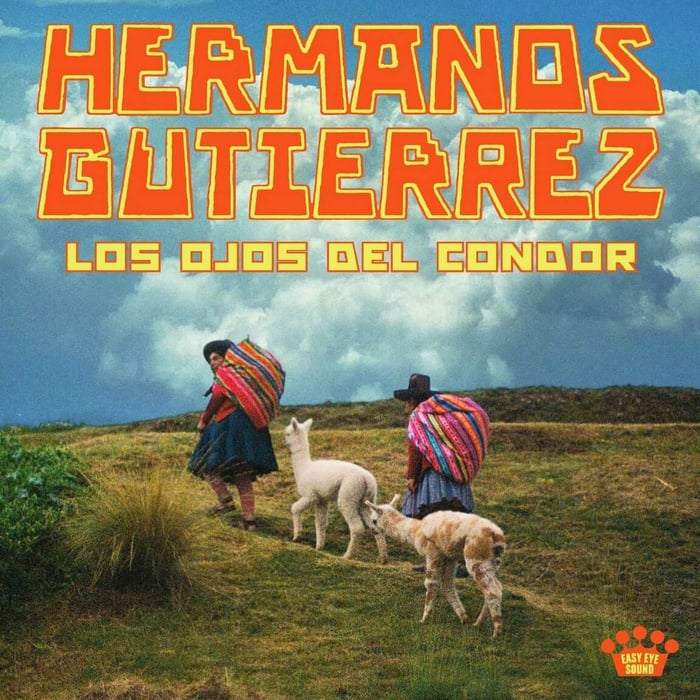
One of the photos the brothers captured during their trip became the album’s cover art: a serene, candid moment featuring two Peruvian women walking their llamas up a grassy hillside beneath a dramatic sky. Their vibrant patchwork bags add a burst of color to the rustic scene.
Alejandro recalls the encounter fondly: “It was a beautiful, unplanned moment. We saw these women, approached them, and started chatting. They were so kind with their llamas. When they walked up the hill, it looked like something straight out of a movie. We got goosebumps and knew right then—that’s the cover.”
That cover embodies the album’s heart, a tribute to the Andes and its people. Alejandro says, “We were proud when locals told us, ‘We love this music. It belongs to this region.’ It was a real confirmation of our dedication.”
The Andes Through Hermanos Gutiérrez’s Lens
Exploration is nothing new for Hermanos Gutiérrez. Their earlier work has always drawn inspiration from geography and travel: 2020’s Hijos del Sol celebrated Mexico, while 2022’s El Bueno y El Malo spotlighted the American Southwest. That latter album earned them a nod for Album of the Year at the 2023 Americana Music Honors and Awards, as well as praise from NPR, including a memorable Tiny Desk concert (Tiny Desk here).
With Los Ojos Del Cóndor, the brothers take their wanderlust to new heights—literally and figuratively—immersing themselves in the Andes. Alejandro puts it best: “It felt like a curious point of view, exploring something so rich and personal.”
The album’s name, meaning “The Eyes of the Condor,” pays homage to the condor—the majestic, largest bird of prey in the Andes and a symbol of the region’s natural beauty and vulnerability. The title track’s narrative video depicts the brothers on an epic quest to protect a giant condor egg, symbolizing the bird’s endangered status and the fragile balance of nature.
“We really identified with this powerful animal from the Andes. We love to fly around, in a metaphoric way, and see what’s next.” — Alejandro Gutiérrez
Crafting the Sound: Tradition Meets Innovation
Estevan’s connection to their musical roots shines through in the instruments he chose for Los Ojos Del Cóndor. He dusted off a nylon guitar his father bought him when he was just eight—the very first instrument he learned to play. Returning to this guitar gave the album a warm, intimate tone that contrasts with the electric guitars they often use in their work.
Alejandro added new textures by incorporating traditional South American instruments like the charango, a small Andean guitar, and the quijada, a percussion instrument made from a dried donkey’s jawbone. These elements intertwine with the brothers’ love for ’70s salsa and cumbia vinyl records, creating a lush soundscape that feels both nostalgic and fresh.
The album’s 10 tracks flow with emotional depth, from tension and introspection to celebration and joy—all without words. This purely instrumental storytelling paints vivid pictures and evokes powerful moods.
Behind the scenes, skilled session musicians helped bring the vision to life, working alongside Dan Auerbach of The Black Keys, who produced the album at his Easy Eye Sound studio in Nashville. This collaboration marks the third time the brothers have teamed up with Auerbach and his crew, blending their vision with his production magic.
Estevan explains the process: “We come in with the songs ready, then the fun part starts—figuring out where bass fits, adding percussion, layering organs. Dan is open to everything and pushes our ideas. We’re a good team and feel secure about the final sound.”
From Switzerland to South America and Beyond
Born and raised in Switzerland, Alejandro and Estevan have always carried a deep love for South American music and culture. Their management connection with Dan Auerbach blossomed into friendship after the producer saw an early clip and immediately wanted to collaborate.
Their career has been marked by serendipitous encounters and collaborations, including work with Leon Bridges, Natalia Lafourcade, and Jack Johnson. In fact, Hermanos Gutiérrez composed the score for the documentary SURFILMUSIC, which explores Johnson’s journey from surfer to filmmaker and musician.
Alejandro fondly recalls, “Jack inspired me on so many levels—from his guitar style to the aesthetics of his early surf movies shot on Super 8 and 16mm film.” Estevan, also a surfer, has shared waves with Johnson and friends on tour, creating meaningful moments that feel like full circles in their musical journey.

A Call to Adventure for Listeners
With Los Ojos Del Cóndor dropping this September 25, Hermanos Gutiérrez are gearing up for a global tour that promises to continue their tradition of exploration—both musically and geographically.
Their hope? That listeners will share in their curiosity and openness, whether discovering their own roots or embracing new cultures. Alejandro sums it up beautifully: “We hope people want to explore and meet new people, keeping an open mind about the world. If they feel that from our music, that would be beautiful.”
FAQ
- What inspired Hermanos Gutiérrez’s album Los Ojos Del Cóndor?
A grainy 1976 photo of their father near Machu Picchu inspired the brothers to explore their South American roots and craft an album paying tribute to the Andes. - What does Los Ojos Del Cóndor mean?
It translates to “The Eyes of the Condor,” referring to the majestic Andean bird symbolizing freedom and vision. - Which traditional instruments are featured on the album?
The album includes the nylon guitar, charango, and quijada, blending indigenous sounds with modern arrangements. - Who produced the album?
Dan Auerbach of The Black Keys produced the record at his Easy Eye Sound studio in Nashville. - What can listeners expect from the album’s mood and style?
A richly textured, instrumental journey that evokes emotion, introspection, and celebration inspired by South American landscapes and culture.
If you’re inspired by the evocative spirit of Los Ojos Del Cóndor, why not bring a piece of that magic into your own space? Shop your favorite album cover poster at our store here and keep the adventure alive on your walls.
 | DISCOUNTGET 30% OFF*Use code on your next order:
|
* This post may contain affiliate links, meaning we earn a commission if you make a purchase through these links, at no additional cost to you.