Not A Sound: Sugar Horse’s Doomgaze Protest Album That Refuses to Behave


 See more Architeg Prints stories on Google.
Not A Sound: Sugar Horse’s Doomgaze Protest Album That Refuses to Behave
Not A Sound is Sugar Horse trimming the fat, recording live, and letting the seams show—politics, fuzz, and weird humor included.
A record that wants you slightly uncomfortable
Sugar Horse doesn’t make “heavy music” so much as they make heavy music argue with itself. I put on Not A Sound expecting the usual doom-and-gaze pileup—but what hit me first wasn’t just weight. It was momentum. This album moves like it’s trying to outrun its own distortion.
Sugar Horse’s whole thing: mismatch on purpose
This band has kept a stubbornly idiosyncratic streak alive the whole time I’ve been paying attention. The core recipe is familiar now: punishing doom riffs rammed into euphoric shoegaze textures, then stirred with irreverent humor, political agitation, and a fondness for friction. They don’t smooth transitions because smoothing things out would ruin the joke—and the threat.
And yeah, they’ve built a reputation in the heavy/left-field festival world (Arctangent Festival keeps showing up in their orbit for a reason). Before this record, they’d already done the EP route—one project loaded with collaborators, another that basically dared you to sit through a single 17-minute piece without checking your phone. That run-up made a second full-length feel inevitable, and it landed previously on Pelagic Records—home turf for bands who like their heaviness experimental and their experiments heavy.
The big flip: shorter, live, and recorded on their turf
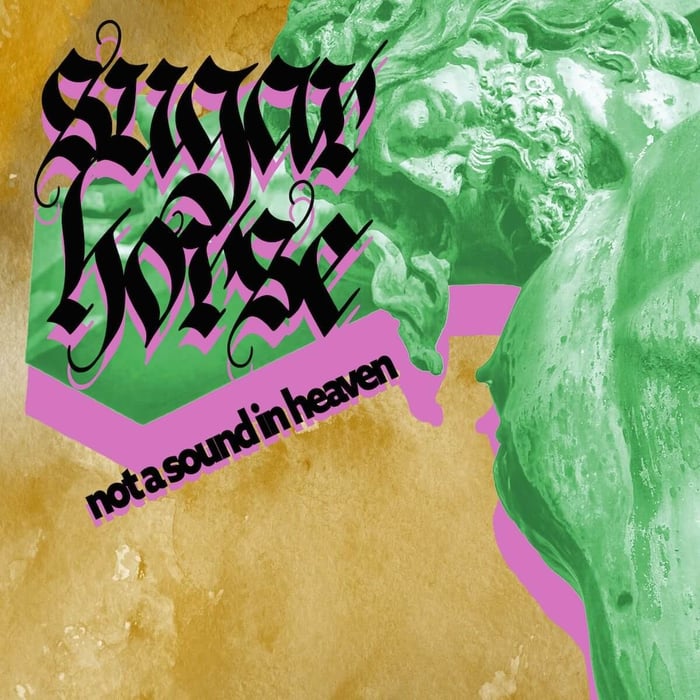
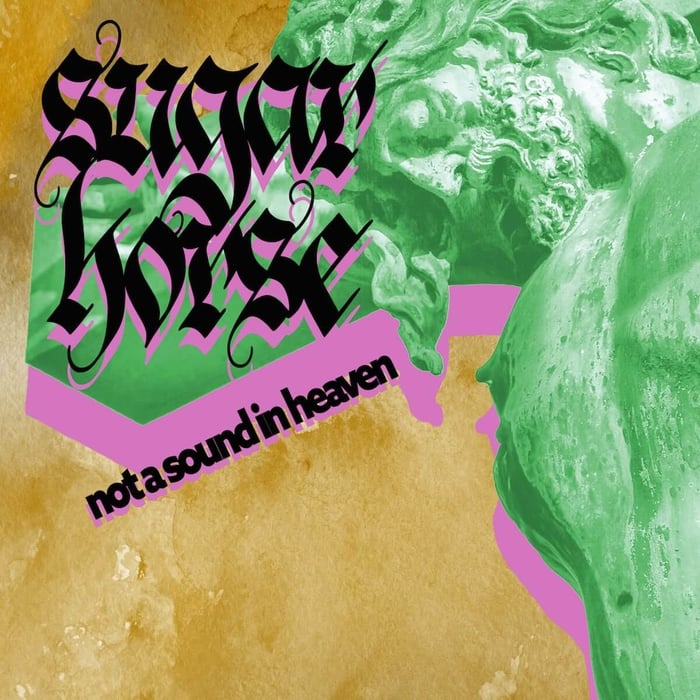
Here’s the script-flip: Not A Sound In Heaven (I’m going to keep calling it Not A Sound because the album itself feels like it wants the punchier title) shifts labels to Fat Dracula Records, and it’s made in a self-built recording studio. That matters, because you can hear the room in the choices.
They wrote and recorded each song as a live take with the full band, skipping extended rehearsals outside the sessions. That’s a loud decision. It’s also their shortest album so far—assuming you don’t count the prior record’s closing 20 minutes of drone provocation (which, frankly, felt like them leaving a “do not disturb” sign on the door of their own album).
The result is a more direct record—still unmistakably Sugar Horse, from the sonic palette to the weird, wrong, wonderful song titles—but it’s got less sprawl and more shove.
“Fire Graphics” kicks the door in—and blames the correct people
The album opens with “Fire Graphics”, and it doesn’t politely introduce itself. There’s a relentless, pulsing beat that feels like it’s been assigned one job: keep your head nodding while the lyrics spit an excoriation of Western capitalism. The riff is simple, almost blunt-force, which is exactly why it works—you don’t need a maze when you’re building a battering ram.
The guitars are drenched in fuzz, and not the cute boutique kind. This is raw distortion that crackles, growls, and threatens to fall apart mid-swing. An arguable take: the fuzz isn’t just tone here—it’s rhetoric. It’s the sound of a system overheating.
And that same rawness shows up immediately elsewhere:
- “Secret Speech” comes in with sludgy thumps that feel like boots on a stairwell.
- “Ex-Human Shield” starts with scratchy riffs that make me think of a motorcycle revving itself into a bad idea, while these vocal-like synth swirls creep behind it like dungeon air.
The album’s real addiction: hard cuts between beauty and damage
The heavy riffs aren’t the whole story, and honestly, that’s where Sugar Horse usually beat a lot of their peers. Not A Sound keeps slamming cleaner, ethereal sections right next to the crush—sometimes with barely any transition. “Ex-Human Shield” is the obvious example: it swerves from abrasion to something almost luminous so fast it feels like the band is testing whether you’re paying attention.
A reasonable listener could argue these minimal transitions are messy. I’d argue the mess is the point: they’re not trying to lull you. They’re trying to snap you out of comfort.
“History’s Biggest T-Shirts” is the album’s messiest flex—and it mostly wins
The centerpiece is “History’s Biggest T-Shirts”, and it goes further than the rest. The first part smashes between synth-pop flavors and screamed eruptions like it’s trying to see how many moods can fit in one breath. Then it drops into a long stretch—about five minutes—of droning ambience and vocoder haze.
At first, I thought that midsection was them padding time, doing the “experimental” thing out of obligation. On second listen, I got what they were doing: it’s not padding, it’s a controlled stall—like the album is forcing you to sit in the smoke before it lets you run again.
The political angle isn’t subtle either. The track directly quotes socialist revolutionary Salvador Allende, and the band treats that quotation like a structural beam, not a cute reference. Then it regroups for a cathartic closer that feels earned specifically because they made you wait for it.
Arguable claim: this track is where Not A Sound becomes more chaotic than their previous stuff—and also more compelling, because the chaos is arranged like an argument, not like random channel-switching.
Ashley Tubb’s voice is the glue, even when the songs try to split apart
These lurches in tone would collapse without a vocalist who can sell the pivot. Ashley Tubb anchors the swings with a style that carries shades of Rou Reynolds in the screams and Robert Smith in the cleans. That’s not me saying he’s copying either one—more like he’s borrowing two different emotional toolkits: one for panic, one for haunted calm.
An arguable statement: the cleans are the scarier part of this album. The screams feel like release; the clean sections feel like someone explaining the world’s ugliness in a calm voice because they’re tired of yelling.
The live recording gamble: dynamism, yes—also the occasional slip
Recording live without a click track is the kind of decision that separates “we care about feel” from “we care about polish.” When it works, it works: the tempo breathes, the band surges, and the songs avoid that modern-grid stiffness that makes even good heavy records feel like spreadsheets with distortion.
But you can also hear the construction lines. There are moments where the beat slips in a way that doesn’t sound intentional. I’m not clutching pearls about it, but I won’t pretend it’s always charming either. The rawness strengthens the message—yet it also exposes the risk: when your whole thesis is urgency, a stumble can briefly read as hesitation.
And the production has one real downside: sometimes the album’s biggest dynamic shifts lose a bit of their impact inside the mix. The walls of fuzz can blur the “before” and “after,” undercutting the heft of the largest riffs. That’s my mild gripe—because the band clearly wants those contrasts to hit like a slap, and occasionally it lands more like a shove through a thick jacket.
The surprise weapon: electronics creeping in where they shouldn’t
Even with the live-band foundation, there’s an experimental streak that keeps Not A Sound from feeling like “just” a doomgaze record. The band leans harder into electronic elements—something that had been teased in standalone singles from last year that didn’t end up on the album.
Here, those impulses show up in sharper ways:
- Drum and bass stabs creep into “Fire Graphics,” like the song is briefly possessed by a club track that hates you.
- The ten-minute closer “You Can’t Say Dallas Doesn’t Love You” toys with dub sounds—space, echo, low-end mischief.
Arguable take: the electronics aren’t decoration. They’re there to make the riffs feel less like tradition and more like sabotage.
Shorter doesn’t mean softer—it means less forgiveness
Because it’s the shortest Sugar Horse album to date, Not A Sound feels like it’s cutting off escape routes. There’s less time to settle in, less time to acclimate to the band’s left turns. That punchiness makes the political lyricism feel even more pointed: the words don’t float over an endless drone bed; they’re delivered in bursts, like headlines you can’t scroll past.
And the album’s core palette is still basically two extremes—doom and dream—except now they’re stitched tighter together. The through-line is the lyrical bite: an unflinching view of the horrors in the world, delivered without asking permission to be “nuanced” in the way people use nuance as a tranquilizer.
Raw and imperfect… because sanding it down would be missing the point
Not A Sound isn’t perfect, and it doesn’t try to be. What’s interesting is why it isn’t perfect: the rough edges come from deliberate process choices—recording live, skipping extended rehearsals, building their own space—rather than a lack of ability or vision.
You could absolutely imagine a “cleaner” version of this album: tighter grid, more immediate mix, bigger contrast drops. But shaving it down would kill the spirit powering it. The record spends its time deriding the cult of efficient systems and the damage they do; making the album too efficient would be a self-own.
I’m not 100% sure the band always finds the best balance between murk and impact, though. A couple more moments of mix clarity could’ve made the heaviest parts feel even heavier. Still, I’d rather have this raw, breathing thing than a sterilized version that says the right words while sounding like it was assembled by committee.
Release details (because time is real)
Not A Sound In Heaven is set for release on April 10th via Fat Dracula Records.
If you want to keep up with the band socially, they’re on Facebook here: Sugar Horse on Facebook.
Conclusion
Not A Sound feels like Sugar Horse refusing the polite version of themselves—shortening the runtime, recording live, letting electronics leak in, and keeping the political angle blunt enough to bruise. The seams show, and that’s the point.
Our verdict: People who like heavy music that argues—doom riffs, shoegaze glow, electronic sabotage, and politics that don’t whisper—will actually love this. If you need pristine timing, “perfect” mixes, or transitions that hold your hand like a museum guide, this album will irritate you on purpose.
FAQ
- Is “Not A Sound” actually a different album name?
No—I’m using “Not A Sound” as shorthand for Not A Sound In Heaven, the album title. - What makes the recording approach stand out here?
The songs were written and recorded as live takes by the full band, without extended rehearsals outside the sessions, which leaves audible human edges. - Where do the political themes show up most clearly?
Right from “Fire Graphics,” and especially in “History’s Biggest T-Shirts,” which directly quotes Salvador Allende. - Does the album lean only on doom and shoegaze?
No—there’s a stronger embrace of electronics: drum-and-bass touches in “Fire Graphics” and dub-style exploration in “You Can’t Say Dallas Doesn’t Love You.” - What’s the biggest drawback for picky listeners?
The live feel can include occasional timing slips, and the production sometimes blurs the punch of the biggest dynamic shifts behind thick fuzz.
If this album’s chaos lodged in your brain, a poster of your favorite album cover is a pretty reasonable way to live with it. If you’re the type, you can browse prints at our store: https://www.architeg-prints.com/
 | DISCOUNTGET 30% OFF*Use code on your next order:
|
* This post may contain affiliate links, meaning we earn a commission if you make a purchase through these links, at no additional cost to you.