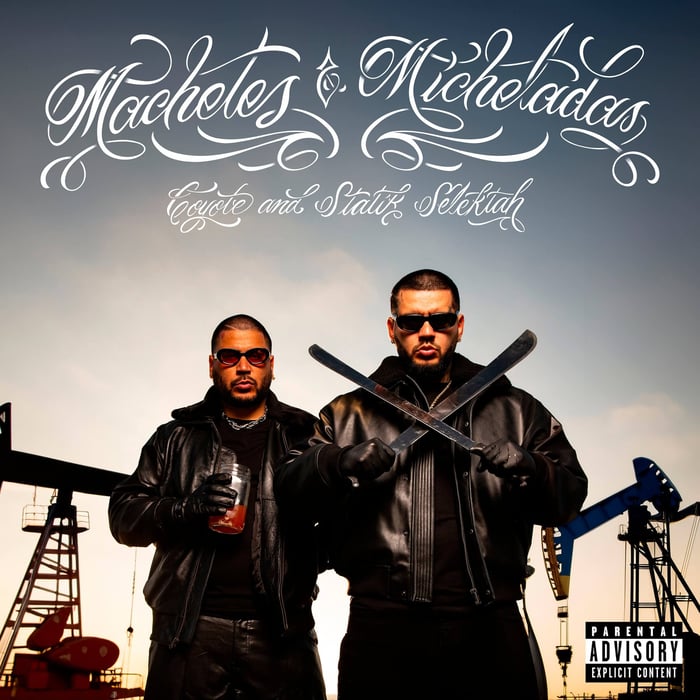
Machetes & Micheladas Album Review: Boom Bap With Lime and a Bruise


 See more Architeg Prints stories on Google.
Machetes & Micheladas Album Review: Boom Bap With Lime and a Bruise
Italicized street-lit honesty: Machetes & Micheladas turns Hawthorne grit into sharp, funny rap that still bleeds when it lands.
This album isn’t trying to be “important”—it’s trying to be undeniable
Some records want your respect. Machetes & Micheladas wants your attention the same way a loud argument at the next table does: you didn’t ask for it, but now you’re locked in.
Coyote—brothers LadiesLoveGuapo and Ricky Blanco—come out swinging with the kind of specific identity that usually gets sanded off in rap marketing meetings. Hawthorne, California sits in that South Bay pocket between Inglewood and the ocean, and the energy here feels like exactly that: not postcard L.A., not Hollywood grime cosplay, but a working-life sprawl where the stories are too weird to be invented. They grew up on Wu-Tang and Nas, bounced between the South Bay and Mexico while their parents stabilized, and eventually started writing raps after losing a championship basketball game. That origin story sounds almost too tidy… but the music doesn’t. The music sounds like two guys who learned early that losing is an education and winning is just a receipt.
Even the name “Coyote” pulls a double meaning that the album keeps chewing on: the trickster figure from Aztec mythology and the person paid to smuggle you across the border. That’s not decoration. That’s the whole worldview—survival with a grin, hustle with consequences. They even own a barbershop on Melrose, which makes sense: this record feels like a long conversation where jokes, threats, and life advice all sit in the same chair.
And this is their fifth full-length, but it’s the first time they hand the entire production to one outside brain: Statik Selektah, the Massachusetts DJ who’s been flipping East Coast sample chops for two decades.
Statik Selektah’s production is the “grown-up decision” that still hits hard
Here’s the bridge from the backstory to the actual sound: giving Statik the whole production slate is Coyote deciding not to be cute about it. No playlist of random producers, no “let’s try everything.” Just one craftsman building the room.
Statik’s drums do what you want boom bap drums to do: the kicks land with weight, and the snares have that clean crack that makes you nod even when the lyric is ugly. The loops lean soul and jazz, chopped tight enough to feel deliberate without getting fussy. If you like your rap production to sound like it’s been sharpened, not polished, this is that.
And yeah, I’ll admit it: on my first couple tracks, I thought the beats might be too comfortable—like they’d slip into “good producer on autopilot” territory. But the more the record unfolded, the more I heard how the drums keep changing the floor under the brothers without ever stealing the scene. Statik isn’t trying to be the star. He’s trying to make sure nobody else gets to be lazy.
That said, there’s one mild knock I can’t un-hear: the sheer consistency of the boom bap palette sometimes flattens the sense of surprise. The variety is there in textures and chops, but the album rarely swerves into a totally different temperature. If you wanted a left-turn track that breaks the frame, you may keep waiting for it.
Coyote’s bilingual swagger is a flex—and they refuse to translate for you
Guapo and Ricky rap with a looseness that almost reads as careless until the punchlines connect and you realize the “mess” is choreographed. They trade bars in English and Spanglish like they’re tossing keys to each other in a parking lot—no ceremony, no pause to explain.
One line says everything about their approach: “I make this shit look like it’s butter, make it look like mantequilla.” They drop the bilingual joke and keep moving, almost daring you to keep up. And that’s the point: this album isn’t a tour guide. It’s a neighborhood conversation happening at full speed.
Their flexes are funny, but they don’t feel like comedy rap. They’ll demand ten million and a jet ski from labels, compare running from the feds to Cinderella, and call themselves walking red flags. It plays like banter—until you catch the dead seriousness underneath. The jokes aren’t to soften the truth. The jokes are how they carry it.
On “Blasphemy,” Guapo goes straight for provocation, putting himself next to Jesus Christ’s clone—“I hang with hookers and crooks”—then claims his skin is Teflon. The delivery snaps in a way that feels like a deliberate throwback to early-2000s battle-rap crispness. It’s the kind of performance that basically says: I can do the righteous street-poet thing if I want, but I’d rather be dangerous and funny at the same time.
The guest verses aren’t features—they’re pressure tests
The record stacks guests like it’s checking who can hang with the brothers’ tone: gritty, specific, slightly unhinged, and still controlled.
Conway the Machine shows up on “Give Me a Hell Yeah!” and immediately paints a scene so sensory it’s borderline absurd: a car interior “mango on the inside, outside of it was tajín,” silk pajamas, Tracy Chapman playing, guns in the club with switches. That’s not just imagery—that’s a flex of taste mixed with threat. The song treats violence like it’s part of the furniture, which is either numbness or realism, depending on what kind of week you’re having.
What surprised me is how the album makes these big-name voices sound like they’re stepping into Coyote’s movie, not the other way around. This could’ve turned into a Statik compilation with a rotating cast. It doesn’t. The Morales brothers stay at the center because they’re the ones with the specific world.
And I’m not 100% sure whether that’s because their writing is stronger or because their chemistry is so casual it becomes its own hook. Probably both. Or maybe I’m just biased toward duos who actually sound like they live in the same brain.
“Cortez On My Feet” turns a shoe into a whole childhood economy
The album’s best trick is how it makes small objects feel like full biographies.
“Cortez On My Feet” flips that idea perfectly. Guapo talks about wanting Jordans as a kid and not being able to get them. His mom buys one pair, he plays so hard he destroys them, then the next day he’s at Ross finding nylon Cortez on the half-off rack—and that becomes the love story. He hits a surplus store for a Pro Club, gets his brother to fade and line him up, walks into school and every girl tells him he’s fly.
That’s not nostalgia; that’s a lesson in how style forms when you don’t have options. The song even interpolates Nelly’s “Air Force Ones,” which could’ve been corny fan-service, but it actually works because it’s used like a cultural timestamp, not a punchline.
Lil Mr. E from Foos Gone Wild slides onto the same track talking about grinding in his Cortez “until Chicanos hit the lotto,” and he nods Mr. Cartoon’s Nike collab like it’s both aspiration and proof of presence. The shoe becomes a whole social ladder: who gets to be seen, who gets to feel new, who has to make “half-off” feel like victory.
“Cali Dreaming” is a postcard that somebody spilled something on
From there, the album keeps zooming into place. “Cali Dreaming” rattles off landmarks and habits that sound like lived-in routines, not tourism: the Slauson Swap Meet, the Rhodium, eating at Chente’s where the food has too much sodium. Then it gets darker without changing tone: a homie overdosing on opium and laughing about it, getting jumped in a bathroom at 13 for wearing a red hoodie with a sports team.
That last detail is the kind of grim specificity you don’t forget because it’s so petty and so permanent. It’s also where the album’s humor turns into something else—like the joke is the only way to say it out loud.
And there’s a line of reality running under everything: everybody here knows somebody paralyzed from the waist down. Not metaphorically. Not “spiritually.” Literally.
A reasonable listener could argue this kind of detail-dropping is just “gritty aesthetics.” I think it’s the opposite: it’s Coyote refusing to let the listener float above the consequences.
The politics hit because they’re aimed at actual targets
The album doesn’t do vague “the system is broken” hand-waving. It picks fights with names, structures, outcomes.
On “What’s Peace?,” the brothers flip Biggie’s “What’s Beef?” framing into a list of questions that are hard to dodge: locking kids up for stealing food, shooting people reaching for registration, letting pedophiles out while weed sellers rot. It’s not written like a debate club essay—it’s written like somebody who’s watched the rules bend for the wrong people too many times.
Locksmith shows up with one of the cleanest cold truths on the record: if Jesus Christ came back tonight, they’d probably deport him. That’s the kind of line that lands because it’s simple and ugly and doesn’t need extra explanation.
R.A. the Rugged Man takes the same track and swings at cultural panic—people scared of Black mermaids, Bad Bunnies, and Bud Lights—then zooms out into DHS remigration talk and compares daily Oval Office meetings to Jerry Springer episodes. It’s chaotic, but it’s intentional chaos: the verse sounds like doomscrolling turned into rhyme.
And yes, these songs will sound like the year they’re made in forever. That’s fine. I’d rather hear a record risk being dated than hear it hide behind timeless vagueness.
“Kid Named Johnny” is the album’s most complete story—and it doesn’t blink
Then the album stops arguing and starts narrating.
“Kid Named Johnny” commits to a full storyline: a straight-A student loses his father to a drive-by, then slides toward a gang because he wants the fatherly love back in any form he can get it. The track follows him through a ninth-grade stabbing, Vicodin from doctors, a Glock from his set, and eventually a shooting where he hits his target in the windpipe.
And the moment that sticks—the one that makes the whole thing feel sick in the right way—is when he watches the target’s mother drop to her knees holding her baby. It’s not cinematic. It’s just the consequence arriving.
If you’ve ever complained that rap storytelling is dead, this track will shut you up for a minute. It’s the most complete piece of writing either brother puts on the record, and it changes the album’s weight because now the jokes and flexes have a body count behind them. Not in a glorified way—more like a ledger.
The “family songs” aren’t soft—they’re instructions and warnings
From that darkness, the album pivots into something quieter but not gentler.
On “Letter to My Son,” Guapo writes straight to his firstborn: be compassionate but don’t be weak, look a man in the eyes when you shake his hand, it’s okay to cry but be careful who sees it. That last part is brutal because it’s honest—love, filtered through a world where vulnerability gets taxed.
He remembers the day his kid’s small fingers gripped his thumb, “the day God put the first breath in his lungs.” It’s tender, but it’s also loaded with fear: he’s writing like time is fragile.
Berner adds his own letter, saying he nearly died in 2022, stayed alive for his son, and wants him to build an empire—but still have fun doing it. That contrast is the whole adult dilemma: build something big, but don’t let it eat you.
Then “Love Me Love Me Not” wanders somewhere nastier. The relationship frame turns into a trap metaphor—tying the knot feels like putting his head in a noose, the love language is verbal abuse, and he’s begging for a back rub instead of backstabbing. Alicia Marie fires back with a line that’s as ugly as it is honest—hoping he dies in the bathtub she cried in—then admits she still loves him anyway.
I won’t pretend I enjoy sitting in that kind of toxicity, but I also can’t call it fake. The song doesn’t ask you to pick a hero. It just shows you the damage people learn to call normal.
The veteran appearances feel like a local roll call, not a nostalgia play
Near the end, the album starts pulling in elder-statesman voices that could’ve turned the whole thing into a “look who we got” parade. Instead it feels like the neighborhood widening.
Sick Jacken on “Whippin’ Cream” talks about making sobriety his new high after three decades and mentions his parents being from Sinaloa. It lands because the delivery sounds like lived choice, not inspirational poster talk.
B-Real introduces the brothers as “the pride of Hawthorne” on “Church,” and the song lays out ten street commandments: hate is cancer, charge a fee for your time, take from the rich, don’t snitch, take your Ls to the chin. It’s moral code as survival strategy, not righteousness.
B-Real and Sick Jacken sharing space reads like a Psycho Realm reunion by proximity—two voices with history in them, orbiting Coyote’s present tense.
And here’s the thing: Conway, Curren$y, R.A. the Rugged Man, and Daylyt are all artists who could’ve sleepwalked through a feature on a producer-led boom bap record. Nobody sleepwalks here. Whether that’s pride, respect, or simply the beats demanding focus, the effort shows.
Where it hits hardest—and where it almost overplays its hand
If I’m picking favorites the way I actually listen—by what I replay, not what I “admire”—three tracks keep coming back:
- “Whippin’ Cream” for the sobriety talk that doesn’t beg for applause
- “Kid Named Johnny” for the full narrative arc that actually changes the album’s gravity
- “Cortez On My Feet” for turning budget shoes into a whole origin myth
The album’s main strength is also its risk: it’s so committed to sharp-edged boom bap that it sometimes refuses the kind of sonic left turn that would make certain moments hit even harder. I kept waiting for one production choice that felt recklessly different—something that made me go, “Oh, they really don’t care if I’m comfortable.” It never quite comes.
But maybe that’s the point. Machetes & Micheladas isn’t a chaos record. It’s a control record—controlled aggression, controlled humor, controlled storytelling. Like a blade you keep clean.
Conclusion
Machetes & Micheladas plays like two brothers staging their life as proof: the jokes, the threats, the politics, the shoe memories, the prayers, the bad love. Statik Selektah gives them a frame that stays solid, and Coyote fills it with details that feel too specific to be performance.
Our verdict: People who actually like boom bap—and don’t need their rap sanded into “vibes”—will love this album. If you want airy hooks, emotional ambiguity, or the illusion that nobody’s ever had a problem in their life, you’re going to call it “too much” and go back to your chill playlist like nothing happened.
FAQ
- Is Machetes & Micheladas a duo album or a producer album?
It feels like a Coyote album first, but the single-producer choice makes Statik Selektah’s fingerprint unavoidable in the best way. - Does the album lean more street stories or punchline rap?
Both, often in the same verse. The punchlines aren’t there to be cute—they’re there to keep the tension from crushing the song. - Which track best represents the album’s storytelling?
“Kid Named Johnny” is the clearest full narrative, and it’s the one that changes the album’s emotional temperature. - Are the political themes subtle or direct?
Direct. “What’s Peace?” doesn’t hide behind slogans—it names scenarios and forces you to sit with them. - What’s the best entry point if I’m new to Coyote?
Start with “Cortez On My Feet” for identity and humor, then jump to “Whippin’ Cream” and “Kid Named Johnny” to hear the record’s range.
If this album left you thinking about imagery—machetes, micheladas, commandments, Cortez—turn that fixation into something you can hang up. Shop your favorite album cover poster at our store: https://www.architeg-prints.com
 | DISCOUNTGET 30% OFF*Use code on your next order:
|
* This post may contain affiliate links, meaning we earn a commission if you make a purchase through these links, at no additional cost to you.