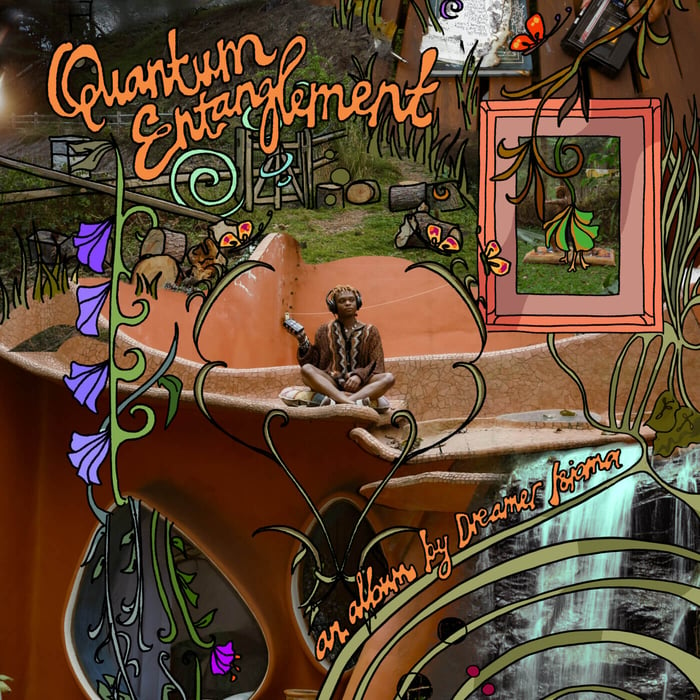
Quantum Entanglement Review: Dreamer Isioma Turns Pain Into a Club Trick


 See more Architeg Prints stories on Google.
Quantum Entanglement Review: Dreamer Isioma Turns Pain Into a Club Trick
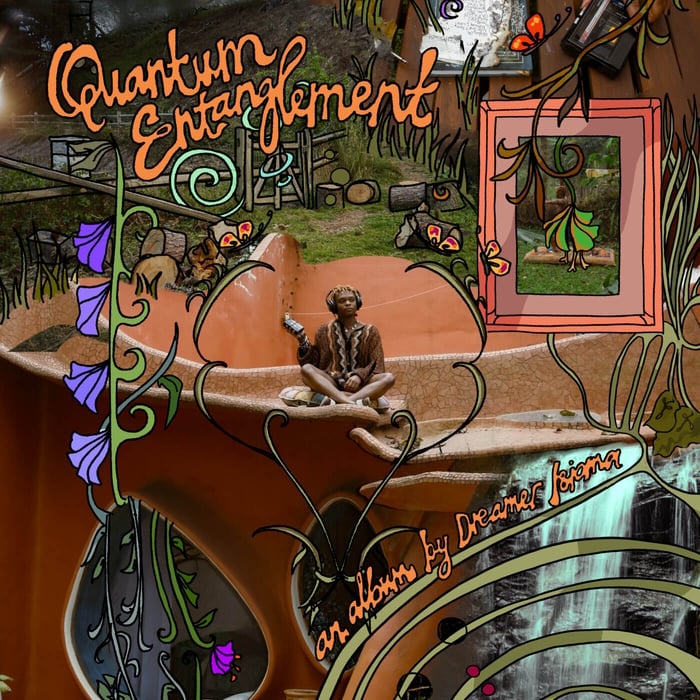
Dreamer Isioma’s Quantum Entanglement uses cosmic language to make self-harm thoughts speakable—then dares you to dance anyway.
Before Anything Else, Here’s the Hard Warning
This album deals openly with suicide and self-harm. If you or someone you know is struggling, the 988 Suicide & Crisis Lifeline offers free, confidential, 24/7 support in the US—call or text 988, or chat at 988lifeline.org.
The Hook: This Album Doesn’t “Express Feelings”—It Stages Them
I went into Quantum Entanglement expecting spacey symbolism and vibe music. What I got instead is a record that treats despair like a practical problem—then keeps changing the lighting so you can’t stare at it too long.
And yeah, it’s messy on purpose. Dreamer Isioma doesn’t present “healing.” They present the moment right before healing—when you’re bargaining with your own brain like it’s an unreliable roommate.
Quantum Immortality Isn’t Comfort Here—It’s a Survival Hack
The album’s whole cosmic framing isn’t cute worldbuilding. It’s a tool. The idea of consciousness continuing somewhere else—some version of you surviving in another universe—lands here like a cold glass of water to the face. Not soothing. Functional.
What I heard in Quantum Entanglement is Isioma using the universe talk as justification: stay alive because the story isn’t allowed to end cleanly. It’s cruel in a way, because it suggests you don’t get an off-switch. But it’s also reassuring in the most backhanded way possible: if you can’t imagine the void, you can’t consent to it either.
I’m not totally sure the physics metaphor holds up under pressure—sometimes it feels like a shiny wrapper around a very old pain—but I also think that’s the point. When you’re low, you’ll use any language that keeps you breathing.
“Holding On” Pulls a Stunt: Suicide Note to Club Chant in Three Seconds
“Holding On” starts by basically begging not to be left alone with the worst thoughts. Then the track strips down until the line hits like a flat, terrifying confession:
“At the top, I might just jump off the world / But I’m holding… on for you.”
That’s the real move of the song: it doesn’t romanticize the ledge. It treats it like a passing option that keeps reappearing in the menu.
Then—this is where Isioma shows what they’re actually doing—everything flips:
“Stop fucking with me / Just dance.”
It’s whiplash. It’s also weirdly honest. Because if you’ve ever been in that headspace, you know the brain does this: one second you’re writing a goodbye letter in your skull, the next you’re trying to out-run yourself with noise and movement. The jump from crisis to dancefloor isn’t “clever”—it’s familiar. And the ending reduces the entire universe down to one grip:
“Baby, hold on / Hold on to me.”
A reasonable listener could say it’s tonal chaos. I’d argue it’s tonal accuracy.
“Smile” and “Nothing Is Real” Sell You Acceptance Like It’s Medicine
“Smile” builds toward its final line like a slow, unavoidable elevator ride: “We’re all gonna die one day, and that is okay.” The track earns that sentence by walking through life events in this drained, dead tone—like the narration is trying not to cry by refusing to inflect.
Then it turns the knife with a directive that sounds gentle until you sit with it:
“When I die, don’t you cry for me… Baby, smile, it’s a celebration.”
That’s not peace. That’s someone trying to force peace into existence by saying it out loud.
“Nothing Is Real” does a similar trick, but dirtier. It opens with an almost too-blunt tell:
“When I’m having the time of my life, I want to die so bad.”
Then it uses unreality like a permission slip: if nothing is real, then feelings can be whatever they are without a moral trial.
By the second verse the rule gets stated plainly: “You can’t be happy without sad.” And the invitation to “Let’s get wild” starts sounding less like fun and more like self-erasure with a better outfit.
If there’s a critique here, it’s that the “nothing is real” framing can flirt with sounding like an excuse instead of a confession. But maybe that discomfort is exactly where the song wants to leave you: not inspired—exposed.
“Life Isn’t Fair” Can’t Even Keep the Bravado for a Full Verse
The most violent frustration bursts out on “Life Isn’t Fair,” and it’s hilarious in the bleakest way that the “money and status” persona barely survives a line or two.
Isioma throws on the loud mask—“Six figs on me, that’s a loss / Seven figs on me, I’m a boss”—even claims icon status with the kind of ego that’s obviously armor: “a fucking icon, you could put me on a cross.”
But it collapses immediately. A few lines later it’s already: “Love pushes me to the edge / Thinking that I’m better off dead.” And the hook can’t stop itself from admitting the truth: “I shouldn’t even care, but I do.”
That’s the album in miniature: it tries on swagger like a jacket, realizes it doesn’t fit, and starts bleeding through the seams.
“On My Grind” Wants the Wound, Then Begs for Love Anyway
“On My Grind” is where the self-destructive logic gets creepily articulate. Isioma doesn’t just fear pain—they want it: “I want somebody who hurts me.” Then they admit the circular sabotage: “Breaking hearts to make my heart break.”
And then, right after all that tough talk, the plea drops in like a crack in the wall: “Please, please, please / Love me.”
Vayda’s part hits from across the room like somebody who’s already tired of the whole romance-to-ruin routine: “Wasted years on love that never came through.” There’s a specific kind of loneliness in that—roaring in the car, yelling at nobody, wondering, “Is he really proud of me?”
Even the flirtiness of “Boo Thang” can’t stay cute. It smuggles in the line that explains basically everything: “I wanna love myself, but loving me is hard.” That’s not a lyric searching for pity. It’s a practical barrier being admitted out loud.
“All I Need” Is One Phrase, Three Meanings—and None of Them Match
“All I Need” repeats “That’s all I need” with three different voices, and the point is that the words keep shape-shifting.
- Isioma’s verse sounds like searching across a whole city map: “South side, north side, west side, out east / No matter where you at…” It’s restless, like love is a location you might still reach if you just keep moving.
- Perry Maysun drags the track into its darkest corner: “In the hills sobbing, plagued with indecision,” imagining destruction as relief—“Burn it all down and bathe in the ashes”—then boiling desire down to an image that sticks in your teeth: “All I need is to burn forever like candles on the corner stairs.”
- detahjae takes the phrase last and builds domestic calm—“All I need is you and babies”—road trips, devotion, the whole soft landing.
And only after that “happy ending” does the verse allow the outside world back in: “the gunshots on the outskirts of the night.”
That ordering matters. It’s like the song insists on imagining tenderness first, then admits the environment anyway. A listener could call that denial; I think it’s a survival habit.
“Believer” Isn’t Heartbreak—It’s Contempt Wearing a Hook
“Believer” runs on contempt more than sadness, and that’s why it’s uncomfortable. The first line sets up a moral mythology right away: “She’s a god, and I’m a demon.” Then the song moves like somebody pre-justifying bad behavior.
When she brings up an unrealized wish, Isioma bails: “I told her that I’m not a believer… I’ll fuck then leave her.” It’s ugly, and it’s supposed to be. Then it turns into open venom—“Bitch, go to Hell / Bitch, go and die”—before finally coughing up the real grievance: “Let’s not pretend like you ain’t do me wrong over and over again.”
Here’s where my first impression changed: at first I wrote this track off as shock-value cruelty. On second listen, it sounded more like a person trying to make betrayal feel powerful by making it loud. It doesn’t excuse the words, but it explains the temperature.
“I Try So Hard” Lets a Friend’s Voice Wreck the Room
“If you even consider leaving, I’ma rip a knife through my heart and stop breathing”—a friend’s voice cuts through the middle of “I Try So Hard,” and it changes the air pressure instantly. The song goes from tense to claustrophobic.
The verse is tight, wounded, threatening self-harm in a way that feels like one moment stretched too far. Then a phone call interrupts, offering the standard lifeline language: don’t let what you can’t control break you, just have faith.
The response is basically self-therapy in real time: “Inhale, exhale, baby, meditate… Don’t hide from your feelings, let ‘em ride.” It’s the kind of advice that sounds clean until you try using it with a brain that won’t cooperate.
And it doesn’t work. The calm breaks: “I almost died trying to find all that I am… I lost the plan.” Then the song ducks behind the flimsiest shield left: “Swag, swag, swag.” It’s ridiculous and sad in the exact same breath—like flexing is the last available language when sincerity starts drowning you.
A reasonable person could argue the “swag” fallback cheapens the moment. I’d argue that’s the honesty: sometimes the coping mechanism is stupid. It still gets used.
“Pressure” Is a Single Held Breath That Admits the Real Secret
“Pressure” is the shortest track, and it behaves like a pause you didn’t ask for but needed. A single held breath. Isioma hands someone else the steering wheel—“I would give you full control”—then asks the question the whole album keeps circling: “Why do I feel safer when you’re near?”
That’s not romance. That’s dependency stated plainly.
And the album refuses to pretend that safety is easy to earn. The calm never fully arrives; the songs just keep reaching for it like hands in fog.
“Love Me” Finally Says the Thesis—Then Immediately Takes It Back
“Love Me” is where the album finally sings its big cosmic idea without hiding behind metaphors:
“Between every star there is space and no matter how far we are, we’re entangled by love.”
It’s blunt enough that it almost sounds like a mission statement. And then—because this album can’t leave sincerity untouched—it starts dismantling that sentiment right away.
The chorus strips the want down to survival math:
- “Love me”
- “Do you really love me?”
- “How can you say you love me?”
- “I don’t even love me”
That’s the whole problem: asking someone else to generate a feeling you can’t manufacture inside yourself. The quantum loophole—the promise that some version of you survives separation—shrinks here into something smaller and uglier: you’re still here, so you still have to ask.
Where It Lands (And Where It Doesn’t)
For me, Quantum Entanglement works best when it stops trying to sound profound and just admits the mess. When it aims for “big meaning,” it sometimes risks turning pain into aesthetic. But when it snaps from confession to rhythm—when it jumps the tracks on purpose—it nails the lived experience: the brain ricocheting between the urge to disappear and the urge to be held.
The tracks I kept coming back to
- “Holding On” (because the tonal pivot is the point)
- “All I Need” (because it shows how the same words can rot or bloom)
- “I Try So Hard” (because the interruption makes it feel real, not staged)
Conclusion
Quantum Entanglement doesn’t solve anything. It just refuses to let the listener look away from the shape of wanting to live—and wanting to stop wanting.
Our verdict: People who like emotionally blunt pop-R&B that occasionally turns into a coping mechanism with a beat will actually love this album. People who need tidy “messages,” stable moods, or lyrics that never get ugly will hate it—and honestly, they might be happier elsewhere.
FAQ
- What is the core theme of Quantum Entanglement?
It’s love as a lifeline across distance—romantic distance, emotional distance, the distance between who you are and who you can stand to be. - Is Quantum Entanglement a sad album the whole time?
No, and that’s the trick. It keeps switching from grief to bounce, like the dancefloor is a pressure valve. - Which song best represents the album’s emotional swing?
“Holding On,” because it pivots from suicidal ideation to “just dance” so fast it feels like a nervous system glitch. - Does the album glamorize self-destruction?
It flirts with that danger at moments, but it more often sounds like someone narrating the impulse while trying not to obey it. - What should I listen for on a second play?
The way phrases repeat but mean different things—especially on “All I Need,” where “that’s all I need” becomes three separate lives.
If this record stuck with you visually as much as it did emotionally, it’s the kind of album that deserves to live on a wall, not just a playlist. You can shop your favorite album cover poster at our store: https://www.architeg-prints.com
 | DISCOUNTGET 30% OFF*Use code on your next order:
|
* This post may contain affiliate links, meaning we earn a commission if you make a purchase through these links, at no additional cost to you.