Saturday Night Sunday Morning Review: PJ Morton’s Split-Personality Test


 See more Architeg Prints stories on Google.
Saturday Night Sunday Morning Review: PJ Morton’s Split-Personality Test
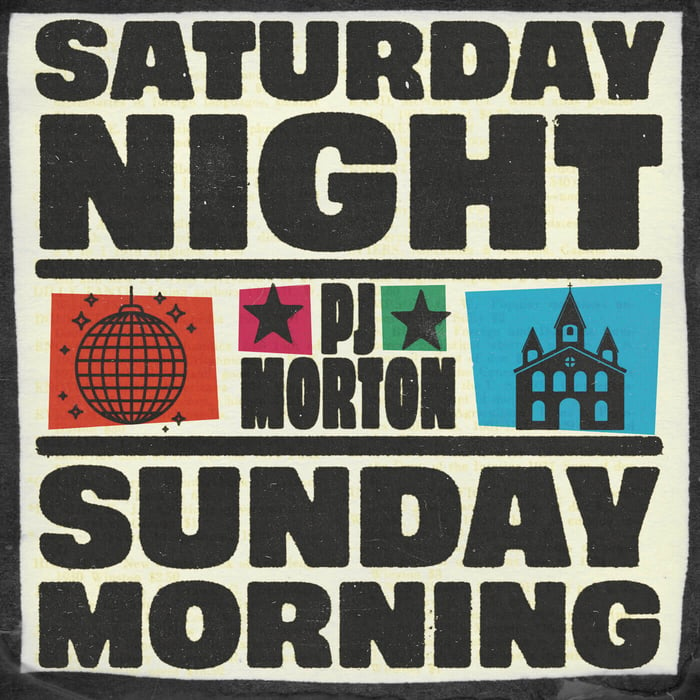
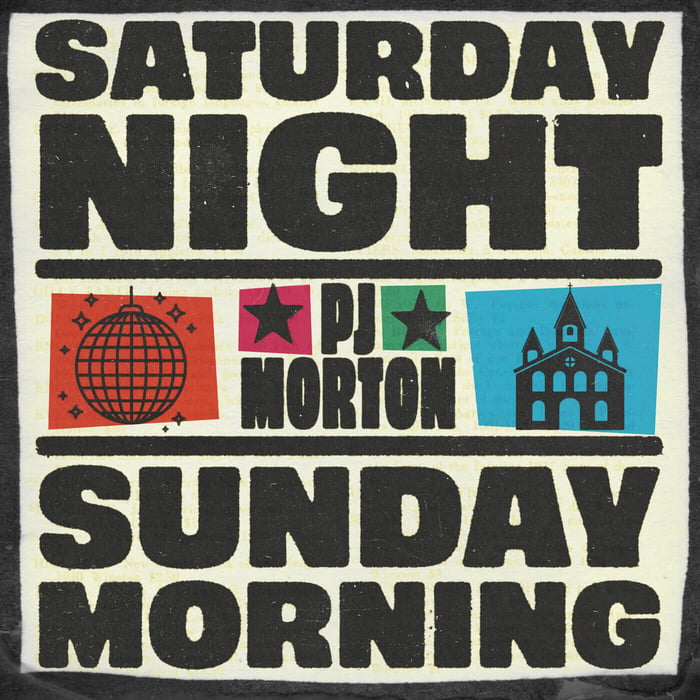
Saturday Night Sunday Morning is PJ Morton turning the Black church calendar into a double album—and daring you to admit you live in both halves.
The premise is simple—and kind of ruthless
Some albums say they’re two things at once. Saturday Night Sunday Morning actually builds a wall and makes you walk through it.
If you grew up anywhere near the Black church (or even just close enough to overhear the rules), you already know this schedule by heart: Saturday night belongs to the world; Sunday morning belongs to the cleanup. PJ Morton doesn’t treat that as a metaphor. He treats it like a floor plan—nine R&B songs for grown folks on one side, nine gospel songs on the other—and he moves between them like he owns the keys to both rooms. Because, honestly, he does.
And yeah, it’s not subtle who taught him the split. Being Bishop Paul S. Morton’s son matters here—not as trivia, but as pressure. You can hear the lifelong skill of learning how to sound convincing in two different kinds of truth at once. Morton’s spent years holding down pop-world polish as a keyboardist (including his long run with Maroon 5) while keeping his soul work on his own terms. This album doesn’t try to merge those lives. It stacks them and says, “Pick a side,” while quietly refusing to.
That’s the real move: the album acts like a decision, but it’s really permission.
The “Saturday Night” songs: he wins by staying calm
The first half doesn’t chase drama. It’s almost allergic to it. Morton’s default mode is clarity over spectacle, and when it hits, it’s deadly—because he’s not yelling. He’s stating.
On “Mutual,” he’s not even chasing someone. He’s talking like the relationship is already in motion and he’s just leveling the table: whatever you’re feeling, I’m feeling too. The groove stays understated, held up by Thaddeus Tribbett’s bass and Keyon Harrold’s trumpet, but the restraint is the flex. The song sells maturity as a kind of seduction. A reasonable person could argue it’s too polite to be sexy, but that’s missing the point: Morton’s trying to make steadiness feel like the thrill.
What surprised me is how much the album trusts that approach. It doesn’t stack hooks on hooks. It lets a line land and just… sit there, like a truth you can’t argue with.
When sincerity droops, you can hear the air leak
That same straightforwardness can also expose him. “Don’t Give Up On Us” is where the honest vow starts to sag under its own weight. He calls her his air. He promises he’ll be better. He leans on “This trouble won’t last always” like it’s a life raft, and for a second I thought the arrangement might rescue it—there’s a mini brass section feel and Zahria Sims on sax, pushing breath into the track.
But the problem isn’t the playing. It’s that the sentiment arrives already pre-approved, like it’s been workshopped by Good Intentions Incorporated. The music tries to inflate a line that doesn’t have enough internal force on its own.
Morton tends to sound best when he’s already won the argument, not when he’s trying to keep the argument from happening. That’s an arguable take, sure—but I kept hearing it: he’s more compelling when he’s describing the crack than when he’s patching it in real time.
“Used to Be” and “Mess”: he’s better at poking the bruise than begging
Then he gets mean—in the best way. Not cruel, just honest enough to be uncomfortable.
On “Used to Be,” he repeats advice that feels like it came from home: keep your business out of the street. And yet it’s too late. Everybody can hear her now. Everybody’s ear is her ear. Nothing gets through. That helplessness is the real subject, not the relationship itself.
He goes for the throat with the line: “Our love used to be our religion.” That’s not just a clever comparison. It’s him admitting the relationship once functioned like a sanctuary—structure, ritual, belief—and now the congregation’s gone. Mike Esneault’s strings don’t answer the question. They underline it, like circling a sentence you can’t stop rereading.
“Mess” keeps that same bruise exposed: yes, I must confess that I’m a mess. Keyon Harrold’s trumpet returns, and it adds a live-room heat that makes the confession feel present tense, not poetic. This is Morton at his sharpest: not pleading for forgiveness, but describing what it feels like to be the problem and know it.
“Autopsy” is the bleak centerpiece—and it doesn’t blink
If the soul side has a bottom, it’s “Autopsy.” Rukhsana Merrise joins him, and the song is basically a coroner report for a relationship. Morton delivers the cause of death with calm precision: when you read the autopsy of us, you’ll see love killed it—we tried our best, and our best wasn’t enough.
That’s a nasty idea because it refuses the usual comfort. There’s no villain, no cheat code, no simple fix. Just the possibility that effort can be sincere and still fail. I’m not even totally sure I like listening to it, but I believe it. And belief is the currency this album trades in.
“Sell My Soul” says no—and finally sounds warm-blooded
On “Sell My Soul,” someone’s trying to catch him at his weakest—coming when he’s down, trying to gain control. Morton’s response is basically: not happening. The optimism is stubborn (the sun can come back around as long as I’m breathing), and the track gains muscle with Chris Payton’s guitar and, again, Harrold’s horn work.
This is one of those moments where the album stops being “nice” and becomes alive. The ballads often keep the room cold on purpose—controlled, adult, careful—but this one has heat. It sounds like he’d rather take the long road and keep his sanity than accept a deal that costs him himself. There’s no grand apology here because there’s no one to win back. It’s self-preservation without shame, which is rarer in R&B than people admit.
The motivational misfire: “Listened to You” can’t find a face
“Listened to You” aims for the same self-possession—grown-man clarity—but doesn’t quite grab it. It’s Morton talking back to his younger self and to anyone who tried to shrink his dreams, calling their critiques projection of their limits. That’s a real insight, but the song has a weird problem: it’s the only one on the soul side that isn’t really sung to a person standing in the room.
It’s addressed to memory and morality, not a living recipient. And for me, the reassurance rings a little hollow because there’s no direct set of eyes to deliver it into. Maybe that’s the point—maybe the “you” is supposed to be every listener—but the track feels less convincing precisely because it tries to be for everyone.
“Protect My Heart” is the moment the mask slips
If you want the soul side’s most human moment, it’s “Protect My Heart.” Morton sings as the always-on-call friend, the guy who shows up, fixes things, says the right thing, never misses a beat. He calls himself Superman—without a moment to spare—and then immediately questions it: Superman isn’t supposed to cry, so who protects his heart?
That’s the crack. The album doesn’t dramatize it with big vocal acrobatics. It lets the worry sit on Esneault’s strings like a weighted blanket. And then Morton does the most realistic thing possible: he rushes to reassure everyone he’s not complaining, that he’s fine, that he’s content. All he wants is reciprocity when it’s her turn.
At first I heard it as just another smooth slow jam. On second listen, it sounded like a quiet boundary-setting speech that took him years to learn how to say out loud.
When he zooms out to “everyone,” the message thins
“Can We Try Love Again” starts with a specific modern detail—Morton scrolling through comments and realizing it’s easier to find hate. That’s a good hook because it’s concrete, not preachy. But then the track expands outward into broad pronouncements: love is what matters, we need it now more than ever.
I get the intention. Still, the farther he expands the audience, the less it feels like he’s talking to anyone in it. The song wants to be a rallying cry, but it lands more like a well-meaning caption. A reasonable listener might find that comforting. I mostly found myself wanting him to return to the sharper, more personal writing where his voice carries more weight.
The “Sunday Morning” songs: rescue narratives, but with teeth
The gospel half doesn’t pretend the Saturday half didn’t happen. It answers it.
On “Could’ve Been Me,” Morton puts himself underwater: drowning deep in sin until someone reaches him in the nick of time. The surrounding songs keep that near-escape energy—dodging bullets, hearing a voice telling him to move, being glad he didn’t stay. It’s not abstract salvation; it’s the very specific feeling of realizing you were almost the story with the bad ending.
“Mercy” is built around the admission that he didn’t deserve to be saved: he fell so many times, yet God still thinks he’s worth it; he couldn’t earn that love even if he tried. With Thaddeus Tribbett’s bass grounding it, the gratitude starts to sound closer to praise than confession.
And here’s the neat trick: when Morton sings “You keep showing up for me,” it answers the lonely Superman from the other side of the record. It’s clearly the same man standing in both rooms—just using different language for the same need.
Dependence as freedom: “Feeling Free”
“Feeling Free” goes all-in on the paradox: without you I’m nothing, but with you I can’t fail. It’s the attempt to fly solo—and the realization that independence was never the goal. The song doesn’t glamorize self-sufficiency; it treats reliance as the actual source of strength.
You can disagree with that worldview, obviously. But the album commits to it so hard that it becomes a statement: Morton isn’t selling confidence. He’s selling connection.
The doubt that makes the faith believable
Then comes the moment I didn’t expect: Morton lets doubt into the gospel set.
On “Always On Time,” right in the middle of thanking a God who’s never failed him yet, he admits: something always gets in his head. He even asks forgiveness for not being where he needs to be. That line hits because it’s awkward in the way real prayer is awkward. Confidence is easy to sing. Uncertainty is harder—and more persuasive.
The most carefully written gospel track here is “Close Enough.”strong> It draws from the story of the woman pushing through the crowd just to touch the edge of Christ’s cloak. Morton gambles everything on the smallest measurable faith: even mustard-seed faith is enough. The same strings that ached beneath the soul songs slow the urgency down to near standstill here, turning that ache into something focused and specific.
It’s not about certainty. It’s about reaching anyway.
When he vamps, it’s either the point—or a cop-out
“Bless His Name” is basically its refrain: he is wonderful, he is marvelous, and not much else. It’s the only gospel-side track where Morton seems content to just vamp. Depending on your tolerance, that’s either the purest praise or the least interesting writing choice on the record. For me, it’s both: I respect the commitment, but I also felt the track lean on repetition a little too hard.
By contrast, “Yesterday Today Forevermore” is steady and holy, praising a God who stays when others leave or deceive you. It’s the least surprising song here—almost a simple benediction—and it asks very little of Morton. Sometimes that’s the comfort. Sometimes it’s the problem.
The album ends by holding someone else up
On “Not Alone,” Morton turns outward, speaking directly to the person he’s watching buckle under pressure: you’re trying to believe, but you don’t know how much more you can take. Then “Waiting for You” goes further, giving him the voice of God speaking to someone who thinks they’ve gone too far to come back. Morton promises that no amount of sin can sever that love.
And here’s where the two halves finally touch palms through the wall: the same guy asking someone to protect his heart on the soul side becomes the guy offering himself as a handhold on the gospel side. He swears that hand won’t slip through his fingers. It’s a bold claim—maybe too bold—but it’s also the emotional thesis of Saturday Night Sunday Morning: the need doesn’t change, only the language does.
Where I landed (and what I’m still not sure about)
I walked in expecting the “Saturday Night” half to be the fun one and the “Sunday Morning” half to be the vegetables. That wasn’t what happened. The soul songs carry the sharpest wounds, sure—but the gospel songs carry the most honest self-doubt.
If I have one lingering hesitation, it’s that the album occasionally confuses broad encouragement with intimacy. When Morton points at someone—a lover, a friend, a scared believer—his writing cuts deeper. When he points at everyone, the blade gets dull.
Still, the record’s effectiveness is hard to deny. It’s not trying to blend sacred and secular into one smoothie. It’s showing you the seam—and insisting the seam is where real life happens.
PJ Morton’s own “favorite track” energy (at least from my listens) circles back to “Protect My Heart,” “Autopsy,” and “Close Enough”—the songs where he stops performing solutions and just admits the ache.
Conclusion
Saturday Night Sunday Morning works because it doesn’t pretend you can delete Saturday night. It just shows you what Sunday morning sounds like when you remember everything.
Our verdict: People who like grown-up R&B that values plainspoken truth—and gospel that makes room for doubt—will feel seen here. If you need big pop crescendos, flashy runs every 30 seconds, or “inspirational” lyrics that don’t get specific, this album will feel like a well-lit room with nowhere to hide (and you’ll probably call it boring on the way out).
FAQ
- Is Saturday Night Sunday Morning really split into two halves?
Yes—nine R&B tracks on the “Saturday Night” side and nine gospel tracks on the “Sunday Morning” side, with a clear tonal divide. - What’s the main theme tying both sides together?
The same emotional needs—love, protection, rescue—show up in both halves, just translated into different kinds of language. - Which songs hit the hardest emotionally?
“Autopsy” for its bleak honesty, “Protect My Heart” for its vulnerability, and “Close Enough” for its small-faith urgency. - Does the gospel side avoid doubt?
No—songs like “Always On Time” let uncertainty creep in, and that’s what makes the faith moments feel earned. - What’s the one place the album stumbles?
When Morton shifts from singing to a specific person to addressing everyone, the message sometimes thins out.
If this album’s split-personality design got under your skin, you might want that feeling on your wall, too. Shop your favorite album cover poster at our store: https://www.architeg-prints.com/
 | DISCOUNTGET 30% OFF*Use code on your next order:
|
* This post may contain affiliate links, meaning we earn a commission if you make a purchase through these links, at no additional cost to you.