An Ending In Itself Review: Sleeping With Sirens’ “Closure” Isn’t Subtle


 See more Architeg Prints stories on Google.
An Ending In Itself Review: Sleeping With Sirens’ “Closure” Isn’t Subtle
Ending In Itself turns trauma into hooks, friendship into scripture, and one band’s comeback into a slightly messy, very human argument with itself.
The kind of comeback that doesn’t knock first
Seventeen years into being that band for a lot of people, Sleeping With Sirens don’t come back politely on Ending In Itself—they come back like someone reopening an old group chat and immediately oversharing. After a four-year gap, this eighth LP feels aimed straight at the ride-or-die crowd: not in a pandering way, but in a “you’re still here, so I’m not going to pretend I’m fine” way.
And yes, I can hear the intent. This album is trying to turn the bond between band and fans into the actual subject matter. Not metaphorically. Practically. It’s like the record is built to say: you kept me alive, so here’s the proof.
The title track: a mission statement dressed as an opener
Right out of the gate, the title track “An Ending In Itself” hits with that specific kind of emotional impact that’s meant to land before you’re ready. It’s not a moody intro or a vibe-setter—it’s a statement: we’re going to talk about mental health, and we’re not going to romanticize the collapse.
What surprised me is how the song refuses to sit in despair. It points toward hope—almost stubbornly. I expected something more resigned, maybe even melodramatic, but instead it frames the struggle as survivable. That choice matters. It makes the album feel less like confessional content and more like a hand on your shoulder that’s squeezing a little too hard.
If you’re looking for subtlety, this isn’t it. But subtlety was never the point. The point is contact.
“Forever/Always” tries to turn friendship into a chorus you can’t dodge
The follow-up, “Forever/Always,” leans into optimism so hard it almost feels like a dare. The chorus is built to be catchy in that impeccably engineered way—like it was tested in a lab where the only equipment is a warped tour parking lot memory and a heart rate monitor.
Lyrically, it’s about the importance of good friends and the way they can drag you back into yourself when you’re slipping. It’s sincere, and it’s clearly designed to be sung back by a crowd. That’s not an accident—this album keeps making choices that feel community-first, like the band is writing with the room in mind, not just the studio.
A reasonable person could argue it’s almost too clean—like the song is sanded down to maximize uplift—but honestly, that’s part of the record’s whole move: turn messy life into something you can carry.
“Need You Here” is the album’s sharpest emotional hook
Next to the big anthems, “Need You Here” stands out because it doesn’t just say it hurts—it builds a melody that keeps pressing on the bruise. This is one of the album’s clearest showcases of Kellin Quinn’s vocal ability: not just range for the sake of range, but that frantic, reaching quality that makes the longing feel physical.
The track digs into fondness for a long-lost lover, and it doesn’t pretend that missing someone is dignified. It’s needy. It’s direct. It’s the kind of song that feels like it was written at 2 a.m. and then kept deliberately that way.
“All I know / Is that I need you here / Don’t let me go / Don’t let me disappear,” — Kellin Quinn
I’ll admit, on my first pass I thought this might be the kind of track that rides one strong hook and calls it depth. On second listen, it’s more effective than I gave it credit for—the repetition isn’t laziness, it’s fixation. That’s the point.
“House Of Matches” is built for the live-show brain
If “Need You Here” is private panic, “House Of Matches” is public ignition. This is the song on Ending In Itself that feels the most obviously engineered to become a fan favorite—especially live. The chorus sticks around like it’s paying rent. It’s one of those hooks that doesn’t politely exit after the track ends; it follows you into the next day.
What I like here is the confidence. The band isn’t trying to reinvent their identity—they’re trying to weaponize the part of their sound that always worked: big, emotional choruses that feel like a release valve.
If someone told me this track was written with a setlist in mind first and an album in mind second, I’d believe them. And honestly, that’s not a diss. It’s strategy.
“Paralyzed” snaps back with teeth (and yes, it’s a change of pace)
Then there’s “Paralyzed,” which shows up like the album suddenly remembered it can throw a punch. It’s a noticeable shift in heaviness—arguably their heaviest release in years—and it works because it interrupts the record’s softer glow with something harsher and more urgent.
You can hear the influence pull toward that classic 2000s post-hardcore/alt-rock energy—bands like The Used and Thrice come to mind—not as cosplay, but as a deliberate return to a sharper-edged version of what Sleeping With Sirens used to do.
And here’s my hot take: “Paralyzed” doesn’t just add variety, it kind of exposes how safe a few of the surrounding tracks are. The contrast makes it obvious when the album is coasting.
Where the album stumbles: “Waiting For You,” “Process,” and “PTSD”
Not everything lands, and the misses are frustrating specifically because the album’s highs are so dialed in.
“Waiting For You” feels predictable in a way that drains it of urgency. It’s the type of track where you can sense the shape of the next moment before it arrives, and not in a satisfying “anticipation” way—more like “okay, I know what room we’re walking into.” This far into the record, I wanted more substance, or at least more tension.
“Process” is where I started checking the clock a little. The lack of variation in the chord progression makes it feel stuck in place, and instead of hypnotic, it comes off flat. I kept waiting for a turn—some shift in dynamics, a melodic left hook, anything—and it mostly just… doesn’t happen.
And “PTSD” is complicated for me, because the lyrical intent is inspiring, but musically it leans repetitive and a little lackluster. I’m not saying every song needs to explode, but if you’re going to name a track after something that heavy, the arrangement can’t afford to feel like it’s running in place.
I could be missing something, honestly—sometimes repetitive structures click when you’re in the exact right mood—but in a full-album listen, these tracks slow the momentum in a way that feels unintentional.
So what is Ending In Itself actually doing?
Even with the letdowns, Ending In Itself redeems itself through its peaks—especially “Forever/Always” and “House Of Matches.”strong> The album’s most successful trick is how it converts personal struggle into something communal without sounding like a self-help poster.
And it does feel different from a lot of their back catalog. Not “new band” different—more like a band with a long legacy trying to sound fresh without pretending they’re 22. That’s a tightrope. Most groups either chase relevance or freeze themselves in amber. This record tries to do neither, even when it slips.
If I have to pin down the album’s real agenda, it’s this: it wants to prove the connection with the fanbase isn’t nostalgia—it’s an active relationship. Sometimes that relationship gets messy. Sometimes it gets catchy. Sometimes it gets a little formulaic. That’s kind of the point.
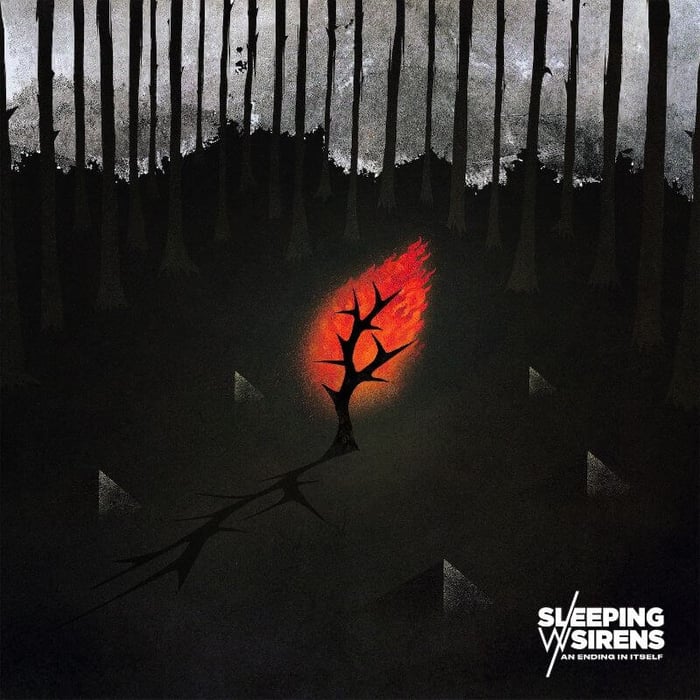
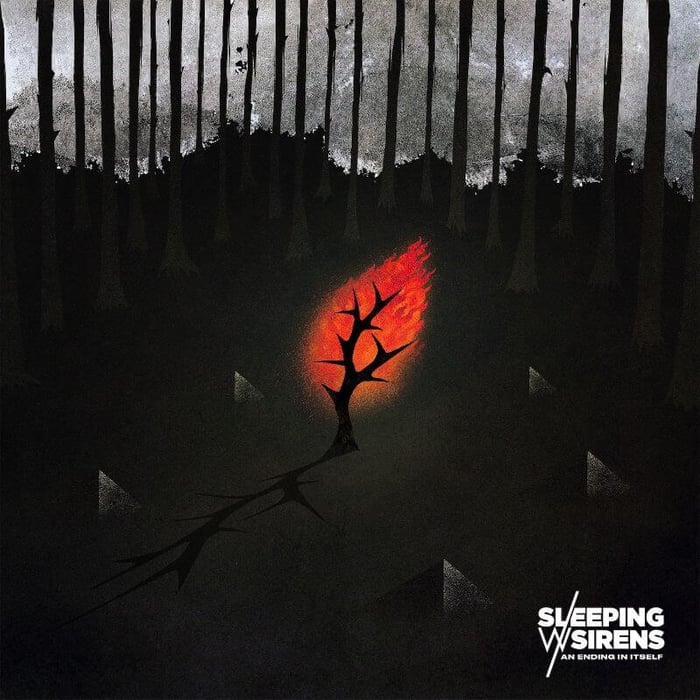
Album artwork
Release note (kept simple)
An Ending In Itself is out now via Rise Records.
Conclusion
Ending In Itself doesn’t act like a victory lap. It acts like a band choosing to be emotionally legible on purpose—sometimes brilliantly, sometimes awkwardly, occasionally on autopilot, but rarely without intent. The best moments hit because they feel like they’re being sung at you and with you at the same time.
Our verdict: If you like big alt choruses that double as group therapy (and you don’t mind a few mid-album speed bumps), this album will feel like a text from a friend who actually meant it. If you want constant heaviness, constant novelty, or songs that never repeat themselves like they’re trying to convince you—yeah, you’re going to get impatient and start skipping.
FAQ
- What is the core vibe of Ending In Itself?
Emotional alt rock/post-hardcore energy that keeps aiming for hope even when the lyrics are heavy. - Which track feels most built for live shows?
“House Of Matches”—that chorus is basically designed to be shouted by a crowd. - Is there a heavier moment on the album?
“Paralyzed” is the clear change of pace and one of the hardest-hitting tracks here. - Are there any weaker points in the tracklist?
“Waiting For You,” “Process,” and “PTSD” lose steam—either by predictability or musical repetition. - Who is this album really speaking to?
Fans who’ve grown up with the band and want songs that feel like survival turned into melody.
If you want a piece of that feeling on your wall, you can always shop a favorite album cover poster at our store—tastefully loud, like the choruses on this record: https://www.architeg-prints.com
 | DISCOUNTGET 30% OFF*Use code on your next order:
|
* This post may contain affiliate links, meaning we earn a commission if you make a purchase through these links, at no additional cost to you.