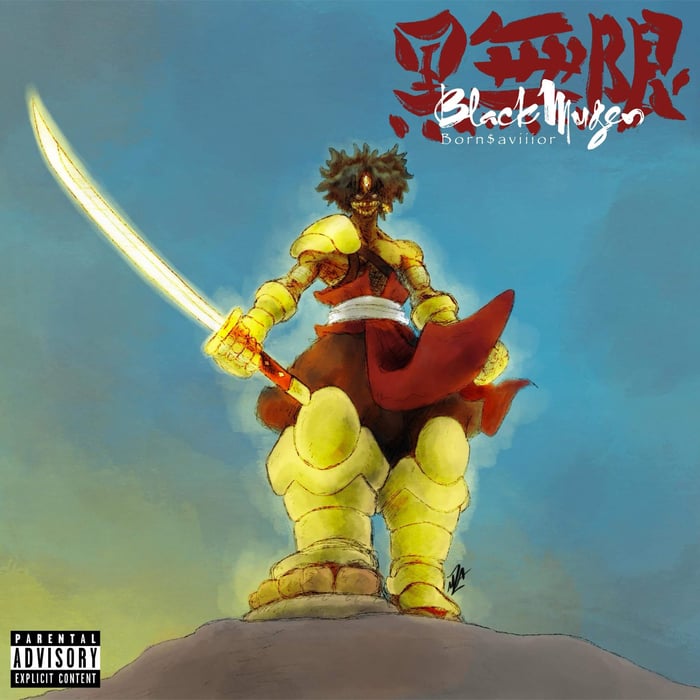
Born$aviiior Review: BlackMugen’s Holy War Is Also a Comic Book (Too Much?)


 See more Architeg Prints stories on Google.
Born$aviiior Review: BlackMugen’s Holy War Is Also a Comic Book (Too Much?)
Born$aviiior review of BlackMugen’s final Satan chapter—where Five Percent doctrine, anime mythos, and war-rap sermons fuse so cleanly it’s almost suspicious.
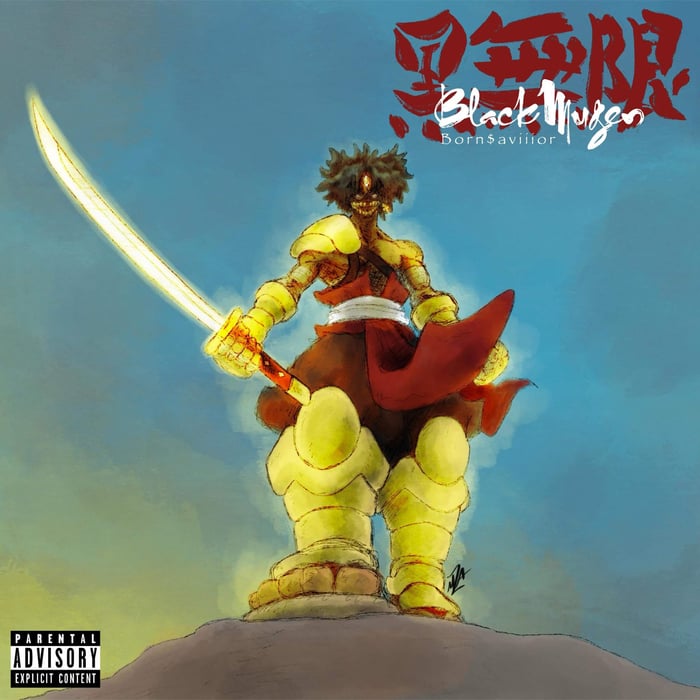
The First Thing You Notice: This Isn’t “Lore,” It’s Law
Some albums build a world. Born$aviiior doesn’t “build” anything—it declares. It shows up like a comic book logline stapled to a Sunday sermon and then acts surprised you’re not already standing for the reading.
BlackMugen moves inside the Black$hinobi Clan’s whole premise like it’s a natural element: Asiatic warriors trained in ninjutsu and ancestral power, sent to rescue the original people and tear down the Devil’s empire. And the album positions Mugen as the warrior training into the role of savior—specifically, the savior who’s there to finish the job on Satan. It’s framed as a final chapter, the last stretch of the battle, the prophecy tightening around his shoulders.
Here’s the part that’s honestly kind of wild: the mix of Five Percent doctrine / Nation of Islam ideas with anime and martial arts imagery doesn’t crack. You’d expect at least one awkward seam where the sermon stops and the cosplay starts. But no—dragon masks, hypertime chambers, “Mugen” as infinity—it all clicks into place like it’s been living together for years.
I’m not saying everybody will buy this worldview. I’m saying the album doesn’t care if you do.
“Art of War”: The Album’s Thesis Comes Out Swinging
The opening stance is physical: shinobi blade on the back, dragon mask on the face, bandaged hands and feet. “Art of War” isn’t introduced like a song—it’s introduced like a mission briefing after months of jungle training against lions, tigers, and bears with no weapons. And Mugen raps the way somebody talks when they’re done negotiating with reality.
There’s no “maybe,” no soft landing, no “I feel like.” He states everything like it’s already been proven in court.
The flex that stuck with me is the line about spotting flaws from “as far as ninety-three million miles away”—the Earth-to-sun distance—then flipping that scientific measurement right back into a personal boast in basically two breaths. That’s what he does all over this record: he’ll borrow the language of the physical world just to re-weaponize it into myth.
And he keeps circling back to the idea that’s basically the album’s moral bumper sticker:
it’s been a hell of a journey to get to heaven
“now” is the greatest gift
that’s why it’s called the present
The thing is, even when that line lands (and it does), the conclusion of the journey doesn’t actually change much. The war tracks keep returning to the same endpoint: Satan gets murdered, gods get unchained, the slave master gets dismantled piece by piece, and Mugen crowns himself savior again.
At first I found that single-mindedness kind of thrilling—like, okay, here’s an artist who refuses to blink. But later in the tracklist I caught myself thinking, yeah, I get it, you’re still winning the same battle. The sermon starts repeating itself, and repetition doesn’t automatically become power just because it’s loud.
“Da2ndComiiing” and the Samples: This Album Doesn’t Do Metaphor
“Da2ndComiiing” plays like a cipher orbiting the sun, and then it drops lines that make the album’s theology explicit: “Indigo child become son of man,” followed by “Hair like wool, skin the color of brass.” It leans into Revelation’s description of Christ to argue the original man was Black.
And the samples aren’t decorative. They do the same job the rapping does: instruction, not ambiance.
The title track “Born$aviiior” opens with a voice that basically tells you a Black man condemned by a white man is exactly the person you should move closer to. By the end, it’s traded the soft “love every man” Jesus for the Jesus who returns with a sword. That swap is the album in miniature: patience gets replaced with judgment, tenderness gets replaced with steel.
One of the strongest spoken-word moments closes “Da2ndComiiing,” reframing the “gangster” idea—less Italian blueprint, more community protection and wealth building. The old gangster dies, a new model is born. And here’s the key: Satan has an address on this album. Mugen doesn’t step out of character to wink and tell you it’s symbolic. If you’re waiting for that “it’s just art” release valve, you might be waiting forever.
I’ll admit I’m not 100% sure whether that commitment is bravery or just a refusal to self-edit—but either way, it’s the engine.
Guest Rappers Save the Runtime (And That’s Not an Insult)
There’s a long stretch of war raps here, and the smartest structural move is how often Mugen hands the blade to somebody else.
On “Diiiv(eye)neFlow,” SHERM STX and AREX come in and inject real motion into the album’s bloodstream. SHERM flips diamonds into the twelve jewels of life and drops the reminder: no weapon formed against the God ever prospers. AREX goes cosmic—so dense it almost leaves the planet—talking hyperbolic time chamber discipline while everybody else is copying and pasting. That verse doesn’t just “go hard.” It escapes.
“$upreme Massacre” is pure fight-scene wordplay: Arkatype and Mugen trading martial arts/fighting-game lines like they’re exchanging combos. “Blades in tissue,” “roundhouse to gristle,” and the calmly ridiculous “What’s Sun Tzu to a Shih Tzu?”—a line that shouldn’t work, but does, because the delivery treats it like scripture.
“Magiiic” gives deity V a whole verse to pull space imagery apart—stones from Orion’s belt, gravity, facts. It’s not subtle. It’s also not trying to be. The album likes its images oversized, like the only way to explain reality is to make it myth-shaped.
Then there’s Erick Purpose on “M(eye)nd of a Warriiior,” and he’s the one who stops being celestial for a minute and gets bluntly street-level: “Fuck police immunity; every cop is a cancer cell.” He also takes a swing at the “good vibes” religion—calling out positivity talk rooted in money and basically saying if you can’t see the problem, don’t talk to him.
That contrast matters. Without guest voices shifting the angle—spiritual math, cosmic combat, street fury—the album’s central sermon would start feeling like one long hallway with the same painting hung every ten feet.
Arguable take: the bench is so deep here that the features end up being the album’s pacing tool, not just its decoration.
“Hieroglyphics” (Six Minutes): When the Cipher Stops Moving
“Hieroglyphics” is the stamina test: six minutes, dense with guest verses, structured like a cipher where the sample doesn’t really change. The unity comes from variety—different voices, different textures—but the beat’s steadiness becomes a double-edged blade.
Mugen opens with the idea that his words are like hieroglyphics inscribed on pyramid walls, built by ancestors still living inside him. That’s a great mission statement: legacy as something internal, not academic.
TYMAY comes in with a racing, alliterative chain of internal rhyme—tight enough to snap shut. Lord Karu Villain delivers an elegiac street verse about chasing waterfalls “on the side where lonely Negroes reside,” then images of a dead pile of birds after a prayer, then wisdom for kids in the ghetto, then a question that hangs there: is he dropping a fable or a fact?
That uncertainty in his verse is interesting because the album overall doesn’t like uncertainty. It prefers decree. So when a guest leaves a question mark instead of a period, it feels like a crack of human air.
Still, six minutes on a sample that doesn’t evolve is where the formula starts showing. Ciphers are supposed to feel like time disappears; here, I noticed the clock. Not because the rapping is weak—because the beat refuses to change its facial expression.
The Sound Palette: Dark Space, Heavy Drums, No Seams
The production makes a specific choice and sticks to it: heavy, dark space with the light stripped out. Hard drums, low end thick enough to sit in your chest. And the sequencing hides its stitches—tracks slide into each other cleanly, like the whole album got sanded down until you couldn’t feel where one plank ends.
KiiiNG MZA’s fingerprints are all over the cohesion: writing, mixing, mastering, and a “no seams” approach even with multiple producers contributing. The practical effect is that the album feels like one long corridor of shadow—on purpose, not by accident.
But there are fringes of shading that stand out because the baseline is so dark:
- Still Do makes “Art of War” feel hard-wired, like it was built for combat
- eno-obong brings the clearest light on “Da$ource”
- and again provides brightness on “DaChosenOne”
Those brighter tracks don’t become “happy.” They become readable. Like somebody finally turned a lamp on in the dojo.
Arguable take: the album’s commitment to the same dark-space palette is either disciplined world-building or a refusal to take sonic risks—depending on how much you enjoy living in that same night sky for an hour.
“Da10thJewel”: The Love Song That Works Because It’s Still Wearing Armor
The softer moments matter more here because they’re rare, and because they don’t switch languages to become “normal.” On “Da10thJewel,” a murmured conversation evolves into a love song, but it keeps the celestial vernacular. It’s aimed at one singular entity—someone measured in energy and time, the queen of his cosmos.
There’s a line in there that feels like the record briefly stops fighting and starts teaching in a different key: true love starts with self; without that, you can’t love nobody else.
He calls himself a lover of lovers—Pac-style—then vows a kind of cartoonishly enormous forever: “infinity times ten to the seventy-six trillion power.” It’s excessive in that way this album likes: not to be funny, but to make devotion sound physically big.
And he frames it as addressed to a wife not yet arrived, which is honestly the boldest kind of romance: writing vows into the future like you’re carving them into stone before the house exists.
After so many demons get slaughtered across the tracklist, this is one of the only moments where he sets the sword down. It lands partly because it’s gentle, and partly because it’s still speaking the album’s same spiritual-combat dialect. It doesn’t feel like an intermission. It feels like the warrior refusing to become a machine.
The Real Reveal: Grief Was the Point of the Armor
For a record draped in dragon masks and blades, the thing that hits hardest is what the armor is hiding.
Grief is threaded through the album in small, blunt admissions. The blood is there. The kinfolk tension is there. On “M(eye)nd of a Warriiior,” Mugen drops a line that doesn’t need metaphors: he’s received more real love from strangers than his own kin.
By the end, the cosmic map narrows from mythic war to family tree.
“DaChosenOne” is where that narrowing becomes unavoidable. He lays out guides—Fred Hampton, Tupac, Nipsey Hussle, Huey Newton—like a pantheon of direction. Then he sets that pantheon aside for Susie, his great grandmother, thanking her for saving him during his lowest lows. He calls himself Susie’s grandbaby for life. And the track ends with her voicemail: an old woman checking in, asking about him, telling him to call back, saying “all this love and stuff.”
That voicemail reframes the whole album. All the ninja gear and prophecy talk starts to feel like a fortress built around a smaller, simpler thing: the kid who saved that message because he couldn’t afford to lose it.
I didn’t expect the record to end up there. On first listen, I took the lore at face value and mostly heard domination. On second pass, that voicemail made the domination feel like a coping strategy—like the war is real, but it’s also a way to survive what’s realer.
Where It Lands (And Where It Stumbles)
If you want neat takeaways, this album refuses. It wants conversion, not comprehension. The war sermon repeats itself enough that I sometimes wished Mugen would let doubt into the room—not to weaken the message, but to give it breath. The guests do that work occasionally, and the family voicemail does it in the most human way possible.
Still, the album pulls off a difficult trick: it merges doctrine, anime myth, and martial arts cinema into one unified language without winking. That’s a deliberate creative decision, and it mostly works.
And yes, I’m going to say it plainly: the album plays like it believes it’s telling the truth, not telling a story. Reasonable listeners can disagree with the worldview—and plenty will. But the conviction is the instrument here, and it’s played constantly.
Favorite tracks I kept coming back to
- “Art of War”
- “Diiiv(eye)neFlow”
- “DaChosenOne”
The overall effect? This feels like a “great” album in the sense that it accomplishes what it’s trying to do—whether you want to live inside its prophecy is a separate question.
Conclusion
Born$aviiior isn’t trying to impress you with range; it’s trying to pull you into a single hard reality where Satan is concrete, salvation is a job title, and love is measured in galaxies. The repetition can drag, sure—but the moments of brightness, the guest variety, and that final turn toward family make the record feel less like cosplay and more like armor with a bruise underneath.
Our verdict: People who like rap as doctrine—war-ready bars, mythic framing, and absolute conviction—will actually love this. If you need irony, tonal variety every three minutes, or a narrator who admits he might be wrong, you’ll bounce off it fast and call it “too much,” then go listen to something politely confused.
FAQ
- What is the core idea behind this Born$aviiior review?
It’s hearing the album as a committed final-chapter war sermon—one that uses anime/martial arts mythos to make its theology feel physical. - Does Born$aviiior lean more spiritual or more cinematic?
It refuses to choose. The point is that the sermon and the fight-scene imagery merge without an obvious seam. - Which track shows the album’s emotional core most clearly?
“DaChosenOne,” especially the ending voicemail, narrows the whole cosmic battle down to family and grief. - Are the features essential or just extra flavor?
Essential. The guest verses provide angle changes that keep the long run of war raps from collapsing into one repeated speech. - What’s the biggest drawback while listening?
The album’s steady palette and recurring sermon can start to feel repetitive—“Hieroglyphics” especially tests patience with a long, unchanging cipher bed.
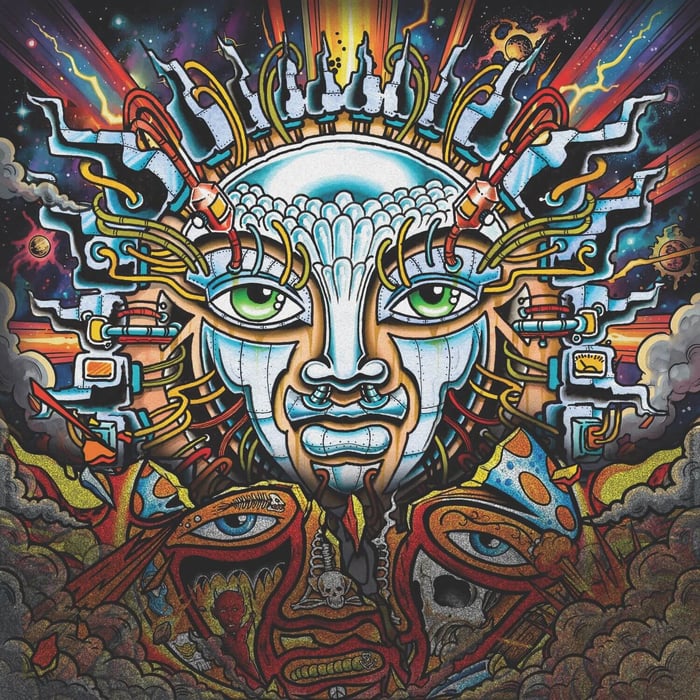
If this album’s imagery stuck in your head—dragon masks, prophecy, holy war logic—getting an album-cover poster that matches that vibe isn’t a bad way to keep the spell going. You can browse options at our shop: https://www.architeg-prints.com.
 | DISCOUNTGET 30% OFF*Use code on your next order:
|
* This post may contain affiliate links, meaning we earn a commission if you make a purchase through these links, at no additional cost to you.