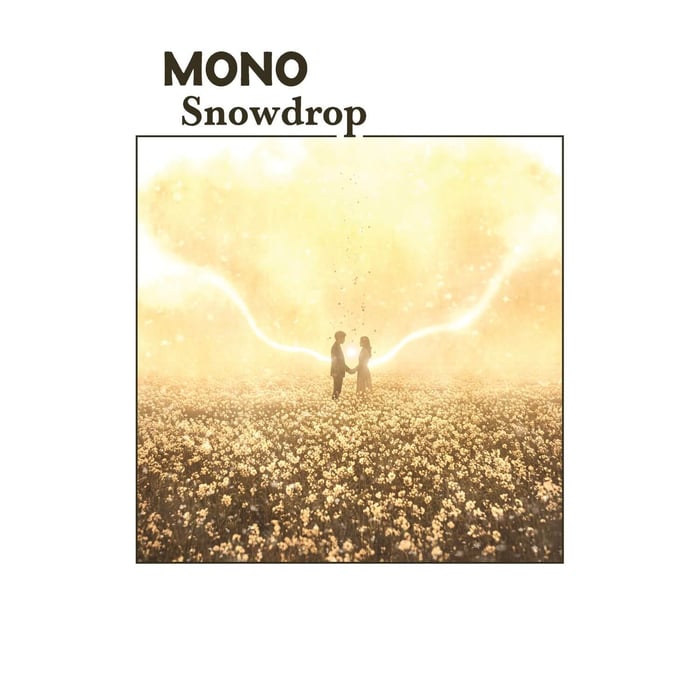
MONO Snowdrop Review: Grief, but Make It Weirdly Radiant (Seriously)


 See more Architeg Prints stories on Google.
MONO Snowdrop Review: Grief, but Make It Weirdly Radiant (Seriously)
MONO Snowdrop turns loss into bright, blooming post-rock—less funeral march, more stubborn life-force. It’s gorgeous, and a little too polished.
A record that stares at death and refuses to sulk
Post-rock has always been the genre that people reach for when words quit. Big arcs, slow-burn dynamics, mostly instrumental storytelling—perfect for emotions that don’t fit in a tidy verse-chorus box. And yeah, plenty of landmark records already proved that grief can be translated into volume, space, and patience. But MONO Snowdrop doesn’t just join that tradition—it side-eyes it and decides to do something harder: it mourns without turning itself into a mausoleum.
I put this on expecting the usual grayscale thunderclouds. What I got was closer to standing in cold sunlight—still chilly, still real, but undeniably lit.
The grief is real, the choices are deliberate
This album doesn’t feel like “inspired by loss” in a vague marketing way. It feels like a band trying to keep moving after a specific absence: the death of their close friend, longtime collaborator, and effectively a “fifth member,” producer Steve Albini. MONO had worked with him repeatedly across a huge stretch of their catalog, from Hymn To The Immortal Wind (2009) through Oath (2024), and you can hear what that kind of creative partnership does—how it becomes part of a band’s muscle memory.
What surprised me is how plainly the album seems to wrestle with the question: What are we without the person who helped shape our sound? I’m not going to pretend I can read their minds, but the sonic decisions here sound like a response to that exact panic.
They kept the setting familiar—Electrical Audio, the studio tied to those Albini sessions—and brought in Brad Wood (connected to artists like Smashing Pumpkins and Touché Amoré) to help steer the recording. That combination matters. You can feel MONO clinging to continuity while still admitting the room has changed.
And honestly? At first I thought that might make the album feel stuck in tribute mode—like a respectful reenactment. On second listen, it hit me differently: this isn’t reenactment, it’s a controlled burn.
An album about death that doesn’t cosplay misery
Here’s the main trick: Snowdrop is death-adjacent, but it’s not drenched in despair. The mood across these eight tracks leans toward reflection, celebration, and—this is the key—hope that doesn’t feel cheesy.
With one exception at the end, the tracks are named after flowers. That could’ve been precious. Instead it works like a quiet structural idea: life cycles, seasonal returns, beauty that’s fragile because it can’t be kept. It’s not subtle, but subtle isn’t the job here. Post-rock is basically the art of making emotional weather and letting you stand in it.
An arguable take: the flower naming isn’t decoration—it’s the album’s way of refusing “finality.” Every title is a reminder that endings still feed the next thing.
“Snowdrop” opens like spring testing the door
The title track starts small: a single guitar, a delicate plucked melody, soaked in shimmer and reverb. It lands like the first visible green after months of dull ground—tiny, almost hesitant. Then MONO does what MONO does: they layer.
But it doesn’t feel like the usual post-rock “build because build.” It feels like growth, like more instruments arriving the way light fills a room when clouds move. By the time it swells into something wider, it’s not a wall of sound so much as an entire field coming into focus.
I kept waiting for the cheap emotional jump-scare—the part where the band cranks the volume to force catharsis. It never really does that. The drama here is patient, which is arguably braver.
“Winter Daphne” flips the genre’s usual posture
Then “Winter Daphne” pulls a neat stunt: it’s post-rock in reverse. It opens with frantic urgency—cacophonous, jagged, like a nervous system firing all at once. And then it backs down into calm.
A reasonable listener could disagree, but I hear this track as MONO acting out the moment before acceptance: the rage at the dying light, the refusal to let the inevitable be inevitable. Then the music loosens its grip and exhales. Not because everything’s fine—because fighting forever is exhausting.
If there’s a mild criticism anywhere around here, it’s that the opening chaos feels almost too carefully arranged. Like: even their panic has good posture. It still works, but it made me wonder—briefly—if MONO can even sound messy unless they choose to.
The orchestra and choir don’t “add grandeur”—they add detail
This album brings in a 10-piece orchestra and an eight-piece choir, conducted by Chicago-based conductor Chad McCullough. That sounds like a recipe for melodrama. Somehow it isn’t.
The extra bodies in the room don’t just make things bigger—they make things more readable. The listening experience changes depending on what you focus on. One playthrough, you’ll hear the guitars carrying the emotional spine. Another time, you’ll get caught in the choral support, the way voices can turn a chord into something like belief. Another time, you’ll follow the strings like they’re tracing a second storyline beneath the main one.
An arguable take: the orchestra/choir isn’t there to impress you—it’s there to keep the album from collapsing into private grief. It turns the feeling outward, communal, almost ceremonial.
“Gerbera” is the album’s most stubbornly hopeful moment
If one track insists on forward motion, it’s “Gerbera.” It’s not “happy,” exactly. It’s more like determined. Marching-band-style drums guide the whole thing, giving the music a spine. Over that, MONO stacks soaring melodies and folds in those choral vocals until the track feels less like mourning and more like someone choosing to keep living out of sheer principle.
This is where I revised my first impression the most. Early on, I assumed the record would lean heavy into elegy—the kind of sadness you admire from a distance. “Gerbera” doesn’t let you stay distant. It’s too upright. Too human.
And yes, that can be an uncomfortable listen if you came here to wallow. MONO isn’t offering that.
“Bells Of Ireland” arrives on vinyl crackle like a memory you didn’t invite
The crackle of old vinyl ushers in “Bells Of Ireland,” and it instantly changes the air in the room. It’s haunting without trying to be “spooky.” The piece centers on a simple grand piano melody, framed by a soaring string quartet and chiming bells.
Every bell ring is the kind of sound that makes your shoulders tense a little—because it’s beautiful, but it also feels like time passing in an audible way. The track doesn’t rush to resolve that tension. It just lets the sound hang there, like standing still in a place you can’t return to.
I’ll admit some uncertainty here: I can’t tell if the vinyl crackle is meant to evoke nostalgia specifically, or if it’s simply a texture choice to make the track feel physically “held,” like an artifact. Either way, it works because it doesn’t over-explain itself.
“Farewell To Spring” says goodbye with wet eyes and a steady voice
The album closes with “Farewell To Spring,” and it lands like a goodbye that’s painful precisely because it isn’t dramatic. It’s tearful, sure—but it’s smiling through it. There’s love in it, not despair.
This is where the entire ensemble feels like it’s speaking at once: guitars, drums, orchestral voices, choral presence—everything singing in harmony, with complementary melodies weaving in and out like overlapping memories. It doesn’t end with a collapse. It fades gently, then signs off with a flourish, like someone putting a hand on your shoulder and meaning it.
An arguable take: this closer refuses the “post-rock apocalypse” ending on purpose. It chooses grace over devastation, and that choice is the album’s whole thesis.
Where this sits in MONO’s catalog (and why it’ll stick)
MONO’s back catalog is deep enough that calling any single release “important” risks sounding like fan-talk. Still, MONO Snowdrop feels like it will be held up as one of their key records in the long run—not because it’s the loudest or the saddest, but because it’s unusually clear-eyed.
It’s also one of the most beautiful ~45-minute statements they’ve put to tape—beauty as in carefully shaped, deliberately paced, and unafraid of softness. In a genre that sometimes confuses heaviness with truth, this record makes a different argument: tenderness can be the sharper instrument.
One more mild complaint, just to keep us honest: there are moments where the elegance is so complete that I almost wanted one truly ugly sound—one scrape, one interruption—to prove the grief was still raw. But maybe that’s my problem, not theirs. MONO seems to be saying rawness isn’t the only valid form of mourning.
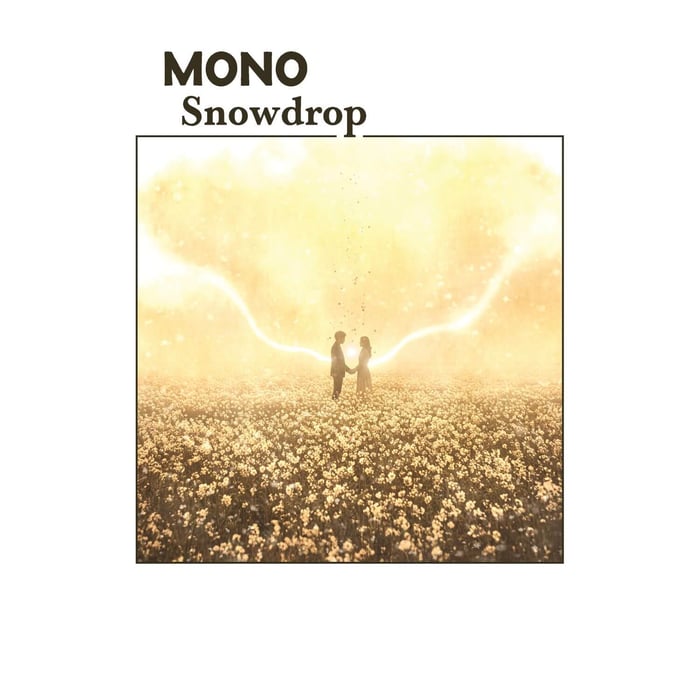
Album artwork
Release note
Snowdrop is out now via Temporary Residence Ltd.
Conclusion
MONO Snowdrop doesn’t dramatize death—it metabolizes it. Track by track, it trades misery for memory, panic for acceptance, and loud catharsis for something harder: continuing. It’s an album that keeps finding light without pretending the dark wasn’t real.
Our verdict: If you like post-rock that actually moves—not just builds—this will hit you right in the chest. If you prefer your grief served as a grey tsunami of volume, you might find Snowdrop “too hopeful,” which is a very funny complaint to make about an album born from loss.
FAQ
- Is MONO Snowdrop a sad album?
It’s grief-informed, but it doesn’t wallow. The dominant feeling is reflection with a stubborn streak of hope. - What stands out most on MONO Snowdrop?
The way the orchestra and choir add detail rather than just “epic size,” especially when the melodies start weaving together late in the record. - Which track feels most uplifting?
“Gerbera” is the clearest surge of forward motion—marching drums, soaring lines, and choral support that feels earned. - Does the album rely on big post-rock climaxes?
Less than you’d expect. It grows and swells, but it often chooses restraint over blowout. - What’s the emotional closer like?
“Farewell To Spring” feels like a goodbye said with love—tearful, warm, and resolved without being fake-happy.
If this record stuck with you visually as much as it did sonically, you can always grab a favorite album cover poster over at our store: https://www.architeg-prints.com — it’s a nice way to keep the mood on the wall without replaying your feelings at full volume.
 | DISCOUNTGET 30% OFF*Use code on your next order:
|
* This post may contain affiliate links, meaning we earn a commission if you make a purchase through these links, at no additional cost to you.