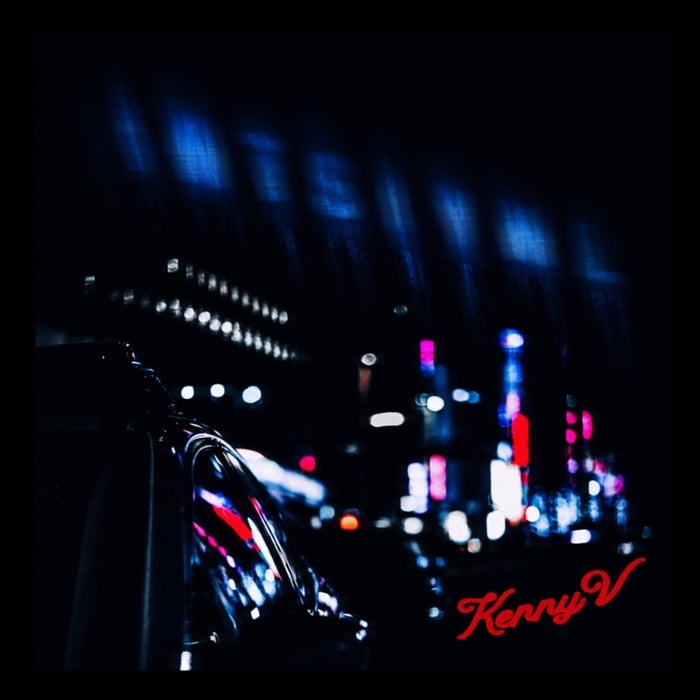
KennyV Album Review: Serengeti’s Livestream Grandpa Won’t Log Off


 See more Architeg Prints stories on Google.
Album Review: KennyV by Serengeti
Serengeti’s KennyV album turns midlife drip and dead love into a comment section spiral—funny, bleak, and way too familiar.
If you put KennyV album on expecting “songs,” you’ll keep tripping over the real point: this thing is staged like a livestream that won’t end, even when it should. It’s not trying to impress you. It’s trying to trap you in Kenny Dennis’ brain while the chat scrolls by and his life keeps buffering.
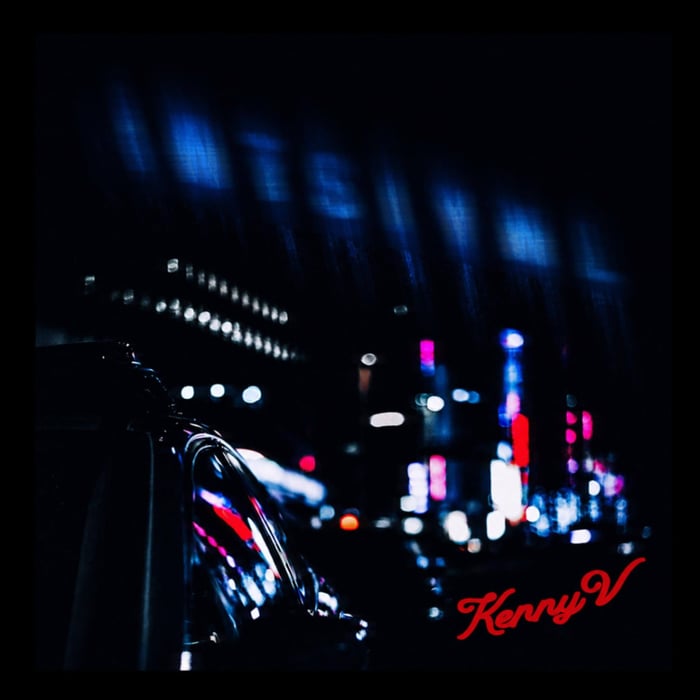
Kenny Dennis—sixty-something, South Side Chicago, deep-fried at the edges—is the kind of guy who treats sports loyalty like religion (Bears, not Cubs) and treats outfits like an emergency. He’s married to Elaine, steady and practical, and he’s obsessed with Jueles, the woman who “died” in a plane crash in ’93… except in this album’s world she strolls right back in, like grief decided to try on a new skin.
Serengeti raps as Kenny with a nasal bluntness that’s less “performance” and more “guy talking at his phone while walking to the freezer aisle.” The rhyme patterns don’t glide; they clench. His thoughts derail, then lock back into place like a deadbolt. It’s intentionally awkward—like he wants you to feel the friction of a man trying to narrate his own life while strangers grade him in real time.
And I’ll admit it: at first I thought the livestream framing was going to be a gimmick. A couple tracks in, it stopped feeling like a clever wrapper and started feeling like the actual cage.
“STINGER”: The Moment the Album Stops Being a Joke
Here’s the pivot: “STINGER” plays like one long verse where Kenny is driving along Lake Shore Drive and arguing with his own memory. The song doesn’t “develop”—it accumulates. Elaine shows up in the details, not the big declarations. She’s the one hauling grocery bags, building him what he calls “a whole cathedral out of coupons and some space.” That line hits because it’s not poetic on purpose. It’s what a guy says when he can’t quite admit he’s been carried.
He describes her devotion with the least romantic metaphor possible—“No fireworks… more like heating vents.” That’s Kenny in a nutshell: he can only recognize love when it looks like utilities.
Then Jueles enters, and the whole album starts behaving differently. She returns at a Portillo’s counter thirty years after the plane crash she supposedly died in… and Kenny nearly drops his chili cheese. The chat can tell he’s slipping. He can tell the chat can tell. He imagines them typing that he’s “done crashing out,” and that’s one of the nastier truths here: even his shame is filtered through how it will play online.
He still takes Jueles with him. Of course he does. He second-guesses it immediately, like a guy watching himself make the wrong decision but refusing to grab the steering wheel. There’s a winter Grand Prix, Jueles asleep with her hand on his chest, and Kenny’s mind narrating every ounce of doubt.
Later, the song drifts into a grocery store scene that shouldn’t be devastating but is: Kenny stands stunned in the freezer aisle holding “banquet Salisbury steak like a rotary phone.” That’s the album’s signature move—taking something cheap and normal and making it feel like a relic you don’t know how to use anymore.
By the time he’s back at Portillo’s downtown, watching Jueles move slowly through fluorescent lunch-rush light, his knees buckle. Not metaphorically. The song makes it physical. That’s why it works: the comedy never fully leaves, but it stops protecting him.
A reasonable listener could argue “STINGER” is too long, too unstructured, too mumbly in its focus. I get it. I also think that’s the point—Kenny can’t edit himself, so the song refuses to.
“ELAINE LOVES MOVIES”: Love as a Literacy Test
From there, the album slides into one of its sharper contrasts: “ELAINE LOVES MOVIES.” Elaine isn’t just “the wife.” She’s a different brain. She quotes Tarkovsky while Kenny quotes Bo Jackson stats. She watches an explosion and calls it “a symbol for pain.” She sees wallpaper and calls it “emotional decay.” She’ll hold onto letterboxing “longer than CVS receipts,” while Kenny sits there eating M&Ms and waiting for mobsters in suits like the plot owes him something.
The cruel part is that Kenny wants to understand. Watching with her makes him feel smart for a second—then dumb again when he realizes he missed the point. That loop is the song: brief confidence, immediate humiliation, repeat.
He rides the brown line in New Balance at 10 a.m. reading essays, like he’s cramming for a relationship he already failed. And yeah, you could say Kenny’s framing of Elaine is self-serving—he makes her a kind of cultured saint so his own cluelessness looks almost charming. But the track doesn’t let him off easy. His insecurity is the loudest thing in the room.
That insecurity spills into the “DEGREES TO PEOPLE” hook, where the longing gets raw and repetitive, like he’s worrying a sore tooth with his tongue. He wonders if Elaine’s still single. He wonders if he’ll ever understand an Orson Welles shot the way she can. By the time the hook ends, the pain isn’t a thought anymore—it’s a thing chasing him down the street.
If there’s a flaw here, it’s that Kenny’s emotional vocabulary sometimes feels intentionally limited to the point of frustration. I kept waiting for him to say one clean honest sentence without dressing it up in brands, sports, or snacks. He mostly can’t. That’s consistent. It’s also, occasionally, exhausting.
“TACO BELL RACING JACKET”: Building a Personality Out of Stuff
“TACO BELL RACING JACKET” is Kenny doing what he does best: assembling a self out of objects.
He lists:
- a necklace that’s “not real gold, but spiritually expensive”
- a “Casio calculator worn by a real nerd”
- Oakley shades
- New Balance 990s he wears like they’re his own walk of fame
- and that title jacket, patched up like a résumé you can wear
The pile becomes evidence. Then it becomes identity. He starts insisting, “I’m him, I’m him,” like saying it enough times will seal the cracks.
Halfway through, the song swerves into advice from Earl Lane: Stallone wrote First Blood; Rocky arrived when he had his last dollar; he was about to give up and start boxing training. The lesson isn’t “dream big.” It’s colder than that.
Earl tells him, basically: just because you tried doesn’t mean you get the top. Sometimes you calm down, grab a bucket and mop, and go to work. Every patch on the jacket starts to feel like a year Kenny persisted while the Oscar went somewhere else.
You can disagree with the takeaway—maybe it’s too bootstrappy, too “shut up and grind.” But inside Kenny’s world, it lands as a kind of mercy. He’s not built for transcendence. He’s built for showing up.
“YO CHAT!” and “W CHAT GANG”: The Audience Isn’t Your Friend
Then the album leans hard into the streamer bit. “YO CHAT!” opens on a “lookin’ grainy” feed, Kenny bragging his drip is “so advanced, it concern the youth.” He’s fielding a DM from Shaq—“Boom, let’s lock in”—and signing off with “No cap, no rap, in peace to Bob Saget.” It’s funny, sure, but it’s funny in the way a man jokes while bleeding.
“I got drip from grief, style from pain.”
He plays his neediness for laughs, then slips in the line that explains the whole aesthetic: “I got drip from grief, style from pain.” That’s not a slogan. That’s a coping mechanism turned into an outfit.
On “W CHAT GANG,” the chat turns from audience to judge and jury. Jueles comes home with “two shopping bags of limited edition Dior,” sees this sixty-something man camping overnight for collabs, and asks the question the album has been dodging: “Kenny, you’re sixties, why you dressin’ like this.” She calls it pathetic while chat types “W fit.”
That’s the sickness in one snapshot: the person in the room is disgusted; the crowd behind the glass is applauding.
Elaine, in Kenny’s memory, reacted the opposite way. She’d smile from the kitchen door and call him cute—not “cute” like trendy, but warm. She’d photograph him like a movie star even in a tiger-print beret. One person loved him. Everyone else just likes the clothes.
If you think the album is secretly celebrating influencer culture, I don’t hear that at all. I hear a guy shrinking himself into content because content doesn’t leave you.
“HEY CHAT,” “LSD SUNSET”: Fame Gets Smaller Every Year
“HEY CHAT” is Kenny talking about the unfamous—the guys who almost mattered. He paints an ‘80s Chicago full of third-string linebackers and bullpen relievers with mustaches and divorce energy. There’s a Bears punt returner whose name Kenny can’t remember, but he remembers the guy called appetizers “snack trays.” There’s a Benny the Bull who moved like he knew where hidden money was.
Kenny remembers meeting a benchwarmer Bull in Ventura—seekh kebabs, toaster oven—and says it changed his whole understanding of fame. That’s a wild claim, but I buy it. Because the album’s point is that “fame” used to be something you could bump into at a gas station without needing a camera crew.
“LSD SUNSET” says the quiet part: now everything’s curated. People are “living through the playback.” Kenny describes the same Chicago seam from a hazier angle—lemon ice at the Taste near Buckingham Fountain, an animatronic gorilla at a 2003 Rainforest Cafe startling kids, Harry Caray’s final game at Wrigley. Then the perfect modern image: a foul ball flies and a hundred phones catch it on tiny screens, not in midair.
That’s not nostalgia for nostalgia’s sake. It’s Kenny noticing the world stopped having moments and started having receipts.
“KENNY CONSPIRE”: Paranoia as a Side Effect of Streaming
“KENNY CONSPIRE” is what happens at 3 a.m. when your brain keeps scrolling even after your thumb stops moving. Kenny’s at pump three at 79th, watching a guy eat sunflower seeds in front of ten duplicate newscasters all saying “believe me.” The repetition is the horror.
He insists one president “died in a way that don’t stay dead,” like death is just a software state. People get “updated overnight like an app,” and nobody consented to the update. A grandmother’s FaceTime voice returns too clean, too fast, as if it was already cached.
“America forgot ‘how to render sadness in low resolution.’”
Kenny says America forgot “how to render sadness in low resolution.” That line doesn’t need explaining, but I’ll say what it does to me: it makes grief feel like an old home video—imperfect, human, and therefore believable. Kenny doesn’t trust anything crisp.
He decides his smoke alarm is chirping out of spite. He wonders if fireworks are drones signaling a blank event. It sounds ridiculous because it is ridiculous. It also sounds like a man whose nervous system has been trained by screens to expect manipulation.
If you think this is just comedy-rap paranoia, listen again. The track isn’t trying to convince you the conspiracy is true. It’s trying to show you what it feels like to live in a world where nothing feels verifiable—not even your own sadness.
“IWTSIYWL” and “STILL HIM”: The Poll Doesn’t Save You
“IWTSIYWL” puts Jueles in the rental car, both hands on the wheel, while the stream runs live polling like this is a game show. Fifty-two percent vote “return to Elaine.” Someone comments “Elaine deserve better,” racks up 1,000 likes, and the mods can’t remove it fast enough. That detail is nasty because it’s accurate: morality becomes engagement, and engagement becomes law.
Rhino has passed away, and Kenny admits he misses Elaine “already” even though he left her for the woman sitting next to him. He can’t even commit to the fantasy without grief leaking through the seams.
Then “STILL HIM” shows Kenny insisting he hasn’t changed, while his friends appear as a stream of names: Bloodsport (the Oakbrook gym), Die Hard (the Jewel), Slayer t-shirts, Chrome Hearts jeans, plus friends who have died. The words start blending together until the connection drops.
That’s the album’s bleakest trick: identity reduced to a list, then the list dissolves, then you’re left staring at a glowing phone under a Budweiser sign on West Jennings past midnight. Simple. Flat. No grand speech. Just disconnection as the ending texture.
I’m not totally sure the final stretch lands for everyone—the emotional collapse is so understated it risks feeling like the album just… stops. But on second listen, that “stopping” felt like the actual statement. Livestreams don’t end with closure. They end when the battery dies.
Highlights I Keep Coming Back To
I’m not doing “best songs” like this is a scoreboard, but these are the moments that keep reloading in my head:
- “STINGER” for the Lake Shore Drive memory battle and that freezer-aisle rotary-phone image
- “KENNY CONSPIRE” for turning media-sickness into something you can actually feel in your chest
- “LSD SUNSET” for the phones-catching-the-foul-ball detail that quietly ruins your day
Conclusion: Kenny’s Real Romance Is the Chat Window
KennyV album isn’t asking you to like Kenny Dennis. It’s asking you to recognize him—the part of him that performs, the part of him that longs, the part of him that confuses attention for affection and calls it “community.” The livestream format isn’t a cute framing device; it’s the knife. Kenny keeps talking because silence would force him to pick a life. And picking a life would mean admitting what he already did to Elaine.
Our verdict: People who like character-driven rap that treats modern life like a psychological hazard will eat this up. If you need big hooks, clean catharsis, and tidy endings, you’re going to feel like Kenny is rambling at you from the next pump over—and you’ll walk inside for snacks just to escape.
FAQ
- What is the KennyV album actually about?
It’s about Kenny Dennis trying to narrate his own mess in real time while the chat judges him, and grief keeps hijacking the stream. - Is Kenny Dennis meant to be likable?
Not consistently. He’s charming in flashes, pathetic in others, and the album seems very aware that “drip” is his shield. - Do I need to know Serengeti’s other work to follow it?
No. The album gives you Kenny’s world immediately: Elaine, Jueles, the chat, and his obsession with being seen. - What’s the deal with Elaine vs. Jueles?
Elaine is grounded devotion—rent change, coupons, warmth. Jueles is weightless and unreal, like fantasy returning to wreck his routine. - Is the livestream angle just a gimmick?
I thought it was at first, but it turns into the main pressure of the album: everything becomes content, even regret.
If this album put a specific image in your head—Kenny under fluorescent lights, or that phone-glow loneliness—an album-cover poster kind of fits the mood. You can browse a few options at our store here: https://www.architeg-prints.com
 | DISCOUNTGET 30% OFF*Use code on your next order:
|
* This post may contain affiliate links, meaning we earn a commission if you make a purchase through these links, at no additional cost to you.