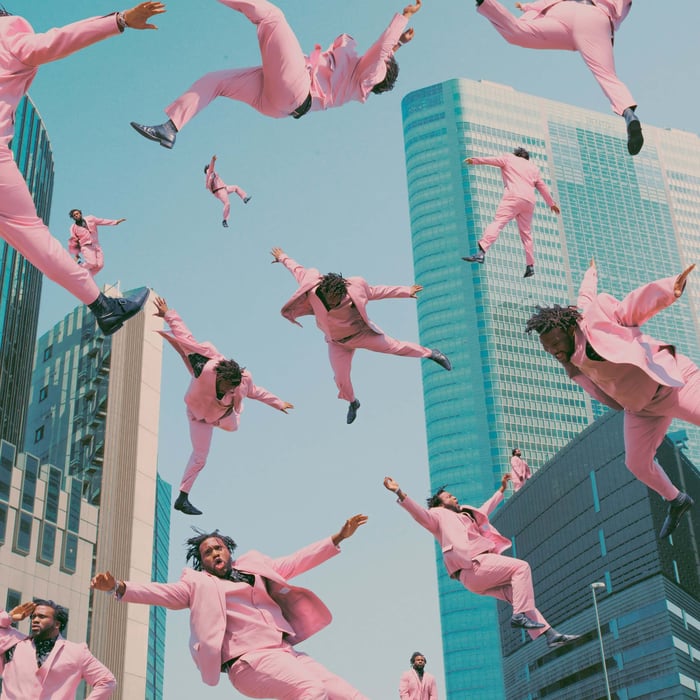
SAKURA Album Review: Devin Morrison’s Love Spiral Is Weirdly Funny


 See more Architeg Prints stories on Google.
SAKURA Album Review: Devin Morrison’s Love Spiral Is Weirdly Funny
SAKURA album feels like romance written by someone scared of wanting anything—sweet on purpose, darker by accident, and oddly hilarious when it panics.
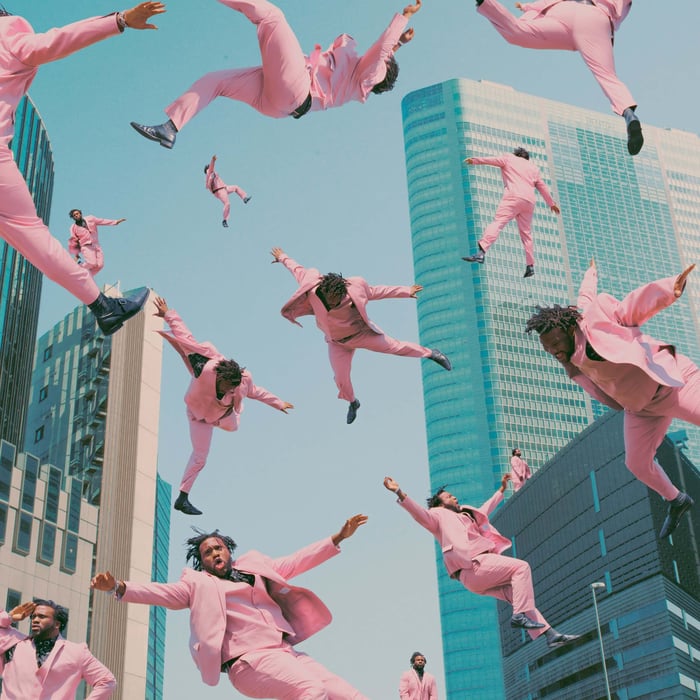
The thing SAKURA album “pretends” to be—and what it actually is
Some albums want you to fall in love. SAKURA album wants to show you what a person does right before they let themselves fall in love—how they stall, joke, flinch, and then act shocked when gravity works.
Listening to Devin Morrison here, I hear someone who’s been building a private language for a long time: nostalgia-warped R&B that borrows its emotional grammar from anime and fighting games as casually as it borrows harmony from classic soul. He doesn’t stop to explain any of it, which is the point. The whole Dreamsoul thing—name, method, vibe—feels like it was coined before anybody asked for a mission statement, and honestly? Good. The music moves like it doesn’t want permission.
At first I thought the sweetness was just sweetness. On second listen, it’s obvious he’s using sugar the way some people use a laugh track—covering the quiet horror of wanting something real.
First, he chooses the fall: “FEAR OF HEIGHTS” into “MY LOVE”
Here’s the album’s first big move: it steps off the ledge.
On “FEAR OF HEIGHTS,” a woman tries to warn him, and he basically shrugs at the concept of safety. He sings like a guy who knows he isn’t built for flight and also refuses to stop climbing. The chorus lands like a deadpan list of what’s waiting at the bottom—facts, not feelings. Even the idea that “two people dying together” should be enough to stop the madness gets delivered with this strange plainness, like he’s reading terms and conditions.
And then the outro flashes the real wish: not “let’s be careful,” but “let’s get superpowers.” Immunity. Forever-love. No consequences. It’s a little funny, sure, but it’s also the exact fantasy you’d expect from someone terrified of normal stakes. He wants invincibility because normal love requires you to be breakable.
“MY LOVE” feels like the impact—except it’s a survivable landing. The fall doesn’t stop, but it becomes livable. The line between flying and falling blurs, and that’s the first time he sounds even slightly okay with uncertainty. Paris Strother’s backing vocals show up like an idealized version of the woman in his head—the kind of person Morrison wants: someone who doesn’t even realize they’re capable of loving him. That’s a telling fantasy, by the way. He’s not chasing confidence; he’s chasing unaware power.
Panic dressed as comedy: “AMOR,” “KAZUYA,” and “JAGUAR”
The love on SAKURA album doesn’t arrive like a warm hug. It arrives like a fist to the sternum. Morrison’s reflex is to laugh and keep moving—until the laugh stops working.
On “AMOR,” he’s writing poems in bed, holding onto her words like they’ve been etched into his skin. And you can hear the embarrassment under it, the fear that she’ll clock him as weird. He tries to self-medicate the feeling with witchcraft (which is such a specific kind of desperation) and then blurts out something close to a plea: I think I need therapy. It’s not framed like a grand confessional. It’s more like a guy saying it in the kitchen because the room got too quiet.
Then “KAZUYA” turns jealousy into a cartoon threat—he drunkenly impersonates a Tekken character, talking like he’s ready to fight anybody who gets too close. It’s performative intimidation, and it almost convinces you… until it doesn’t. Cube’s vocal presence in the hook eggs the violence on, but the track keeps betraying itself. The post-chorus interrupts the tough-guy act with the actual desire: he just wanted the person he thinks loves him to call him. That’s the whole thing. All that macho theater, just to avoid admitting he wants reassurance.
“JAGUAR” hits a similar nerve in a different outfit: a drunken road trip, a wild woman in the passenger seat, and Morrison quietly muttering don’t wanna lose control like the phrase might work as a protective charm. It doesn’t. If anything, repeating it exposes how close he already is to losing it. That’s the trick he keeps pulling—saying the fear out loud, hoping naming it makes it smaller.
Tokyo residue: desire in mixed languages, mixed motives
You can hear the Tokyo years in how casually he moves between cultural references and languages—not as a “concept,” but as a normal part of how he wants things.
“GIRL” wraps itself in Brazilian baile-funk textures, like Morrison is hosting a party—his own “Baile da Dreams”—and tossing out a Florida-Brazil name-check over the beat. But the English under it can barely do anything except repeat the same confession: I forget the names of all the other girls. It’s desire without follow-through, lust that never bothers to become a plan. A reasonable listener might call that shallow, but I think it’s intentional: the song doesn’t “develop” because he doesn’t want it to. Commitment is the monster in the closet, so he leaves the light off.
“OISHISOU” (Japanese for “looks delicious”) takes the food metaphor way past where most songs would stop—straight through the expiration date—until it becomes blunt: post-church Sunday lunch turns into I really wanna eat you. No shame, no coyness. Joyce Wrice jumps in and answers in Japanese too, saying he’s making her blush and flush with desire. She even mirrors the idea—I savored every bit—which makes the track feel like a rare moment where the flirtation isn’t one-sided fantasy. Then Morrison drops a remark about Florida boys and appetite and suddenly the whole thing snaps back to the US like a rubber band.
If there’s a “favorite track” argument to be made from the album itself, “OISHISOU” makes the strongest case: it’s the point where his jokes actually land and his desire sounds mutual.
Letting guests talk changes the power dynamic—and he knows it
A lot of artists add features as decoration. Morrison uses features as pressure. When someone else enters, his persona has to deal with another will in the room—and he keeps losing control of the narrative.
On “SHE DON’T,” he’s courtly and aching: leaving a gift on her doorstep, getting silence back, wondering when he got demoted to second place. It’s that specific kind of loneliness where you feel pathetic for even keeping score. Then Foggieraw slides in and treats the pain like it belongs to somebody else. He’s bragging—Chevys, Rapunzel hair—and even drops a number joke (“I can’t be less than two”) like none of this emotional mess can touch him.
And here’s my mild criticism: that pivot is almost too effective. Foggieraw’s unfazed swagger can make Morrison’s tenderness feel small for a second, like the song accidentally proves the wrong point. I don’t hate it, but it does tilt the balance.
“ZODIAC SINE” takes the idea further. It starts with a zodiac pick-up line and then slowly drowns. Morrison sounds like he’s consenting to being pulled under—like the flirtation is an invitation to disappear. Then Seafood Sam arrives and goes where Morrison won’t: praying for the moment to be right, sliding a ring onto her finger, asking her to leave a scar on my chest. He even shouts out Ron Artest while swinging for what’s his, framing love like a cost—something “we pay.” Morrison’s version of romance is often passive-aggressive, but this feature forces a different posture: direct, risky, almost reckless.
“FALLEN SOLDIER” makes the breakup a battlefield—and it actually stings
“FALLEN SOLDIER” casts a breakup as war, and Morrison plays the dead soldier—specifically the one nobody bothered to finish off. That detail matters. It’s not just heartbreak; it’s abandonment with loose ends.
He interrogates himself after the fact: what was he even fighting for? What did the rules of the game have to do with him? And the images pile up fast—cut rope, collapsed levee—like trauma stacking before he’s had time to label the first wound. He even questions whether that first love was love at all, which is a brutal kind of doubt: if the origin story is fuzzy, what does that say about every choice after?
Rae Khalil comes in and plants her feet on solid ground. Her verse is clean, almost emotionless—money settled, breakup reframed as an escape she earned. And then she ends on the phrase Morrison can’t outrun: I don’t wanna fall. It’s the same fear as “FEAR OF HEIGHTS,” but here it’s not a stunt; it’s a survival instinct.
The longest descent: “TULIPS & ROSES” and the apology stuck in his throat
This is where SAKURA album stops being cute about its own impulses.
“TULIPS & ROSES” starts in a cartoon. Morrison is wallowing in a Super Mario-level infatuation, acting like he’s chasing some Princess Peach character who’s in love with a Princess Daisy. He presents a bouquet he claims he hand-picked and de-thorned because he’s worried about her fingers—an almost absurd level of careful devotion, like romance as a crafting mini-game.
And then he walks in on her with someone else.
The sweetness drains fast. He starts talking about grabbing a knife—not in a flashy horror-movie way, but in a practical way: cutting ties. He repeats that it’s not his fault, that he didn’t do it, while dead flowers keep showing up as the symbol. It’s not subtle, and it doesn’t need to be. The track is the sound of someone trying to rewrite the scene in real time so they don’t have to feel humiliation.
At the end, he spirals into a solo diatribe that sounds like the worst phone call advice you could give yourself: find that number, call it up, and ask if she likes tulips… what about roses? It’s pathetic and human and a little frightening because you can hear him trying to regain control with manners.
Then the album places “SUMIMASEN” right after: a wordless instrumental string piece titled with a Japanese word that means “excuse me” or “sorry.” No lyrics, just the apology he can’t say after the knife has already done its work. That sequencing feels deliberate: the violence is the action; the strings are the conscience arriving late.
Uncertainty isn’t a theme here—it’s the actual narrator
For all the posturing, Morrison spends an impressive amount of this album unsure of himself. That might be the most honest thing about it.
“COULD IT BE?” stretches doubt into an extended episode: vacillating, second-guessing, replaying a bungled move and a failed conversation until the rationalization becomes its own cage—maybe it feels better to say I forgot. That’s not a line from someone confident. That’s someone trying to sand down the edge of a mistake until it doesn’t cut anymore.
On “PURPLE ABYSS,” he shoves the doubt into a third-person persona—watching an alternate self collapse under the weight of “the pain he’s caused.” The distance is the defense. It ends with him on his knees, pleading for no more harm, which is a wild place to land if you started the album joking about dying together at the bottom of a fall.
And then “LET IT HAPPEN” pulls the camera back. SUMIN urges patience, and a stray Korean lyric pops up like a small sign on the road: guidance that the move is simple—just let it happen. No magic ray appears. No flight. No cheat code. The closest Morrison gets to “powers and invincibility” is accepting he can’t control the drop.
I’ll admit it: I’m not totally sure whether the album thinks that’s growth or resignation. Maybe it’s both. Either way, it’s the first time the record stops trying to be clever and just exhales.
Where I land with it (and yes, it shifted after a replay)
I walked into SAKURA album expecting playful, nostalgia-laced R&B with some anime seasoning. That’s there, but it isn’t the point. The point is a guy turning fear into punchlines until the punchlines start sounding like cries for help.
The album’s romance “expands” because Morrison finally gives his own contradictions enough room: wanting devotion while avoiding need, chasing invincibility while begging not to fall, acting tough while secretly just wanting a phone call. The comedy is real, but it’s not decoration—it’s the armor. And when the armor cracks (especially on “TULIPS & ROSES” and “FALLEN SOLDIER”), the record gets sharper.
If I have one lingering complaint, it’s that some of the character voices can blur together when he stays in the same anxious register too long. But the sequencing and features usually yank the story back into focus before it turns into mush.
Conclusion
SAKURA album doesn’t sell romance as salvation. It sells romance as exposure—sometimes sexy, sometimes ridiculous, sometimes legitimately unsettling—and it keeps showing the same truth from different angles: Morrison isn’t afraid of love, he’s afraid of what he’ll do because of love.
Our verdict: People who like R&B that jokes while it bleeds will latch onto this fast—especially if you enjoy anime/fighting-game melodrama repurposed as emotional shorthand. If you need your love songs straightforward, clean, and noble, this one will annoy you; Morrison spends way too long arguing with himself, and he’s not interested in providing a calm resolution. Consider it a messy, charming panic attack with good harmonies.
FAQ
- What’s the core vibe of SAKURA album?
Sweet-sounding R&B used as camouflage for fear, jealousy, and commitment panic. - Is SAKURA album more funny or more dark?
Both, and that’s the trick—the humor often is the darkness, just wearing cologne. - Which tracks best show the album’s range?
“OISHISOU” (flirtation pushed to absurd clarity), “FALLEN SOLDIER” (breakup-as-war), and “TULIPS & ROSES” (cartoon crush turning sour). - Do the features matter, or are they just extras?
They matter. Guests like Joyce Wrice, Rae Khalil, Seafood Sam, and others change the emotional balance and force Morrison’s persona to react. - Is this album about “healing”?
Not really. It’s more like watching someone stop pretending they’re immune to falling—progress, sure, but not a tidy self-help arc.
If this album’s artwork is stuck in your head the way its spirals are, you can grab an album-cover poster that fits the mood over at our store: https://www.architeg-prints.com
 | DISCOUNTGET 30% OFF*Use code on your next order:
|
* This post may contain affiliate links, meaning we earn a commission if you make a purchase through these links, at no additional cost to you.