My Broken Odds Review: BabyChiefDoit’s Teen Superhero Complex (Oops)


 See more Architeg Prints stories on Google.
My Broken Odds Review: BabyChiefDoit’s Teen Superhero Complex (Oops)
My Broken Odds isn’t a victory lap—it’s a 16-year-old building a myth while you can still hear the kid breathing inside it.
A superhero origin story, but the mask keeps slipping
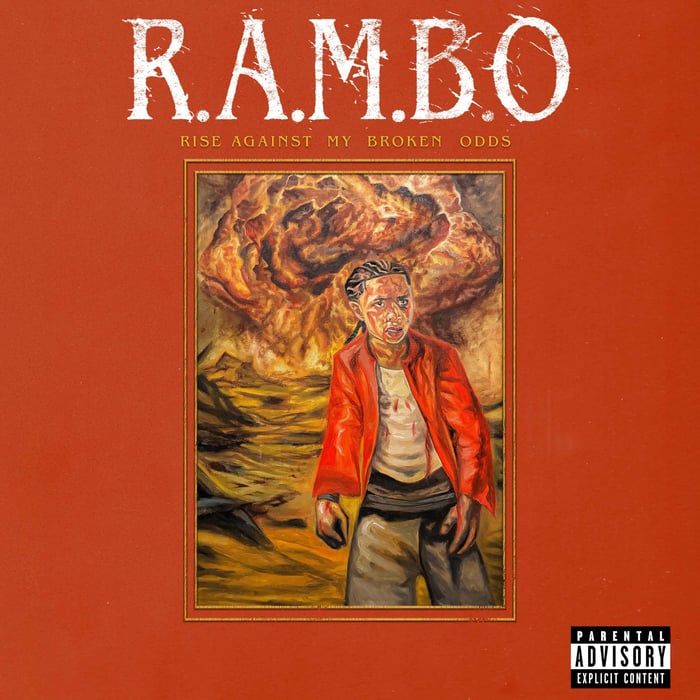
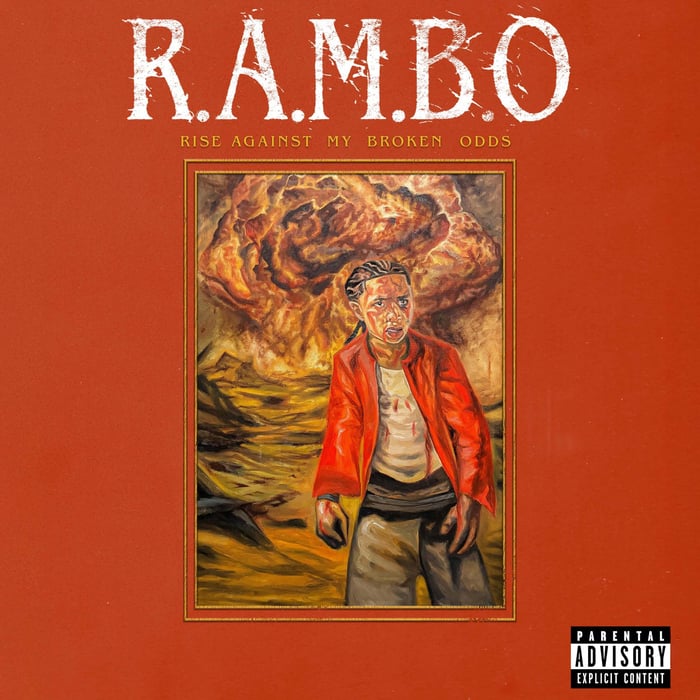
Some albums show you a person. My Broken Odds shows you a person trying to become a character in real time—and not in a cute “concept record” way. In a blunt, stubborn, teenage way. BabyChiefDoit comes off like a 16-year-old from Chicago’s South Side who decided the safest place to live is inside a comic-book identity, then keeps testing that identity on every track like he’s trying to see if it still fits after a growth spurt.
He keeps calling himself Lieutenant Rambo, Big Zoo, Batman, “more than a man”—and he doesn’t say it like a metaphor. He says it like a legal name change. What makes it hit weirder (and honestly smarter) is that the superhero isn’t just in the lyrics. It’s in the sound, because he produces or co-produces most of it. So the person bragging and the person building the floor underneath the brag are the same. That matters. It turns the whole record into a self-made stage play where he’s both actor and set designer, yelling at you from a spotlight he wired himself.
And still—this is the important part—the cape never quite fits. Every time he reaches for the “invincible” angle, you can hear teenager leaking around the edges: boredom, pettiness, insecurity, a need to be believed right now.
“Y’all Can’t Kill Me” and the art of playing yourself
From here, the album starts doing something sneakier than just tough talk. “Y’all Can’t Kill Me” doesn’t feel like a normal flex; it feels like he’s playing pretend with every name he’s ever been called and seeing which one survives the verse.
He stacks up versions of himself—Lieutenant Rambo, Big Zoo, Batman, young rich Black man—alongside a grim little scoreboard beneath it: “thirty bullets when he was 15,” dreams at 16, “high rolls” at 17, and the repeated insistence that he’s cheated death a hundred times so nobody else can take him out. If that was all it did, it’d just be invincibility cosplay.
But the song undercuts itself on purpose. In the same breath, there’s a confession that he’s never spent a day laboring, like a whiny kid used to getting whatever he asks for. That contradiction is the point. He’ll rent a tour bus full of groupies and then demand… a Rubik’s Cube. Not money. Not jewelry. A Rubik’s Cube, basically in case he gets bored and needs to play with himself. That detail is so teenager it almost derails the whole “superhero” pitch—and that’s why it works. The fantasy is loud, but the reality keeps photobombing it.
One line in particular frames the whole album’s psychology: “See, I’m a hero, but I looked up to the villains.” That’s the thesis. A kid who picked up the wrong images young, then decided to build a career out of those images on purpose. I don’t even think he’s pretending to be confused about it. He’s bragging about the contradiction like it’s a skill.
“WENT WEST”: he won’t let you forget who made the beat
Next, the record leans into a different kind of power: control. BabyChiefDoit is almost incapable of hopping on a track without telling you he’s behind the production. On “WENT WEST,” he says he’s the architect, locks down the blueprint, and then basically goes full Kanye West in attitude—big declarations, bigger confidence, and the kind of self-mythologizing that dares you to argue.
He literally boasts, “They gon’ be surprised when they see I made this beat,” and by the third verse he’s already threatening to fire producers. Then he flips it: he’s asking whoever saw what happened to tell the guy he’s trying to hire a new one. It’s funny, but not “joke” funny—more like watching someone shadowbox in a mirror and still win the match.
What surprised me is how often the boasting lands when it shouldn’t. The hooks are catchy enough that the punchlines slide in without getting rejected. He’ll veer into kitchen-themed bars—telling somebody to get out if they can’t handle the heat—then suddenly the opponent’s being turned into broth. Then a random pork chop line gets spun into a pig bar. Then the hook shrugs: how did the 2612 crew come out on top? Answer: nobody knows. It’s a chaotic way to write, but it also feels honest. A 16-year-old mind moves fast, changes the subject, circles back, laughs at itself.
If you’re looking for tidy songwriting, this part might irritate you. I kept waiting for one of these songs to pick a lane and stay there. But the scattered confidence is kind of the point: he’s reminding you he built the floor he’s dancing on, and he’s doing it while still learning where the edges are.
Sports metaphors, melodies, and when threats drown out the point
From there, the album starts treating victory like a timing trick. “Game Six” turns a last-second shot into a buzzer-beater hit—like he’s not just winning, he’s winning right before the lights cut off. The chorus does a lot of work here. It distracts from a verse that’s basically a hater calling him soft and suburban, plus a girl he shuts down with “Who the fuck is we?” That dismissal is cold, but it also reads like a kid trying on cruelty because he thinks that’s what winners do.
Then “Get High” pulls a similar move but with a cleaner trick: the chorus is about getting high on melodies. And the best part is that the superior verse is tucked between the bragging lines, where he slips in that he’s not the same guy anyone remembers from 2023—and that he can stay drug-free while still being the highest in the room. That’s a specific flex, and it changes the vibe. Suddenly the confidence isn’t only about violence or money; it’s about distance traveled, like he’s allergic to being frozen in somebody else’s memory.
“Live by the Gun” is where the tough talk starts to blur. It’s a harder tune, and he packs so many threats into the extended bars that the lyrics get muffled. The menace overwhelms the message. On first listen I thought that was the whole appeal—just intensity for intensity’s sake—but on second listen it felt like a slight stumble: when everything is a threat, none of it has shape. The track wants to be a warning sign, but the paint is so thick it runs.
“Ghetto Love Story”: sweetness, cinnamon, and the trap under it
The relationship songs are where the album stops being an action movie and starts being a diary with fireworks taped to it. “Ghetto Love Story” smells like cinnamon and cocoa butter—sweet center, soft lighting, the kind of detail that makes the romance feel tactile. But it doesn’t stay innocent. It’s two kids, messy loyalty, and that awful third presence: the boyfriend on the other end of the phone.
One of them is always trying to talk her out of it. There’s a line that plays like a compromise—“I’ll shut up if you’ll just dance with me”—but even that feels like bargaining for control. Then she stumbles, hands the phone to the boyfriend, and the mood snaps. She ends up beaten. The guy at the end wants the kid who set it off gone. No lesson, no cleanup, just consequence.
That’s what this album does when it’s at its sharpest: it doesn’t wrap up the scene neatly. It just lets you sit in it.
“The Story of Jane”: the cute line that immediately curdles
Then he replays the same outline from a more sugary angle with “The Story of Jane,” and the sugar doesn’t make it safer—it makes it creepier. He meets a Jane in Tennessee and opens with a pun so teen it almost makes you roll your eyes: only-ten-I-see. It’s charming for half a second, then the mask slips.
He describes her—five foot three with a six-foot heart—then undercuts himself with a self-own about his writing skills not being bright, while admitting he can still scrawl on an instrumental. That’s honest. But the song keeps widening into the ugly parts: the long stretch they put him in after he got jumped, watching friends get shot, making hits, turning to drugs for the drug. “Forever” becomes the agenda, until the phone buzzes.
Snow calls. Says he saw her go down on him. Says Snow and his brother already have her. And here’s the detail that sticks: BabyChiefDoit saw the setup coming in the last bars, called it out in the room, and still went inside. That’s not just heartbreak; that’s self-sabotage with eyes open. The album keeps returning to that idea: knowing the danger doesn’t stop him. Sometimes it dares him.
“On the Run”: when the hook drops out and the questions show up
By the time “On the Run” hits its back half, the cockiness thins. The nah-nah-nah drops out, and suddenly the track is full of rhetorical questions—like the persona is running out of breath.
What do you know about hurt? About being locked in a cell? About love someone made a point of extinguishing? About putting twenty-five thousand into a video? About wanting a statue of yourself on a water fountain when you’re finally done?
And then there’s the quietest question of all: he remembers drowning.
I’m not totally sure what to do with that drowning mention—whether it’s literal memory or a metaphor he can’t stop seeing—but the uncertainty feels intentional. It’s the rare moment on this record where he doesn’t slam the door after he speaks. He leaves it cracked.
“Dear Jonathan”: the album stops flexing and starts asking
The most unbearable small questions show up in “Dear Jonathan,” a letter to an absent father. It’s not written like a grand speech. It’s written like a kid trying to build a person out of missing information.
What’s your favorite song? Your favorite meal? Your favorite game? How did you decide on my name with my mother?
He moves into forgiveness—“I’ll never resent you,” believing his father had a golden heart and was battling demons too—and then asks about the origin of his own rage. He sets that absence beside the fact that he pulled the trigger on a gun, beside the fact that it “rained too young.” And the letter ends on the question that doesn’t have a safe landing: if you’ve been watching over me, are you proud or ashamed?
If the album has a heart, it’s here. And yeah, someone could argue it’s emotional manipulation, or calculated vulnerability, or a “serious song” placed for balance. I don’t buy that. This track feels like the one place he stops performing and just… speaks. It’s also the moment that makes the rest of the superhero stuff sound less like ego and more like armor.
Love songs that turn into threats (because he’s still 16)
From there, he tries to convert fantasy into something stable, but his brain keeps giving him teen logic detours. “Apple of My Eye” turns a wedding fantasy into actual marriage—sort of—but it has to pass through a chain of associations first: burger to French fry, dark to sun, eventually landing on coke. That’s how the thoughts move: not in poems, in jump cuts.
Mid-serenade, he promises that if she wrongs him, he’ll trash the whole house. And “Party Girl” wants the girlfriend home from the club, admits he hates that she’s a party girl, then veers into the same insecurity-powered violence: firing shots into the walls the moment the feeling takes over.
This is where I’ll admit a small frustration: the tenderness gets cramped. It shows up, then gets bullied out of the room by aggression. One song gives you the soft side; one verse shoves a threat into it. It’s realistic, sure, but it also starts to feel like a default setting he hasn’t learned to override yet.
When the roster gets thin: “NY” and “DTM”
The back end also has a thinner “roster mode” energy. “NY” rolls through first-ho, second-ho callouts like a checklist, like he’s trying to keep control by reducing people to positions.
And on “DTM,” the collaborators come in with the best bars. That’s not an insult—it’s just what happens when other voices enter a world you’ve been narrating alone: they bring angles you don’t. The women flip the script too, asking what a man who doesn’t cover hair or nails is good for. That’s a clean reversal, and it lands because it punctures the album’s constant “I’m the one” posture without needing to yell.
Pull the Rambo mask off and it’s still the same kid
Here’s the part I think the album is actually doing, underneath all the names: if you remove the Lieutenant Rambo image, you don’t find a child pretending to be someone else. You find a kid comparing his age to the dangers he’s already faced—counting “thirty shots at 15,” then lining it up against “riches at 17.” That’s a bizarre math problem to live inside. A teenager who can count the years he was “supposed” to die starts to believe he can’t be killed.
Lieutenant Rambo, Big Zoo, superhero who defied death—that’s the same boy who wanted a Rubik’s Cube on the road because he’d be bored. Under it all is a body that’s still alive and well, trying to make sense of why it’s still here.
And if that sounds heavy, it is. But the album doesn’t treat it like a tragedy. It treats it like a résumé.
Where I landed: strong, messy, and weirdly convincing
I didn’t expect this to stick with me as much as it did. At first I heard the aliases and thought, okay, another kid building a persona. But after a few spins, the persona started sounding like the only language he trusts. That’s a different thing.
This album works best when:
- the hooks are playful enough to carry the contradictions (“Game Six,” “Get High”)
- the bravado gets interrupted by real questions (“On the Run”)
- he stops acting invincible long enough to admit a wound (“Dear Jonathan”)
And it drifts when:
- the threats pile up so high they blur (“Live by the Gun”)
- tenderness gets forced to share a room with intimidation (“Apple of My Eye,” “Party Girl”)
Favorite tracks I kept coming back to: “On the Run,” “Dear Jonathan,” “Y’all Can’t Kill Me”
BabyChiefDoit doesn’t sound like he’s trying to impress you. He sounds like he’s trying to convince himself—and that’s why My Broken Odds keeps grabbing attention even when it’s messy.
Our verdict: If you like rap that feels like a teen writing his own legend in permanent marker—half flex, half panic—this album will hit. If you need emotional maturity, tidy storytelling, or romance without property damage threats, you’ll want to exit the tour bus early (and take the Rubik’s Cube with you).
FAQ
- Is My Broken Odds more about rapping or persona-building?
It’s persona-building through rapping—he keeps testing names like they’re armor and seeing which one survives the song. - Does BabyChiefDoit’s self-production matter on this album?
Yeah. It makes the bravado feel authored, not rented. The guy talking is literally building the room he’s talking in. - What’s the emotional center of the record?
“Dear Jonathan.” The questions are small, specific, and painful, and the song doesn’t hide behind jokes or threats. - Where does the album lose momentum?
When the threats stack so densely that the words smear together—toughness becomes noise instead of meaning. - What tracks should I start with if I’m unsure?
Start with “Y’all Can’t Kill Me,” then “On the Run,” then “Dear Jonathan.” If those don’t move you, the rest won’t convert you.
If you want something physical that matches this album’s larger-than-life self-myth vibe, you can always grab a favorite album cover poster from our store: https://www.architeg-prints.com. It’s the same impulse, just cleaner than firing shots into your drywall.
 | DISCOUNTGET 30% OFF*Use code on your next order:
|
* This post may contain affiliate links, meaning we earn a commission if you make a purchase through these links, at no additional cost to you.