RAYE Album Review: Hope, Panic, and a Husband Search (Seriously)


 See more Architeg Prints stories on Google.
RAYE Album Review: Hope, Panic, and a Husband Search (Seriously)
RAYE’s album turns loneliness into four “seasons” of scenes—funny, bleak, and strangely tender. It’s not a victory lap; it’s a flashlight in a hotel room.
Courtesy of Human Re Sources.
This isn’t “healing music.” It’s receipts with a melody
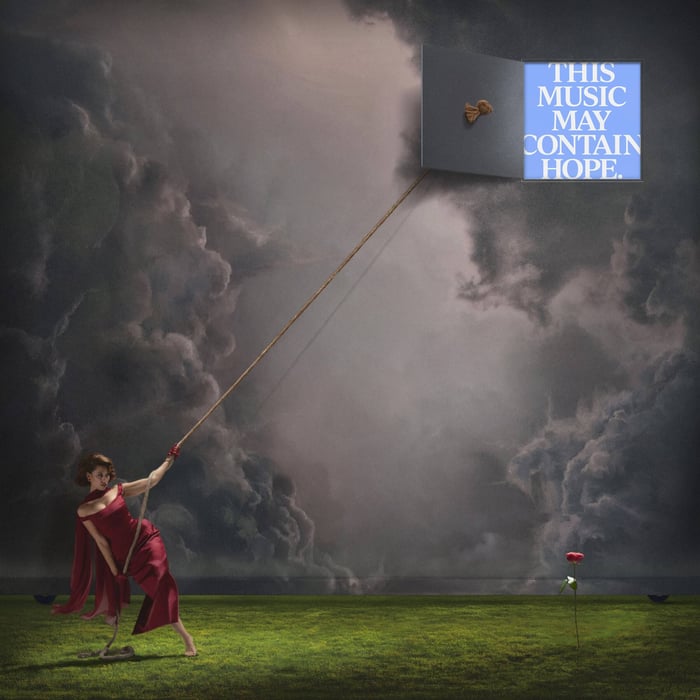
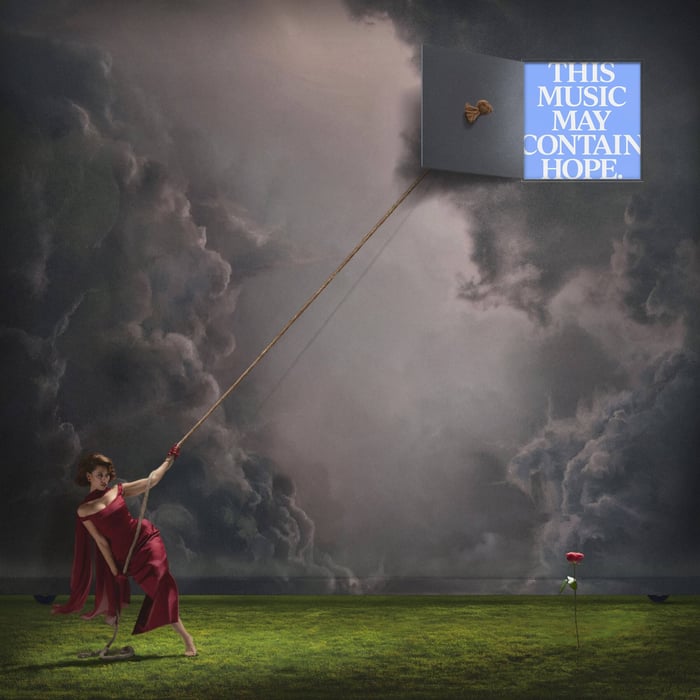
If you press play expecting the usual post-breakup empowerment parade, this record politely drags you into a different room and locks the door. THIS MUSIC MAY CONTAIN HOPE. isn’t RAYE trying to prove she “won.” It’s RAYE admitting that winning still leaves you alone with your thoughts—often in a nice outfit, often at an ungodly hour, and often with nobody texting back.
And that’s the point. This RAYE album feels like it was built to escape a storyline: industry misery, public vindication, trophy shelf, applause. I can feel her actively refusing to narrate her own legend. Instead, she zooms in on the humiliating stuff—quiet, bodily, specific loneliness—like she’s documenting evidence before it evaporates.
The backstory is a cage—and you can hear her stepping out of it
Here’s what’s wild: the album carries the weight of a long career without sounding like it’s begging you to respect her résumé. Still, you can hear the history in how sharp the writing is.
She spent years as the invisible hand in other people’s hits—co-writing for pop’s upper floors, getting treated like a utility instead of a person. She signed young (too young to have any real leverage), got pushed toward dance-pop she didn’t even seem to like, and got held hostage by label logic: chart first, album later. That kind of situation doesn’t just waste time; it rewires what you think you’re allowed to make.
Then she broke away, went independent through Human Re Sources, started owning her masters, dropped My 21st Century Blues, and the world did that thing it does when it realizes it ignored someone too long: showered her with validation all at once—six BRIT Awards in one night, a number-one UK single, the whole “overnight success after a decade” miracle.
And then life did something stupidly literal: her car got stolen with her songwriting notebooks in the trunk. She posted a cake that read “sorry ur car got stolen” and basically told everyone to lower their expectations about album two. Months later, the car came back—everything untouched—like the universe returned her diary and dared her to keep going.
You can hear that dare inside this album. Not as inspiration-poster stuff. More like: fine, I’m still here, and I’m telling the truth now.
Four seasonal acts, one woman—alone in a lot of rooms
This album is split into four seasonal acts across seventeen songs, and the structure matters because it keeps the sadness moving. Not “moving” like upbeat—moving like weather. A front comes in, sits on your chest, clears, comes back.
What hit me is how consistently the record places you in physical scenes. Not vague heartbreak fog—actual objects and actions:
- a Paris hotel room at 2:27 a.m.
- seven Negronis and a red dress that didn’t get witnessed the way she wanted
- unzipping your own dress because nobody’s there to do the gentle part
- a pillow that literally gathers dust because it never gets used
- kissing lipstick onto the back of your own hand just to see what your love looks like
- stopping at a petrol station in someone else’s car to buy a large bottle of gin while crying
That kind of detail isn’t decorative. It’s how she prevents the songs from floating away into “sad girl aesthetic.” She’s not romanticizing loneliness; she’s inventorying it. And yeah, a reasonable listener could argue it’s too specific—almost invasive—but I think that’s her whole flex: she’d rather be embarrassing than abstract.
The men aren’t villains. They’re a field guide
The dating songs don’t feel like revenge. They feel like someone got tired of pretending confusing behavior is mysterious. RAYE sketches men the way an exhausted expert sketches animals: with precision, not awe.
“Beware.. The South London Love Boy” is basically a public warning label
This track plays like a cheerful PSA about a specific species of charming menace. The Love Boy moves fast—grabbing your arse before you’ve even sat down, pulling up in an all-black car, reading poems out the window like he’s auditioning for your trauma bond. He’ll tell you he’s toxic while sounding so convincing you decide it doesn’t count.
It’s funny, but it’s not harmless-funny. The bounce in the production almost dares you to dance to your own bad decisions. That’s not an accident—she’s making the hook sweet so the warning goes down easy.
“The WhatsApp Shakespeare” turns flirting into a slasher setup
Same city, different predator energy. The “sweet poetry” and cursive kisses are the disguise. The gut-punch detail is that he wouldn’t even “put his type on paper”—and she realizes she wasn’t the girl, she was one of seven. That’s not heartbreak as tragedy; that’s heartbreak as casting call.
“Skin & Bones” is where the jokes get thin—and so does her patience
A man cancels forty-five minutes before picking her up and tries to reroute the night into “dessert at my place.” The song reacts by stripping him down to parts, like she’s removing his personality privileges.
“Just skin and bones
And lungs and a heart
Two eyes and a liver
And a nose and no brain.”
That’s not just a lyric; it’s her refusing to narrate him as deep. Some listeners will say it’s harsh. I think it’s mercy. She’s stopping herself from making excuses for him.
“Goodbye Henry” is where the album stops winking
Then the tone shifts, and it stays shifted. “Goodbye Henry” doesn’t perform bitterness. It performs that quieter horror: this feels happy, but it isn’t happy at all.
She’s at the Railway Tavern in her local, sipping gin in silence, kissing him goodbye. She imagines the alternate timeline—three kids, a life that happened in some other branch of reality. And then Al Green shows up from Memphis, Tennessee, like a ghost with perfect timing.
A seventy-nine-year-old man and a twenty-eight-year-old woman singing together shouldn’t work this well, and for a second I wasn’t sure if the duet would feel like a stunt. It doesn’t. It lands like a blunt agreement across decades: love hurts the same no matter how many birthdays you’ve survived. If anything, it makes the song more brutal, because you realize nobody ages out of longing.
“Nightingale Lane” is the album letting itself breathe
“Nightingale Lane” takes similar emotional territory but backs the camera up. She remembers her first love kissing her goodbye on a South London suburban street—thin lips, beer-stained, tear-stained. Now she drives down that road slowly, and at red lights she dares herself to say it out loud: somebody loved me once, and someday, somebody will again.
Here’s where my first impression changed. The first time through, I thought she was leaning too hard into hope—like she was trying to tie a ribbon on the sadness. On second listen, it hit differently: she’s not selling optimism. She’s practicing it. The song doesn’t demand you believe her; it just documents her trying.
A reasonable person could call that indecisive. I think it’s honest.
Family shows up like a hand on your shoulder
This is where the album quietly outsmarts itself: it doesn’t let loneliness become the only character.
Her grandmother’s voice note opens the record: “Call me, please, we need to pray.” That older-generation presence keeps returning like a lifeline—phone calls, messages, small spiritual interruptions that pull her back from the edge.
“Fields” is the record’s plainest gut-punch
RAYE leaves her grandad Michael a voicemail: sorry for months of silence, do you get lonely too? His answer is brutally simple: “You can feel lonely in a crowded room.”
No fancy writing. No dramatic framing. Just a truth said by someone who doesn’t need to decorate it.
He tells her she’ll hear his songs when he dies. She tells him his longevity “gives me life.” Neither of them oversells the moment, which is exactly why it hits. Pop usually tries to turn family into a cinematic montage. This is just two people acknowledging time.
“Joy” sounds like siblings, not “features”
Her sisters Amma and Absolutely sing on “Joy,” and it comes in like a gospel-flavored rebuttal to despair—clapping hands, that old promise that joy comes in the morning. What makes it work is that it doesn’t feel like a lineup; it feels like a living-room muscle memory. They sound like they’ve harmonized together long before anybody cared.
If you don’t like gospel textures, you might roll your eyes here. I didn’t. I think she uses it as a survival tool, not a genre costume.
Hope doesn’t arrive as triumph—it arrives as a to-do list
This is the sneaky thesis of the whole RAYE album: hope is not a finale. It’s a task.
“I Will Overcome” is a note she left for herself
It exists because she needed the reminder. And you can hear the gap between needing to say it and actually believing it. That gap is the song’s engine. If she sounded fully convinced, it would be motivational wallpaper. Instead it feels like someone repeating a sentence until the body stops arguing.
“Click Clack Symphony” makes leaving the house sound heroic (and it kind of is)
Co-produced with Hans Zimmer, it opens with RAYE calculating the odds of being born—one in four hundred trillion—then immediately confessing she can’t conquer leaving the house.
That contradiction is the entire modern brain: cosmic miracle, still can’t answer a text.
She eats, sleeps, scrolls, toils. Then the song turns into the act of calling your girls and going out anyway. Zimmer’s orchestration swells behind the sound of high heels on pavement—like a film score for the deeply unglamorous decision to put on a dress instead of staying in bed.
Part of me thinks the Zimmer-sized drama is slightly ridiculous… but also, that’s the joke she’s making. For some people, leaving the house is the boss fight.
“I Hate the Way I Look Today” starts ugly on purpose
She looks in the mirror and cries. She hates her mind. She bargains with herself—she can be lonely if she’s lonely and skinny. It’s not pretty, and it’s not trying to be.
Then a saxophone slides in and the song pivots, just barely, toward correction: “words of affirmation must repeat ’till I believe it.” That “’till I believe it” is doing a lot of work. She’s not cured. She’s trying not to spiral.
Mike Sabath’s production keeps changing outfits—and mostly pulls it off
The album’s production range is a big part of why the tracklist doesn’t blur. Mike Sabath gives her multiple frames to act inside:
- “Beware.. The South London Love Boy” rides an epic pop-soul chassis
- “Winter Woman” drops into a slow-motion glide
- “WHERE IS MY HUSBAND!” swings with a Motown-adjacent brass stomp
- “Fields” strips down to piano, guitar, and voice—plus the sound of a man who’s been writing songs forever playing “Clair de Lune” for his granddaughter
If I’m nitpicking, there are moments where the album’s ambition flirts with excess—like it’s daring you to keep up with its costume changes. But I’d rather hear RAYE overreach than sand herself down for coherence. The whole point is that she’s many versions of herself, sometimes in the same night.
“Happier Times Ahead” zooms out and refuses to center her
This song is the album stepping outside RAYE’s own apartment and looking at the whole street.
A girl in a window on a Saturday morning clutching her aching heart. A middle-aged man driving his van on Bond Street, making his last lonely pint the highlight of his day. Auntie Jean in the middle of England crying after sixty years of marriage because Roger is gone and she’s stuck in the land of the living.
None of these people are RAYE. None of them know each other. The song connects them anyway—and tells them one simple thing: it can’t rain forever.
Not “it will be fine.” Not “here’s how to fix it.” Just: the weather changes. That restraint is why it works. A more cynical listener could call it sentimental. I think it’s the album’s bravest move—comfort without instruction.
The saddest song might be the one that makes you laugh
“WHERE IS MY HUSBAND!” is absurd in the way real longing is absurd. She wants a diamond ring—big, shiny, something she can wave around and talk about. She’s basically reviewing applications. She’s 5'5" with brown eyes and this growing fear she’s going to die alone.
Her grandmother’s reassurance—“Your husband is coming”—hangs over the song like a warm prophecy and a mild threat.
The genius here is that RAYE lets two readings sit together:
- it’s funny because it’s theatrical and slightly unhinged
- it’s devastating because she means it
She doesn’t ask you to choose. The brass section struts like confidence while the lyric admits panic. That contradiction is the entire song.
The tracks I keep going back to (for better or worse)
Not “best,” not “objectively strongest”—just the ones that keep re-opening in my head:
- “I Hate the Way I Look Today” — because the self-talk is alarmingly familiar, and the sax turn feels earned.
- “Goodbye Henry” — because the duet makes time itself feel like a character.
- “Fields” — because it’s family love without the Hallmark glaze.
A reasonable listener could pick different favorites easily; the album’s built like a set of rooms, and people get haunted by different corners.
Conclusion: hope, but make it human
This album doesn’t treat hope like a prize you receive after suffering correctly. It treats hope like something you handle with shaky hands—sometimes sincerely, sometimes sarcastically, sometimes while wearing lipstick for nobody. RAYE sounds like she’s done performing her resilience for strangers. She’d rather show you the actual mechanics: the calls, the cravings, the embarrassing prayers, the pointless red lights you use as confession booths.
And yeah, it’s heavy. But it’s also oddly funny in the way honest diaries are funny—because humans are dramatic animals trying to buy gin at a petrol station and still believing in love. Somehow both things are true.
FAQ
- Is THIS MUSIC MAY CONTAIN HOPE. a breakup album?
It’s more like an aftermath album—what happens after the punchline, after the texts, after you get home alone and the night keeps going. - Does the album lean more pop, soul, or jazz?
It moves between them depending on the song’s “scene.” The shifts feel intentional, like outfit changes for different emotional roles. - What’s the emotional center of the record?
“Fields” and “Goodbye Henry” feel like the spine: family as grounding, love as injury, and time as the real antagonist. - Is the Hans Zimmer collaboration distracting?
It’s a bit oversized on purpose—making “going out” sound like a cinematic feat, which is the whole joke and the whole pain. - Who is this album not for?
Anyone who hears vulnerability and immediately asks for a cleaner chorus and a happier ending.
If this record stuck with you visually as much as it does emotionally, it’s the kind of album art that actually looks good on a wall—feel free to shop your favorite album cover poster at our store: https://www.architeg-prints.com.
 | DISCOUNTGET 30% OFF*Use code on your next order:
|
* This post may contain affiliate links, meaning we earn a commission if you make a purchase through these links, at no additional cost to you.