Elmiene’s sounds for someone Review: Sad Dad Soul, No Small Talk


 See more Architeg Prints stories on Google.
Elmiene’s sounds for someone Review: Sad Dad Soul, No Small Talk
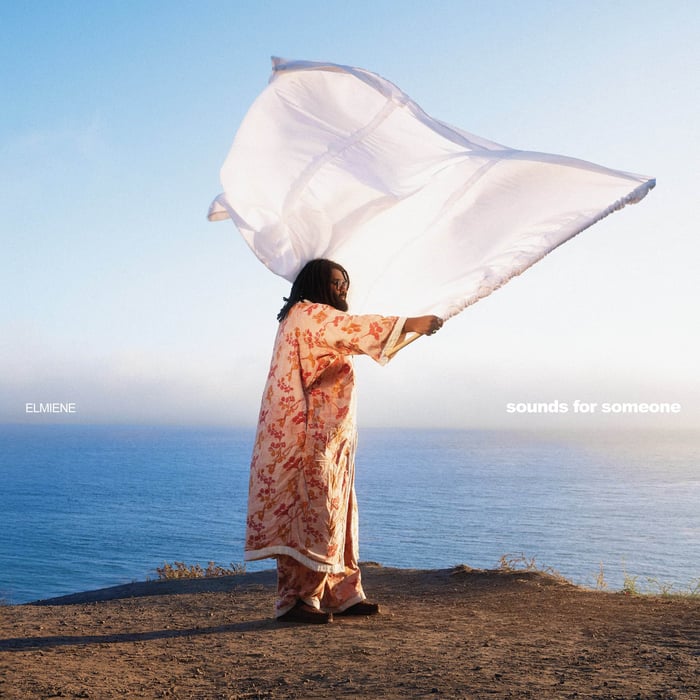
Elmiene’s sounds for someone turns modern soul into a private argument—warm keys, tight grooves, and requests that get uncomfortably specific.
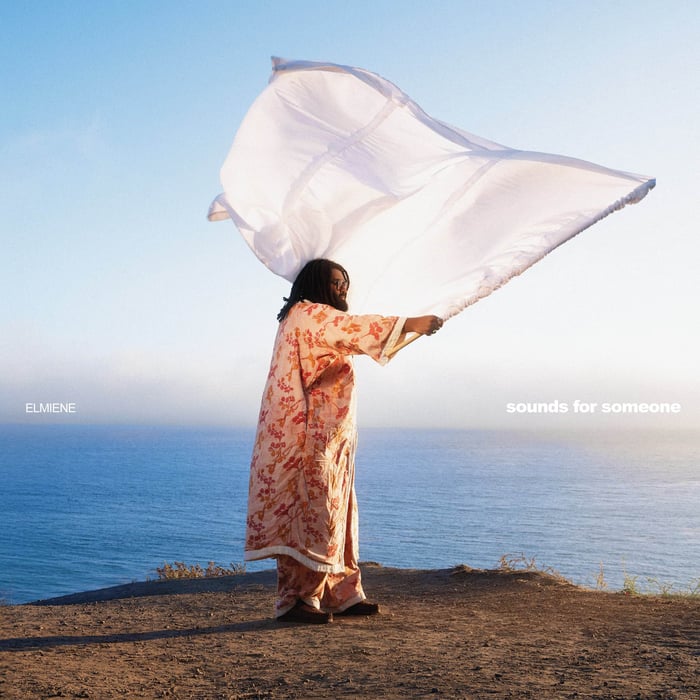
Courtesy of Polydor Records/Def Jam Recordings.
This album isn’t trying to impress you—it's trying to survive you
Some records feel like a press kit with drums. sounds for someone isn’t that. It plays like Elmiene shut the door, lowered his voice, and decided the only way out was to narrate the stuff people usually swallow.
And yeah, it’s “pretty” in that polished, warm-keys way. But the point isn’t prettiness. The point is control—keeping the emotion on a short leash so it can’t bolt.
The origin story already happened; this is what he did with the weight
You can hear the weird pressure baked into Elmiene’s career arc without anyone spelling it out. One minute it’s a backyard D’Angelo cover in Oxford—tracksuit bottoms, crumbling garage energy—then suddenly big names are watching. Missy Elliott, Pharrell, Questlove… the internet did that thing where it anoints someone in fast-forward.
Then “Golden,” still basically an unreleased idea at the time, gets placed in a Louis Vuitton show curated by Benji B—Virgil Abloh’s final show in Miami—landing as a memorial two days after Abloh died. That’s not just “a placement.” That’s a song being forced to mean something enormous for a man Elmiene never met.
Here’s what matters: sounds for someone doesn’t sound like an artist chasing that moment. It sounds like an artist dodging it. The album acts like he already proved he belongs in the room—so now he’s using the room to say things he wouldn’t say outside it.
And he didn’t exactly loaf between that viral spark and now. He burned through projects like he was trying to outwork expectation: EL-MEAN, Marking My Time (with names like Sampha, Syd, BADBADNOTGOOD orbiting), Anyway I Can (with D’Mile), For the Deported, and the Prince-indebted Heat the Streets mixtape. All while finishing a degree at Bournemouth and even keeping “security guard” in the back pocket as a fallback. That last detail matters because it tells you the confidence here isn’t delusion. It’s earned—and slightly annoyed.
My first impression was that this album would be a “big debut” with big debut muscles. On second listen, it’s the opposite: it’s small on purpose. Private on purpose. Almost stubbornly so.
The real theme: asking for things you shouldn’t have to ask for
The sneaky concept running through sounds for someone is how often Elmiene is requesting basic human treatment like it’s a favor. Almost every track asks for something—belief, protection, honesty, one more night, one clean answer.
And when an album is built on asking, you start noticing what the artist thinks he’s allowed to receive. That’s the uncomfortable part. This isn’t romantic pleading as a vibe; it’s an inventory of needs that were left unattended.
“Cry Against the Wind” is the emotional axis—and it doesn’t flinch
At some point Elmiene clearly realized—after the writing, not before—that a huge chunk of these songs point back to his dad. I don’t know if he meant to build the album around that relationship, but the record behaves like the truth caught up with him and refused to be edited out.
“Cry Against the Wind” is the one where the album stops hinting and just says it. The phone calls. The same old stories. The boredom that creeps in when you’ve done the same emotional argument too many times. Then he drops the line that makes you sit up because it’s ugly and honest at once:
He basically admits he could live with hate, but not with indifference. The lyric lands like: I can’t stand you—yet I’d still burn the world down to feel you care.
That’s the kind of contradiction people actually carry. And the song’s final lines—about time flipping present into past, about birth and death happening on the same weekday, about being “made of clay”—strip away any remaining performance. It’s not “poetic” in the decorative sense. It’s poetic in the blunt sense: someone finally saying the sentence they’ve been dodging.
Andrew Aged and Buddy Ross set it on warm keys and hushed percussion that never tries to compete with his voice. Smart choice. The production treats the track like you’re overhearing something through a wall—close enough to feel invasive, muffled enough to feel real.
Arguable take: if you made this track bigger—more drums, more cinematic swell—you’d actually ruin it. The whole trick is that it refuses to “arrive.”
“Saviour” sounds brighter, but the need is darker
Then “Saviour” (produced by Sampha) tilts into something more synthetic and bright than Elmiene’s earlier work. It almost glows. And because it glows, the desperation reads sharper.
Elmiene plays most of the instruments himself here, and you can tell—there’s a self-contained feeling, like he’s locking the door from the inside. He’s pleading with someone—maybe his father, maybe the idea of a father—to protect him, to vouch for his innocence, to fight for him “for ages.” It’s both accusation and longing in the same breath:
“Take a breath and realize you left me in this danger.”
That line is cold because it’s not screamed. It’s stated. And the chorus asks “Why can’t we just relax?” in a way that implies he already knows relaxing isn’t on the menu. The “please just blow it all away” refrain should be corny on paper. Somehow it isn’t—because he sings it like he’s trying to blow out a candle that doesn’t even have a wick. Nothing to grab. Nothing to end.
If I’m uncertain anywhere on the record, it’s here: I can’t tell whether “Saviour” is a prayer to a specific person or a protest against the whole role. But honestly, the ambiguity works because that’s how that kind of wound behaves—half memory, half myth.
Arguable take: this is the album’s most “modern” track sonically, and it’s also the one that feels the most trapped.
When he asks for belief, he makes it sound like a debt
The bridge from family to romance on sounds for someone isn’t a pivot—it’s a continuation. The same hunger shows up with different masks.
“Honour,” featuring Baby Rose, is basically Elmiene asking for the simplest thing in the world: believe in me. Baby Rose’s voice coils around his down low, giving the track a gravity that isn’t dramatic, just heavy. He admits he’s always doubted himself, convinced he doesn’t deserve a “someone else,” and then sings like he’s trying to earn permission to be loved.
Arguable take: the duet isn’t there for variety; it’s there to make his insecurity sound like it has a witness.
Then “Don’t Say Maybe” snaps that soft patience in half. With Ghost-Note and No I.D. driving a more uptempo groove—snapping, insistent, the clearest rhythmic break from the album’s prevailing warmth—Elmiene draws a line instead of circling the feeling.
“I always hated when you treated me like a child,” he opens, and the hook is blunt: say yes or no, don’t say maybe.
That directness is what makes it stand out. The father-addressed songs plead and loop. This one doesn’t negotiate. It demands a clean answer, like he’s done living in emotional fog.
“Reclusive” is the funniest thing here, and it’s funny because it’s true
Not everything bleeds. “Reclusive” is probably the most fun anyone’s ever had admitting they don’t want to leave the house.
Elmiene has clearly absorbed Biz Markie’s talent for making the mundane memorable. The song zooms in on tiny details of inertia: wake up, play video games, think you need to change, don’t change. The line “I ain’t even gonna lie / Not a social butterfly” is the album at its most self-aware—and maybe its most disarming.
Gitelman’s production starts with piano and drums and gradually widens into a busier arrangement, but it never treats reclusiveness like a problem to solve. It’s framed as a fact of life. Which is a subtle flex: the track refuses the standard “I’m broken” arc and instead shrugs like, this is just Tuesday.
Arguable take: “Reclusive” isn’t comic relief—it’s the album’s thesis in miniature. Isolation isn’t always sadness; sometimes it’s strategy.
The romance cuts don’t flirt; they bargain
The romantic songs hit harder here because the album is already emotionally loaded. In another context, they could feel like standard slow-jam territory. Here, they sound like someone trying to negotiate with reality.
“Lie With Me” is a painful request: fake it, lie, make me believe what you don’t—just until I can move on. He knows it’s over. He’s not asking to fix it. He’s asking for one last night of pretending because the truth is too sharp to hold barehanded.
“Light by the Window” puts him in a locked room with an empty glass and a double bed, hiding for days, posted by the window, wondering if leaving would even matter. Raphael Saadiq’s presence adds weight to the arrangement, and Elmiene meets that weight without straining. There’s a specific line that sticks because it’s oddly ordinary in the middle of emotion:
“Detrimental to my vision / Without my glasses you’re far away with no precision.”
That’s the difference between a good lyricist and someone filling space. It’s not trying to be quotable; it’s trying to be accurate.
Arguable take: the Saadiq-assisted stretch is where Elmiene sounds least like he’s performing “soul” and most like he’s just talking in melody.
The back half settles into a pulse—sometimes that’s power, sometimes it’s padding
Ghost-Note and OzMoses Arketex handle most of the album’s back half, and they keep it in a steady mid-tempo pocket. The upside is Elmiene gets room to phrase long—to stretch syllables, to let a thought finish. His tenor is built for sustained quiet.
The downside is that the consistency can blur the edges if the songwriting doesn’t sharpen them. When it works—like “Lonely People,” which reads like a mutual codependence anthem where two people quietly agree to stay small together—the controlled simmer makes the track feel inevitable, like a slow lid closing.
When it doesn’t, it drags a little. “Special” is sweet—an ordinary-day love song—but it sits so comfortably in the same tempo and register as nearby tracks that it risks becoming part of the wallpaper. Not bad wallpaper. Just… wallpaper.
That’s my mild criticism: the album’s commitment to restraint is admirable, but once or twice it confuses “steadiness” with “same-ness.” A sharper sequencing choice—or one more track willing to get weird—could’ve made the second half hit with more contrast.
Arguable take: “Special” would land harder if it weren’t surrounded by songs living in the same temperature range.
He sings like volume is optional—but meaning isn’t
Elmiene’s voice is the quiet engine that keeps this whole thing moving. He dips into falsetto when the lyric needs air, and drops to a low murmur when it doesn’t. Neither mode feels like a flex. It feels like he’s choosing the most efficient way to tell the truth.
You can hear a household in it—raised in Oxford by his Sudanese mother, with a poet grandmother and a musician grandfather in the lineage. He sings like expression was non-negotiable, but volume was always a conversation.
And then “Told You I’ll Make It” pulls the family thread tight again. He reaches his father’s house, puts the key in the lock, and it won’t turn. The image is brutal because it’s so simple: effort meets a door that doesn’t care.
“How much have I changed? / Do you hate me now?”
He promised he’d be there. He shows up. The door stays closed.
Arguable take: that locked-door moment says more than any shouted climax could—because it refuses catharsis.
What sounds for someone is really doing
This album isn’t trying to “heal.” It’s trying to document the exact shape of a need while it’s still alive. It’s Elmiene choosing warmth in the production so the lyrics can be colder without sounding theatrical. It’s him making requests he should’ve been given for free—then realizing, mid-verse, that he’s still the one asking.
I thought I was getting a debut designed to prove something. I ended up with an album that assumes you already believe the hype and asks a different question: what if the hype doesn’t help when the phone rings and it’s the same old story again?
Conclusion
Elmiene made sounds for someone like a private letter that accidentally got excellent mixing and a few legendary collaborators. It doesn’t try to win you over—it tries to tell the truth cleanly enough that it can finally stop repeating itself.
Our verdict: People who like soul that whispers instead of shouts will actually love this—especially if you’ve ever replayed a conversation in your head like it’s a playlist. If you need big hooks, dramatic beat switches, or emotional closure served hot, you’ll get impatient and start checking your phone by track seven.
FAQ
- Is sounds for someone a breakup album or a family album? It keeps sliding between romance and family, but the emotional engine feels father-centered—like every other relationship is echoing that first one.
- What’s the most direct song on the album? “Don’t Say Maybe.” It’s the rare moment where Elmiene stops circling the feeling and demands a straight answer.
- Does the production ever overpower Elmiene’s voice? No—and that’s intentional. Tracks like “Cry Against the Wind” are built like overheard conversations, not performances.
- What’s the “lightest” moment here? “Reclusive.” It turns staying inside into a tiny anthem without pretending it’s a tragedy.
- Any weak spot worth knowing? The mid-tempo consistency can blur the back half. “Special” is pleasant, but it risks blending into the album’s steady temperature.
If this record put an image in your head—one of those rooms with the blinds half-open—getting a favorite album cover poster is a nice way to keep that feeling around. If you’re the type, you can browse prints at our store: https://www.architeg-prints.com
 | DISCOUNTGET 30% OFF*Use code on your next order:
|
* This post may contain affiliate links, meaning we earn a commission if you make a purchase through these links, at no additional cost to you.