Hellripper Coronach Review: Goatcraft, Cowbell, and a Funeral Hymn


 See more Architeg Prints stories on Google.
Hellripper Coronach Review: Goatcraft, Cowbell, and a Funeral Hymn
Hellripper Coronach delivers blackened speed metal with a fierce Scottish edge, blending relentless riffs, dark folklore, and unexpected clean vocals into a powerful, unrelenting album experience.
Come for the riffs, stay for the reckless confidence
Some albums sound like a band trying to prove a point. Hellripper’s Coronach sounds like James McBain doesn’t feel the need to prove anything—he’s just setting fire to the room because he likes the lighting.
And yeah, I’m going to say it plainly: this record isn’t “experimenting.” It’s showing off, and it gets away with it because the songs are built on riffs that don’t wobble.
The “Goat Kvlt” vibe is silly… until it isn’t
The whole goat-obsessed, diabolical-aesthetic thing could’ve been corny. Plenty of metal acts dress up folklore like a Halloween store display and call it “atmosphere.”
But Coronach doesn’t feel like costume work. It feels like McBain is pulling stories out of the soil—Scottish folklore, ugly history, local menace—and then using them as excuses to write nastier hooks. The intent is obvious: the riff comes first, always, and everything else is there to sharpen it.
That choice matters, because the album keeps flirting with black ’n’ roll swagger and punk grit, and it never collapses into genre tourism. If anything, the bigger risk is the opposite: sometimes it’s so riff-forward that you can miss how personal it’s being unless you’re paying attention.
The album starts by punching you in the teeth
The opener “Hunderprest” doesn’t “set the tone.” It immediately acts like the tone was already set and you’re late. The first notes slam down with thrashing charisma and a pace that feels almost impatient—like the track is annoyed you expected an intro.
And the undertone is key: there’s this vampiric, screeching darkness tucked into the speed. It’s not the kind of black metal atmosphere that floats around like fog. It’s more like a blade edge under stadium-sized thrash energy. A reasonable listener could argue it’s “just fast and nasty,” but to me it’s more intentional: the song is trying to make speed metal feel predatory again.
That’s the first big statement of Coronach: this is blackened speed metal that refuses to behave politely.
Then it gets personal—without getting soft
Right after that, “Kinchyle (Goatkraft And Granite)” comes bounding in, and it does something smart: it turns the local pride into motion. It’s named after the McBain clan’s war cry, and it genuinely sounds like one—built to be shouted back at the band, beer raised, body already leaning toward the pit.
This track also carries the album’s most grounded emotional move: it reflects on growing up in a version of Scotland that isn’t postcard-pretty. The song doesn’t mope about it. It rocks it up, makes it feisty, makes it physical. That’s the trick: rather than “opening up,” it just tightens the screws and lets the riff do the talking.
I’ll admit, on my first pass I thought this one was just the obvious crowd-pleaser. On second listen, it felt more like the record’s mission statement: personal doesn’t mean vulnerable—personal can mean loud enough to knock a wall down.
Black ’n’ roll swagger, but it never turns into a party band
There’s a stretch on this album where the black ’n’ roll bounce shows up, and it could’ve gone wrong. A lot of bands hit that groove and suddenly everything smells like backstage warm beer and forced “bad boy” charm.
But “Blakk Satanik Fvkkstorm” pulls it off because it’s still vicious. The axe work feels like it’s being shoved down your windpipe—furious shredding, rabid screams—and it’s tied to the gothic horror tale of Thrawn Janet from Robert Louis Stevenson. That detail matters because it keeps the song from turning into empty sleaze. It’s “fun,” sure, but it’s fun the way a bonfire is fun: you’re enjoying it, but you’re also aware it could take your eyebrows off.
A fair criticism, though: the title’s whole exaggerated spelling-and-attitude thing is a lot. I get the point—it’s deliberately obnoxious, like scrawling on a church wall—but I did have a moment where I thought,
okay, we get it.The good news is the riff doesn’t care whether you approve.
The album’s “dark” songs aren’t just slower—they’re meaner
Here’s where Coronach starts acting like it has more dimensions than just speed and bite.
“The Art of Resurrection” opens with a haunting piano and strings—an intro that’s almost too elegant, like a casket lining. Then the blackened thrash storms back in, and the contrast is the point. The beauty isn’t comfort. It’s bait. The song carries an unnerving sense of impending doom that feels earned, especially because it’s tied to Edinburgh’s infamous 19th-century bodysnatching. That theme could’ve been pure horror-movie theatrics, but the arrangement makes it feel clinical and grimy at the same time.
Then there’s “Baobhan Sith (Waltz of the Damned)”, which leans into darker flavors of the macabre without falling into the “here’s the spooky track” cliché. The album doesn’t bubble over into camp because it never treats horror like decoration—it treats it like fuel.
If you disagree and think the atmosphere is just there to look cool, I get it. But the way the riffs re-enter after those intros feels too deliberate to be accidental. It’s structured like the record is saying:
you can have your beauty, but you’re not keeping it.
“Mortercheyn” is where the punk brain takes the wheel
Then Coronach gets crusty.
“Mortercheyn” is explicitly tied to McBain’s time growing up in a punk scene and his love for rawer subgenres, and you can hear it in the pacing. It’s tormenting—not because it’s slow, but because it feels like it’s pushing forward with its shoulder, not gliding on technique.
And yes, it’s got those delicious raspy “bleh” moments that make the track feel physical, like spit hitting a mic grill.
Then the cowbell shows up.
The cowbell shouldn’t work. It’s the kind of choice that can turn a serious song into a novelty in one second flat. I honestly wasn’t sure if I was going to roll my eyes the first time it rang out. But the album frames it as this pulsating metronome of death—steady, stupid, and weirdly threatening. It’s like the track is daring you to laugh, because it knows you’ll still be headbanging.
And thematically, it’s even more unhinged in the best way: a crusty ripper about a lethal horse disease, made “better” (or at least louder) by adding cowbell. That’s not subtle artistry. That’s a musician making a decision with a shrug and a grin, then letting the riff justify the crime.
The title track “Coronach” saves the clean vocals for the funeral
One of the more revealing choices on this album is that McBain saves something he apparently found hard—singing—for the very end.
The title track “Coronach” is framed as a funeral lament, because a coronach is typically sung at Scottish funerals. And instead of treating that as an excuse for more screams and theatrics, the track lets clean vocals step forward. Not constantly, not like a pop pivot, but enough that you notice the human throat behind the snarls.
What surprised me is how well it lands emotionally without begging for sympathy. The clean vocals don’t sound like a different persona. They sound like the same guy, just standing closer to you for a minute. And that choice quietly reframes the whole album: all that speed, all that bite, all those tales of priests and body-snatching and evil—it isn’t escapism. It’s a way of telling the truth without talking like a normal person.
If there’s a weak spot here, it’s that the jump into clean vocals might catch some listeners off-guard in a way that feels almost too late in the tracklist. Part of me kept waiting for that vulnerability earlier. But maybe that’s the point: you don’t get the funeral hymn until you’ve earned it.
The folklore isn’t trivia—it’s the album’s weapon
Across these eight tracks, the subjects pop up like torn pages from a notebook: vampiric priests, body snatching, the blunt reality of evil, and even that lethal horse disease. It’s folklore, sure, but it’s also worldview.
And I think that’s what Coronach is actually doing: it’s using local stories and historical ugliness to make the music feel rooted, not generic. Plenty of bands can play fast. Plenty can go “blackened.” This one sounds like it’s standing on granite, pulling riffs from somewhere specific—highlands, city slabs, whatever you want to picture—and daring you to pretend place doesn’t matter.
Play it loud enough and it starts to feel less like listening and more like getting dragged.
HELLRIPPER - Mortercheyn (OFFICIAL VIDEO)
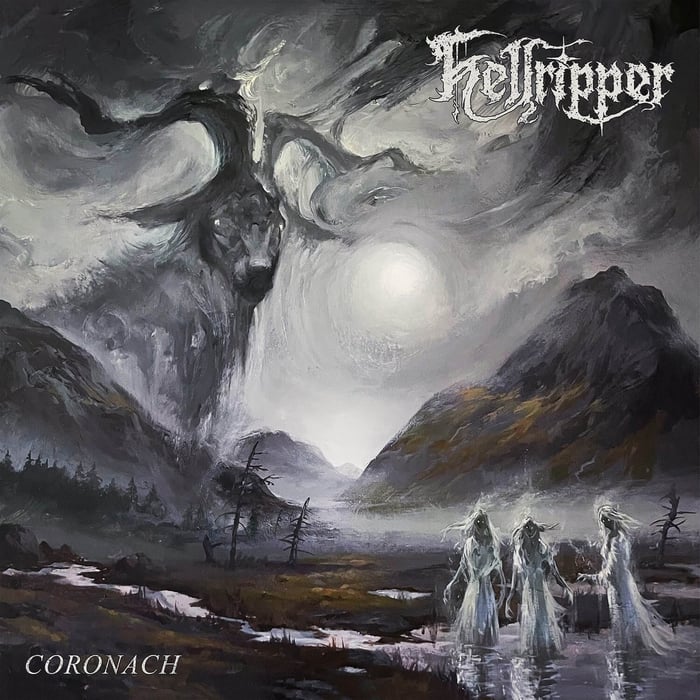
Album art that looks like it sounds
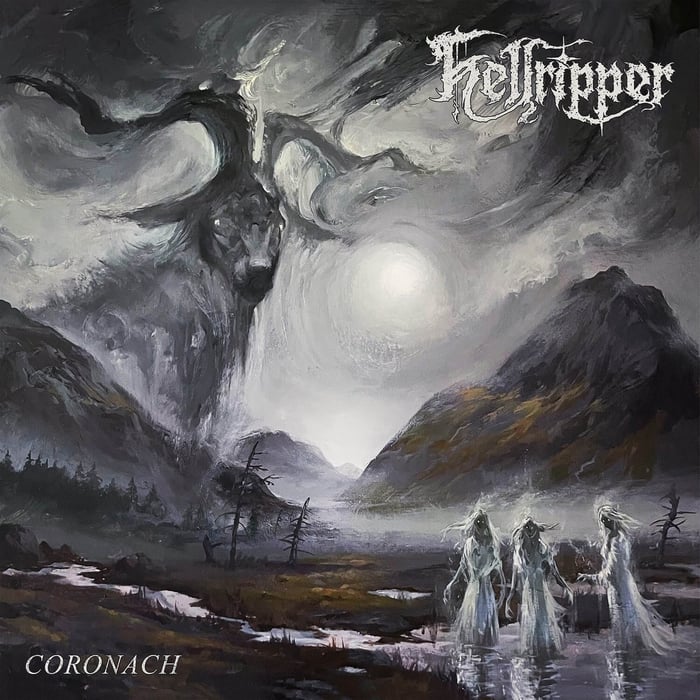
The cover doesn’t hide the vibe. It looks like an object you’d keep near the turntable to make other records nervous.
Release note (because you’ll ask anyway)
Coronach is set for release on March 27 via Century Media Records.
Conclusion
Hellripper Coronach doesn’t try to be everything, but it absolutely tries to go everywhere—thrash backbone, blackened bite, crust-punk grime, a flash of piano and strings, then clean vocals right at the funeral door. The boldest part is that it never apologizes for any of it. It just keeps handing you riffs and expecting you to keep up.
Our verdict: If you like your metal fast, nasty, and rooted in real grime (not fantasy-map grime), you’ll actually love Hellripper Coronach. If you need “tasteful” aesthetics, neatly behaved genres, or you flinch at cowbell showing up in a lethal-horse-disease song, you’ll have a long day with this record.
FAQ
- Is Hellripper Coronach more thrash or black metal?
It plays like speed/thrash with blackened teeth—thrash muscle up front, black metal bite in the corners. - Which track best represents the album’s vibe?
“Hunderprest” for pure forward motion, “Mortercheyn” for the grime, and “Coronach” for the curveball humanity. - Does the album really use piano and strings?
Yes—most noticeably as the intro to “The Art of Resurrection,” and it’s there to sharpen the dread, not to sound fancy. - Are there clean vocals?
Yes, on the title track “Coronach,” and they hit harder because they’re saved for the end. - Is the black ’n’ roll swagger overwhelming?
No—it flirts with swagger, especially on “Blakk Satanik Fvkkstorm,” but it never turns into a party act.
If that cover art is already living in your head, it might belong on your wall too—shop a favorite album-cover-style poster at our store: https://www.architeg-prints.com
 | DISCOUNTGET 30% OFF*Use code on your next order:
|
* This post may contain affiliate links, meaning we earn a commission if you make a purchase through these links, at no additional cost to you.