Smoke DZA’s Road Trip to Amsterdam: Spiritual Whiplash in a Weed Jacket



Smoke DZA’s Road Trip to Amsterdam: Spiritual Whiplash in a Weed Jacket
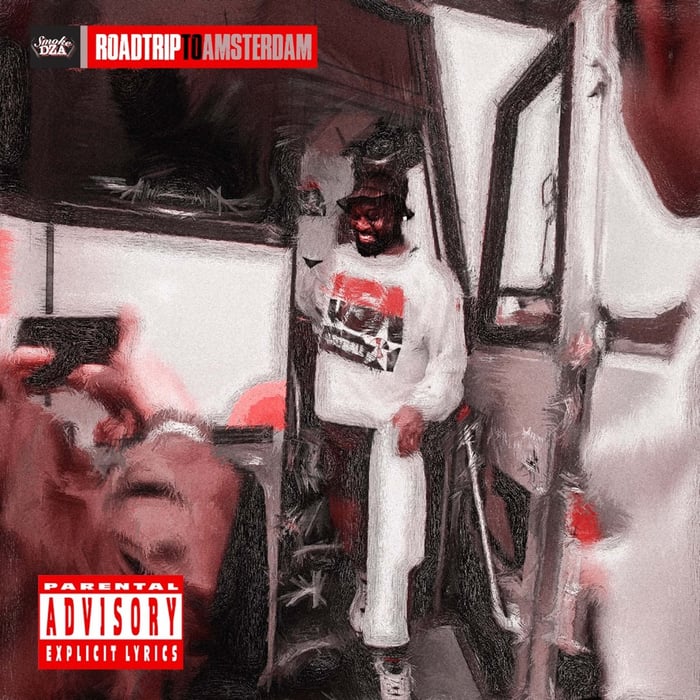
Smoke DZA’s Road Trip to Amsterdam swaps haze for prayer, then grabs the blunt again mid-verse. It’s a pivot—and a flex—arguing with itself.
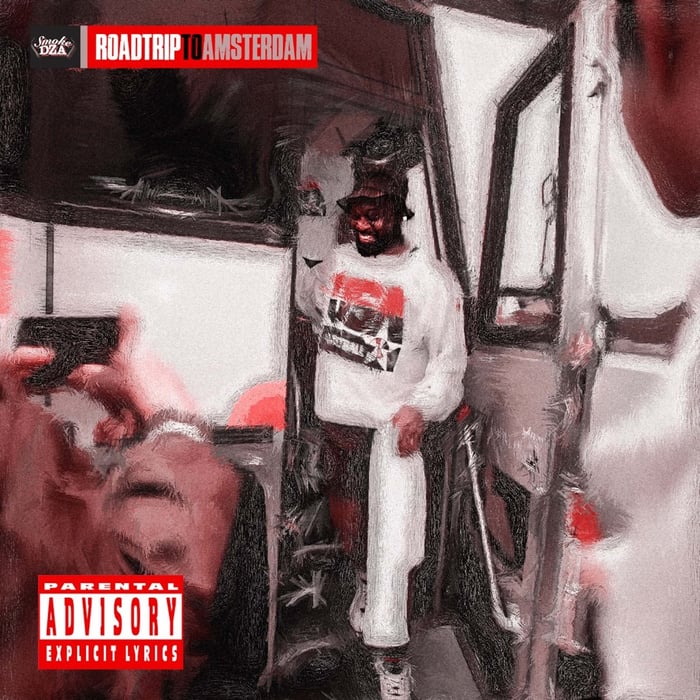
A passport full of stamps… and a head full of noise
If you’ve been around Smoke DZA’s music for any amount of time, you already know the deal: the “Kush God” brand usually shows up like a familiar smell in a favorite hoodie—comforting, predictable, and kind of the point.
This time, Road Trip to Amsterdam still walks in wearing that hoodie, but the eyes look different. The album frames itself like travel—Berlin, Barcelona, Amsterdam—like a long-running lifestyle of motion and indulgence. And sure, the catalog has always collected cities the way a passport collects stamps. But what I hear here is less “vacation” and more “I left so I wouldn’t have to sit with my thoughts, and now my thoughts caught up anyway.”
That’s the real trip. The destinations are just wallpaper.
Fifteen years of kush talk… then “Grounded” cuts the lights
The album opens with “Grounded,” and it doesn’t ease in. It clears its throat before it clears the smoke. DZA isn’t doing the mystical-rapper intro thing; he flat-out says he’s not doing tarot. He’s in prayer mode. And immediately, the first real storyline isn’t money or weed—it’s absence. Names he can’t reach. People he can’t call. A father-shaped gap that still won’t assemble into something usable.
The line about “knowledge is power” lands like a quote he’s carried around for years, the kind you repeat when you don’t know what else to do with the pain. Then grief hits sideways: hearing about Todd’s death and reacting with disbelief because it happened on April Fools’ Day. That’s not a clever rap detail—it’s the kind of detail you only say when you’re still stuck on the moment the news landed.
And then comes the big swerve: the hook reassures you it’s still him—feet on the ground—but he says it plainly: this time it’s not the smoke life. He even repeats it in another section, promising he won’t smoke. The track ends in spoken prayer to God, like he’s trying to make the record itself into proof that he’s not just performing change.
I’ll admit, on first listen I thought, “Okay, this is the serious intro before he goes back to business as usual.” On second listen, it hit me that “Grounded” isn’t a preface. It’s a thesis he keeps arguing with for the rest of the album.
The album’s real trick: prayer and flex share the same lung
From “Grounded,” the record slides into “Turnmeup” and “Harley Race,” and this is where the album shows its main habit: it refuses to separate holiness from stunt rap.
“Turnmeup” starts with the ice and the designer cues—Cartier specs energy—then suddenly pivots into Five Percent Nation talk. It’s not a clean switch; it’s the same voice, same confidence, like theology is just another form of inventory. The line about being “God body” isn’t presented like a lesson. It’s presented like a status symbol.
“Harley Race” goes full kingpin posture over a DJ Muggs beat, and it works because Muggs beats don’t ask for permission. But DZA keeps the spiritual thread alive by challenging enemies with a question that’s half-taunt, half-test: are you with God or did your faith change?
That’s the contradiction in a nutshell: the record wants to kneel and stand on someone’s neck in the same breath. And instead of choosing one, DZA braids them together until you can’t tell where the prayer ends and the brag starts.
A reasonable listener could say this is messy. I’d argue it’s the point. The album isn’t about purity; it’s about what a guy does when his conscience gets louder but his lifestyle doesn’t instantly obey.
“Irish Goodbye” is where the writing stops posing and starts remembering
When DZA gets specific, he gets dangerous—in the best way. “Irish Goodbye,” produced by Daringer, sounds like a memory you can’t quite shake. He’s talking about the pre-digital hustle days, handheld digital scales, hitting Audubon for sour, moving product through a drought, getting tight with farmers and vets. These aren’t “I sold drugs” clichés. They’re coordinates.
That’s what I mean when I say the album is actually doing something: it uses detail the way some rappers use hooks. The details aren’t trivia—they’re receipts for a life that still pulls on him.
Styles P shows up and slides in like he always does: calm, experienced, and allergic to nonsense. He drops the kind of street wisdom that sounds obvious until you realize how many people ignore it—if you’re smart, don’t touch the white, but let the green fly. It fits the album’s tug-of-war perfectly: a weed-centered worldview that now has to share space with mortality and consequence.
If you don’t like “Irish Goodbye,” you probably don’t like Smoke DZA at all. I don’t mean that as gatekeeping. I mean the track is the whole identity: lifestyle rap that’s finally willing to show its teeth.
Features don’t feel like accessories—especially on “Dead Homies”
The album’s guests don’t show up like random playlist boosters. They feel chosen for tone, not algorithm.
On “Dead Homies,” the energy turns into a straight-up prayer for the departed—no cute framing. T.F cuts through the shiny-rapper facade with a line that basically tells you what this whole economy of rap can be: “bullshit wrapped in premium packaging.” That’s one of the album’s sharpest moments because it refuses to romanticize the look of success. It calls it costume jewelry.
And the important thing: none of the features sound out of place. Nobody’s forcing a different genre into the room. They’re all standing in the same weather.
If you want a neat concept album where every track neatly underlines the theme in red marker, you might get impatient here. This album’s cohesion is more emotional than structural—like a group text where everyone is talking about the same crisis from different angles.
Not every detour earns its mileage
Here’s where I stop nodding and start squinting.
“Gotham City” goes for pure hard-hitting anthem: Fivio Foreign on the hook, Cory Gunz unloading those thick, dangerous verses like he’s trying to dent the speakers. On its own, it’s a banger. Inside this album, it feels like someone opened the wrong door and walked into a different party. The spiritual thread that “Grounded” lit up gets weaker here, and the album briefly forgets what it just told you it cared about.
“Does He Do It” stretches one cheating scenario across three verses with the familiar Jerry Green chorus, and this is where the project “pads” itself. The song isn’t unlistenable—it’s just the kind of track that makes the album feel less brave for a few minutes. Like, we get it. You can still do the classic playbook. But did you really need to stop the emotional momentum to prove it?
“BTW,” though, snaps the focus back with one excellent, clean, cutting verse—then closes with a spoken outro that sounds like a life coach grabbing you by the collar: start being accountable for what you’re doing. That outro breaks the spell in a good way. It’s like the album admitting the listener isn’t the only one being lectured.
I’m not totally sure if “BTW” is meant to sound motivational or scolding. It kind of lands as both, which might be the most honest thing about it.
“4 Fiends Away” is the real grief—because the person is still here
The rawest pain on the record isn’t about someone who’s gone. It’s about someone still breathing, still reachable, and still slipping away anyway.
“4 Fiends Away,” produced by Nicholas Craven, is DZA dealing with somebody he came up with—he frames him like family, like a nephew. And it’s not a dramatic intervention scene; it’s the slow horror of watching alcohol shrink a grown man into a child. That phrase sticks because it’s not poetic. It’s observant.
DZA doesn’t pretend he can rescue him. He won’t abandon him either. He admits he’s getting messages, seeing the stumble in real time, and the best he can do is support from far. That’s a brutal kind of love: present, but at a distance because closeness would turn into enabling or heartbreak on a schedule.
And then the album circles back to the same spiritual posture as “Grounded”: he can only pray for him, ask that grace be extended the same way he’s asked for it. The track ends where that prayer language began, like the album finally admitting this is what the trip was for—not the cities, not the flexes. This.
If “Grounded” is the promise, “4 Fiends Away” is the proof that the promise is hard to keep.
So what’s this album actually doing? It’s trying to quit without quitting
The funniest thing about Road Trip to Amsterdam—and I mean “funny” in the way life is funny when it’s being ruthless—is that it keeps selling you transformation while refusing to burn down the old brand.
The Kush God identity is still here. The talk of product, the luxury cues, the posture—it’s not gone. But now it’s constantly interrupted by prayer, grief, and conscience. The album doesn’t choose a lane because the whole point is that DZA is driving with both hands on different wheels.
That will annoy some people. Some listeners want the clean weed-rap cruise. Others want the full spiritual pivot, no backsliding. This record gives neither camp total satisfaction. It’s the sound of a person trying to evolve without losing the parts that paid for the evolution in the first place.
And yes, that tension is sometimes thrilling and sometimes clunky. But it’s never fake.
Conclusion
Road Trip to Amsterdam isn’t a postcard. It’s a messy voice note recorded mid-reckoning—prayer bleeding into flex, grief bleeding into routine, and one guy realizing that quitting a habit is easy compared to quitting the person you used to be.
Our verdict: This album will hit listeners who like their weed-rap with consequences and their grown-man bars with a little spiritual static in the background. If you want nonstop anthems with zero soul-searching, you’ll get restless and start skipping—probably right around the detours.
FAQ
- What is the core theme running through Road Trip to Amsterdam?
The push-pull between the Kush God lifestyle and a real turn toward prayer, loss, and accountability—often happening in the same song. - Which track sets the album’s tone best?
“Grounded.” It doesn’t tease seriousness; it commits to it, then forces the rest of the album to answer for it. - Do the features feel stitched on or natural?
Natural. Styles P and T.F especially sound like they’re in the same emotional neighborhood, not visiting for clout. - What’s the biggest weak spot on the tracklist?
The detours. “Gotham City” bangs but feels thematically disconnected, and “Does He Do It” drags a familiar scenario longer than it earns. - Is this album more reflective or more street-focused?
Both, and that’s the gamble. It prays, it brags, it mourns, it flexes—and sometimes those moods collide instead of blending.
If this album put a specific image in your head—cover art, a scene from a verse, that “Grounded” prayer energy—you can turn that feeling into wall art. Shop your favorite album cover poster at our store: https://www.architeg-prints.com/
 | DISCOUNTGET 30% OFF*Use code on your next order:
|
* This post may contain affiliate links, meaning we earn a commission if you make a purchase through these links, at no additional cost to you.